Understanding suffixes Reading Worksheets for 6-Year-Olds
3 filtered results
-
From - To
Unlock the magic of language with our “Understanding Suffixes” reading worksheets designed specifically for 6-year-olds! These engaging resources help young learners explore the concept of suffixes, enhancing their reading and vocabulary skills. Each worksheet is crafted to be age-appropriate, featuring fun exercises that encourage kids to identify and use various suffixes in words. As children practice, they'll gain confidence in understanding word meanings and improve their reading fluency. Perfect for at-home learning or classroom activities, our worksheets make studying suffixes enjoyable and effective. Start empowering your child’s literacy journey today with our interactive and informative materials!
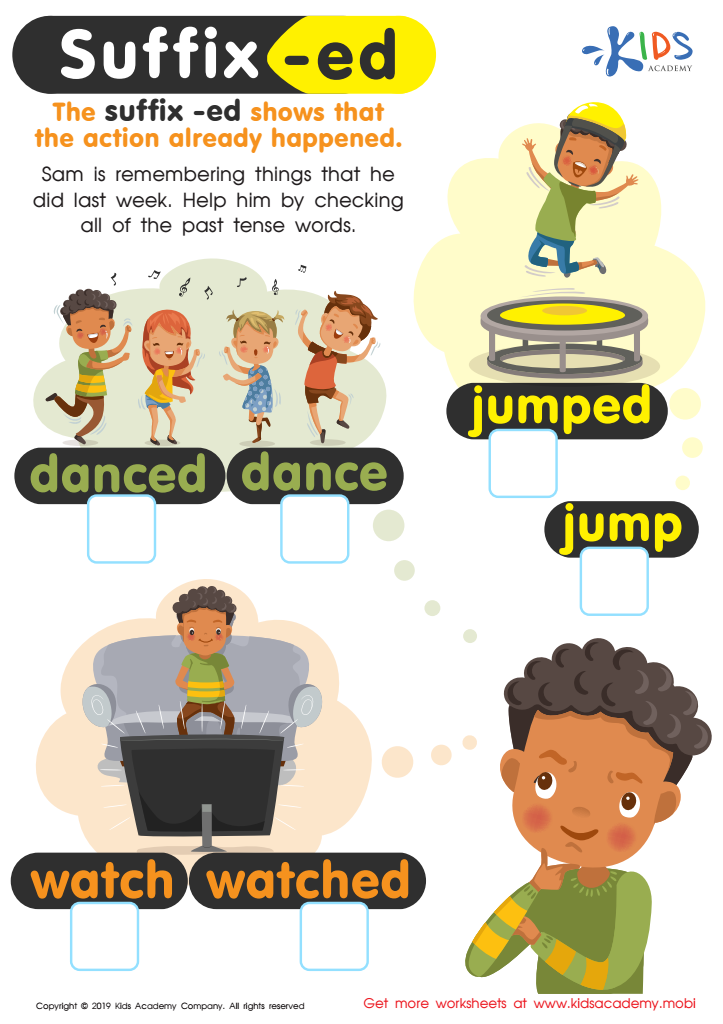
Suffix-ed Worksheet
 Assign to My Students
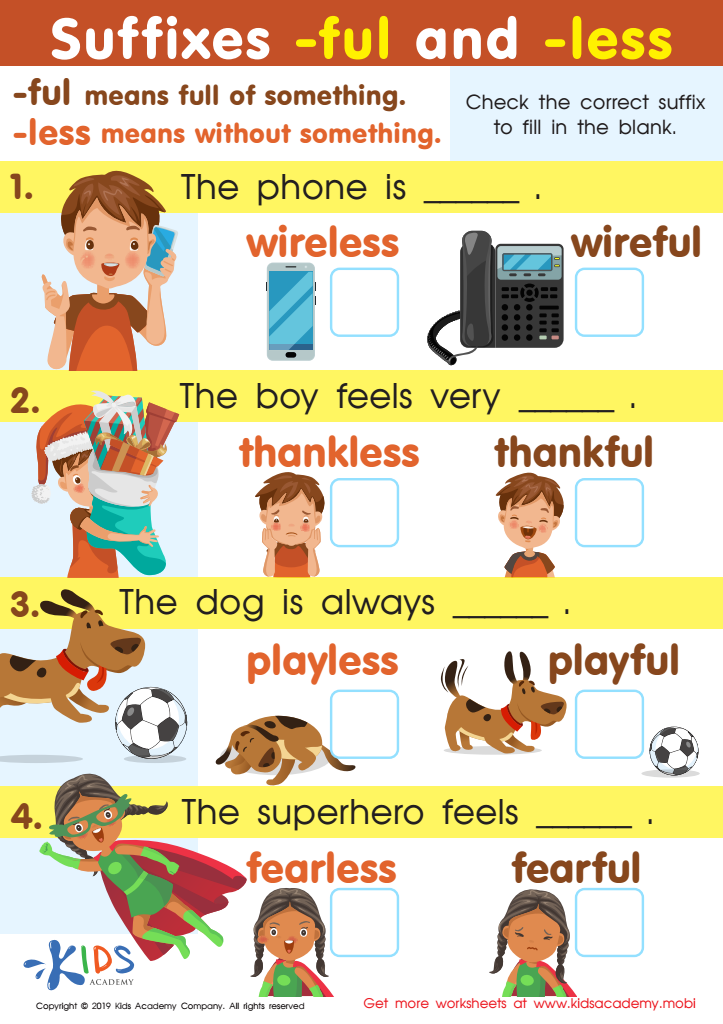
Suffixes –ful and –less Worksheet
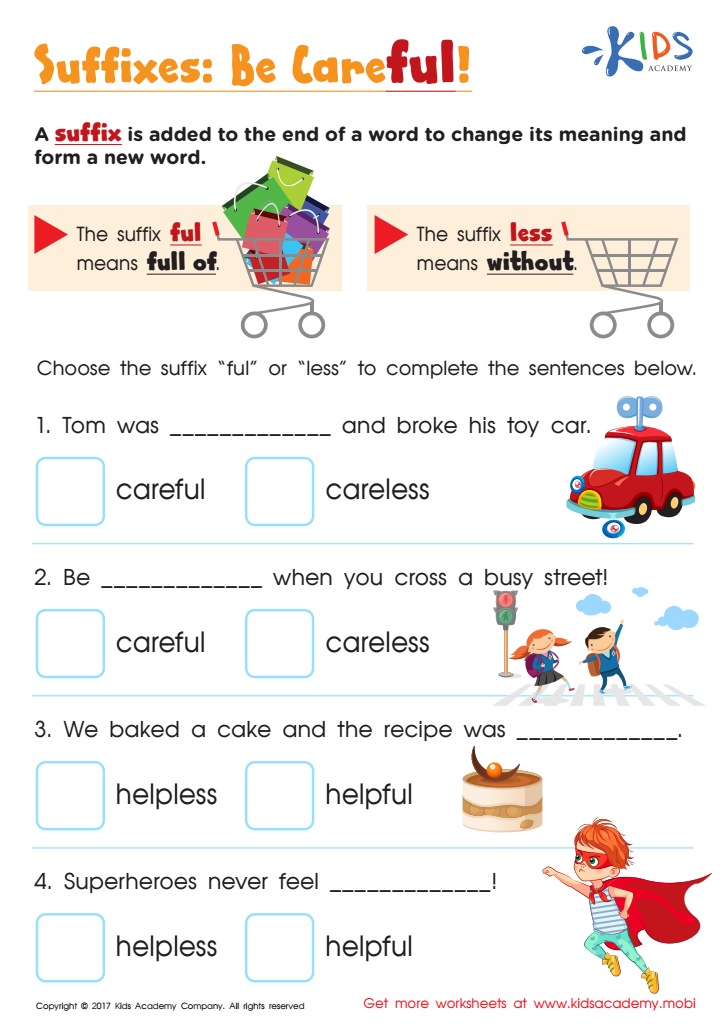
Suffixes Ful and Less Worksheet








Understanding suffixes is crucial for 6-year-olds as it enhances their reading and language skills, which are foundational in early literacy development. Suffixes are word endings that change a word’s meaning or grammatical function, helping children decode unfamiliar words. By recognizing common suffixes like "-ing," "-ed," and "-s," young learners become better equipped to make sense of new vocabulary, which boosts their comprehension and fluency.
Parents and teachers should care about teaching suffixes because it nurtures critical thinking and analytical skills. As children progress, knowing suffixes enables them to infer meanings and understand word relationships, thus enriching their reading experiences. Furthermore, mastering suffixes fosters creativity; children can experiment with word formation, expressing themselves more effectively in writing and speaking.
Additionally, a solid grasp of suffixes supports performance in school, leading to increased confidence and participation in literacy activities. Engaging parents in this learning process can create a supportive home environment that encourages reading. Ultimately, by prioritizing suffix education, we lay the groundwork for lifelong literacy and a love for language, empowering children to navigate their academic journeys with greater ease and enthusiasm.








