Filters

8 filtered results

Clear all filters
Favorites
With answer key
Interactive

8 filtered results

Difficulty Level

Grade


Enhance your child's reading skills with our engaging Vocabulary Building Reading Comprehension Worksheets designed especially for 6-year-olds! These fun, interactive worksheets promote language development and vocabulary expansion through captivating stories and exercises tailored to young learners. Each worksheet emphasizes essential skills such as word recognition, contextual understanding, and inference, making learning enjoyable and effective. Whether at home or in the classroom, our resources support early literacy skills while fostering a love for reading. Explore our diverse collection today and watch your child’s vocabulary and comprehension abilities flourish! Perfect for teachers, parents, and caregivers aiming to inspire a lifelong passion for language.

Check out this FREE Trial Lesson on Reading Comprehension for age 6!

Mystery and Fantasy Stories

Favorites
With answer key
Interactive
  • 6
  • Vocabulary Building
  • Reading Comprehension
Poem: My New Kite Worksheet

Poem: My New Kite Worksheet

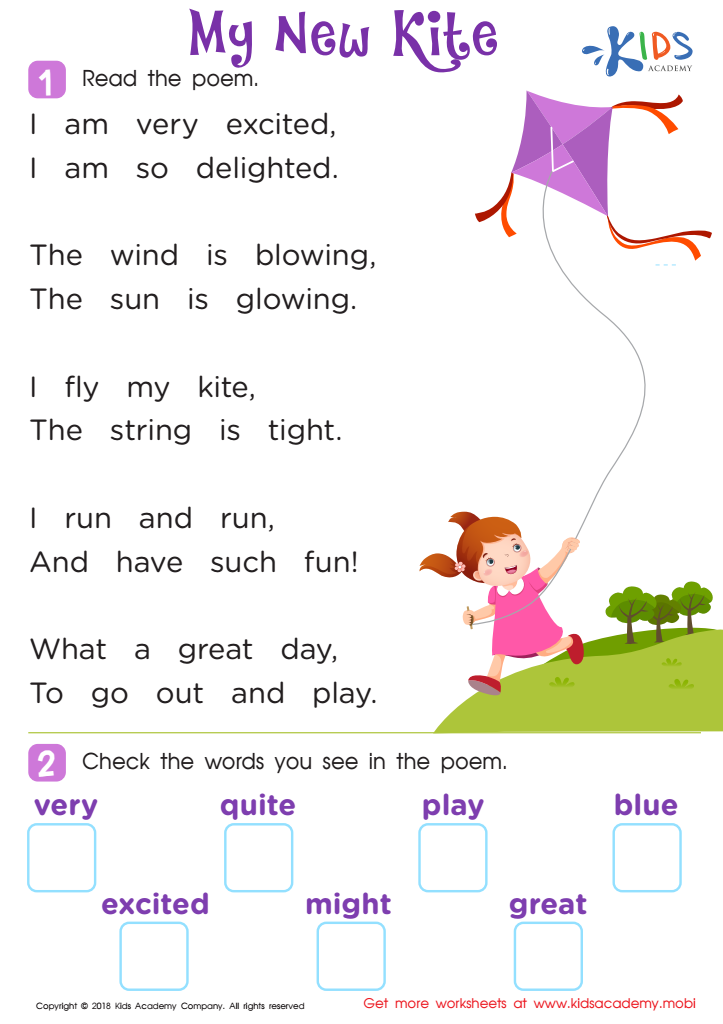
Read a cheerful poem with your child and have them check the boxes next to the words that appear. Then, ask them to identify rhyming words, noting that these won't appear at the bottom of the page. This is a delightful reading activity to help your child remember what they read.
Poem: My New Kite Worksheet
Worksheet
What Am I? Worksheet

What Am I? Worksheet

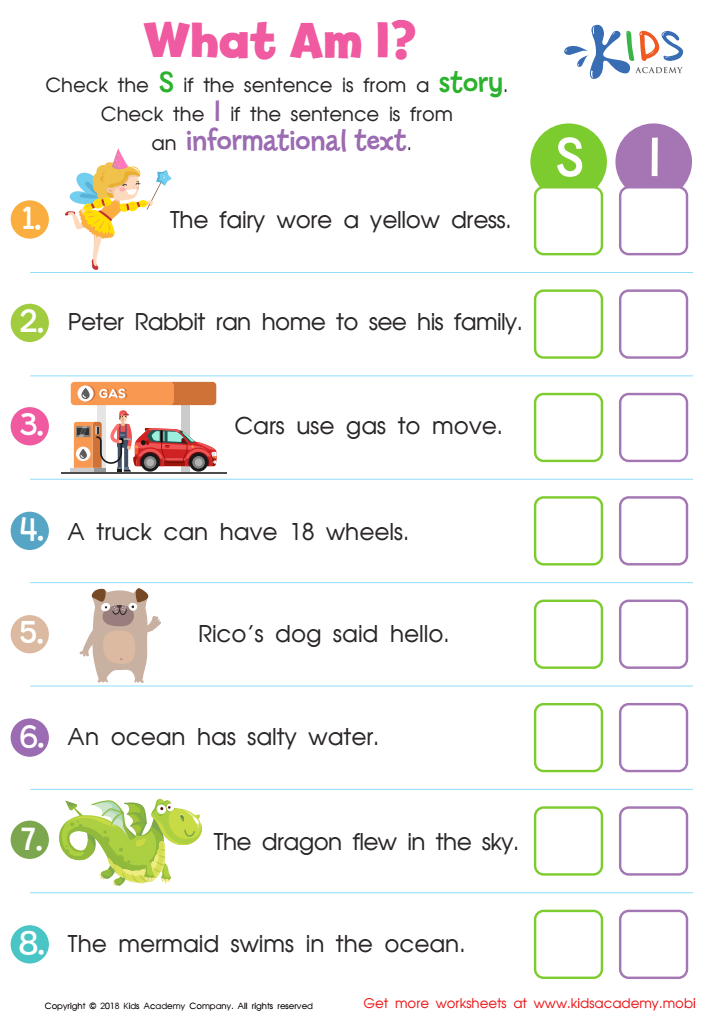
This worksheet assesses students' ability to differentiate between stories and texts they read for facts. Students learn to distinguish between reading for pleasure and reading for information. It includes statements from both a story and an informational text, and students must decide what type of text it is.
What Am I? Worksheet
Worksheet
Three Little Pigs Vocabulary Worksheet

Three Little Pigs Vocabulary Worksheet

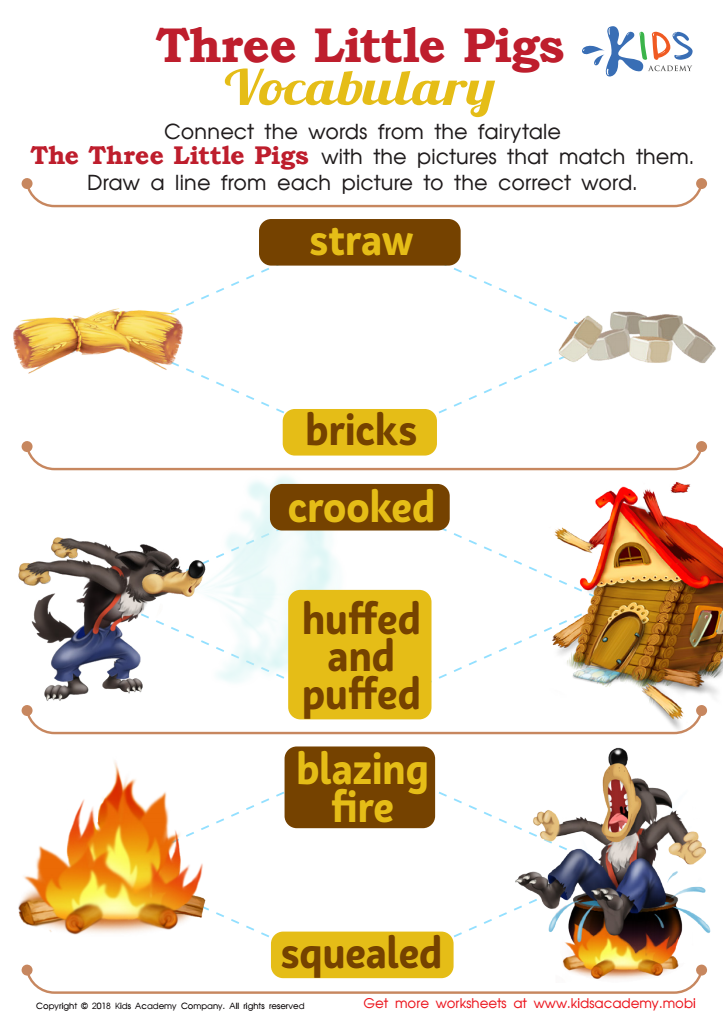
Read the Three Little Pigs to your children. Have them use the tracing sheet to connect the story words with the pictures. This is a fun and educational way to help them build their vocabulary.
Three Little Pigs Vocabulary Worksheet
Worksheet
Little Elephant's Birthday Worksheet

Little Elephant's Birthday Worksheet

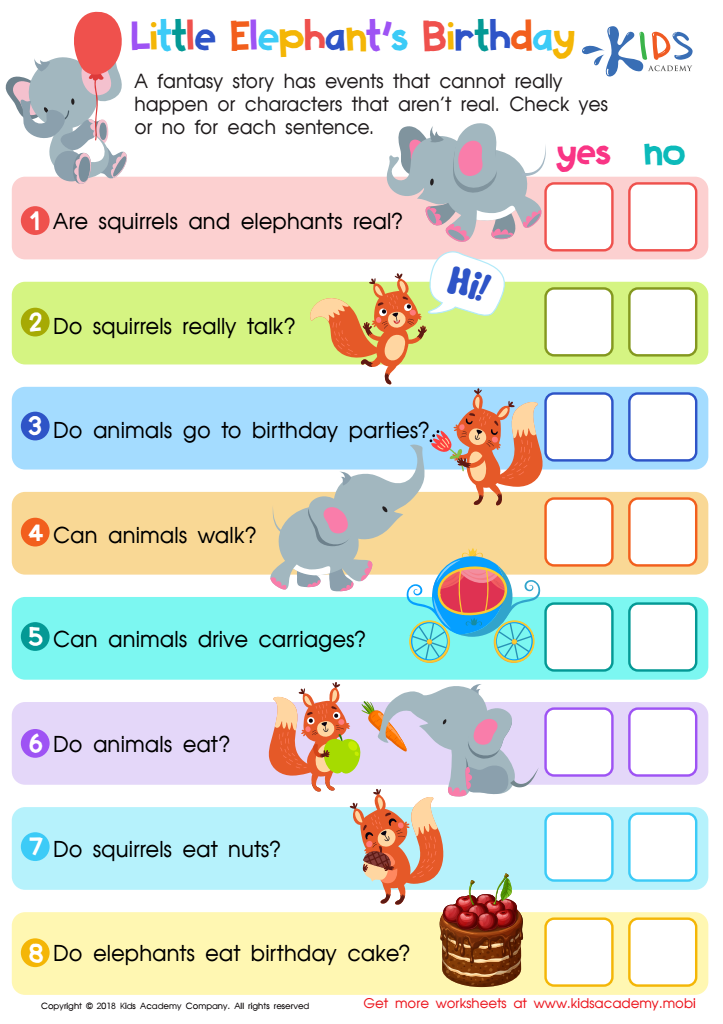
It's Little Elephant's birthday! Help your students celebrate with this fun worksheet full of colors and pictures. Deciding which questions are facts and which are fiction will help them differentiate between fantasy stories and reality. Let them have fun learning why certain elements of fantasy can't be true!
Little Elephant's Birthday Worksheet
Worksheet
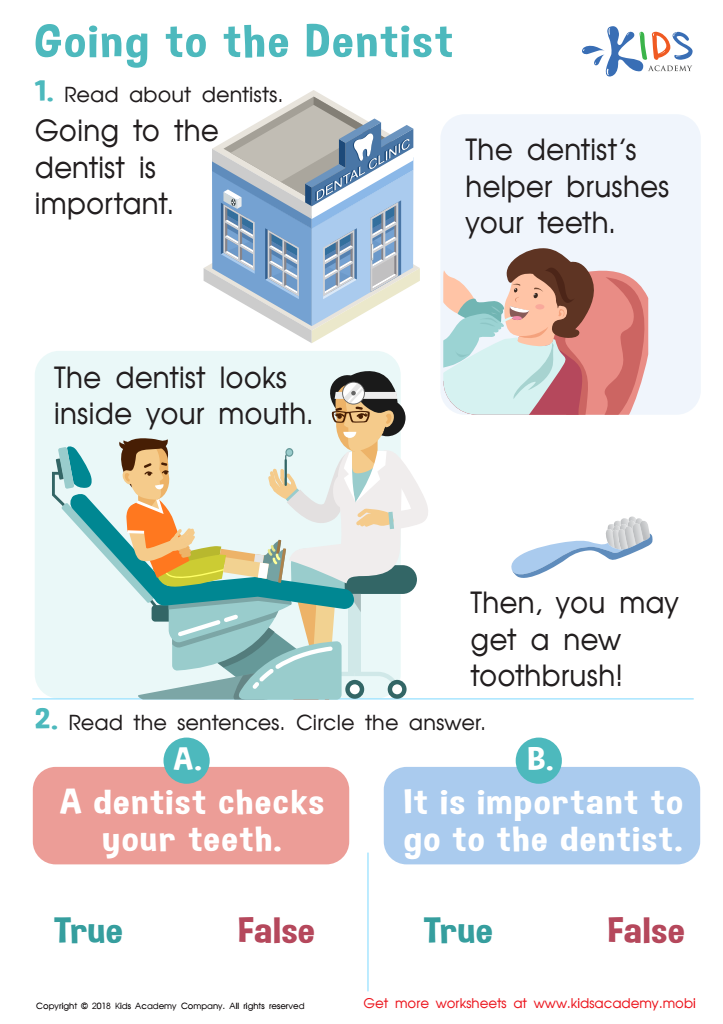
Going to the Dentist Part 2 Worksheet

Going to the Dentist Part 2 Worksheet

Visiting the dentist can be nerve-wracking for children. This informative PDF will not only explain what the dentist does, but also use pictures to assure children. They'll learn why seeing the dentist is important and be able to verify their understanding through true/false questions.
Going to the Dentist Part 2 Worksheet
Worksheet
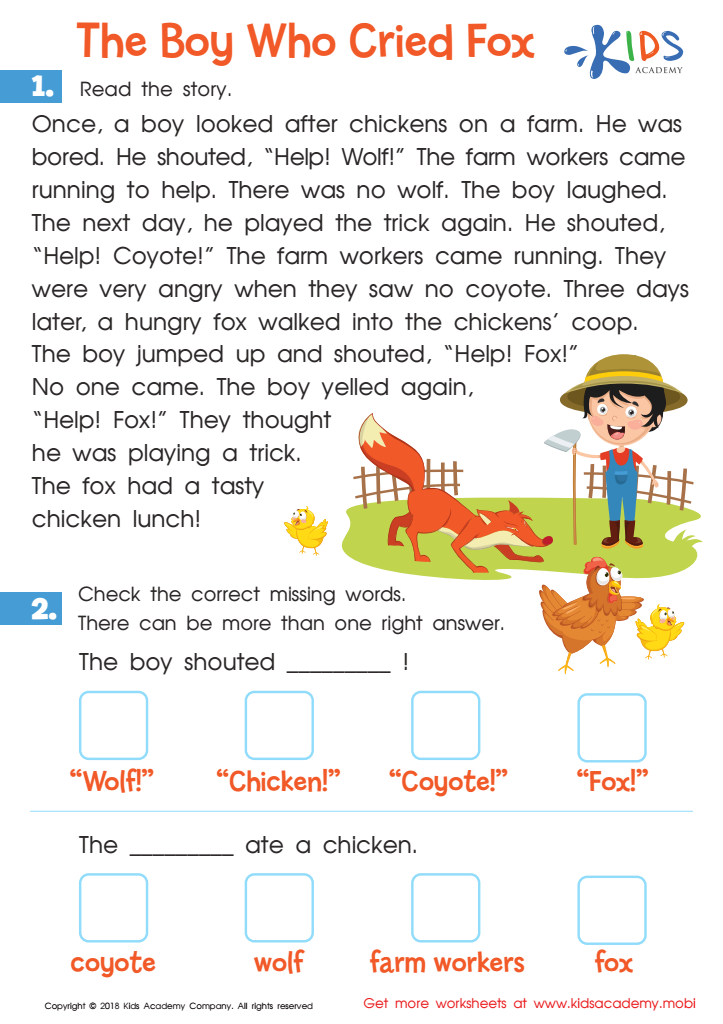
The Boy Who Cried Fox Worksheet

The Boy Who Cried Fox Worksheet

This worksheet encourages students to recall details from a story and answer questions to test their comprehension. Perfect for reading lessons, enrichment, or extra help.
The Boy Who Cried Fox Worksheet
Worksheet
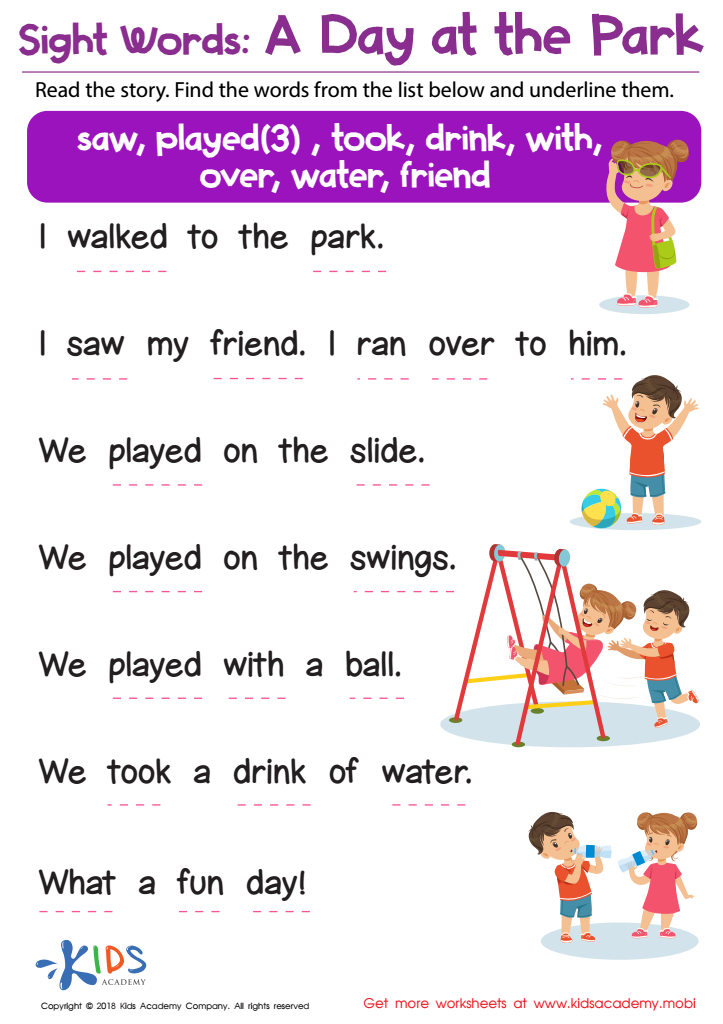
Sight Words: A Day at the Park Worksheet

Sight Words: A Day at the Park Worksheet

This worksheet offers kids practice reading sight words in a story. With picture clues and repetitive wording, they'll work with words that can't be sounded out to reinforce their learning. This is an important step in the reading process that helps kids become more confident readers.
Sight Words: A Day at the Park Worksheet
Worksheet
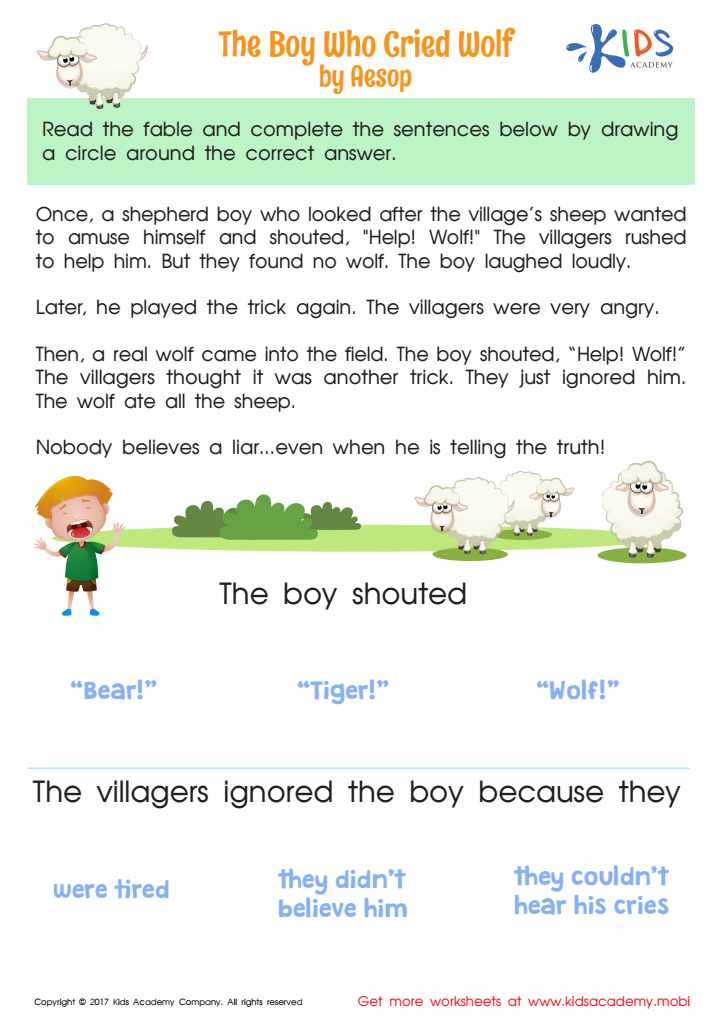
Worksheet: The Boy Who Cried Wolf

The Boy Who Cried Wolf Worksheet

Test your child's reading comprehension with The Boy Who Cried Wolf worksheet. Read the fable, then answer the questions. Use the text to help your child check their answers are correct. Boost reading skills in a fun, interactive way!
The Boy Who Cried Wolf Worksheet

Worksheet


Vocabulary building is crucial for 6-year-olds as it directly influences their reading comprehension and overall learning. At this age, children are beginning to connect words with meaning, making it essential for parents and teachers to engage in supportive literacy practices. A rich vocabulary allows children to understand stories better, grasp new concepts, and articulate their thoughts clearly.

When children encounter unfamiliar words, it can hinder their understanding of texts, leading to frustration and disengagement. By fostering vocabulary growth through interactive reading, discussions, and word games, parents and teachers can not only improve comprehension but also instill a love for reading. This foundation nurtures critical thinking skills, enabling children to analyze stories, make predictions, and draw conclusions.

Additionally, strong vocabulary supports social skills, as children learn to communicate their ideas effectively and interact with peers. It also correlates with academic success, as strong readers often perform better across subjects. Hence, promoting vocabulary building should be a priority for adults guiding 6-year-olds, serving as a gateway to a lifetime of effective communication and learning. Investing time and resources in vocabulary expansion forms the cornerstone of literacy development, setting children up for future success.