Identifying story elements Reading Fiction Worksheets for 6-Year-Olds
3 filtered results
-
From - To
Explore our engaging "Identifying Story Elements Reading Fiction Worksheets for 6-Year-Olds," designed to enhance young readers' comprehension and analytical skills. These fun and educational worksheets help children identify characters, settings, and plot structures in their favorite stories. Each activity is crafted to foster critical thinking, imagination, and an enduring love for reading. Ideal for at-home learning or classroom use, our resources provide parents and educators with valuable tools to support early literacy development. Help your child master the fundamentals of fiction with these interactive and enjoyable worksheets today!
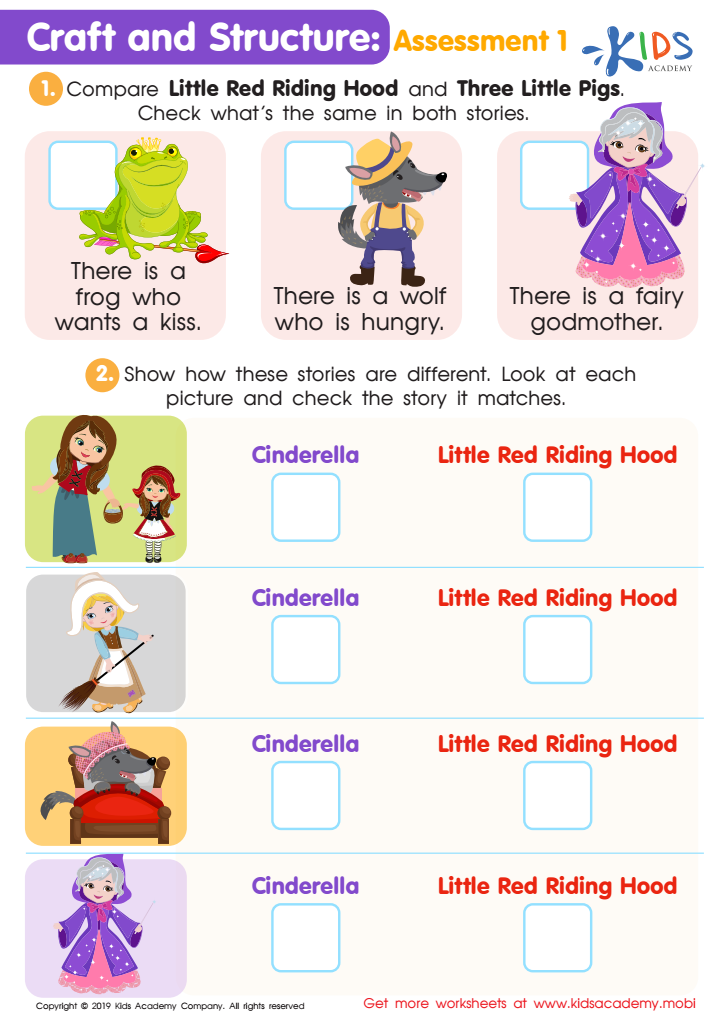
Craft and Structure: Assessment 1 Worksheet
 Assign to My Students
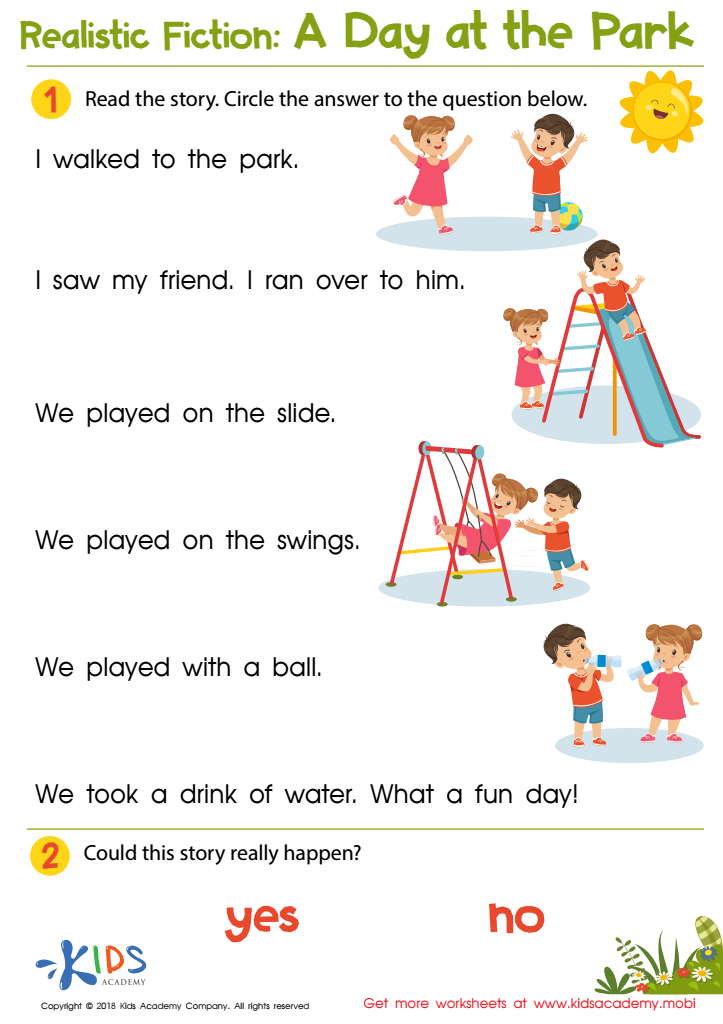
A Day at the Park Worksheet
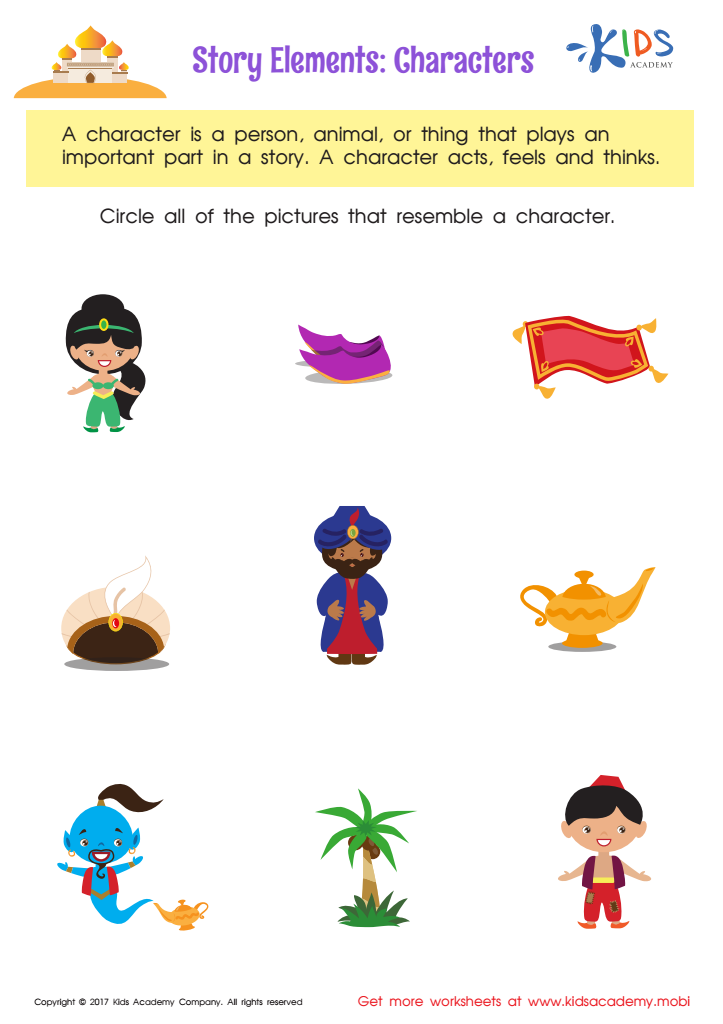
Story Elements Printable








Understanding and identifying story elements, such as characters, setting, plot, conflict, and resolution, is crucial for young children, particularly 6-year-olds, as it forms a fundamental building block of their literacy and cognitive development. When 6-year-olds learn to identify these elements in fiction, they sharpen their comprehension skills. This is because recognizing the components of a story helps them grasp structure, making it easier for them to follow and understand the narrative.
Moreover, identifying story elements enhances critical thinking. As children differentiate between characters, settings, and events, they begin to analyze and predict outcomes, promoting higher-level thinking and problem-solving abilities. For parents and teachers, fostering these skills can contribute to overall academic success, as comprehension is a significant part of all subjects.
Story elements also encourage emotional and social development. Understanding characters’ motivations, actions, and feelings enables children to develop empathy and improve their social skills. Discussing and relating to characters can provide a safe space for children to explore complex emotions.
In summary, emphasizing story elements in reading not only ensures that 6-year-olds build a strong foundation for future reading success but also fosters essential cognitive, emotional, and social skills, laying the groundwork for well-rounded development.








