Fine Motor Skills Sight Words Worksheets for 6-Year-Olds
4 filtered results
-
From - To
Enhance your 6-year-old's reading and writing abilities with our Fine Motor Skills Sight Words Worksheets. These carefully curated activities are designed to help children recognize, read, and write essential sight words while simultaneously improving their fine motor skills. Through tracing, writing, and cutting exercises, children practice the coordination and control needed for proficient handwriting. Our engaging and fun worksheets not only strengthen early literacy skills but also prepare little hands for more complex tasks. Perfect for home or classroom use, these worksheets provide a comprehensive approach to learning that supports both cognitive and motor development. Get started today!
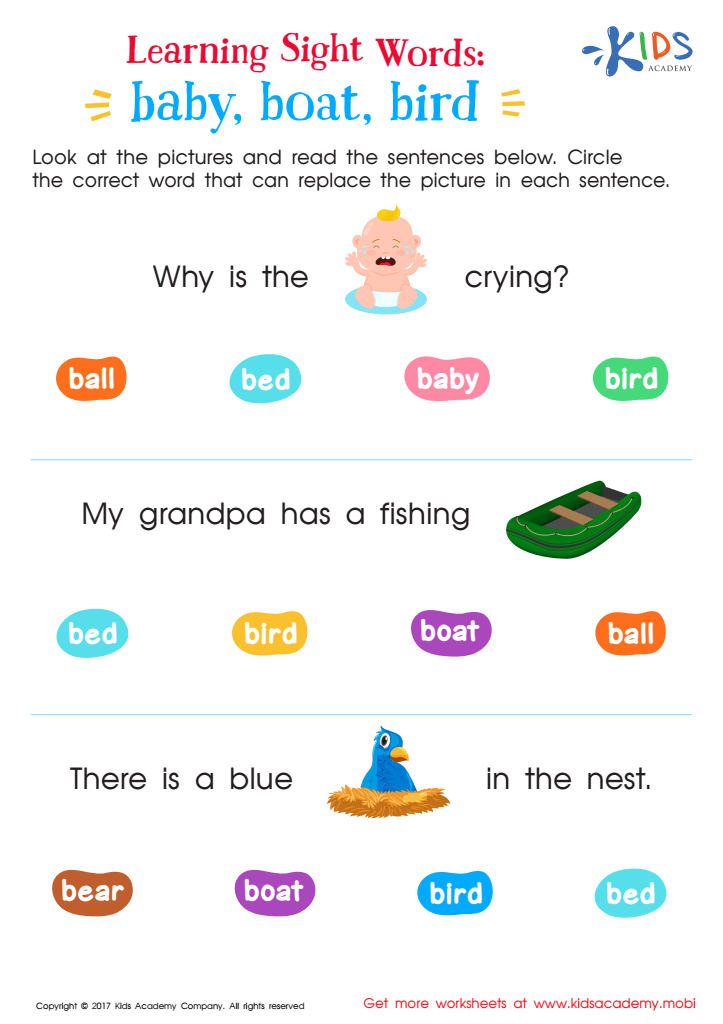
Baby, Boat, Bird Worksheet Sight Words Worksheet
 Assign to My Students







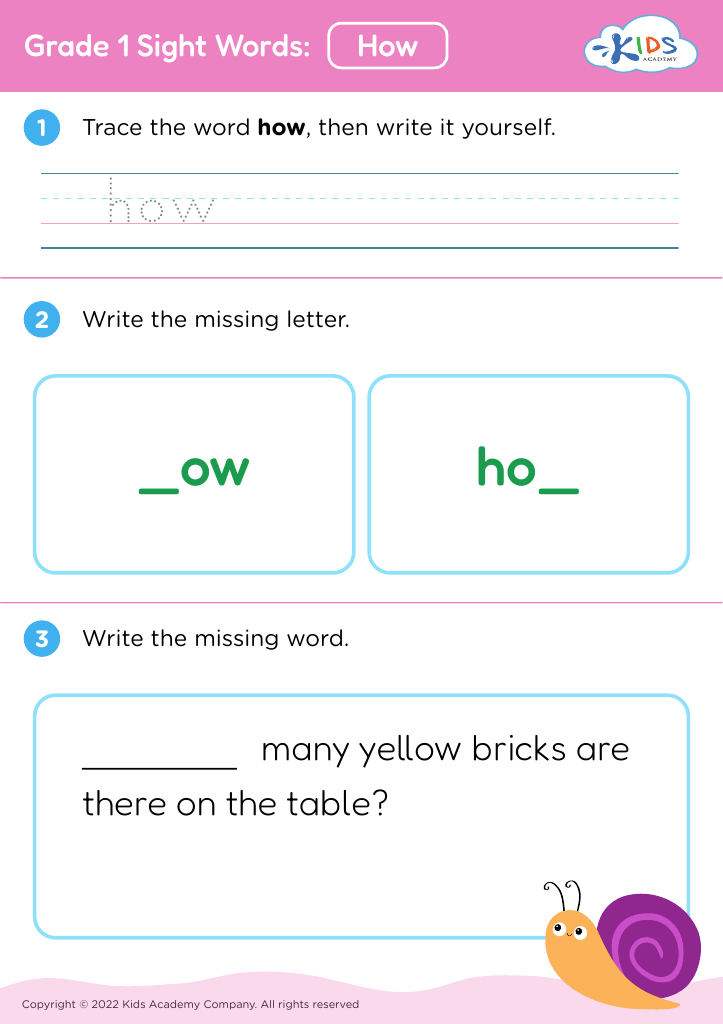
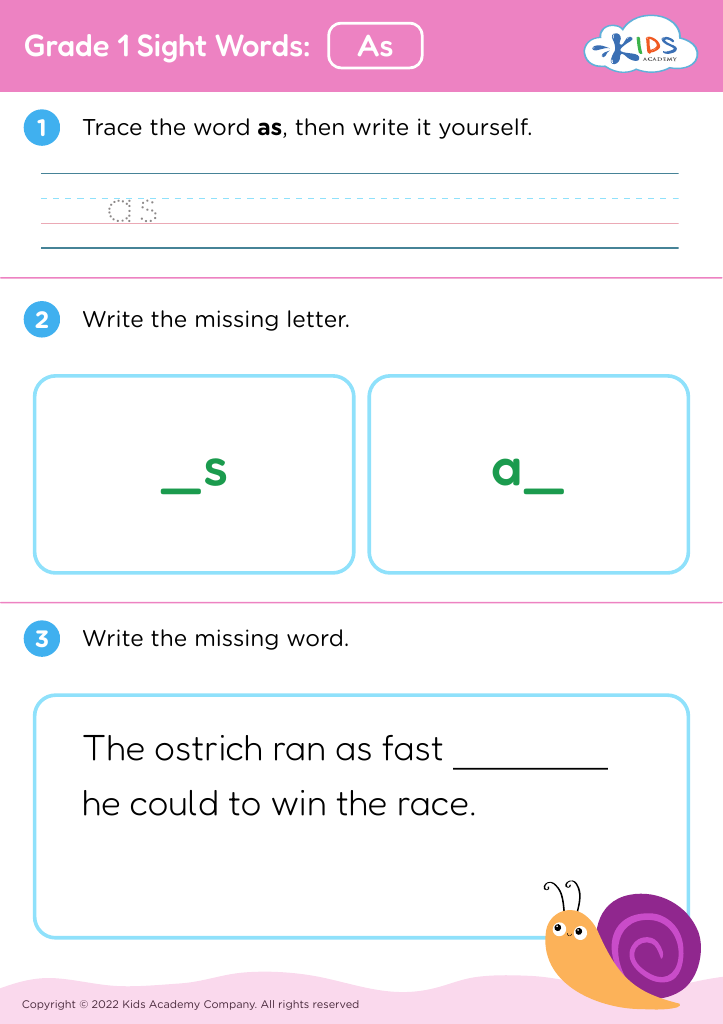
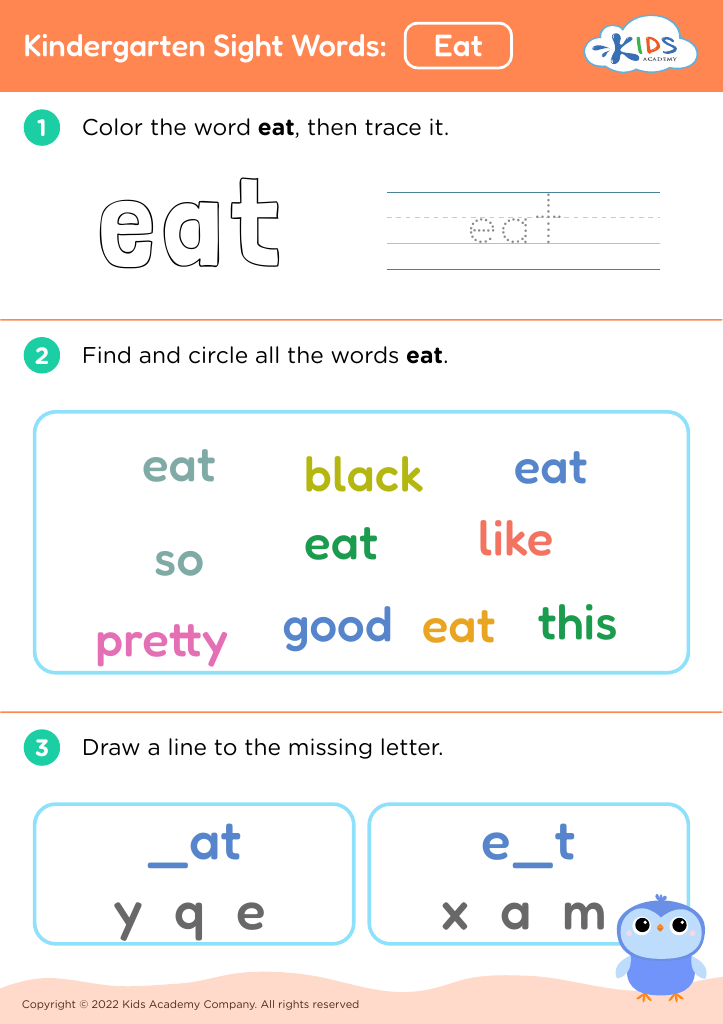








Fine Motor Skills and Sight Words are essential components in a 6-year-old's developmental stage, and parents and teachers should pay special attention to these areas due to their substantial impact on a child's future learning and daily functioning. Fine Motor Skills involve the small muscles in the hands and fingers, which children need to perform tasks such as writing, buttoning clothes, and using scissors. Strengthening these skills not only helps with dexterity and coordination but also builds a foundation for higher-order tasks such as typing and detailed artwork.
Simultaneously, Sight Words are commonly used words that children are encouraged to recognize instantly without needing to decode them. Mastery of these words plays a crucial role in early reading fluency. A strong vocabulary of Sight Words enables children to read more efficiently and with comprehension, boosting their confidence and interest in reading. Additionally, it frees up cognitive resources to tackle more complex words and concepts.
By nurturing fine motor skills, parents, and teachers can ensure that children acquire the physical ability to express their knowledge, both in writing and other daily activities. Meanwhile, focusing on Sight Words enables children to become proficient readers. Parenting and teaching strategies that balance these areas create a supportive and enabling environment for holistic child development.