Categorization skills Science Worksheets for 6-Year-Olds
4 filtered results
-
From - To
Enhance your child's learning with our Categorization Skills Science Worksheets for 6-Year-Olds! These expertly designed worksheets help young learners grasp essential science concepts by classifying objects, animals, and plants into their correct categories. Our fun and engaging activities not only build foundational science knowledge but also boost critical thinking and observational skills. Perfect for both classroom settings and at-home learning, these printable resources provide a hands-on approach to mastering categorization, making science enjoyable for budding young minds. Discover our collection and watch your child's understanding of the natural world thrive!
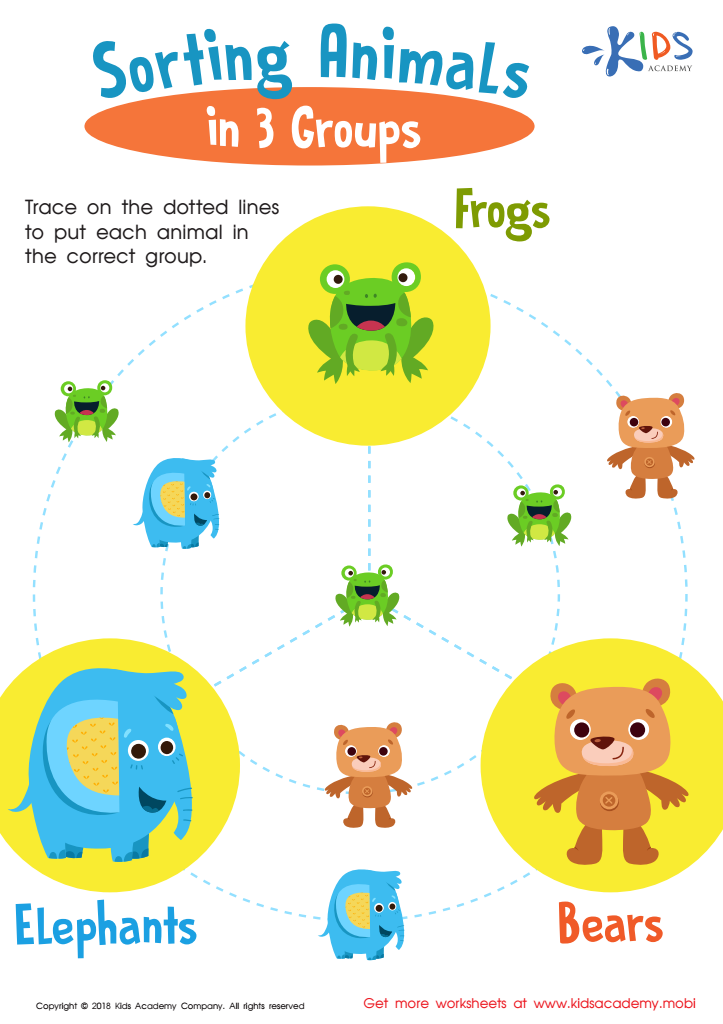
Sorting Animals in 3 Groups Worksheet
 Assign to My Students
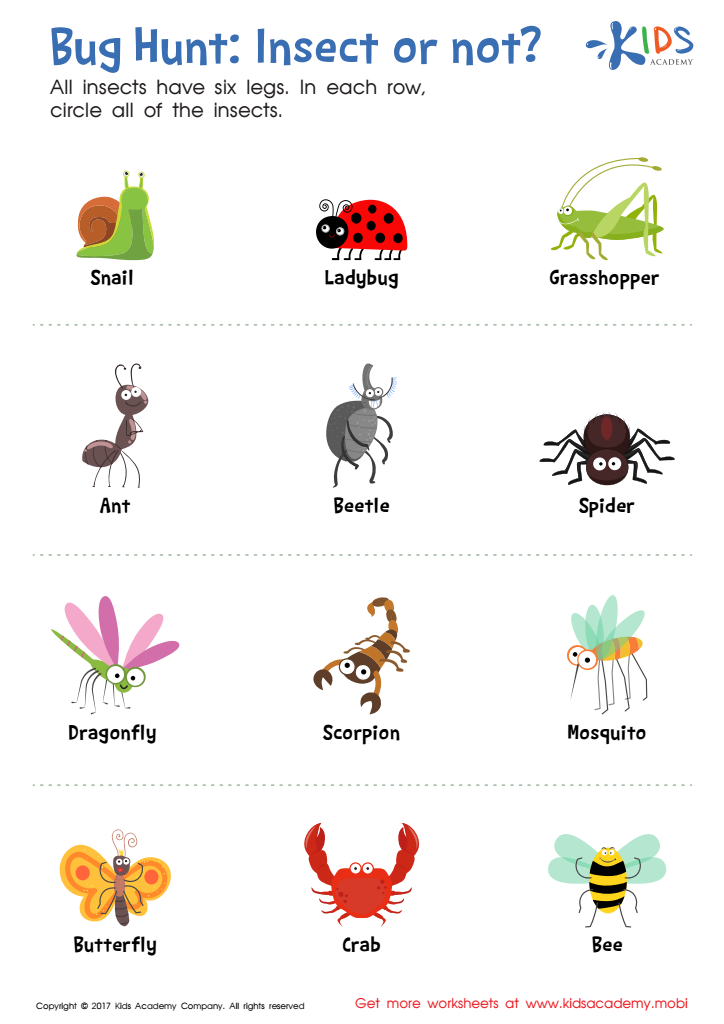
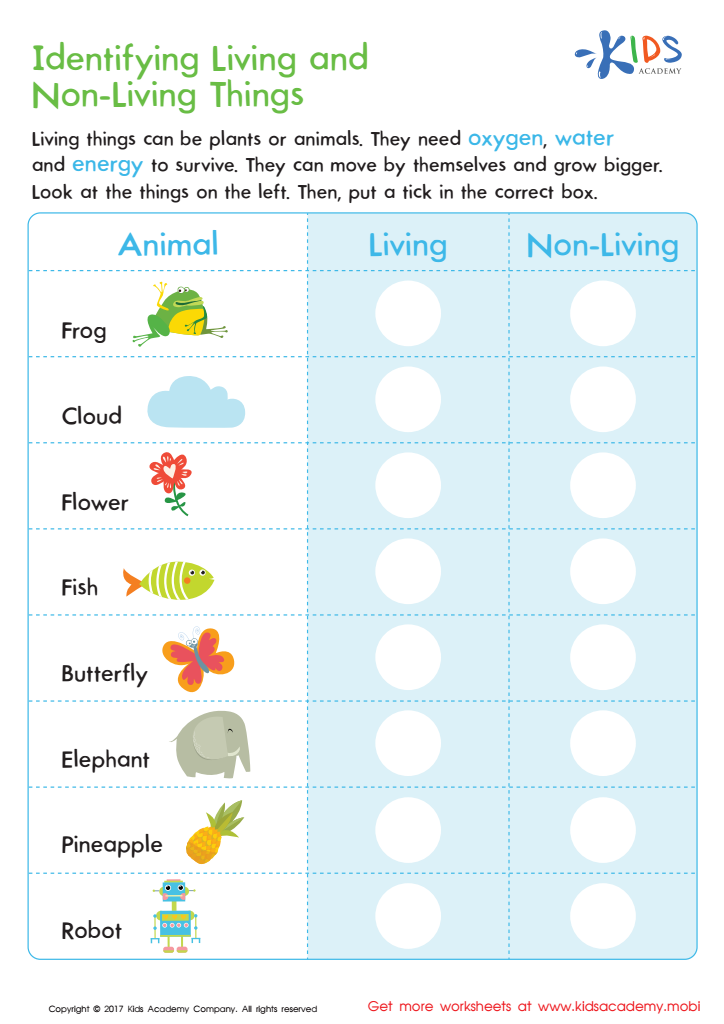
Identifying Living or Non–living Worksheet
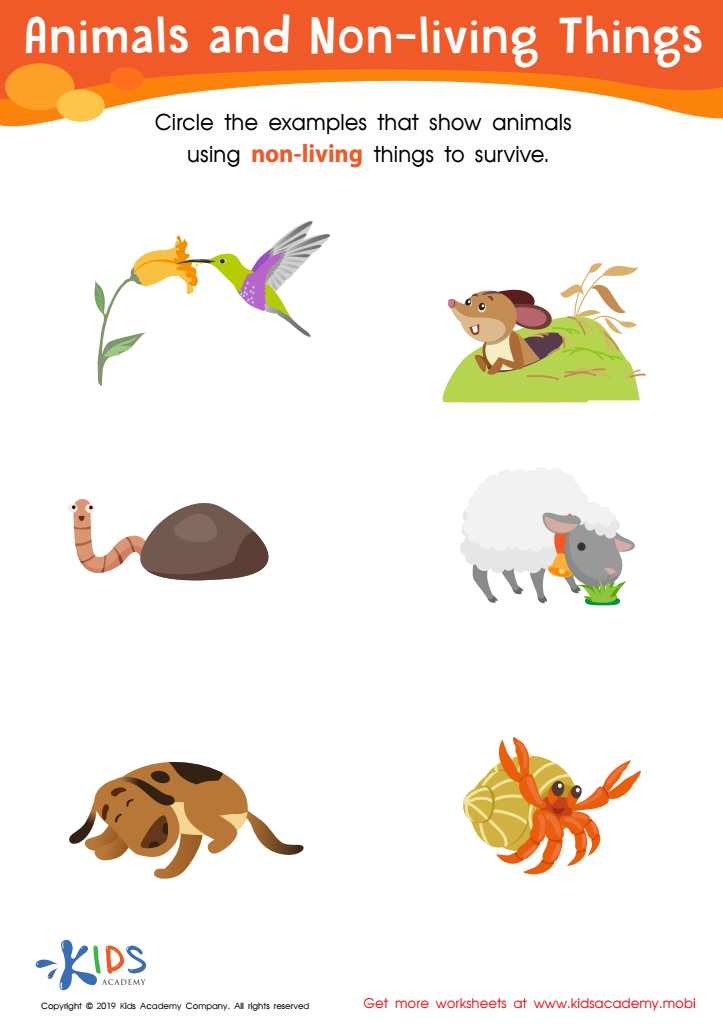
Animals and Non-Living Things Worksheet






Categorization skills in early childhood are essential as they lay the groundwork for cognitive development and future learning. For a 6-year-old, understanding how to group objects, ideas, or information based on common characteristics improves their critical thinking and problem-solving abilities. When parents and teachers emphasize categorization skills, they help children make sense of the world by recognizing patterns and relationships.
These skills are instrumental in various academic subjects. For example, in science, categorizing objects by properties such as size, shape, or color helps children grasp complex concepts like the classification of animals, weather patterns, or matter states. This foundational knowledge not only enhances their scientific understanding but also promotes curiosity and a deeper interest in learning.
Furthermore, categorization aids in literacy as children learn to organize words and expand their vocabulary, making reading and comprehension more manageable. Socially, it helps them navigate and interpret social dynamics by identifying behavioral patterns and categorizing social cues.
By nurturing categorization skills, parents and teachers equip children with tools that enhance memory, boost logical reasoning, and improve overall academic performance. Prioritizing these skills fosters a well-rounded, analytical mindset vital for lifelong learning and personal growth.







