Spatial awareness Physical Science Worksheets for 6-Year-Olds
3 filtered results
-
From - To
Enhance your six-year-olds' understanding of spatial awareness with our engaging Physical Science worksheets! Designed for early learners, these worksheets introduce concepts like position, direction, and distance using fun and interactive activities. Through vibrant illustrations and relatable scenarios, children will develop essential skills that bolster their cognitive abilities and promote critical thinking. Our worksheets cater to various learning styles, ensuring every child can grasp the fundamental ideas in spatial awareness. Perfect for classroom settings or at-home learning, these resources provide a wonderful way to foster curiosity about the physical world. Explore our collection today and watch young minds grow!
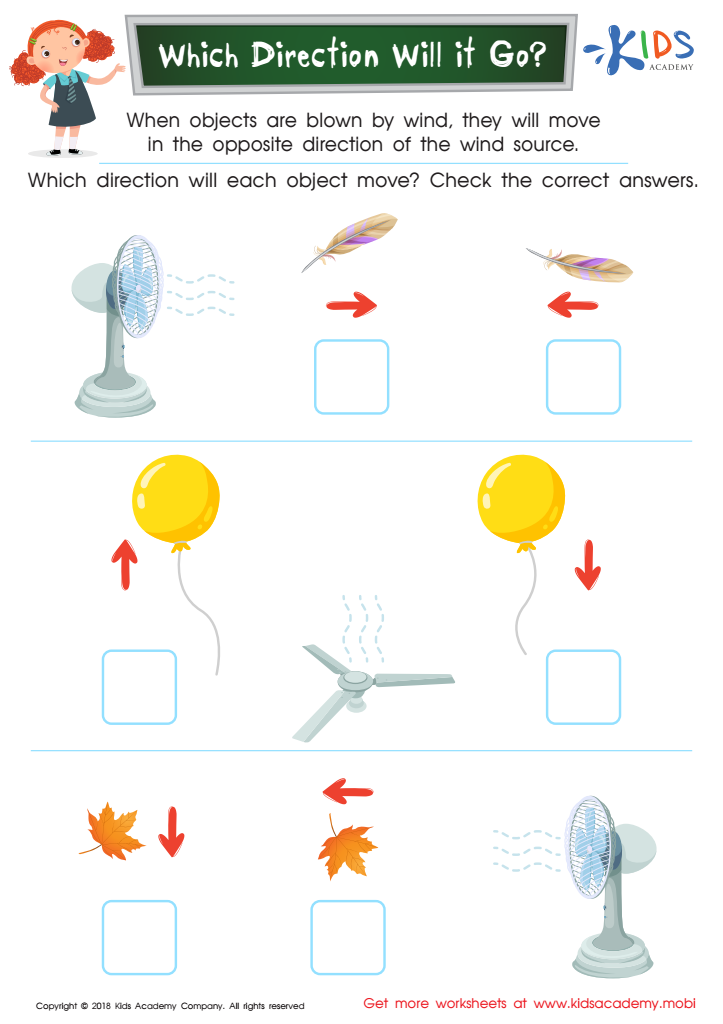
Which Direction Will it Go? Worksheet
 Assign to My Students
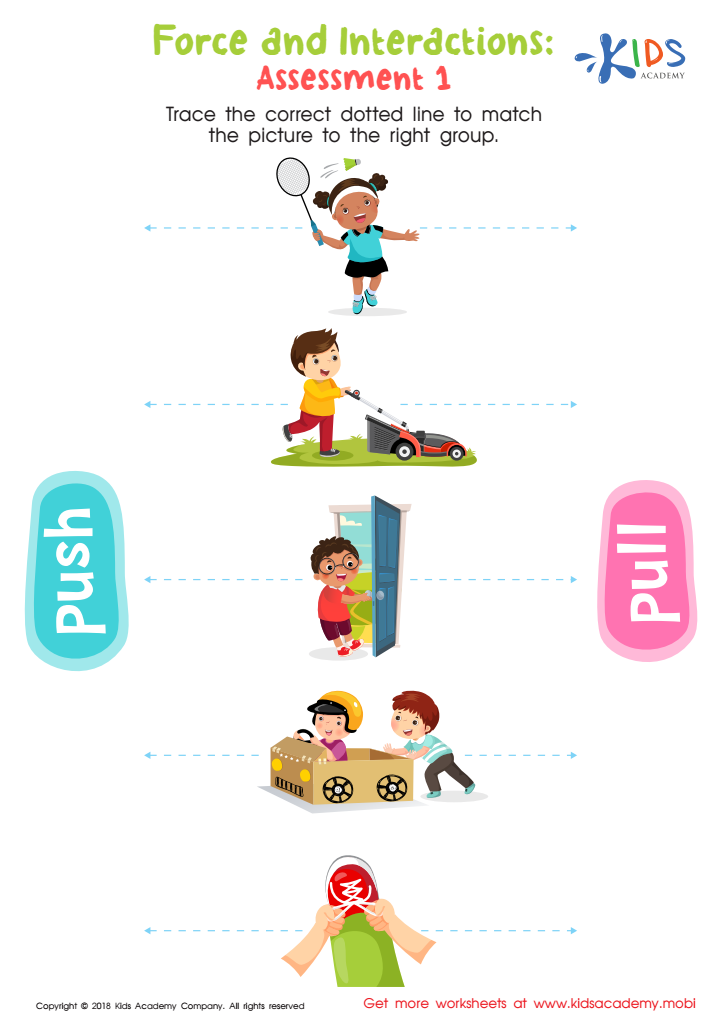
Force and Interactions: Assessment 2 Worksheet
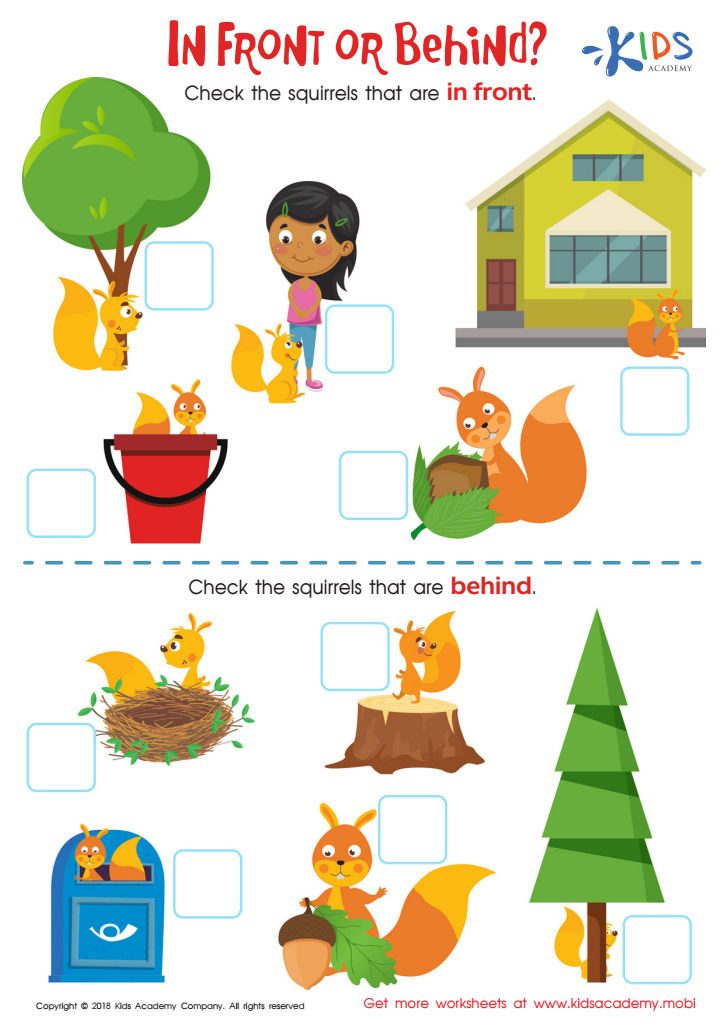
In Front or Behind: Part 2 Worksheet







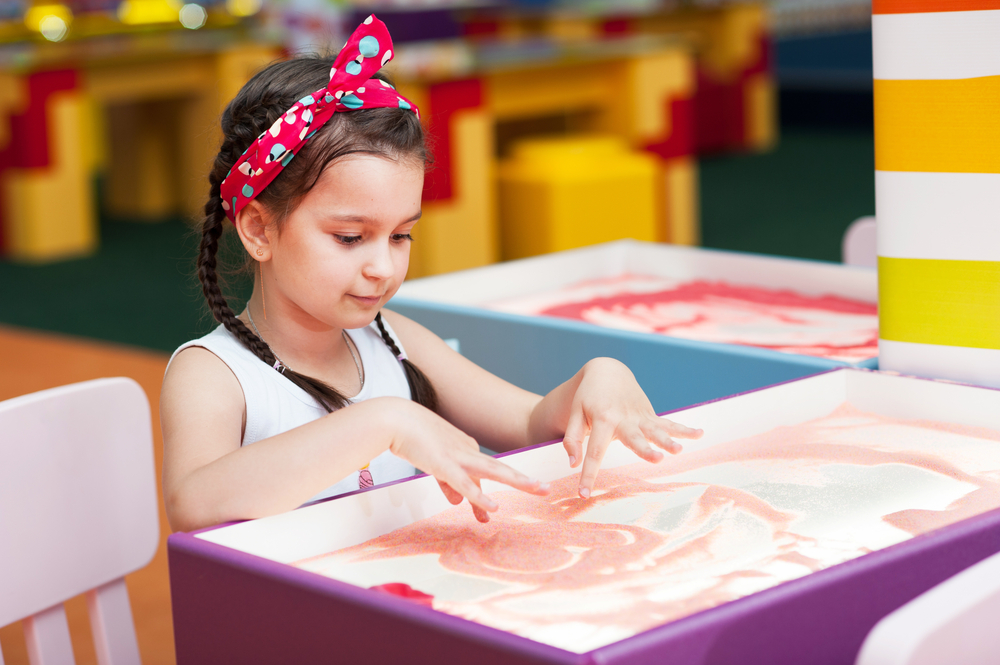
Spatial awareness is a critical component of early childhood development, significantly impacting a child's understanding of physical science concepts. For 6-year-olds, developing spatial awareness enhances their ability to perceive and navigate the world around them. It helps them understand how objects relate to each other in space — fundamental in subjects such as geometry, physics, and even art.
Parents and teachers should care about fostering spatial awareness because it lays the groundwork for problem-solving and critical thinking skills. Engaging in activities that promote spatial reasoning, such as puzzles, building blocks, or interactive games, encourages children to visualize and manipulate objects. These skills are essential not only in academic settings but also in everyday life, such as understanding directions, predicting outcomes, and making informed decisions.
Moreover, boosting spatial awareness can enhance children's confidence as they learn to interact with their environment. As they progress through their education, a strong foundation in spatial reasoning will benefit them in more complex physical science concepts, making learning more accessible and enjoyable. By prioritizing spatial awareness, parents and teachers contribute to a child's overall cognitive development, paving the way for future learning and success in various fields.







