Understanding communities Community Worksheets for 6-Year-Olds
3 filtered results
-
From - To
Discover the "Understanding Communities Community Worksheets for 6-Year-Olds," designed to spark curiosity and enhance social awareness in young learners. These worksheets introduce children to the concept of communities, exploring the roles of various community helpers, local establishments, and the importance of cooperation and interaction. Engaging activities encourage them to identify familiar places and people within their neighborhood, fostering a sense of belonging and responsibility. Aligned with early grade standards, these resources provide an excellent foundation for social studies, helping kids develop critical thinking skills while having fun. Enhance your teaching toolkit and guide young minds to appreciate their communities today!
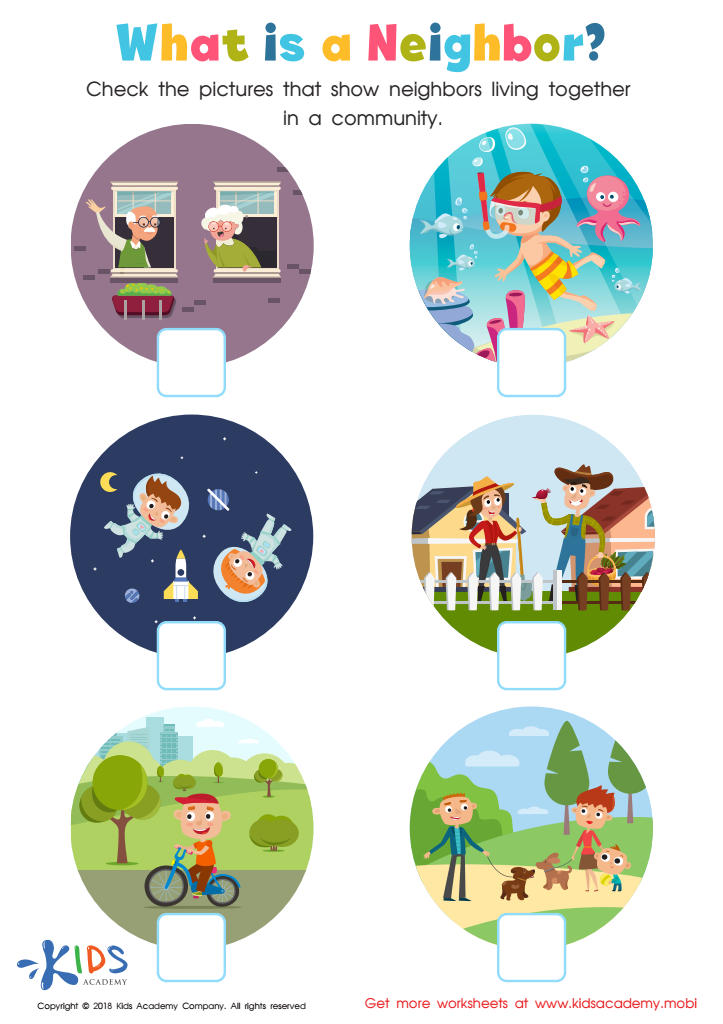
What is a neighbor Worksheet
 Assign to My Students
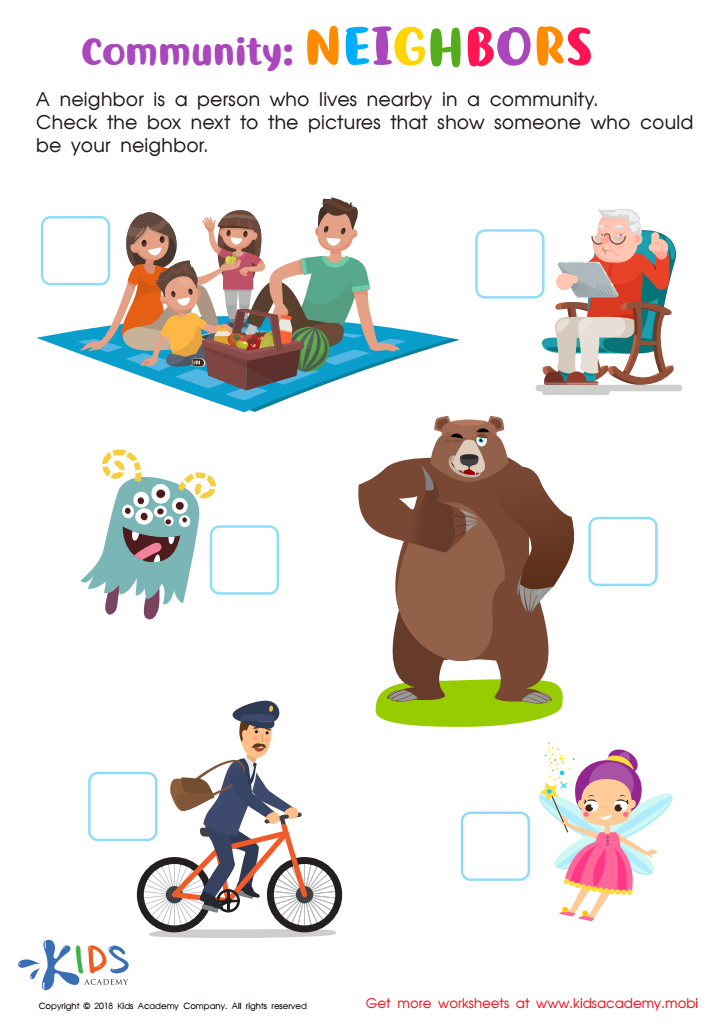
Community: Neighbors Worksheet
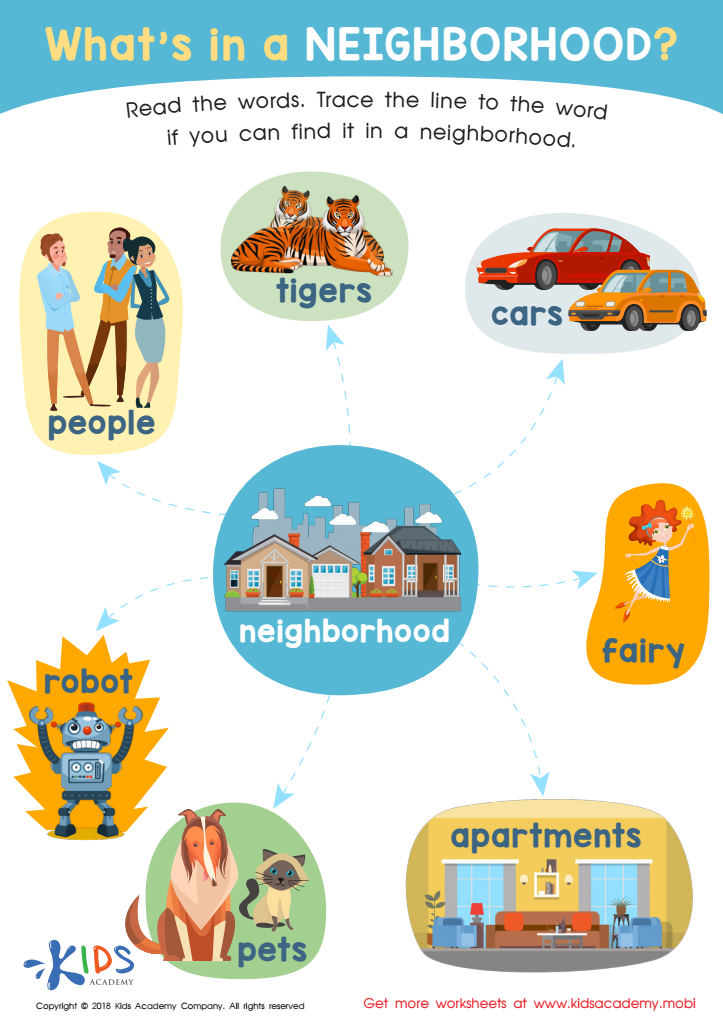
What's in a Neighborhood? Worksheet







Understanding communities is crucial for 6-year-olds as it helps them develop essential social skills and a sense of belonging. Parents and teachers play a key role in nurturing this understanding, as it lays the foundation for children’s emotional and cognitive growth.
When children learn about their own community, they become more aware of diversity, including different cultures, traditions, and lifestyles. This exposure fosters empathy and respect, teaching them to appreciate differences and build positive relationships with peers. Learning about community roles—such as firefighters, teachers, or doctors—helps children grasp the importance of teamwork and collaboration, reinforcing the idea that everyone has a special part to play.
Moreover, understanding their community allows children to become active participants in it. Whether through simple activities like neighborhood clean-ups or visiting local farms, children gain a sense of responsibility and pride in their surroundings. This not only enhances their self-esteem but also instills values like civic responsibility and kindness.
By engaging children in discussions about their community, parents and teachers empower them to express their viewpoints and think critically about social issues, ultimately shaping well-rounded individuals who are prepared to contribute meaningfully to society.








