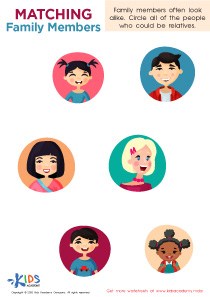
Understanding citizenship Good Citizenship Worksheets for 6-Year-Olds
5 filtered results
-
From - To
Explore our "Understanding Citizenship Good Citizenship Worksheets for 6-Year-Olds" designed to nurture responsible behavior and community awareness in young learners. These engaging worksheets introduce essential concepts of citizenship, empowering children to understand their role within their community. Through fun activities, kids will learn about kindness, respect, and sharing, fostering essential life skills. Ideal for educators and parents, our printable resources encourage meaningful conversations about good citizenship. By reinforcing these values early on, we help children appreciate diversity and the importance of contributing positively to their world. Download our worksheets today and inspire the next generation of thoughtful citizens!
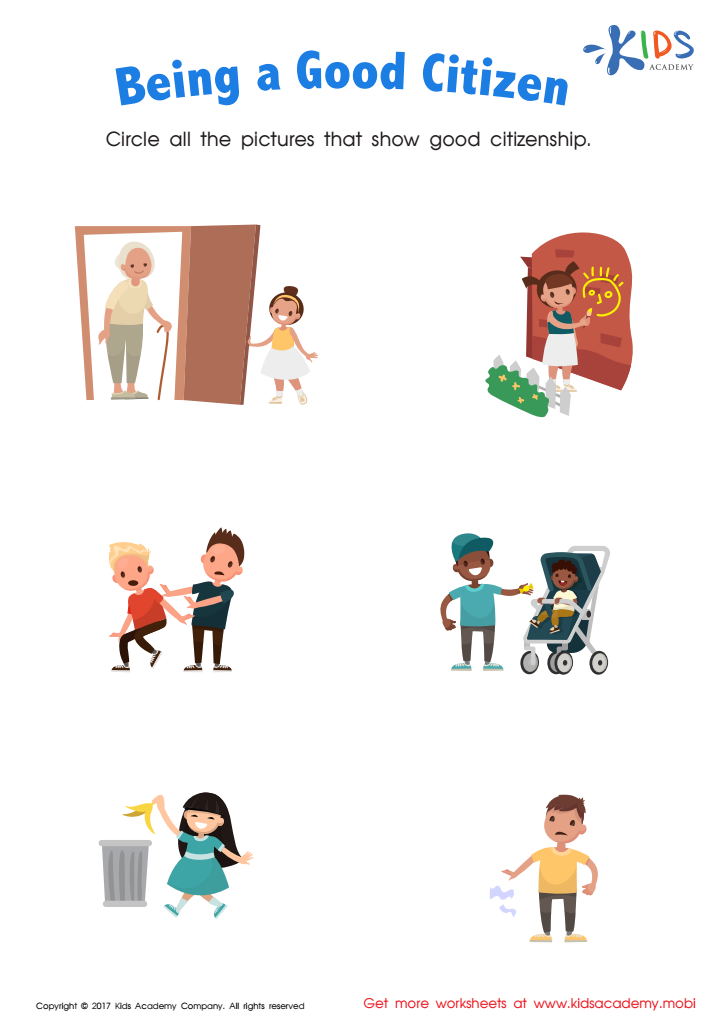
Being a Good Citizen Printable
 Assign to My Students
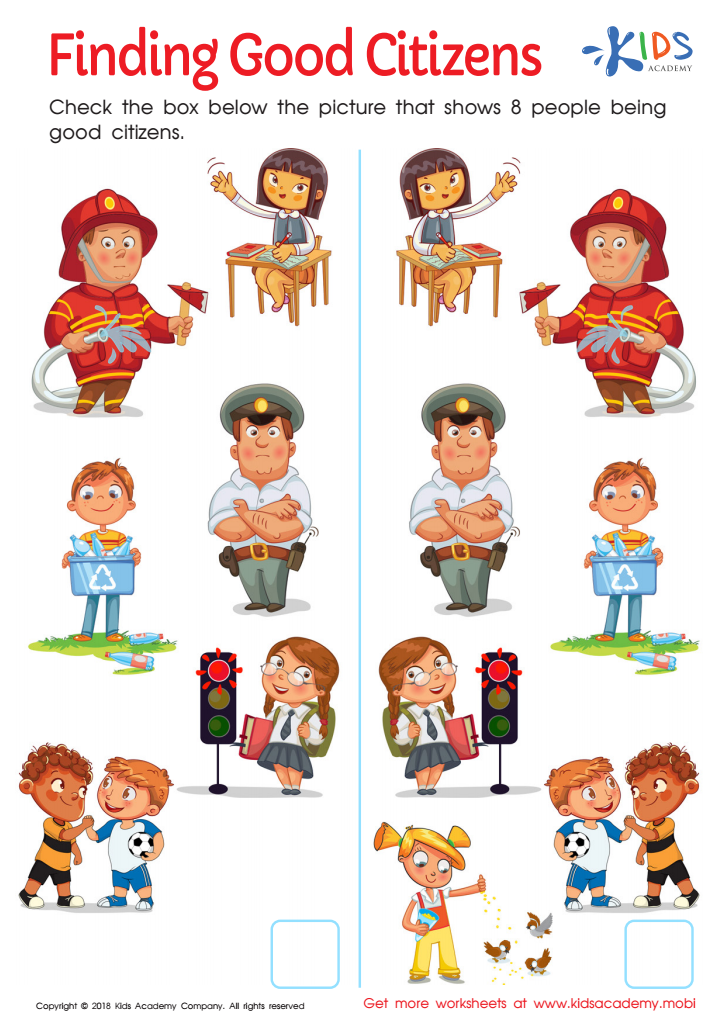
Finding Good Citizens Worksheet
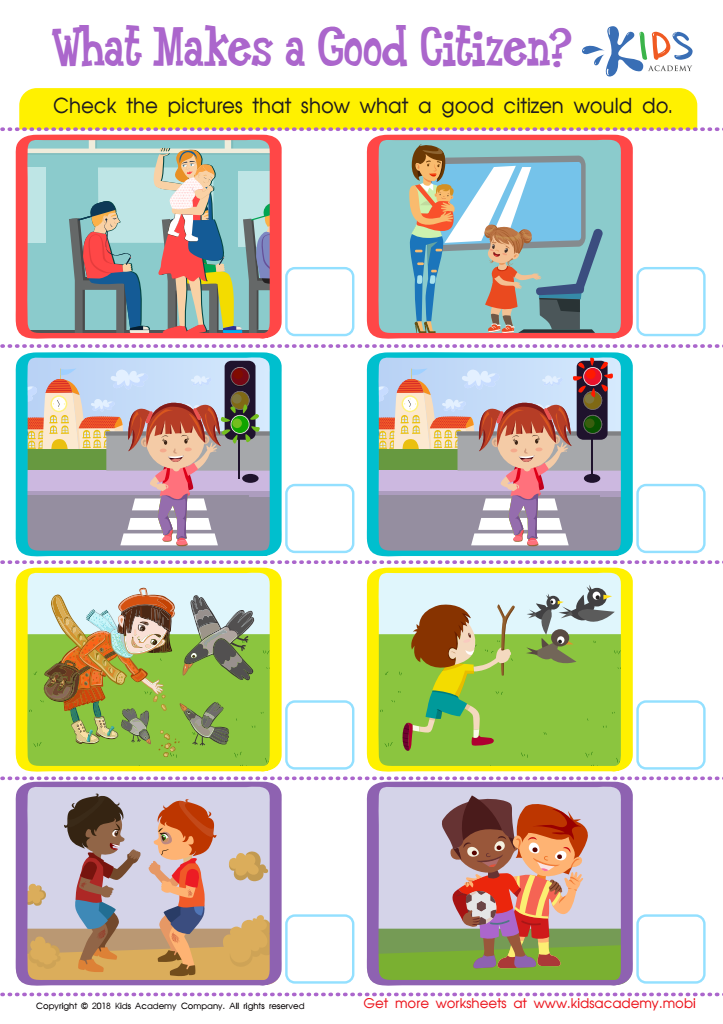
What Makes a Good Citizen? Worksheet
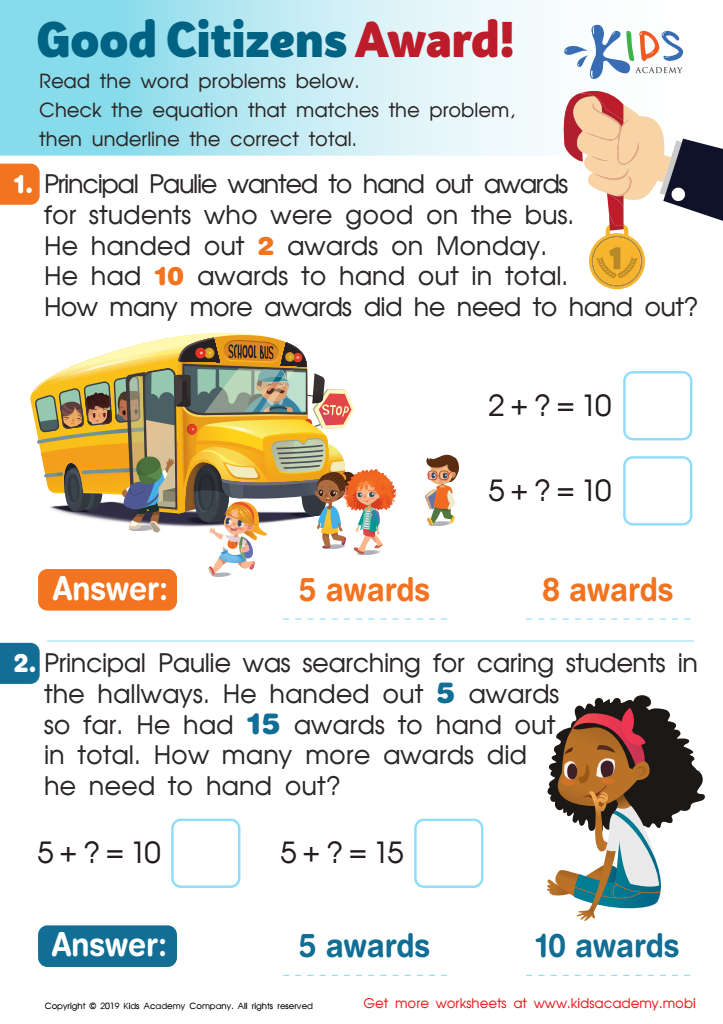
Good Citizens Award! Worksheet
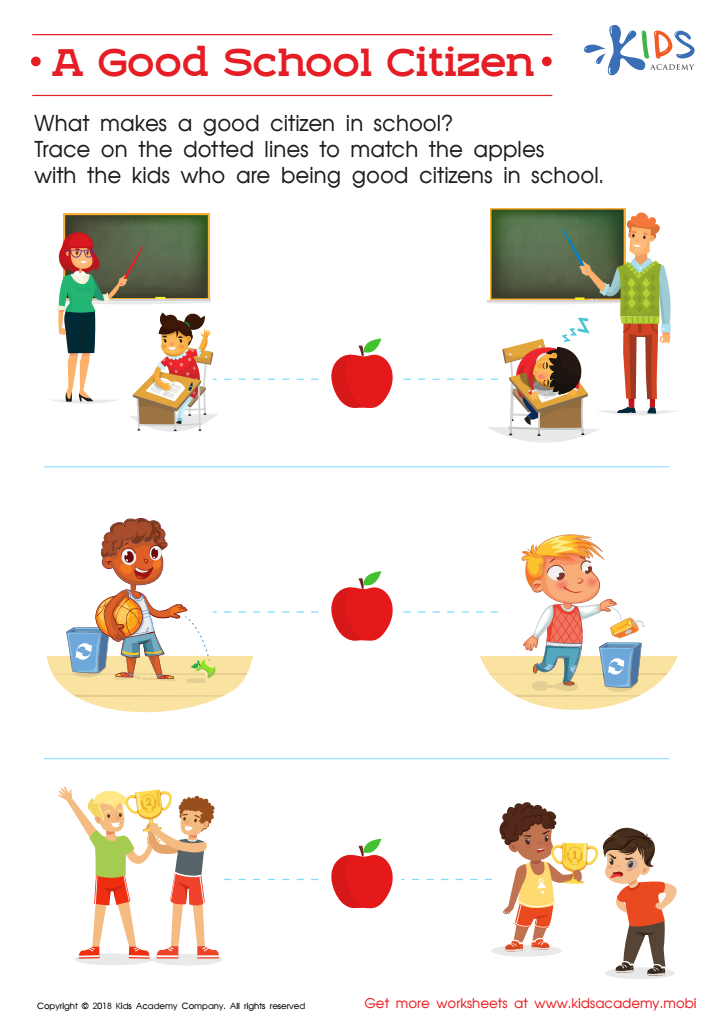
A Good School Citizen Worksheet


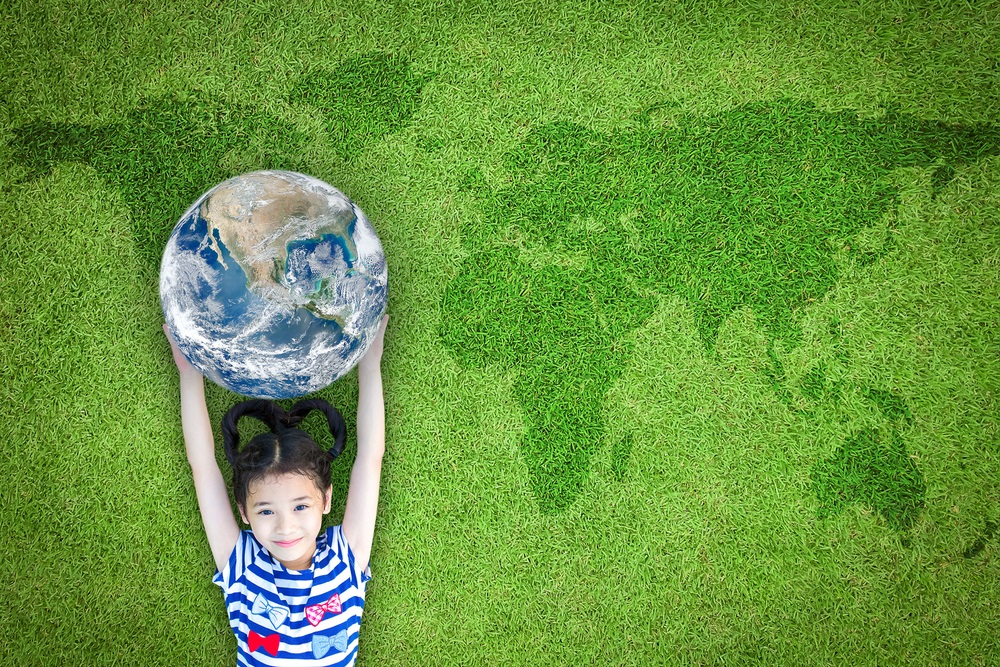

Understanding citizenship and good citizenship is crucial for 6-year-olds as it lays the foundation for responsible and engaged future adults. At this age, children are beginning to navigate the world beyond their immediate family, making it essential for parents and teachers to instill the values of respect, empathy, and community involvement. Good citizenship teaches kids to recognize their role in society and the importance of treating others with kindness.
By fostering an understanding of citizenship, adults can encourage children to appreciate diversity and cultivate a sense of belonging. This awareness helps develop critical social skills, such as cooperation, conflict resolution, and effective communication. Additionally, lessons on good citizenship often incorporate practical activities, such as volunteering or participating in community events, which enrich children's lives and teach them the importance of giving back.
Furthermore, in today’s interconnected world, teaching young children about citizenship can help them become more informed about global issues and encourage them to think critically about their actions and their impact on others. Ultimately, nurturing young citizens today investment in a more compassionate and responsible society tomorrow, making it vital for parents and teachers to engage in these discussions early on.