Word Recognition Consonants Worksheets for Ages 7-8
5 filtered results
-
From - To
Boost your child's reading skills with our engaging Word Recognition Consonants Worksheets designed specifically for ages 7-8! These worksheets focus on enhancing your child’s ability to identify consonants within words, supporting their journey to becoming confident little readers. Our fun and interactive activities combine colorful visuals with practical exercises, making learning enjoyable and effective. By practicing word recognition with consonants, children will improve their decoding skills, vocabulary, and comprehension. Explore our collection to help your young learners build a strong foundation in literacy while making learning an exciting adventure! Perfect for use at home or in the classroom. Start exploring today!
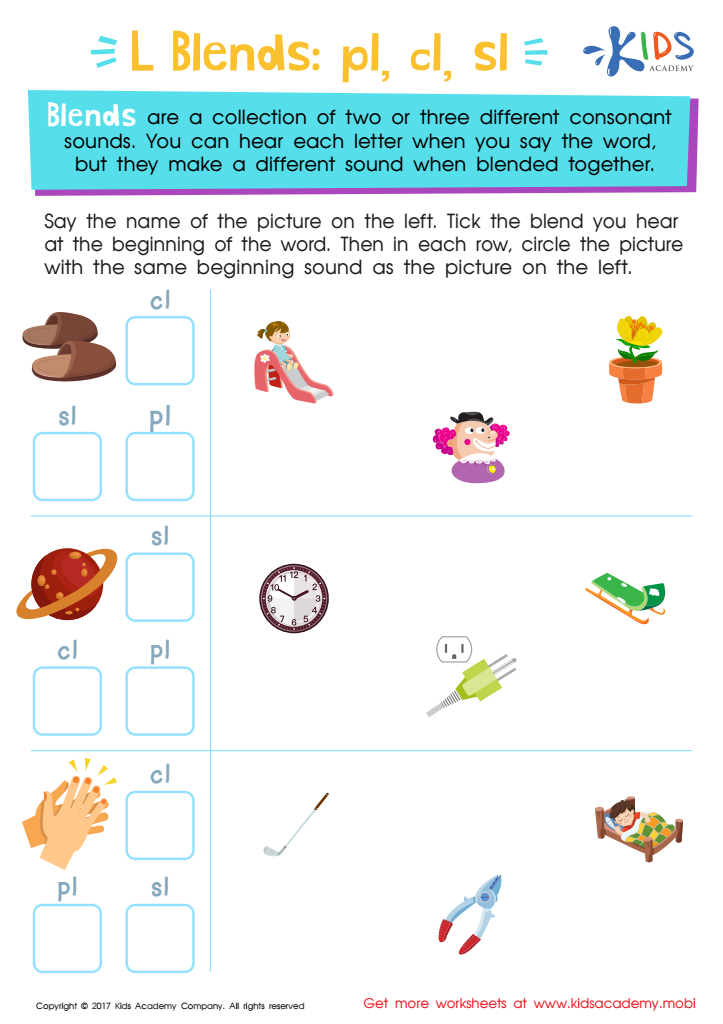
L Blends: "Pl", "Cl" and "Sl" Printable
 Assign to My Students
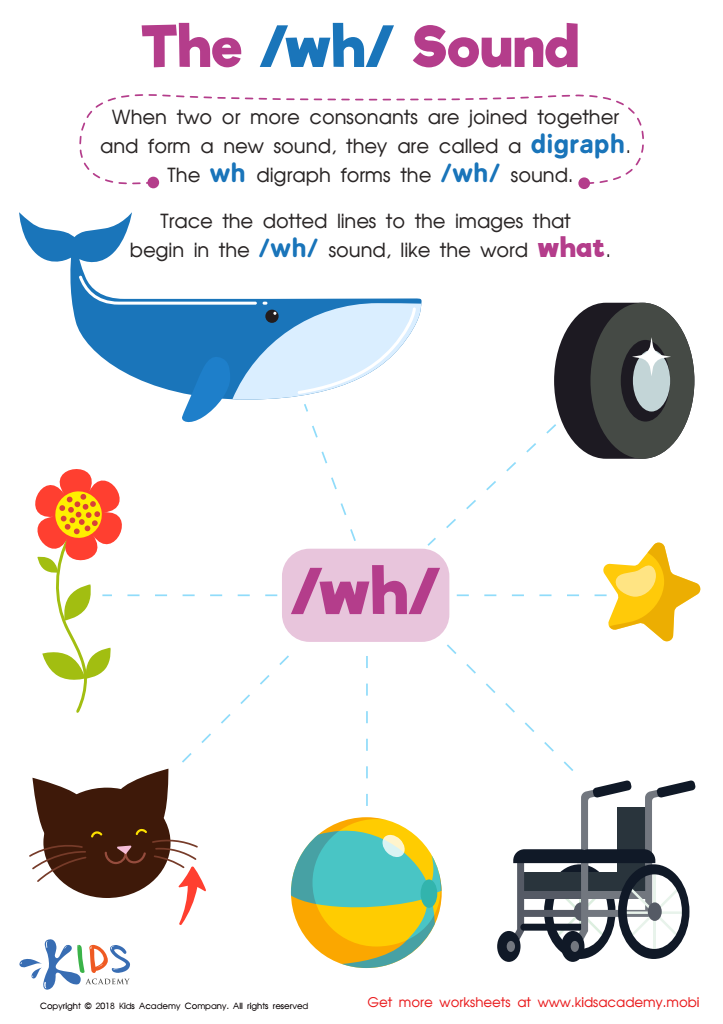
The /wh/ Sound Worksheet
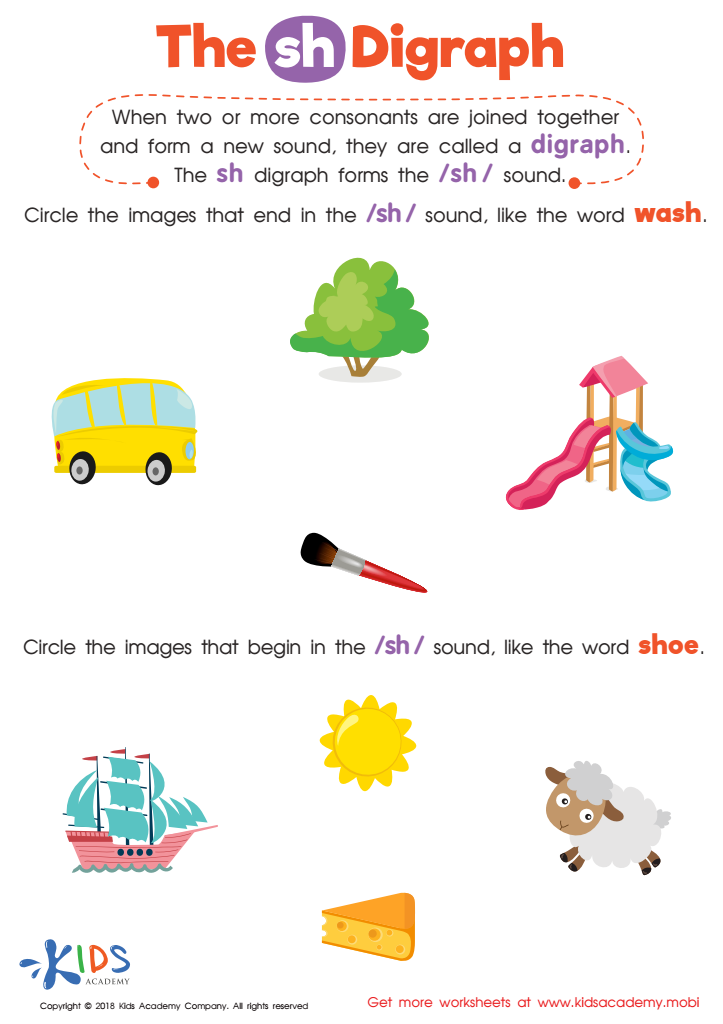
The SH Digraph Worksheet
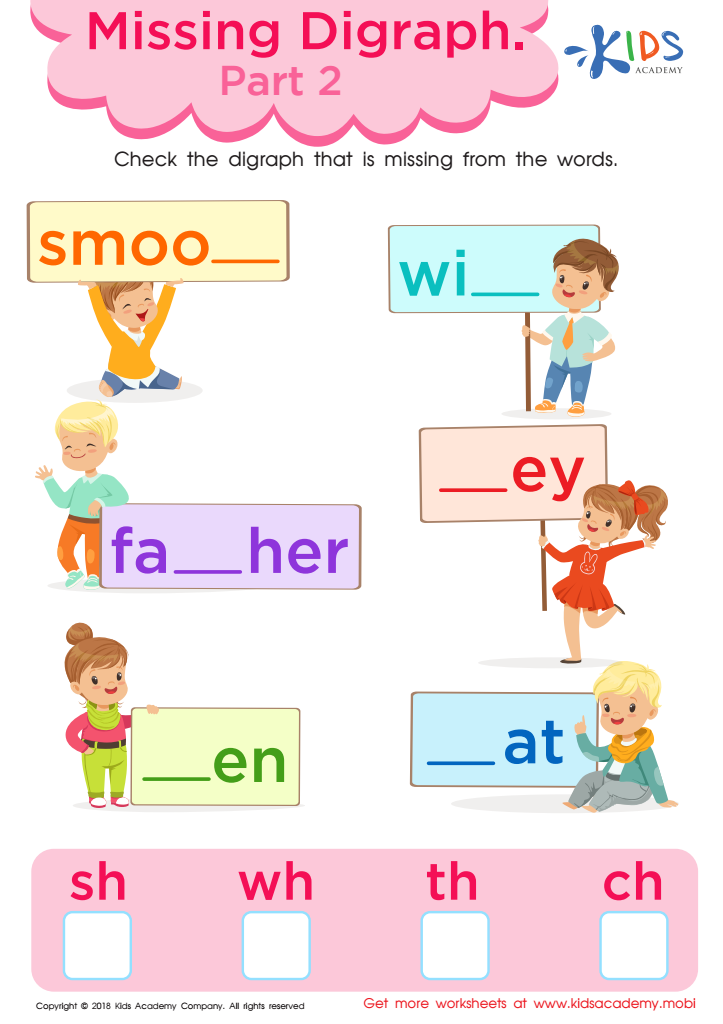
Missing Digraph: Part 2 Worksheet
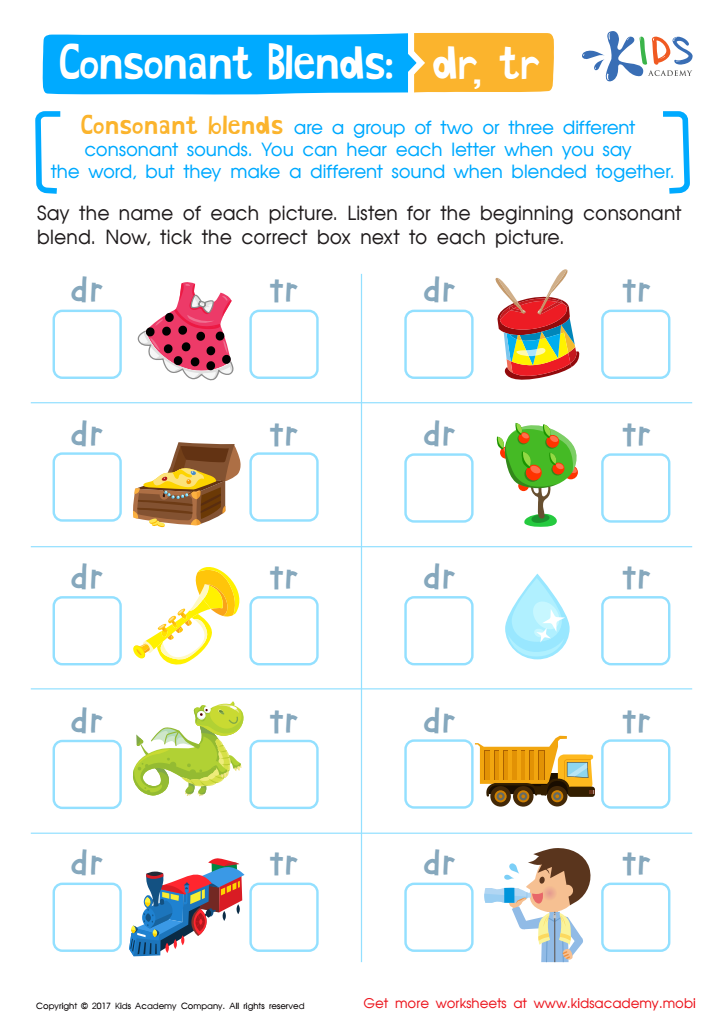
Consonant Blends: "Dr" and "Tr" Printable



Word recognition, particularly focusing on consonants, is a crucial aspect of literacy development for children aged 7-8. At this age, students are transitioning from learning to read to reading to learn. Strong word recognition skills enable children to read fluently, comprehend texts more effectively, and enjoy stories, which is vital for their overall academic success.
Consonants play a foundational role in decoding words. Children must be able to recognize consonants to sound out unfamiliar words accurately. For example, understanding the difference between "bat" and "pat" can drastically change meaning, underscoring the importance of accurately identifying consonants. Moreover, awareness of consonants can aid in spelling, enabling children to write more confidently and communicate their ideas clearly.
Parents and teachers should prioritize consonant recognition as part of reading activities, encouraging phonetic games, reading aloud, and engaging with diverse texts. By fostering an environment that emphasizes consonants, adults can cultivate a love for reading and improve children’s vocabulary and comprehension skills. Doing so not only enhances current educational outcomes but also establishes a strong foundation for future literacy endeavors, ensuring that children are well-prepared to tackle more complex reading challenges as they progress in their education.







