Filters

7 filtered results

Clear all filters
Favorites
With answer key
Interactive

7 filtered results

Difficulty Level

Grade


Subject

    Discover our engaging Letter Sounds Worksheets designed specifically for children aged 7-8! These worksheets offer a fun and interactive way for young learners to master phonics and enhance their reading skills. With a variety of exercises, including identifying sounds, matching letters, and completing words, your child will gain confidence in their ability to recognize and use letter sounds effectively. Perfect for use at school or at home, these printable resources cater to different learning styles. Encourage your child's literacy journey today with our carefully crafted worksheets that make learning letter sounds enjoyable and effective! Start exploring now!

    Check out this FREE Trial Lesson on Letter Sounds for age 7-8!

    Segment Words with 2 or 3 Sounds

    Favorites
    With answer key
    Interactive
    • 7-8
    • Letter Sounds
    What Do You Hear? Worksheet
    What Do You Hear? Worksheet

    What Do You Hear? Worksheet

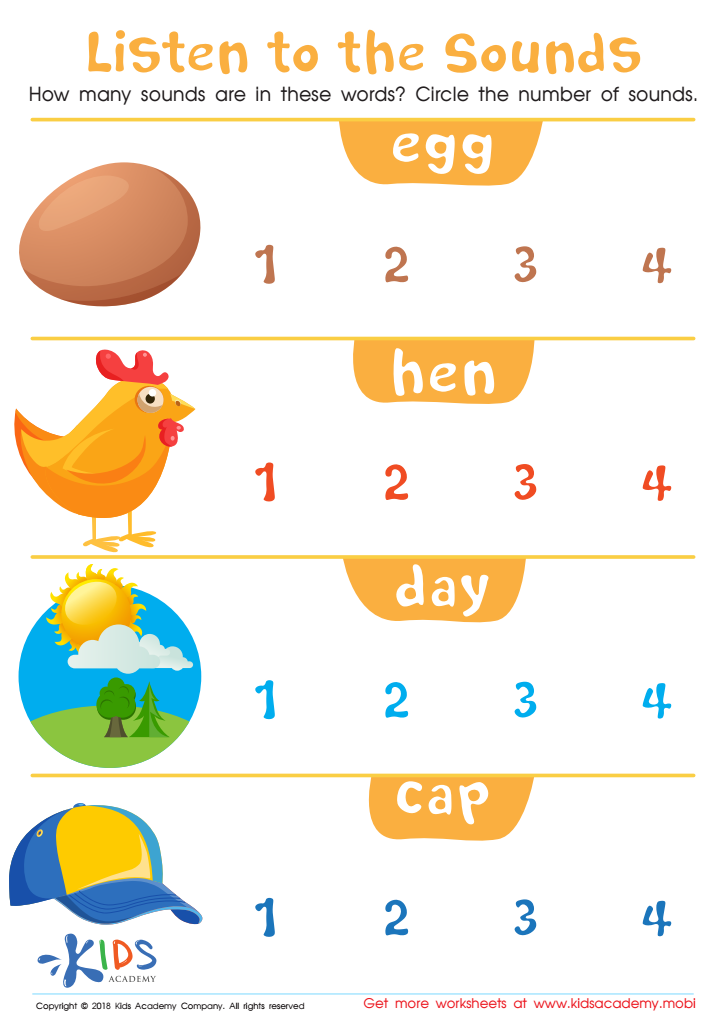
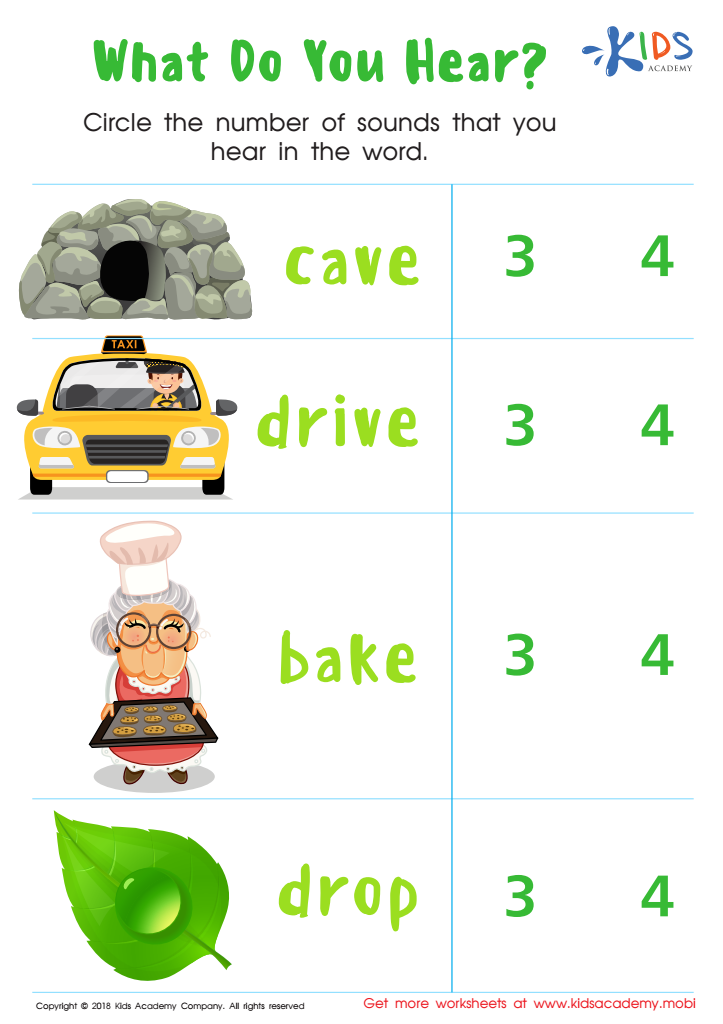
    New readers can develop phonological awareness with this fun worksheet. They'll isolate sounds in words and count them, then circle the number of sounds heard. It'll help build their auditory discrimination and decoding skills, leading to more fluent reading. Without even knowing it, their reading skills are improving!
    What Do You Hear? Worksheet
    Worksheet
    Listen to the Sounds Worksheet
    Listen to the Sounds Worksheet

    Listen to the Sounds Worksheet

    This worksheet builds emerging readers' skills in using sounds for reading and spelling. It helps strengthen auditory processing by having them count the sounds in each word, then trace the corresponding number. Fun and cheerful!
    Listen to the Sounds Worksheet
    Worksheet
    3 Sounds Worksheet
    3 Sounds Worksheet

    3 Sounds Worksheet

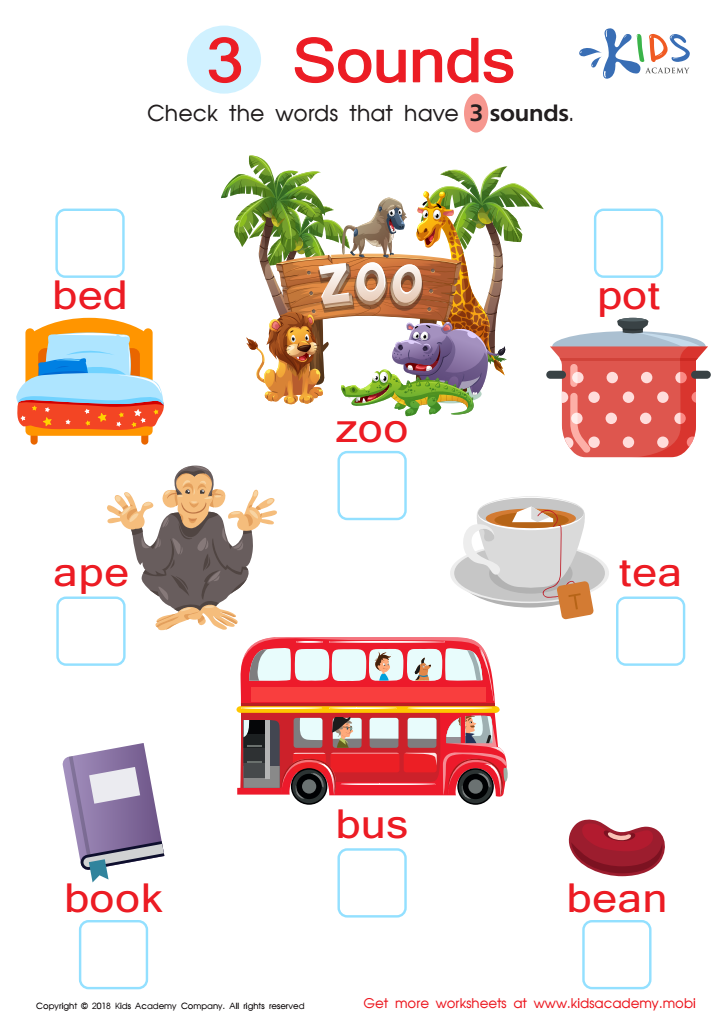
    Kids will love learning with this free, colorful worksheet. It's full of familiar words they can name and sound out with three distinct sounds. This helps build decoding skills, plus they get to check off words they read. It's a fun way to teach children to identify and use sounds.
    3 Sounds Worksheet
    Worksheet
    Let's Count the Sounds Worksheet
    Let's Count the Sounds Worksheet

    Let's Count the Sounds Worksheet

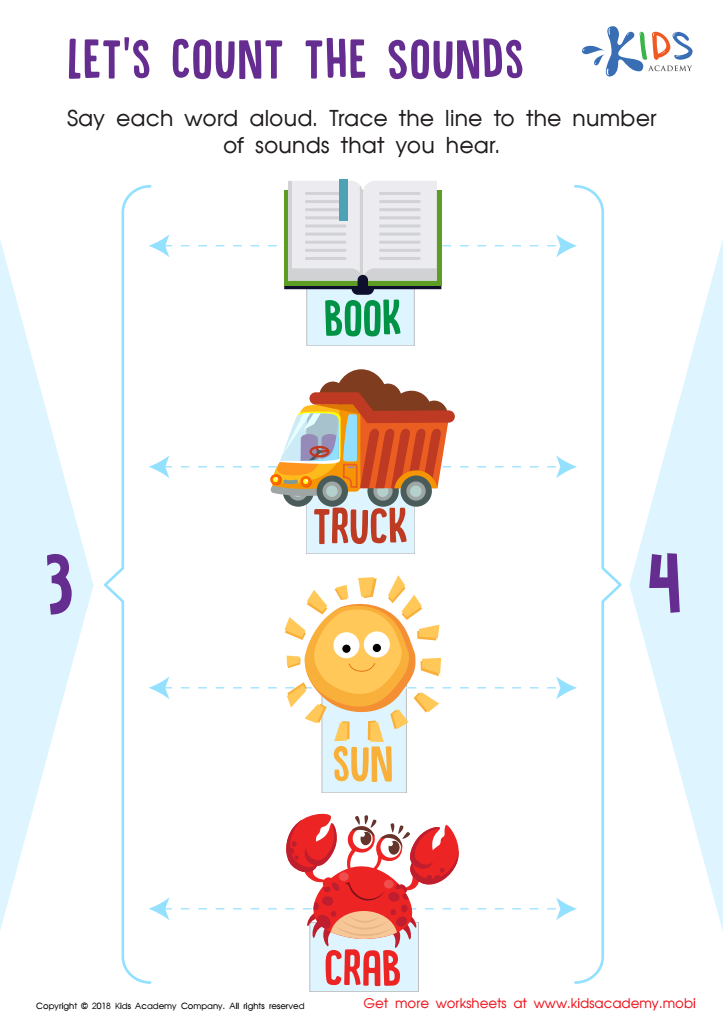
    This bright and cheery traceable worksheet encourages children to practice auditory discrimination and phonological awareness. Using picture clues, they read each word and trace the line that represents the number of sounds heard. This builds decoding skills and helps them become successful readers.
    Let's Count the Sounds Worksheet
    Worksheet
    Finding the Sounds Worksheet
    Finding the Sounds Worksheet

    Finding the Sounds Worksheet

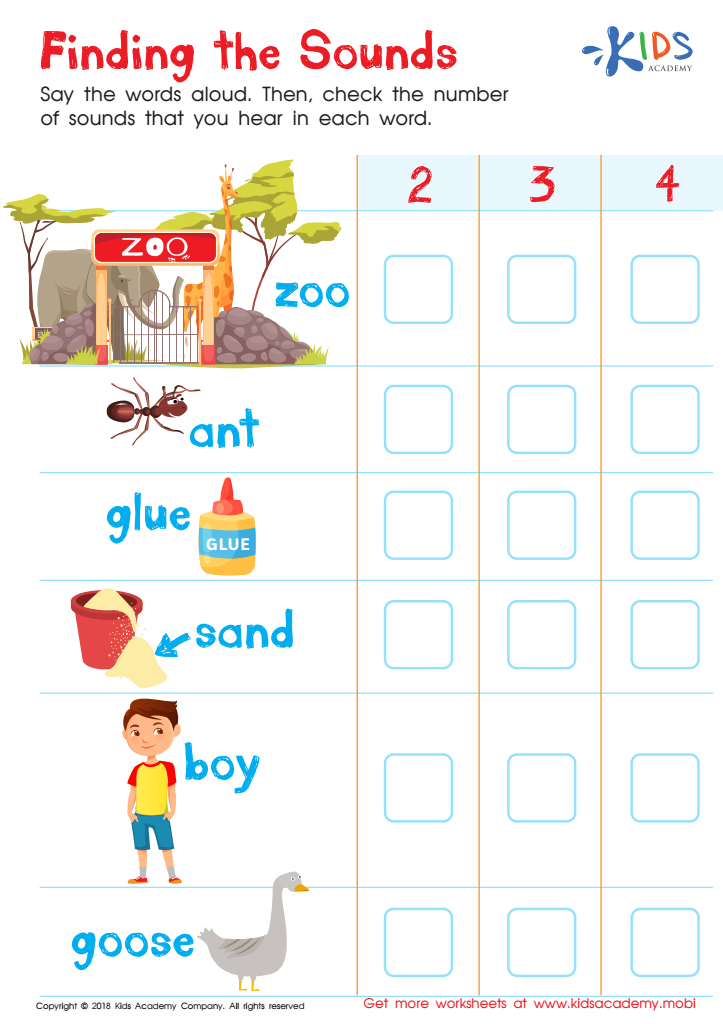
    This free colorful worksheet assists children in learning words and breaking them down into sounds. It boosts auditory discrimination, phonological awareness and fine motor skills. Picture clues help them read confidently, and they can check the appropriate boxes to practice their reading skills.
    Finding the Sounds Worksheet
    Worksheet
    Let's Check for «i» Sounds Worksheet
    Let's Check for «i» Sounds Worksheet

    Let's Check for «i» Sounds Worksheet

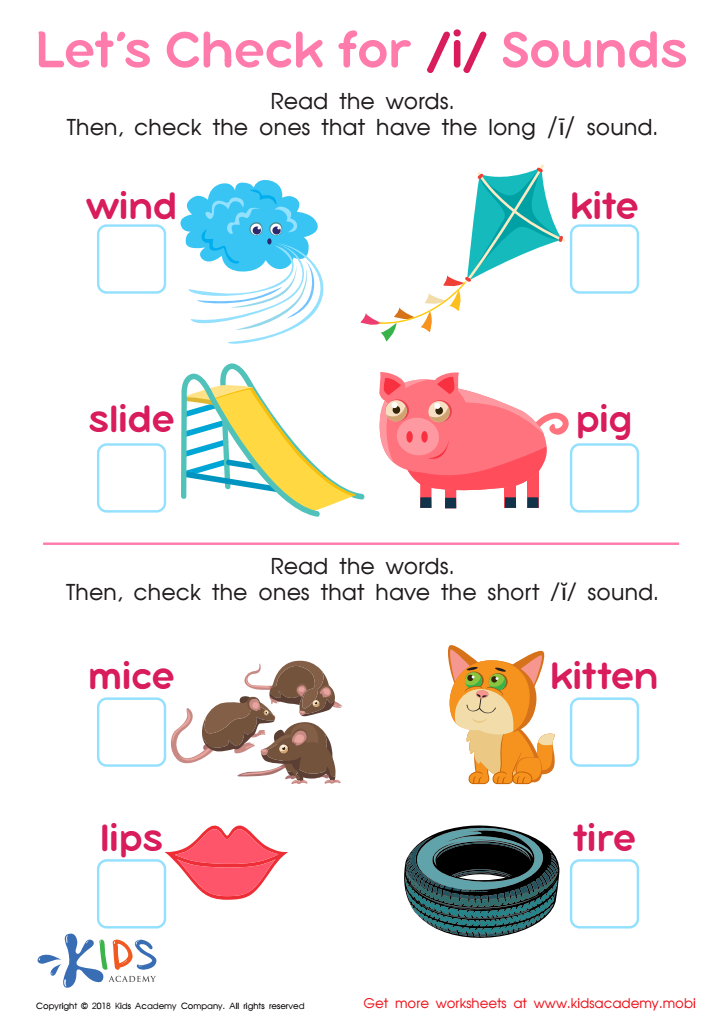
    This fun worksheet with pictures boosts phonics skills - differentiating between long «ī» and short «i» sounds in 1- and 2-syllable words. Kids use picture clues to read words, then check off the correct ones. It's a great way for new readers to practice early reading skills and find success on their own.
    Let's Check for «i» Sounds Worksheet
    Worksheet
    Hungry Dragon Worksheet
    Hungry Dragon Worksheet

    Hungry Dragon Worksheet

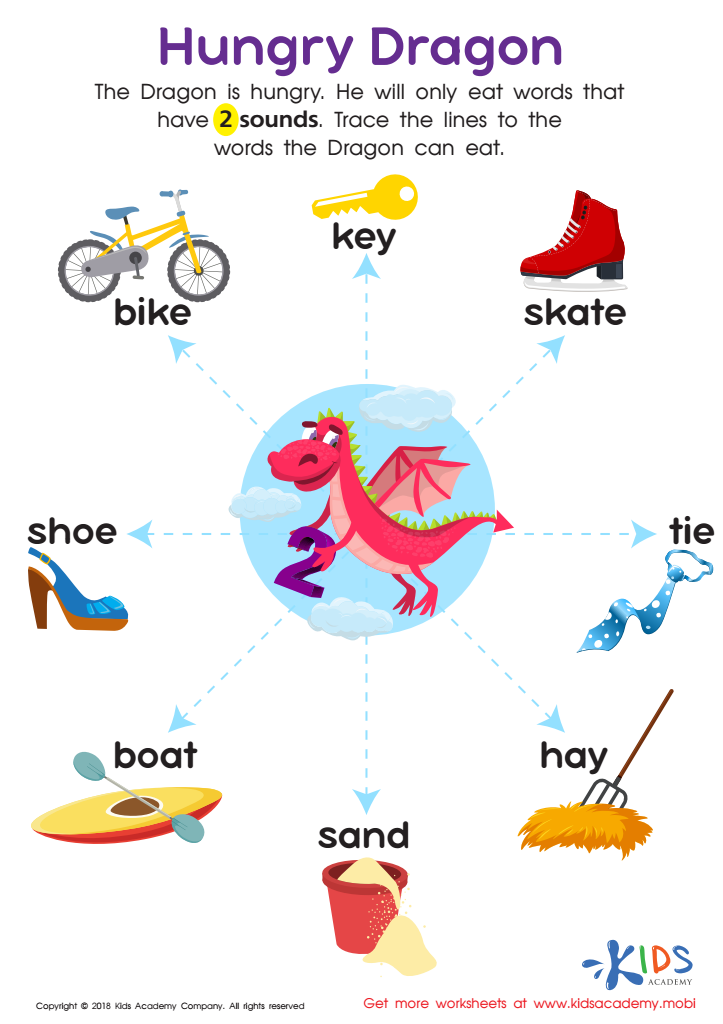
    Feed the dragon words and watch your child strengthen their phonological awareness and auditory discrimination skills! Download this free PDF for tracing exercises that build their fine motor skills too. Kids will love spending time with the cute dragon while they unwittingly learn reading skills!
    Hungry Dragon Worksheet
    Worksheet


    Parents and teachers should care about letter sounds for children aged 7-8 because it forms the cornerstone of literacy development. At this critical age, children are transitioning from learning to read to reading to learn. Mastery of letter sounds enhances their ability to decode words, which is essential for word recognition and comprehension. This skill enables children to tackle increasingly complex texts in their academic journey.

    Additionally, understanding letter sounds supports spelling and writing skills. Children who grasp the relationship between sounds and letters are more likely to spell words correctly and express their thoughts more coherently in writing. This foundational knowledge boosts their confidence as readers and writers, encouraging a lifelong love of literature.

    Moreover, phonemic awareness—being aware of the sounds in language—plays a crucial role in effective communication. Children who are proficient in letter sounds are better equipped to participate in discussions, share ideas, and articulate their thoughts clearly.

    By fostering a strong foundation in letter sounds during this pivotal age, parents and teachers contribute to children's overall academic success, promote critical thinking skills, and prepare them for a future in which literacy is vital for navigating the world. Thus, prioritizing letter sounds is beneficial for both cognitive and emotional growth.