Phonics Skills Vowel Diphthongs Worksheets for Ages 7-8
10 filtered results
-
From - To
Help your child master vowel diphthongs with our engaging Phonics Skills Vowel Diphthongs Worksheets, designed specifically for ages 7-8. These expertly crafted worksheets from Kids Academy provide essential practice in recognizing and blending two-vowel sounds, enhancing reading fluency and spelling skills. Each worksheet features fun activities, including matching, fill-in-the-blank, and sorting exercises, to reinforce learning in an interactive way. Perfect for classroom use or at-home study, these worksheets support key phonics instruction, preparing your child for reading success. Unlock their potential and make learning phonics enjoyable with our comprehensive worksheets.
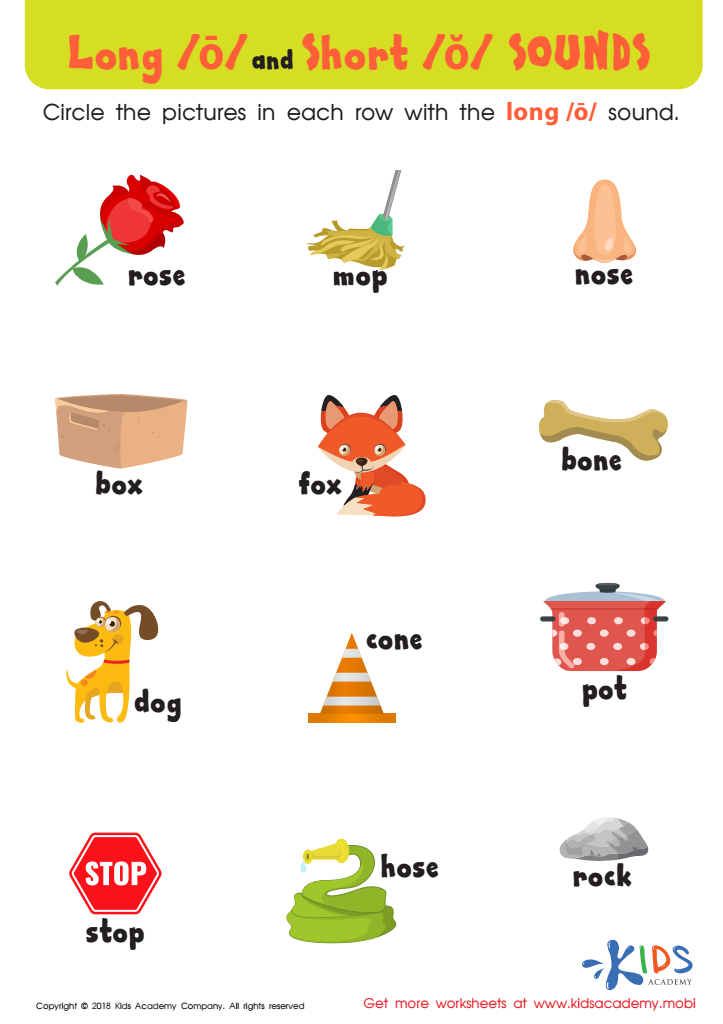
Reading: Long O and Short O Sounds Worksheet
 Assign to My Students
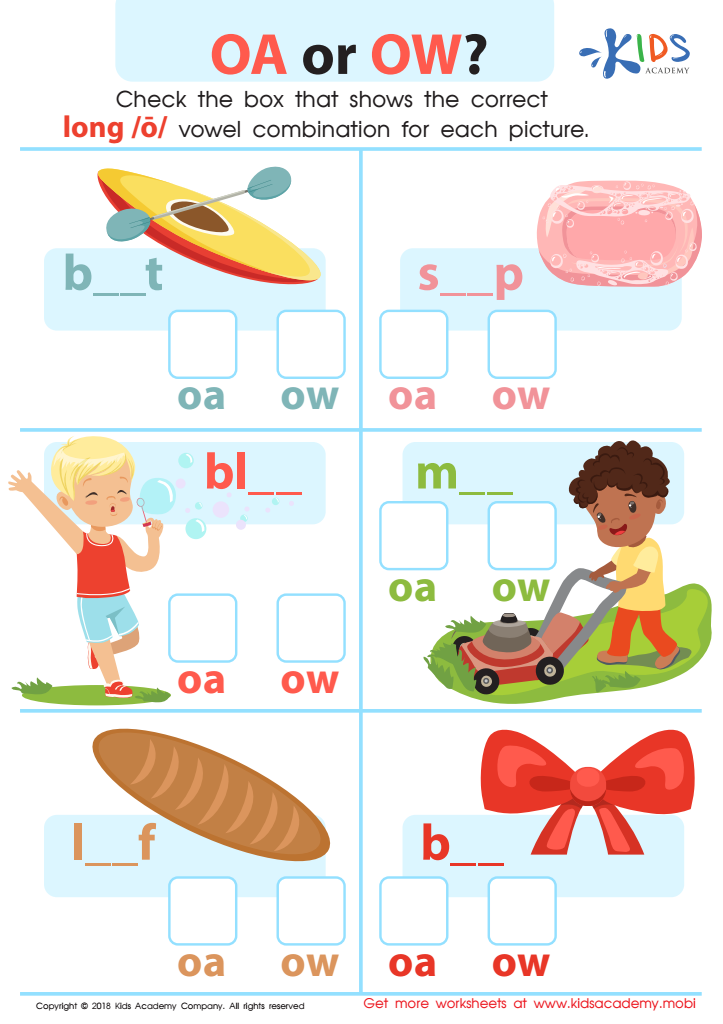
Reading: OA or OW Worksheet
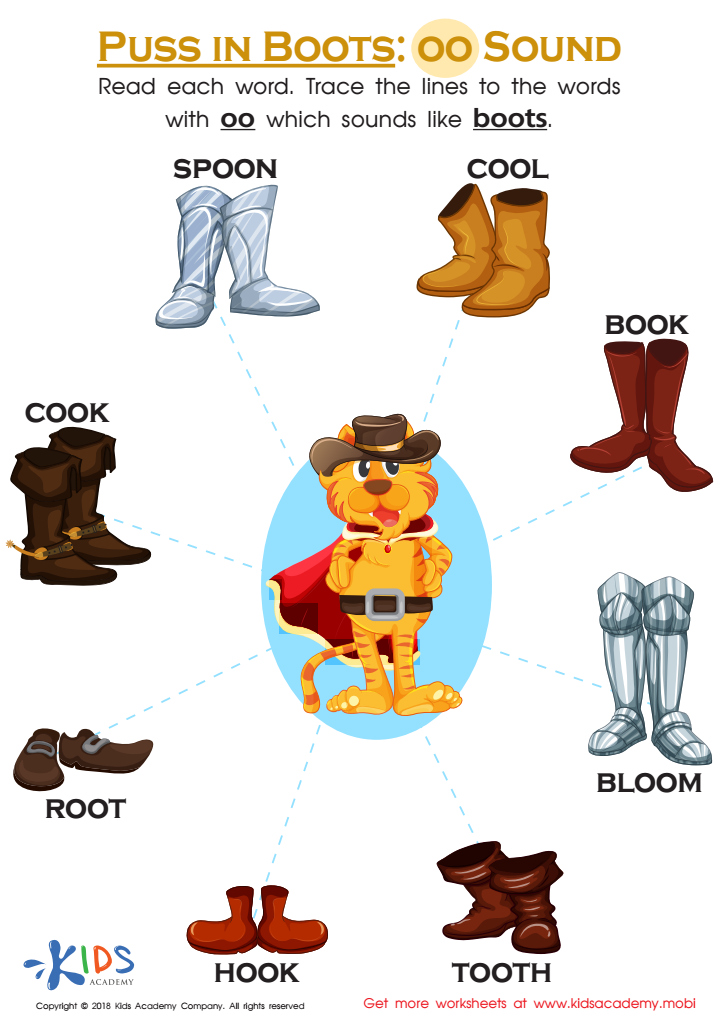
Puss in Boots: OO Sound Worksheet
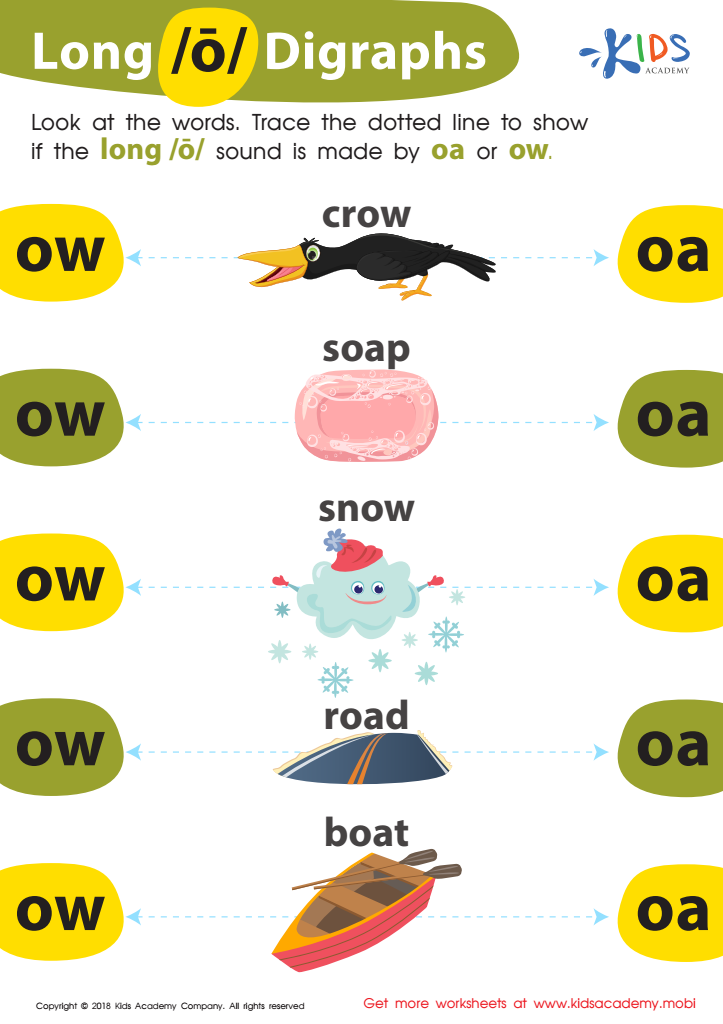
Reading: Long O Digraphs Worksheet
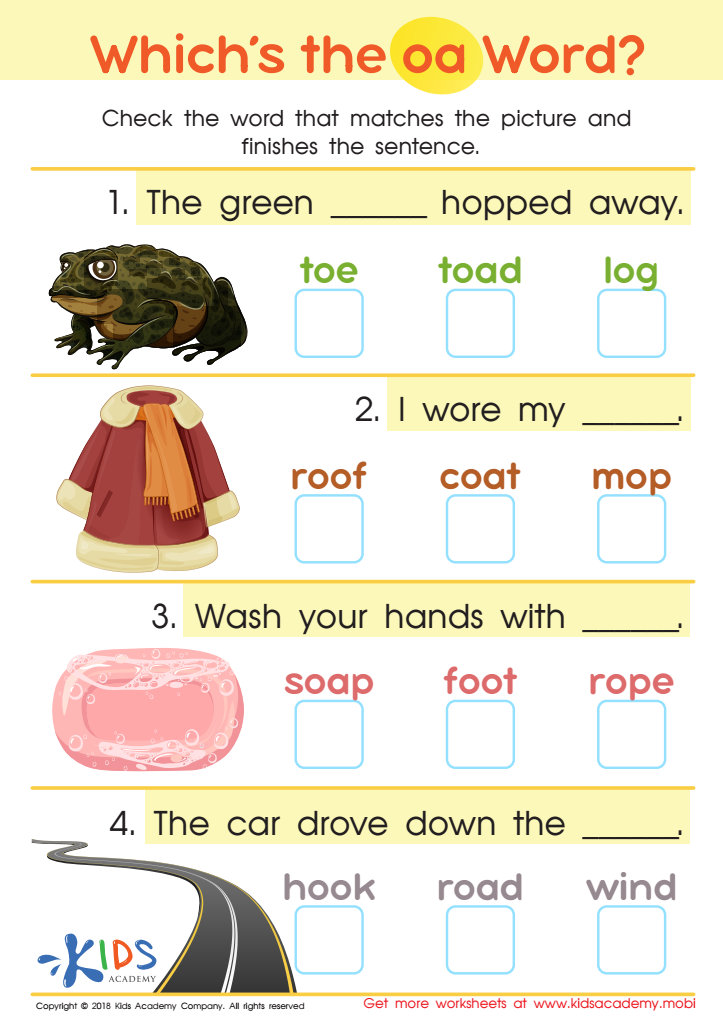
Which's the OA Word? Worksheet
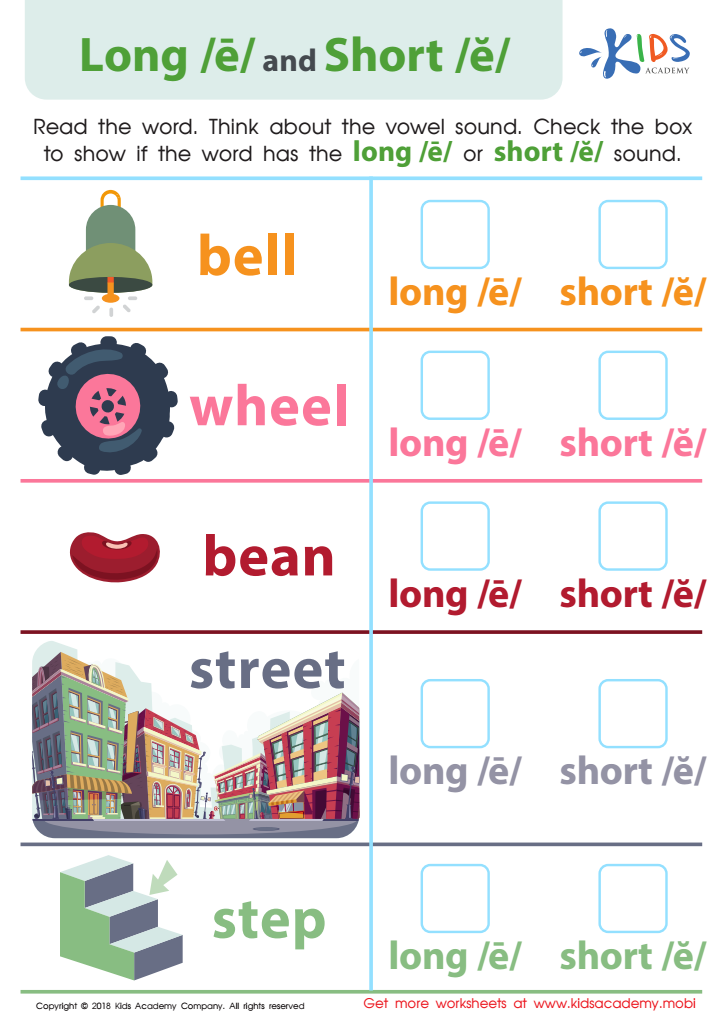
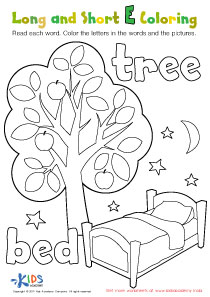
Reading: Long E and Short E Worksheet
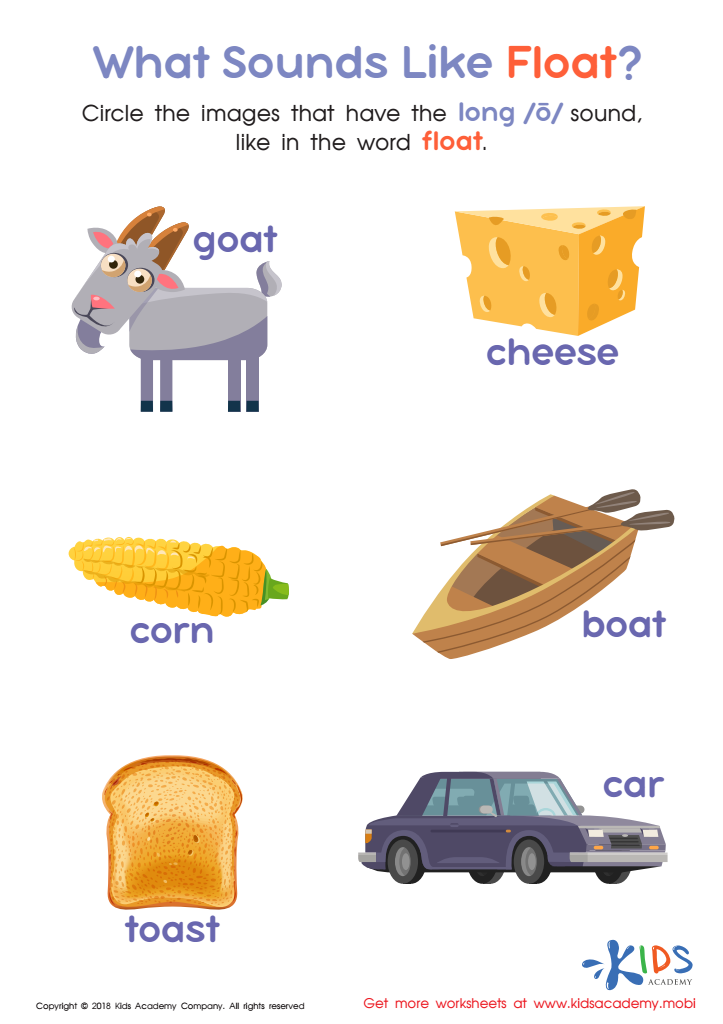
What Sounds Like Float? Worksheet
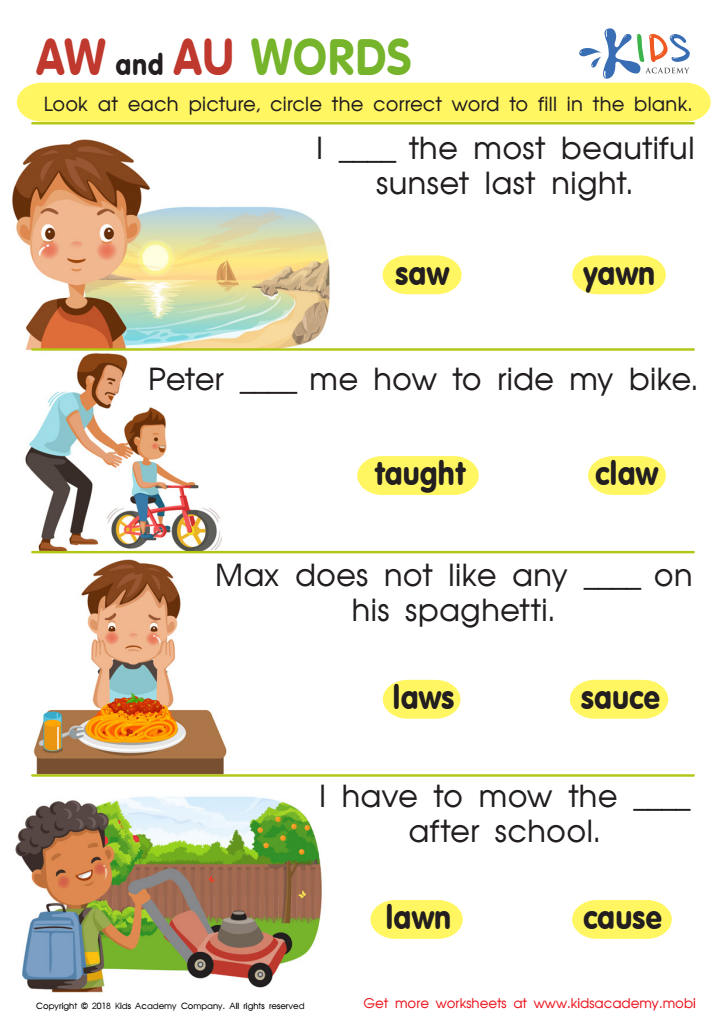
Reading: AW and AU Words Worksheet
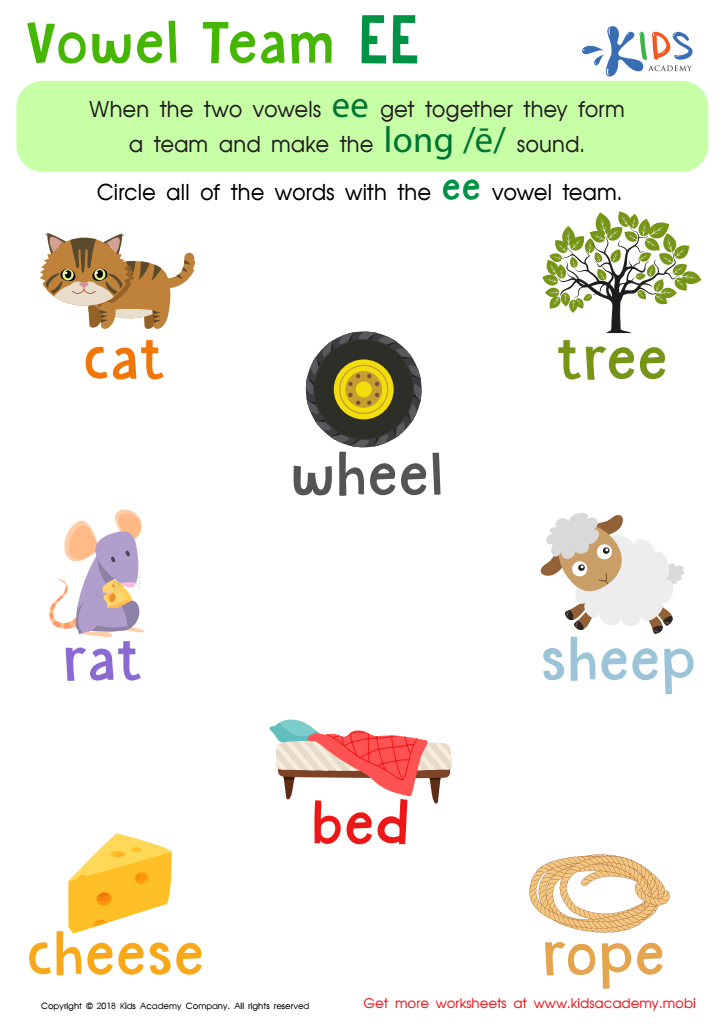
Reading: Vowel Team EE Worksheet
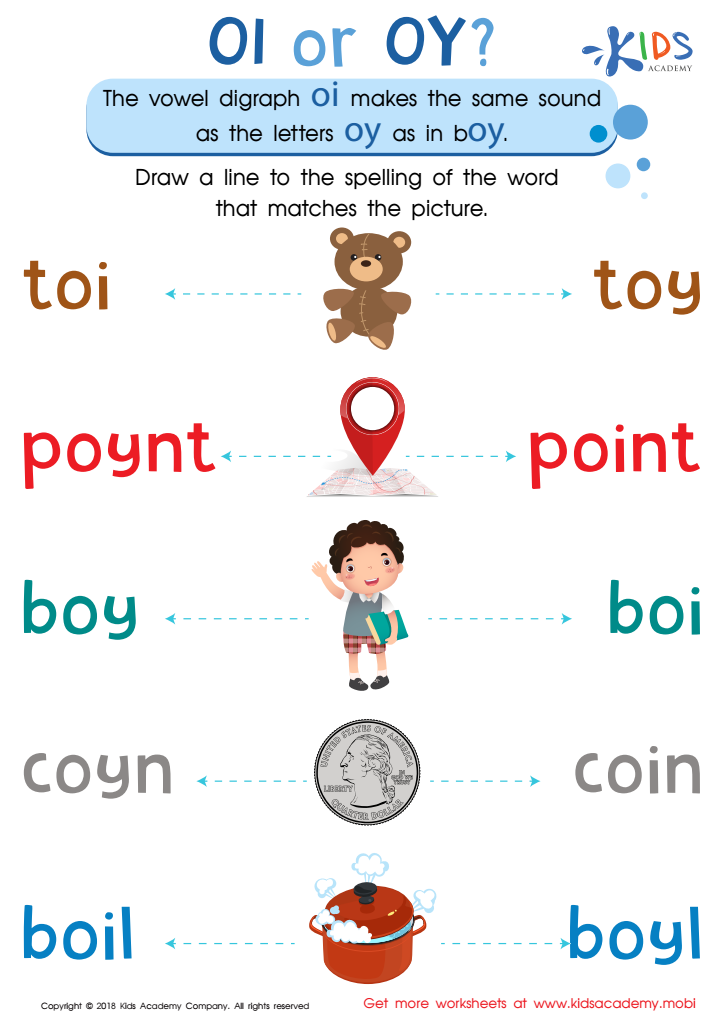
Reading: OI and OY Worksheet


Phonics skills, especially vowel diphthongs, play a crucial role in the early literacy development of children aged 7-8. At this age, students are transitioning from learning to read to reading to learn, and mastering vowel diphthongs can significantly enhance their reading fluency and comprehension.
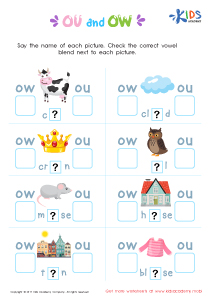
Vowel diphthongs, such as "oi" in "boil" or "ou" in "about," are combinations of two vowel sounds in a single syllable which create a more complex and exciting sound experience for young readers. Understanding and decoding these sounds allows children to read a wider variety of words with ease and accuracy. Mastery of diphthongs aids in pronunciation and helps children develop a more instinctive command of language rhythms and patterns.
From an educational perspective, proficient knowledge of vowel diphthongs supports overall reading proficiency, boosting children's confidence and enthusiasm for learning. Phonics instruction that includes diphthongs equips children with valuable tools for decoding new words independently, thereby fostering a sense of independence and making learning more engaging.
Parents and educators should give importance to these skills as they directly contribute to spelling accuracy, reading comprehension, and verbal expression. Ensuring that children have a solid understanding of diphthongs prepares them for more complex literacy tasks, thereby forming a strong foundation for lifelong learning.