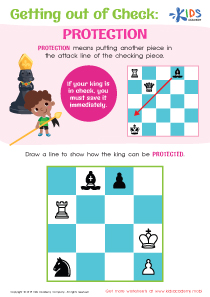
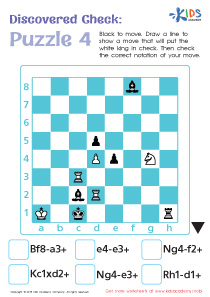
Enhancing problem-solving skills Chess Worksheets for Ages 7-8
3 filtered results
-
From - To
Discover our engaging "Enhancing Problem-Solving Skills Chess Worksheets" designed specifically for children ages 7-8. These worksheets combine the strategic game of chess with critical thinking exercises, helping young learners develop their problem-solving abilities in a fun and interactive way. Each worksheet introduces various chess scenarios, challenges players to think critically, and promotes logical reasoning. Ideal for both classroom and home learning, these resources will inspire creativity and boost cognitive skills while children learn the rules and strategies of chess. Get ready to embark on an exciting journey of skill-building through the timeless game of chess!
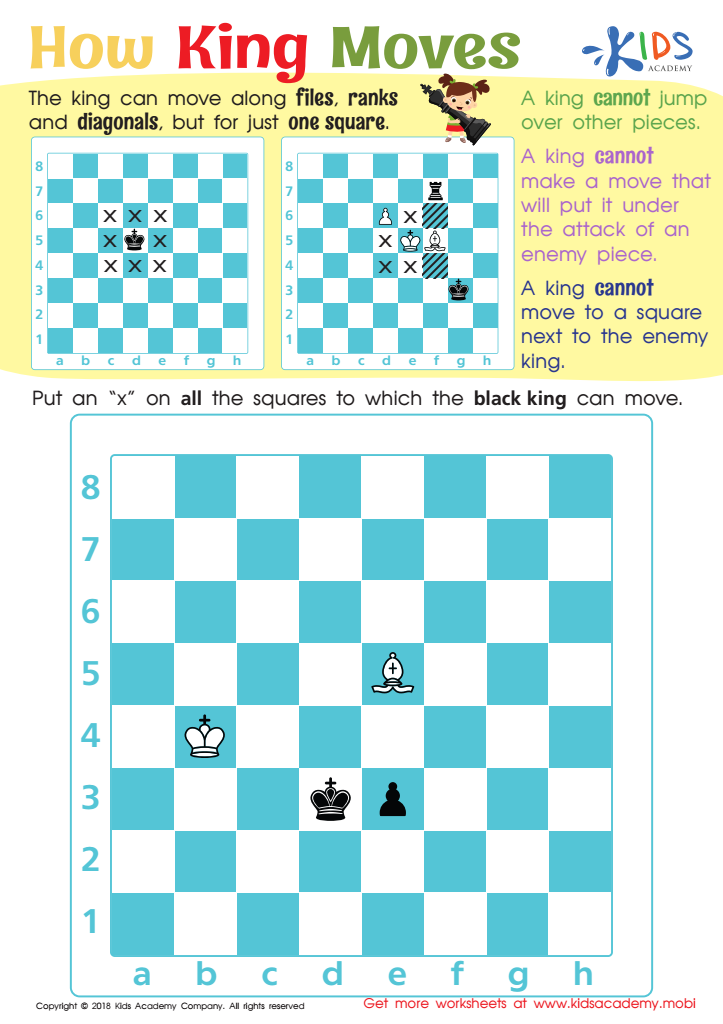
How King Moves Worksheet
 Assign to My Students
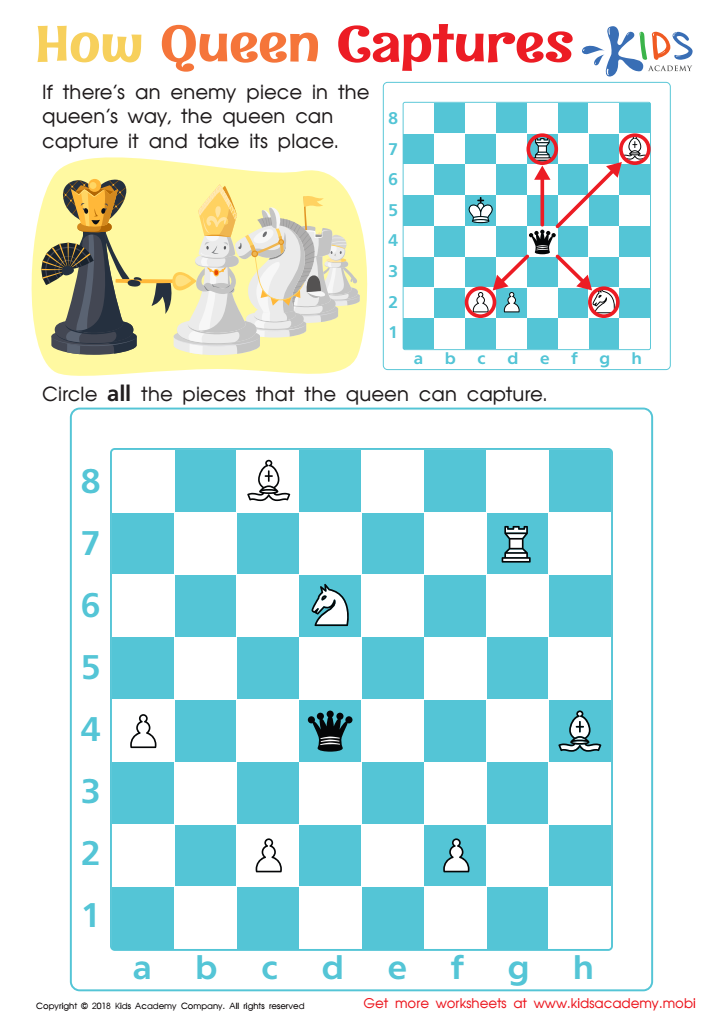
How Queen Captures Worksheet
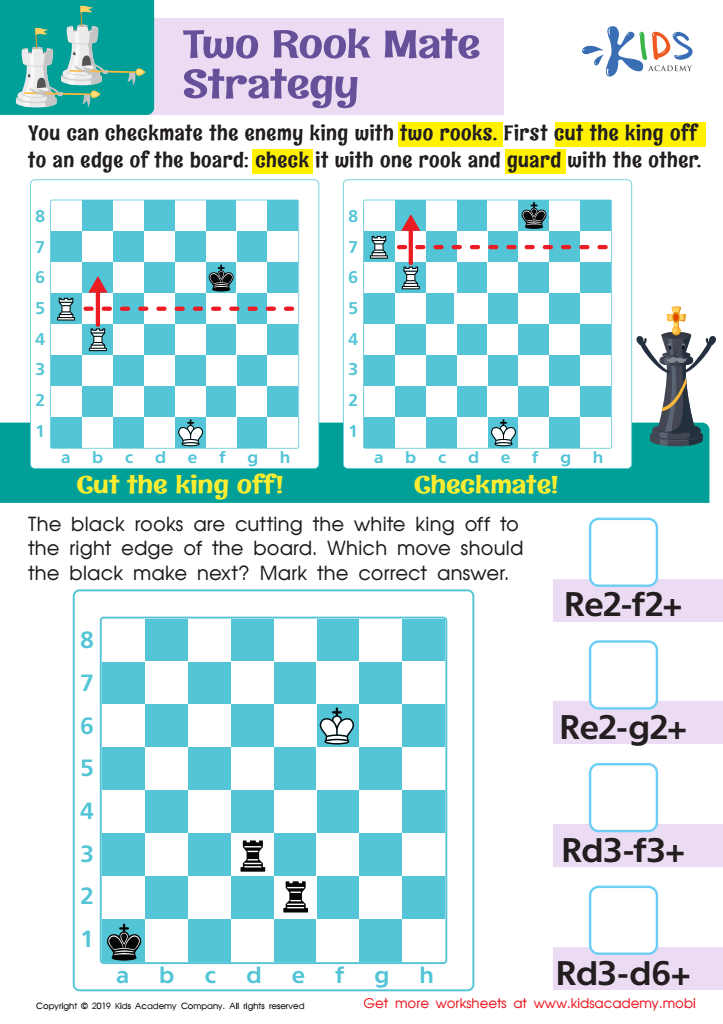
Two Rook Mate Strategy Worksheet








Enhancing problem-solving skills through chess for children aged 7-8 is crucial for their cognitive development and overall academic success. At this age, children are naturally curious and eager to learn, making it an ideal time to introduce concepts that promote critical thinking. Chess encourages kids to analyze situations, think ahead, and develop strategies, which translates to improved problem-solving abilities both in and outside the classroom.
Chess provides a structured environment where children can learn to navigate challenges systematically. It helps them understand the importance of planning, foresight, and adaptability—skills that are increasingly essential in today’s fast-paced world. Furthermore, engaging in chess fosters perseverance, as players learn to cope with setbacks and adapt their strategies.
In addition to cognitive benefits, chess also enhances social-emotional learning. It teaches children how to take turns, respect opponents, and handle both victory and defeat with grace. Parents and teachers who foster these skills through chess not only aid intellectual development but also contribute to building resilient, confident individuals equipped for future challenges. Thus, supporting chess activities is an investment in a child's holistic growth that will benefit them well beyond the game board.