Addition Practice Worksheets for Ages 7-8 - Page 5
106 filtered results
-
From - To
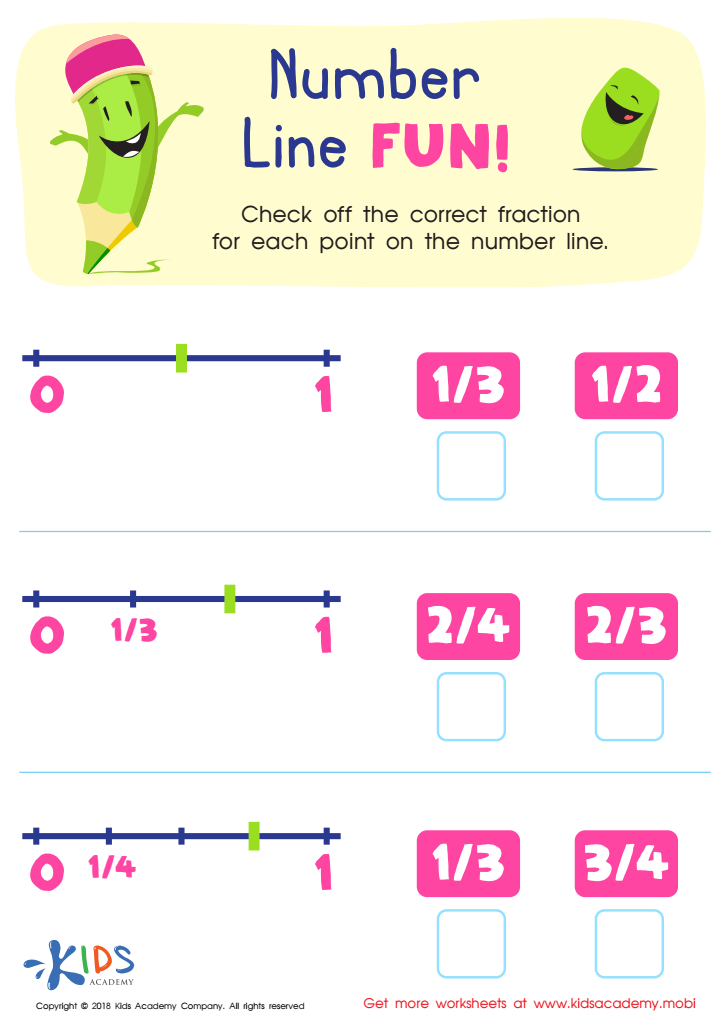
Number Line Fun Worksheet
 Assign to My Students


.jpg)





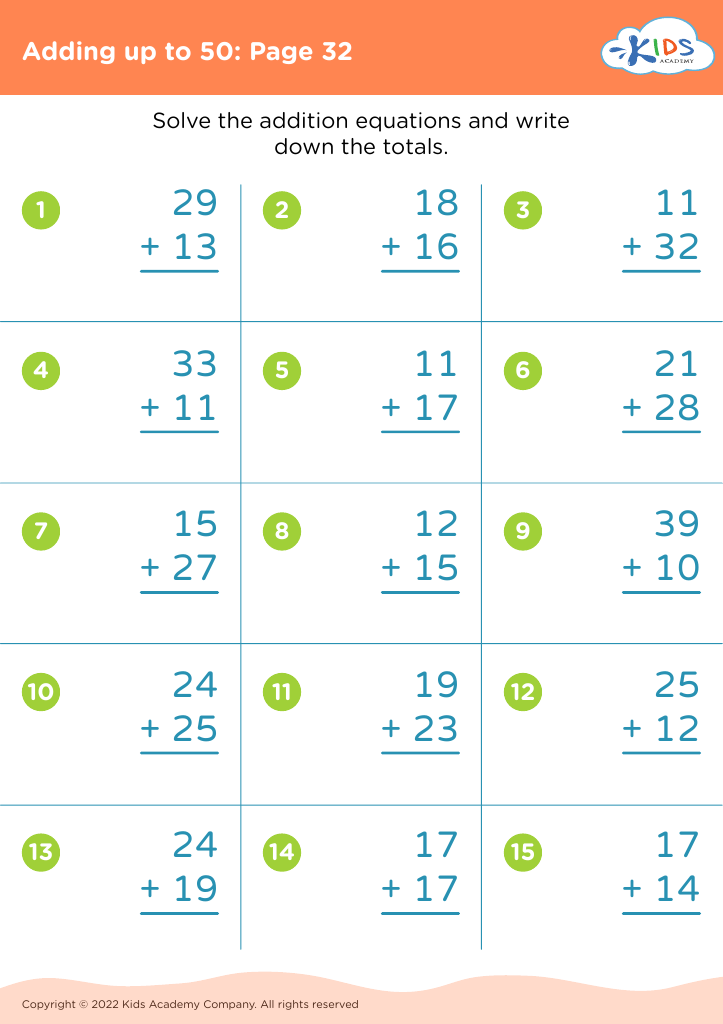
Addition practice for ages 7-8 is crucial in developing foundational math skills that will benefit children throughout their academic journey and daily life. At this age, children begin to transition from simple to more complex mathematical concepts, making a solid understanding of addition essential. Mastery in addition boosts confidence, allowing children to tackle larger numbers and more challenging operations, such as subtraction, multiplication, and division.
Regular practice helps reinforce memory retention and enhances problem-solving abilities. It builds the neural connections necessary for future mathematical learning, supporting cognitive development during these critical years. Additionally, consistent practice with addition fosters a sense of achievement, encouraging a positive attitude toward math.
Furthermore, addition skills are applicable beyond the classroom in real-life situations, such as budgeting, shopping, and cooking. By understanding basic addition, children can make informed decisions in everyday tasks.
Teachers and parents play a vital role in creating a supportive learning environment. By engaging in addition practice together, they can foster communication and build a stronger parent-child or student-teacher bond. Ultimately, prioritizing addition practice equips kids with essential tools for academic success and helps cultivate lifelong learning habits.








