Basic Addition Worksheets for Ages 7-8 - Page 2
48 filtered results
-
From - To
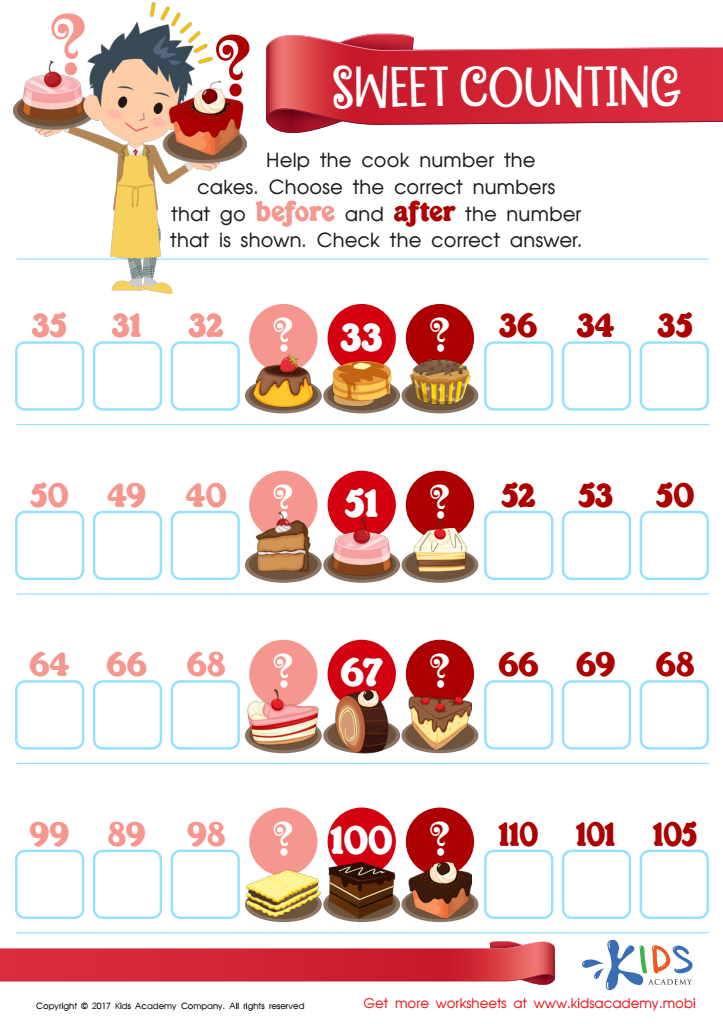
Sweet Counting - Part 1 Worksheet
 Assign to My Students
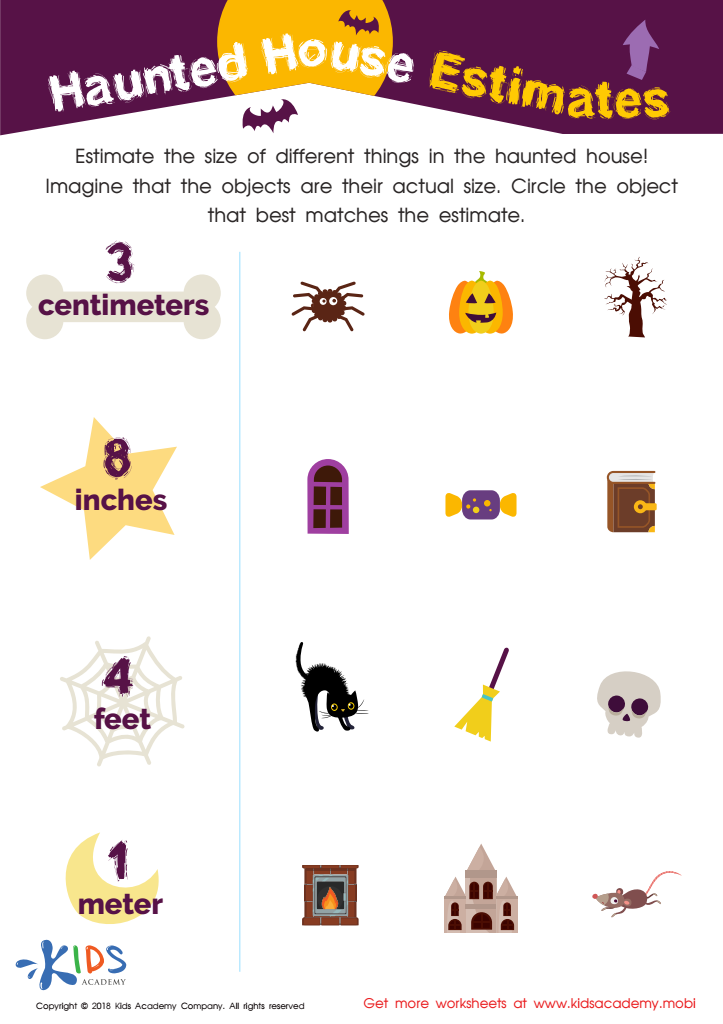
Haunted House Estimates Worksheet
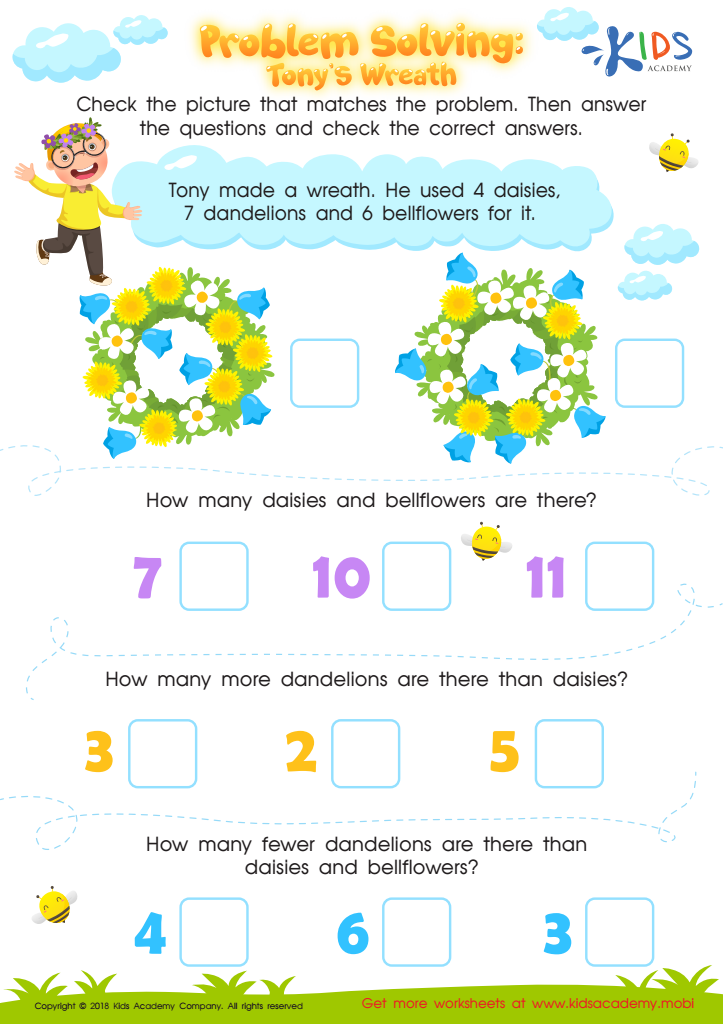
Problem Solving: Tony's Wreath Worksheet
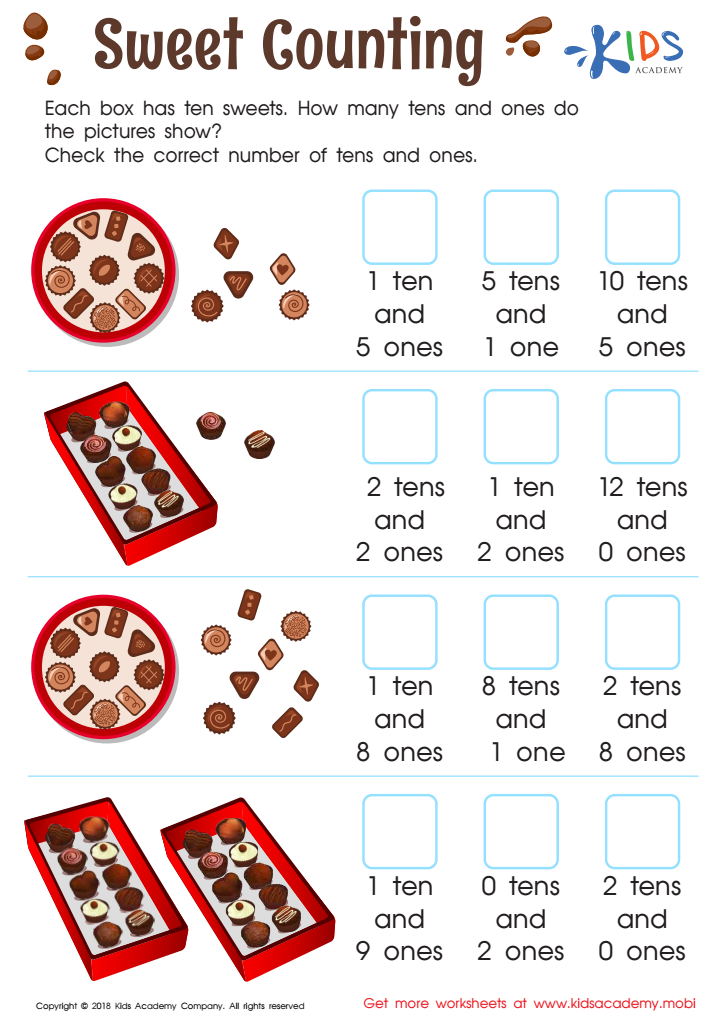
Sweet Counting - Part 2 Worksheet
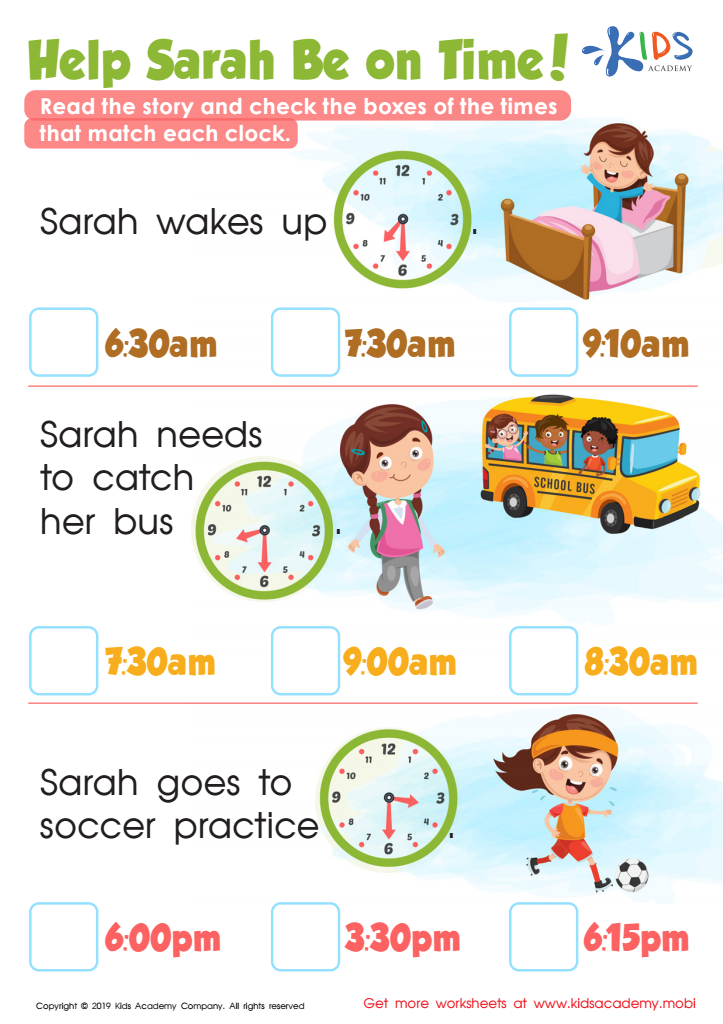
Help Sarah Be on Time! Worksheet
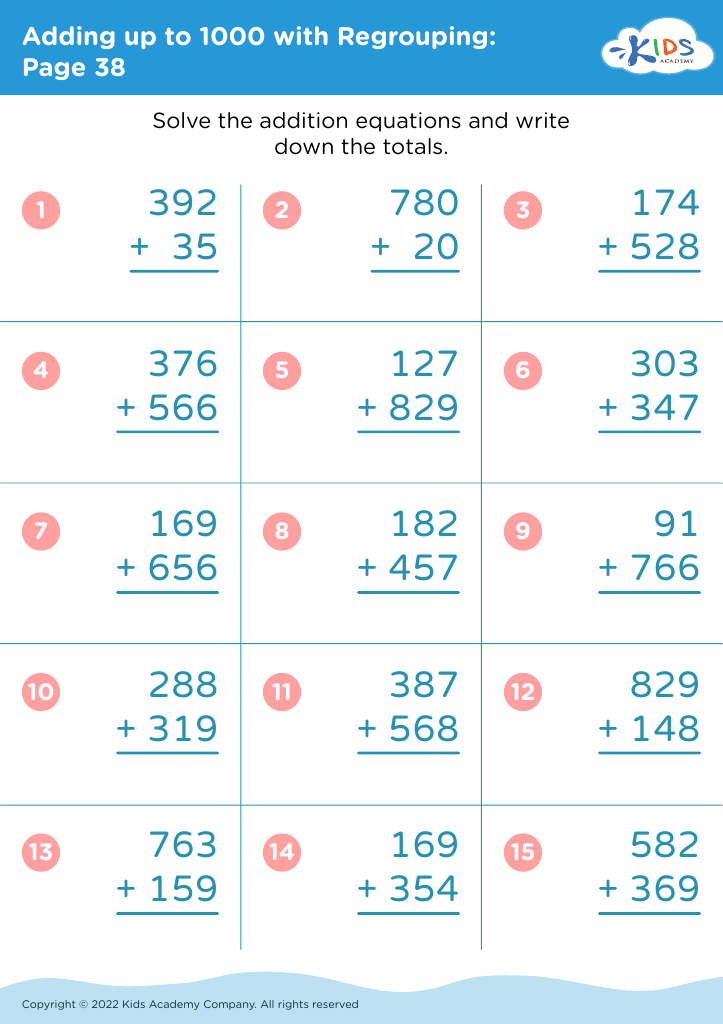
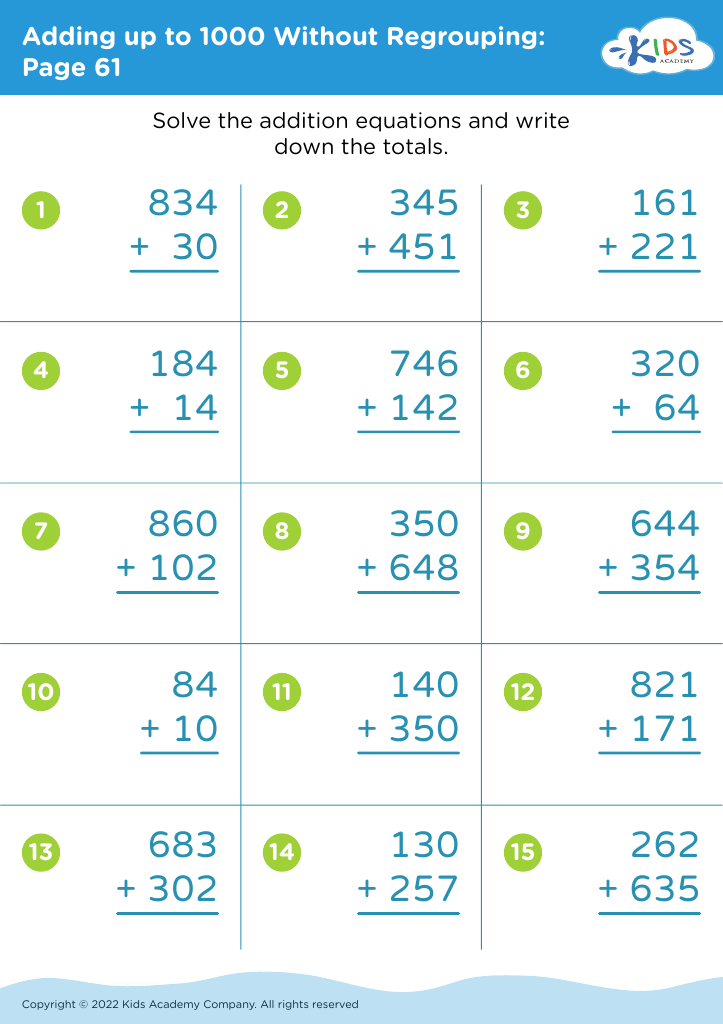
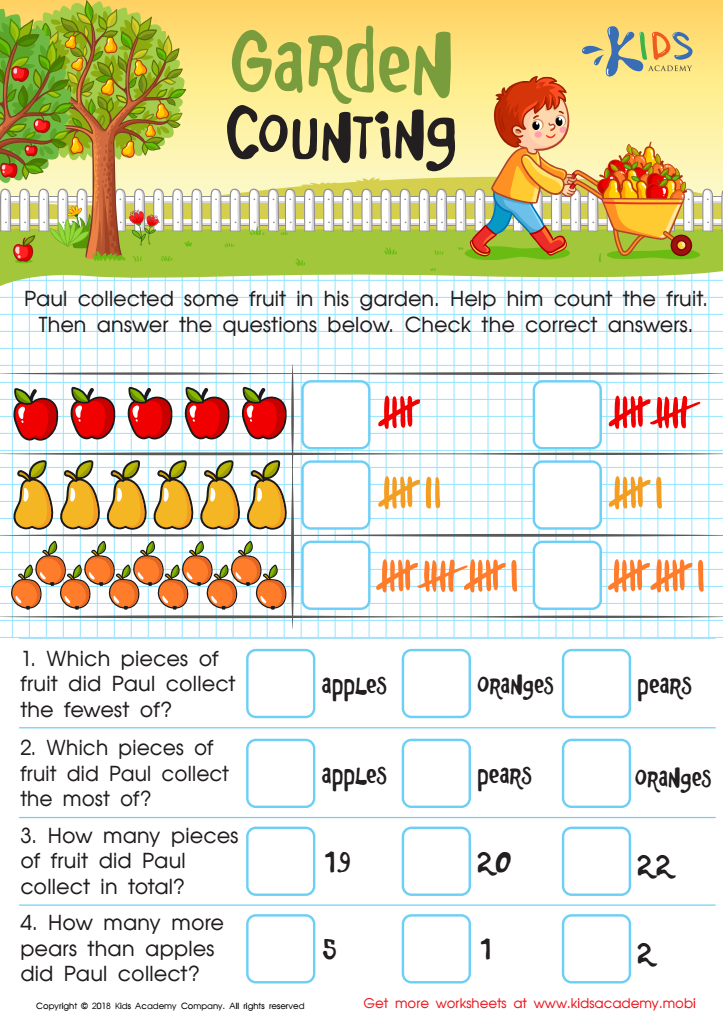
Garden Counting Worksheet
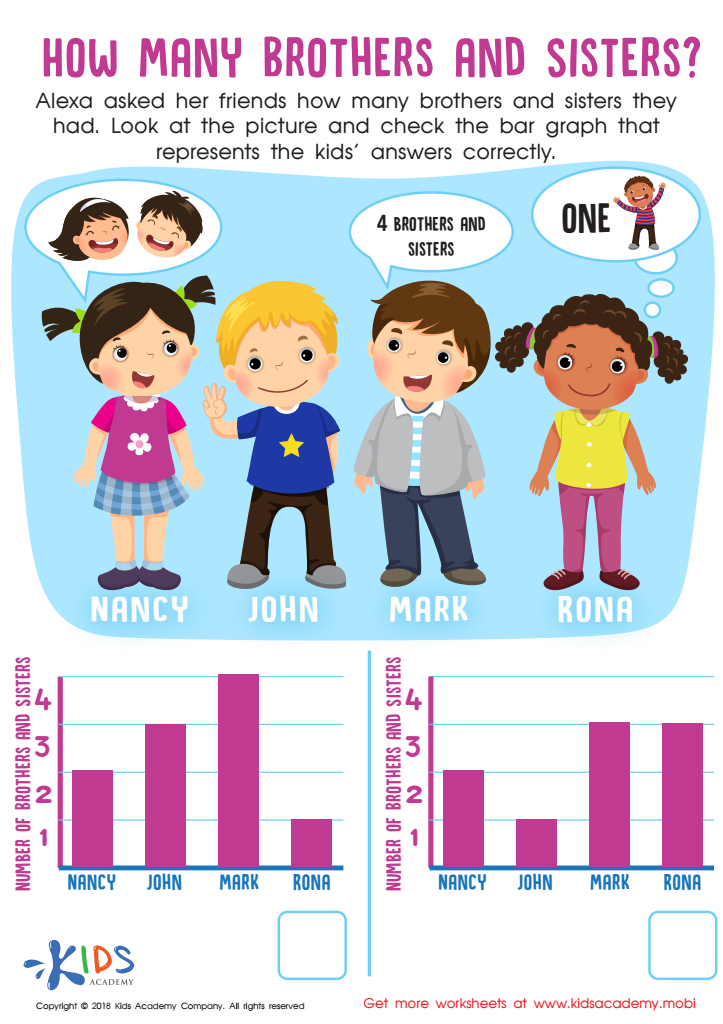
How Many Brothers and Sisters? Worksheet
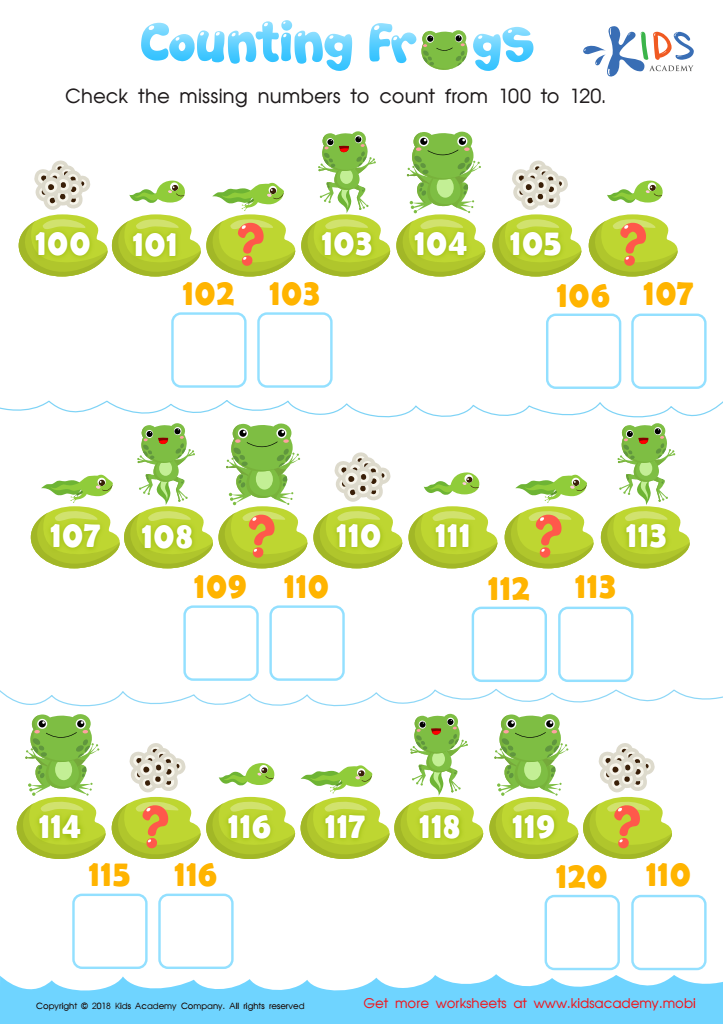
Counting Frogs Worksheet
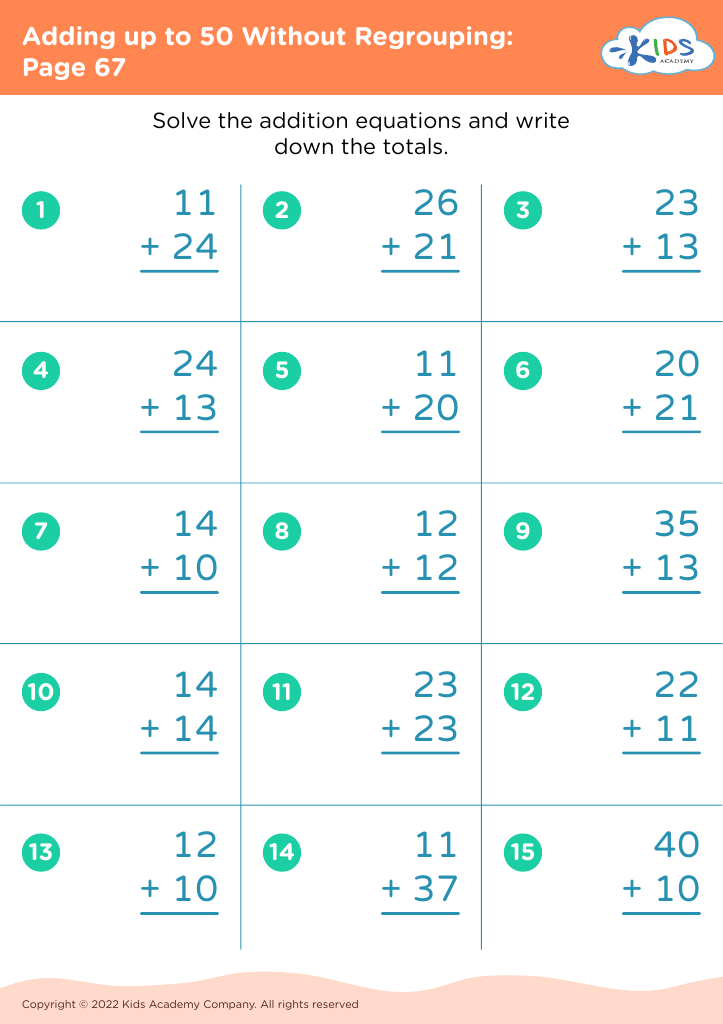
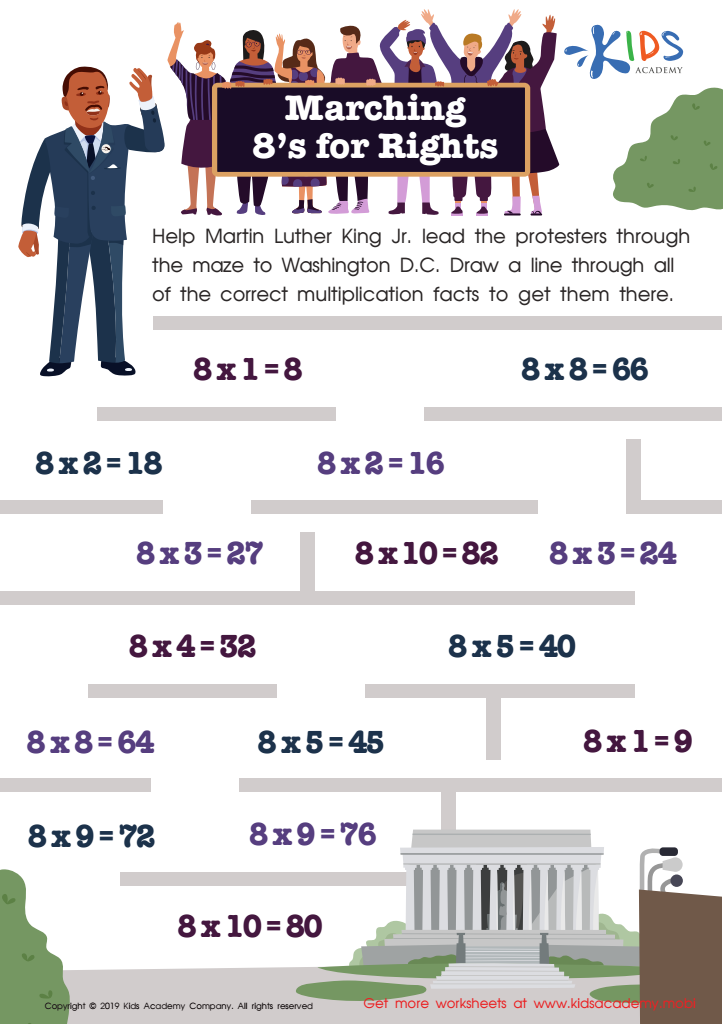
Marching 8’s for Rights Worksheet
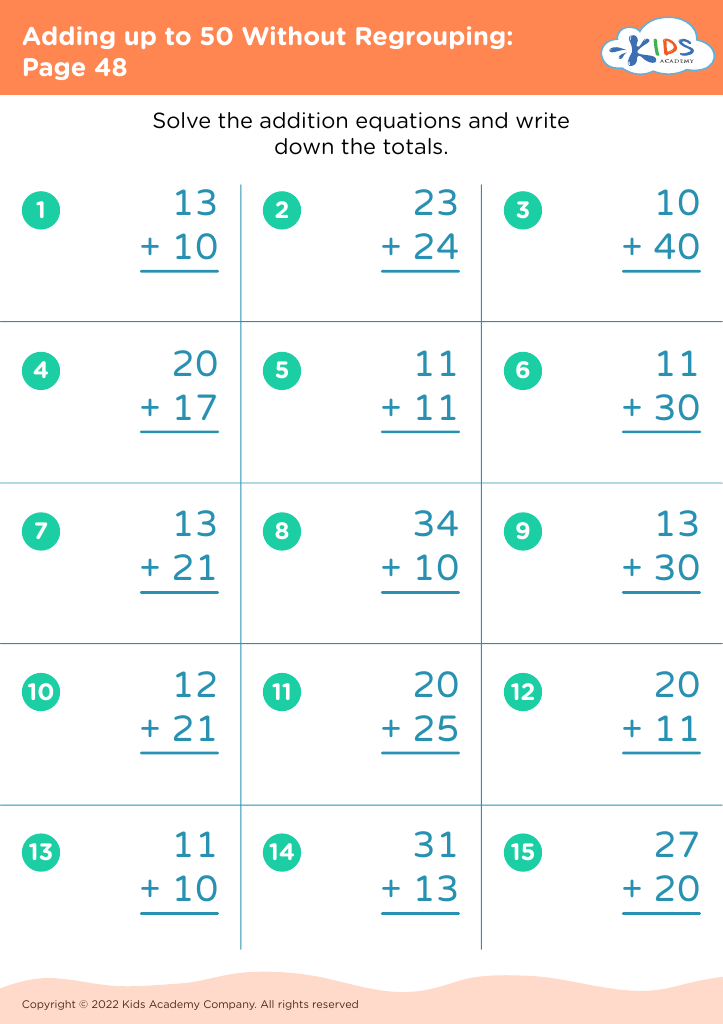
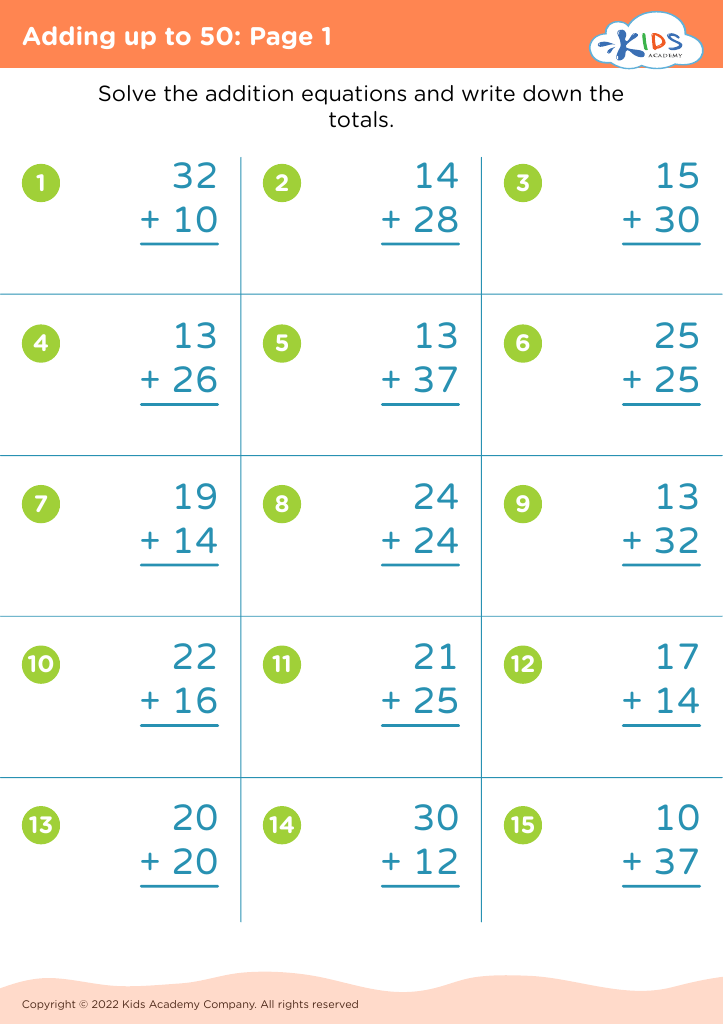
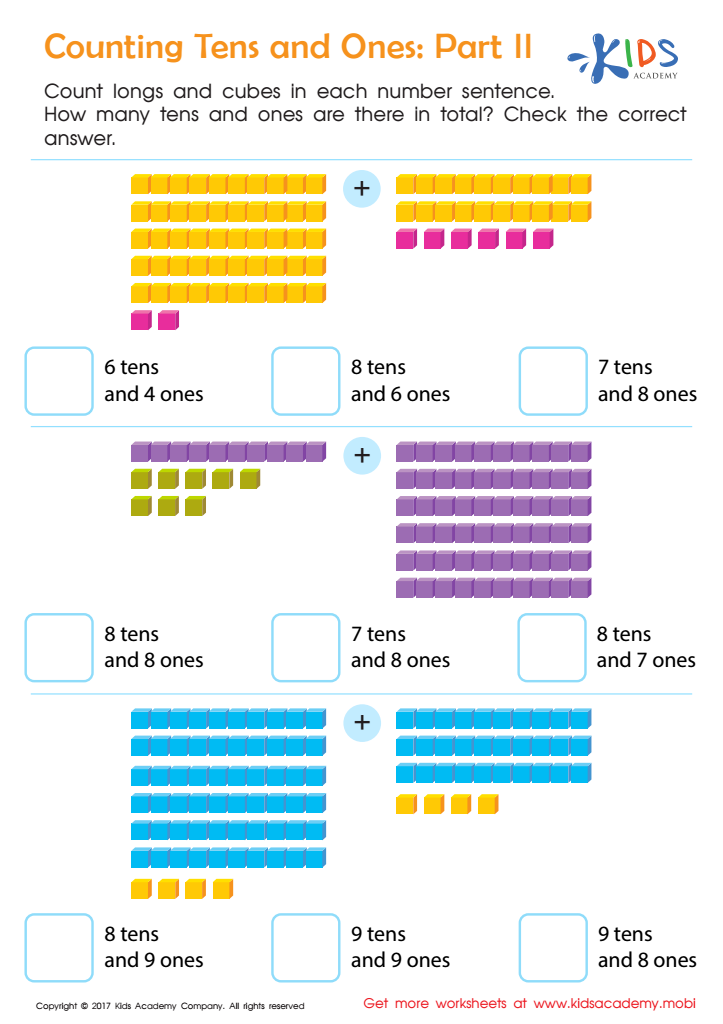
Counting Tens and Ones: Part 2 Worksheet
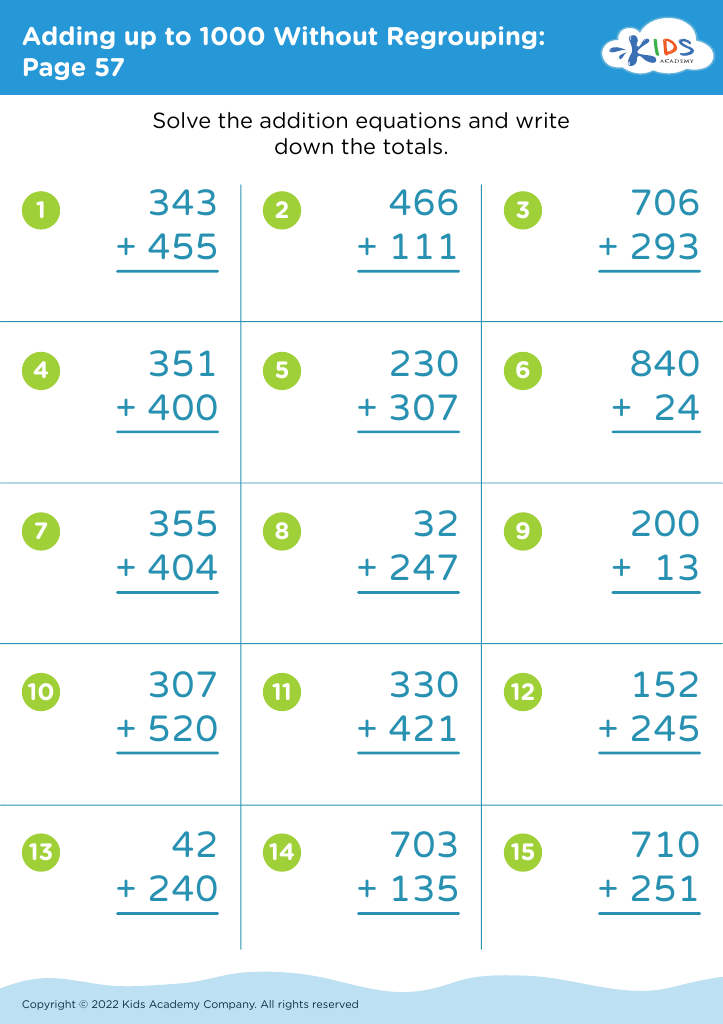
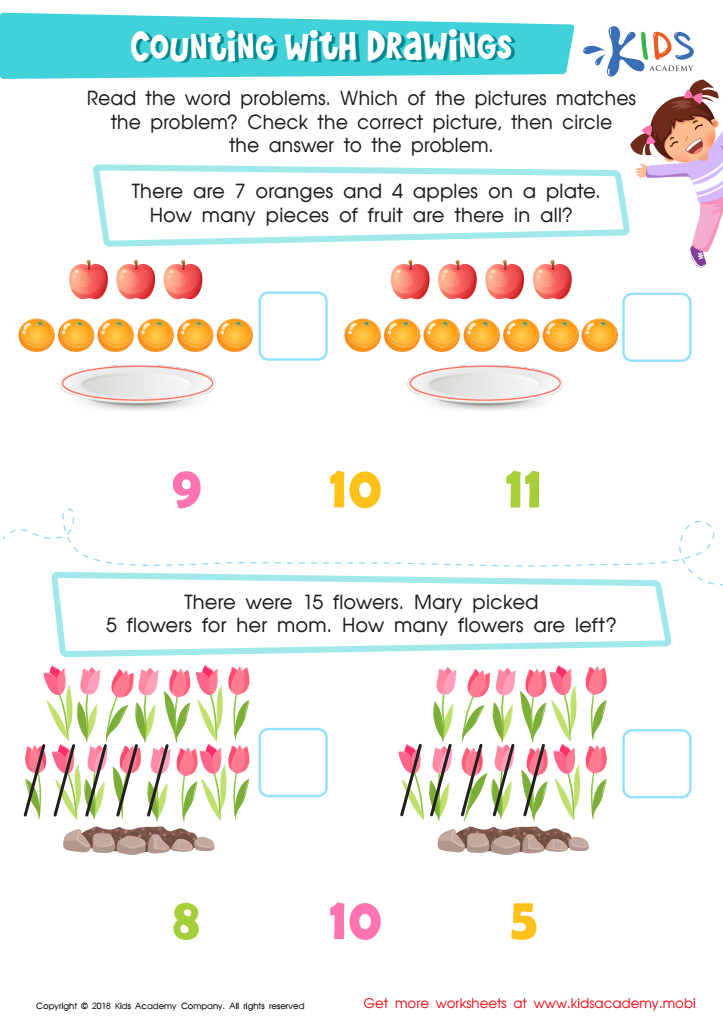
Counting with Drawings:Fruits & Flowers Worksheet
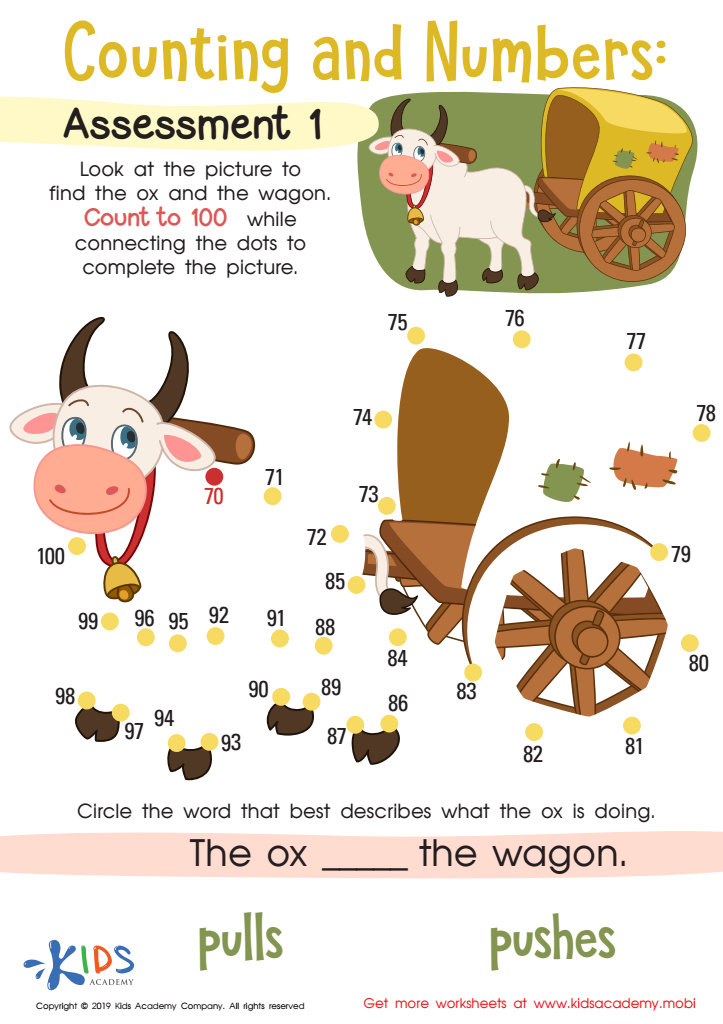
Counting and Numbers: Assessment 1 Worksheet
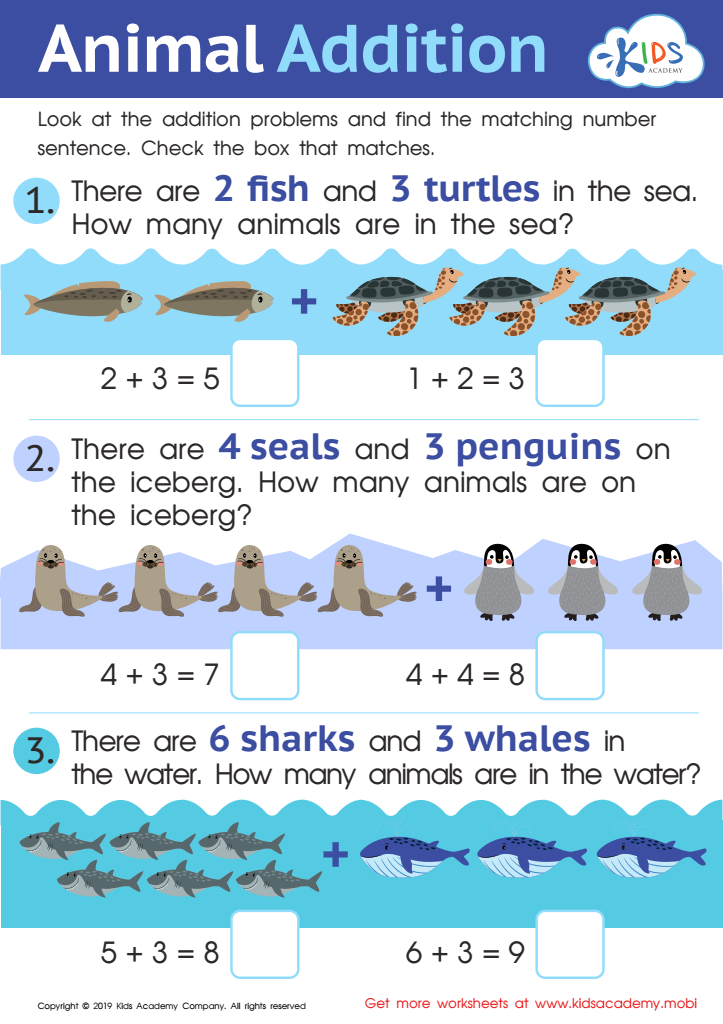
Animal Addition Worksheet
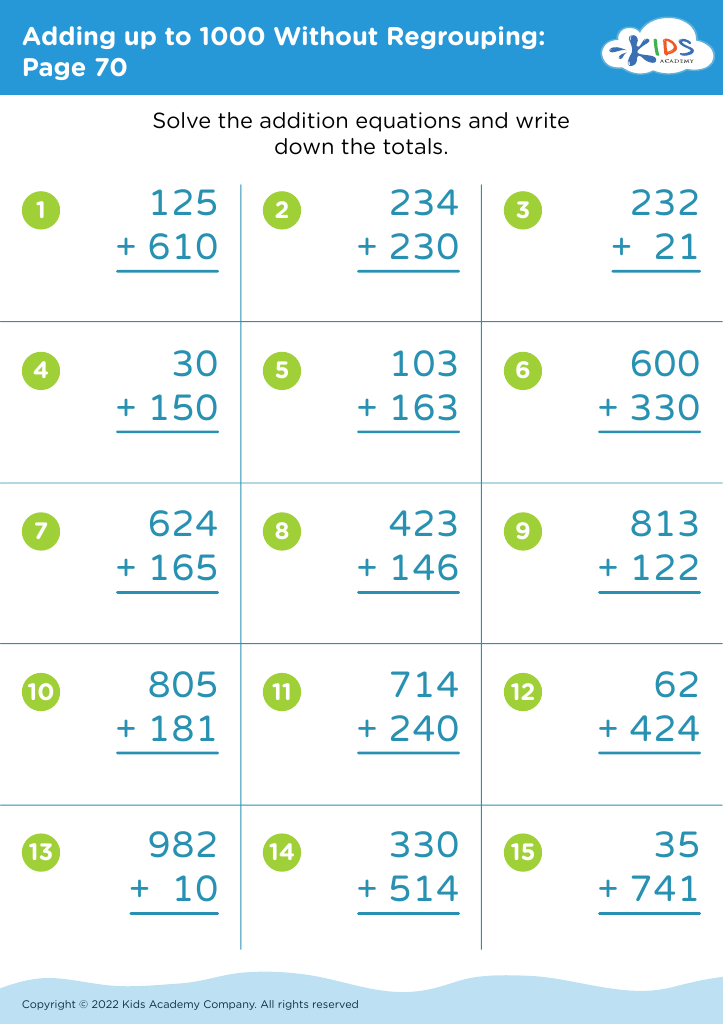



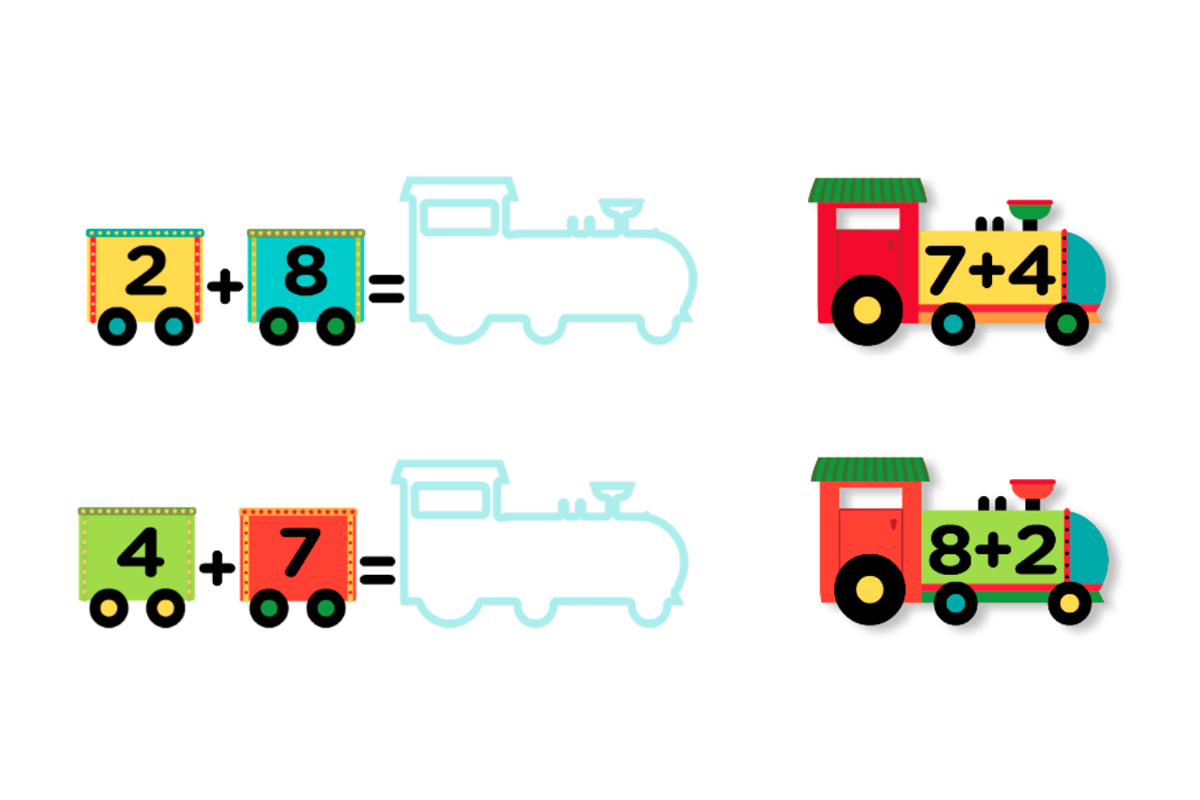


Basic addition is a fundamental building block in mathematics and critical for students aged 7-8, as it lays the groundwork for future learning in both math and daily life. At this age, children are transitioning from simple to more complex mathematical concepts. Mastery of basic addition enhances their problem-solving skills and boosts their confidence when tackling more challenging subjects.
Parents and teachers should prioritize basic addition because it develops cognitive abilities such as logical thinking and pattern recognition. Understanding numbers and how to manipulate them prepares children for future math concepts, including subtraction, multiplication, and division. This foundational knowledge fosters a positive attitude towards mathematics, making learners less anxious and more engaged.
Moreover, basic addition isn't just an academic skill; it has real-world applications. Children encounter situations involving addition daily, whether it’s sharing snacks with friends, helping with grocery shopping, or managing allowances. These experiences reinforce the importance of math in everyday life.
Investing time and resources into ensuring students grasp basic addition paves the way for lifelong learning and essential life skills, ultimately shaping them into confident and capable individuals ready to face more complex challenges in the future.








