
Geography skills Worksheets for Ages 7-8
3 filtered results
Difficulty Level
Grade
Age
-
From - To
Subject
Activity
Standards
Explore our engaging Geography Skills Worksheets designed for children ages 7-8! These resources focus on developing essential map skills, understanding landforms, and recognizing continents and countries. Our worksheets encourage interactive learning through fun activities like map puzzles, labeling exercises, and matching games, helping young learners grasp key geographical concepts. Designed to enhance critical thinking and spatial awareness, these materials are perfect for both classroom settings and at-home learning. With colorful illustrations and captivating content, your child will enjoy exploring the world around them while building foundational geography skills. Unlock the explorer in your child today with our comprehensive worksheets!
Favorites
With answer key
Interactive
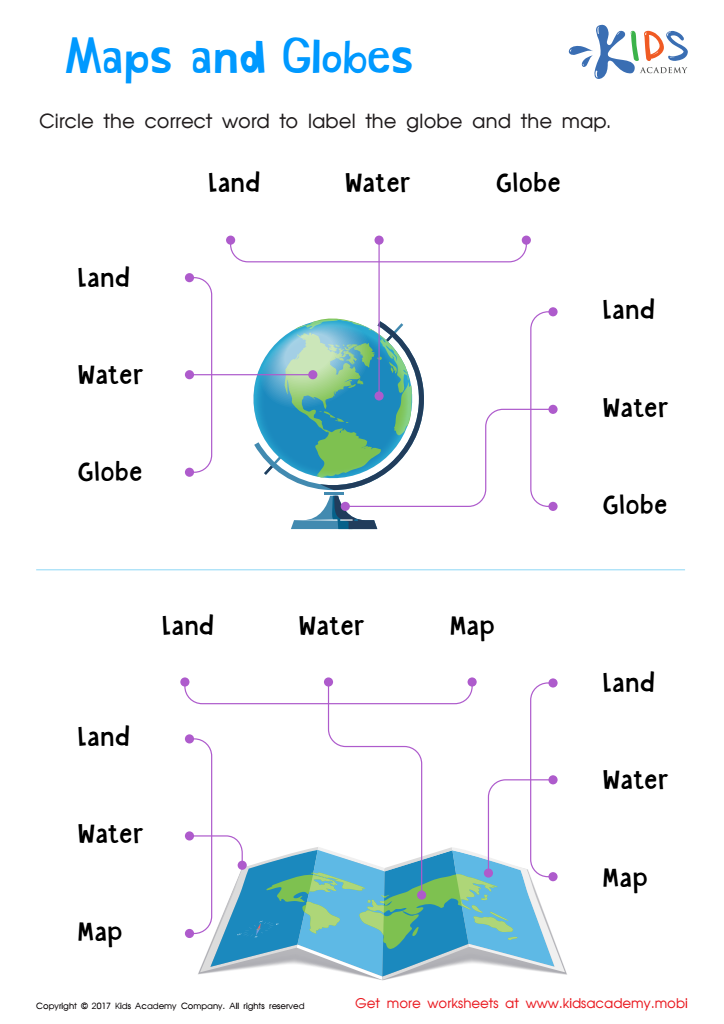
 Assign to My Students
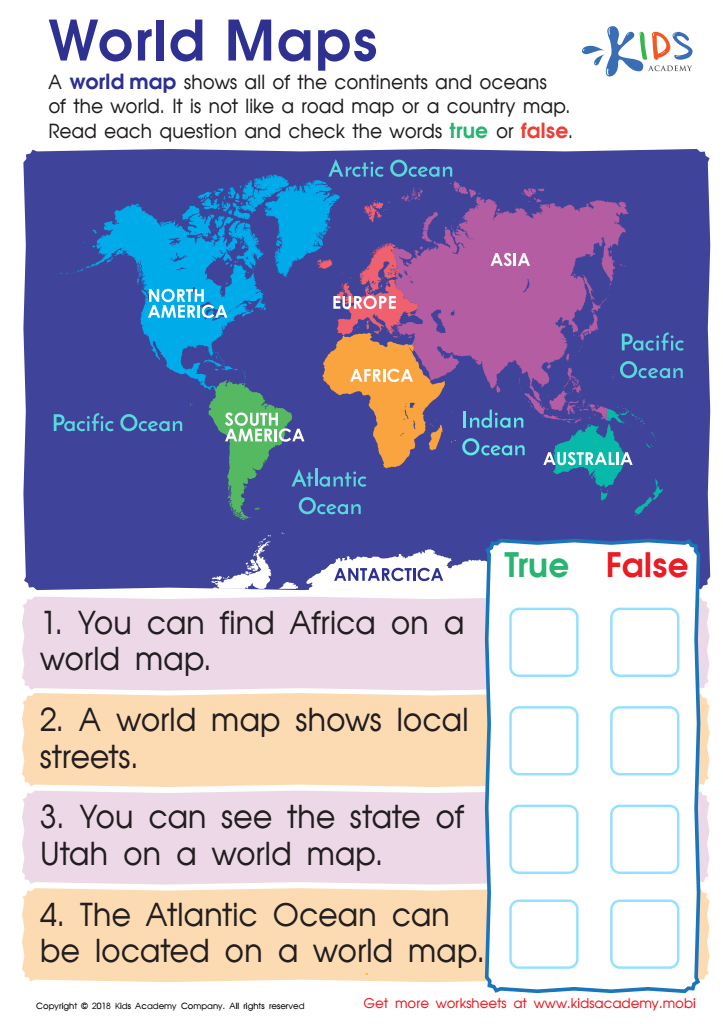
World Maps Worksheet
Help your young geographer learn about world maps. Show them that it displays all the oceans, continents and is distinct from other maps. Challenge them to answer the true/false questions on this free worksheet, and help them become a global citizen who understands the purpose of world maps.
World Maps Worksheet
Worksheet
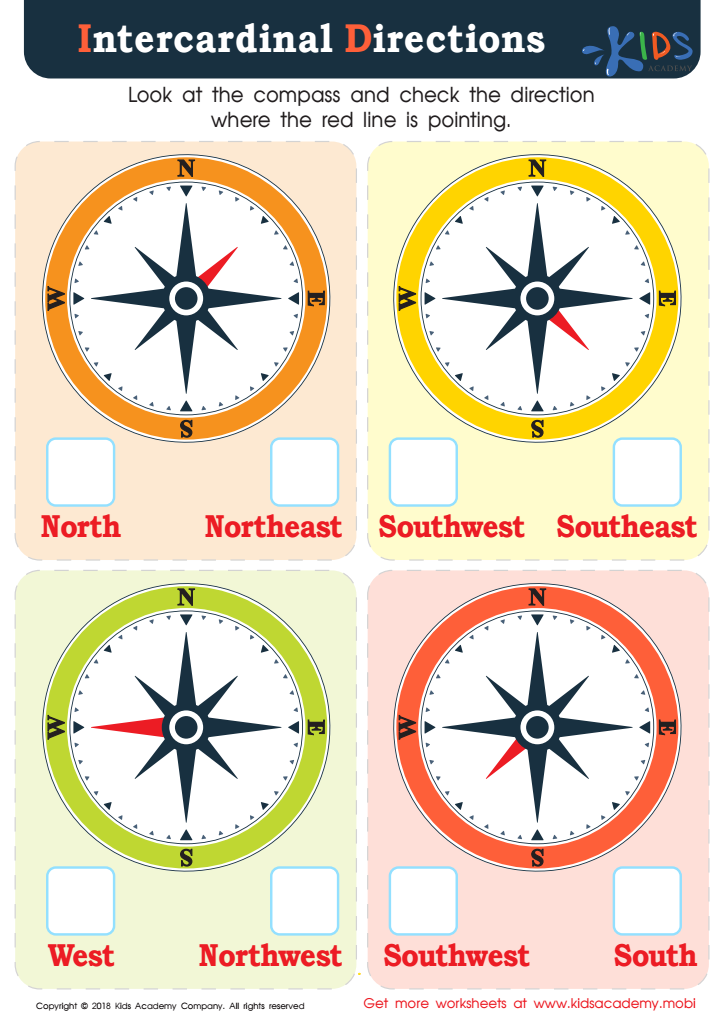
Intercardinal Directions Worksheet
Young students often don't get to practice cardinal and intercardinal directions in the digital age, but it's an important social studies and geography concept to learn. This PDF provides colorful compasses for them to practice with, giving them a real-world skill for common curriculum and independent living.
Intercardinal Directions Worksheet
Worksheet
Join Kids Academy for Free
Who is primarily going to use this learning content?




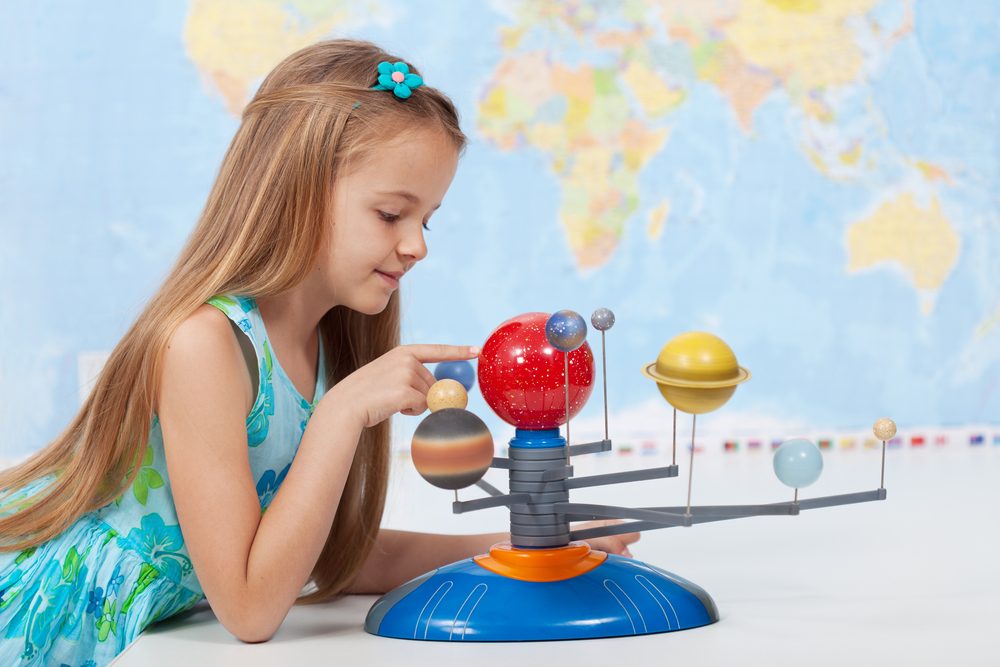
Geography skills are essential for children aged 7-8, as they lay the foundation for critical thinking, cultural awareness, and environmental responsibility. At this age, children begin to understand their place in the world, making it an ideal time to explore geographic concepts. Learning about maps, continents, and countries enhances spatial awareness, helping children develop essential navigation skills that are vital in today’s interconnected society.
Geography lessons foster curiosity about diverse cultures and lifestyles, encouraging empathy and a global perspective. As kids learn about different regions, they gain insights into how people live, which cultivates respect for diversity. Additionally, understanding natural landscapes, climates, and ecosystems promotes a sense of environmental stewardship. This awareness can lead to more responsible behaviors toward nature and sustainability as children grow.
Moreover, geography skills are linked to various subjects, including history, science, and mathematics. Thus, reinforcing these skills can enhance overall academic performance. For parents and teachers, nurturing interests in geography can also result in lifelong learning and exploration, empowering children to engage with their communities and the world beyond. In a world facing issues like climate change and globalization, strong geographic literacy is crucial for helping children navigate future challenges.








