Increase vocabulary knowledge Worksheets for Ages 7-8
3 filtered results
-
From - To
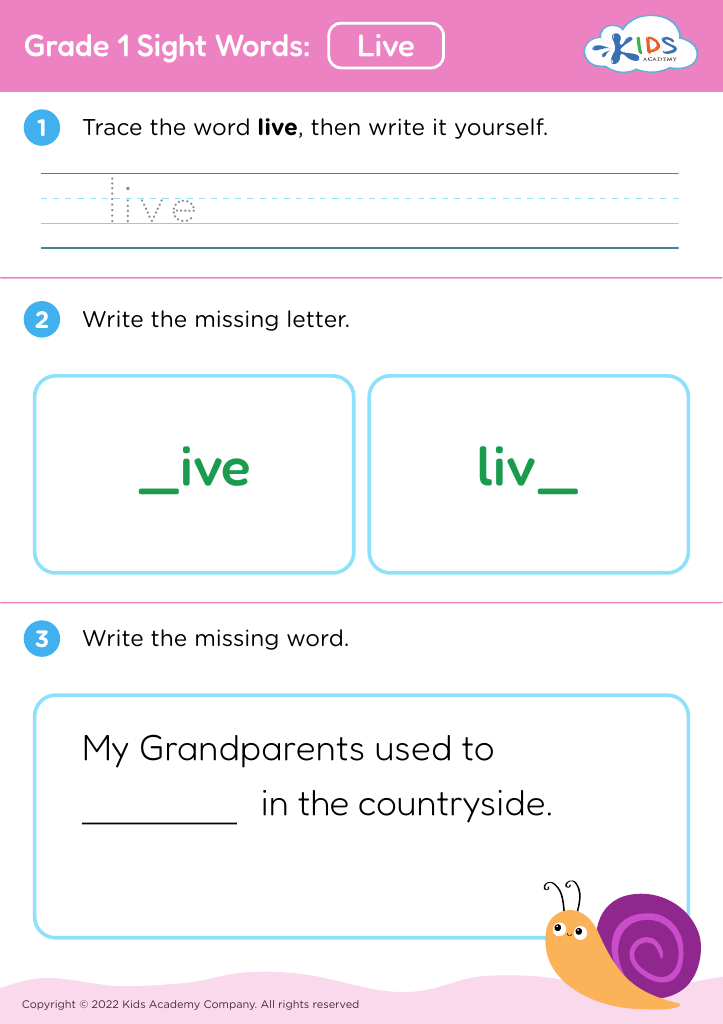
Boost your child's vocabulary with our engaging worksheets designed for ages 7-8! These fun and interactive activities focus on enriching language skills through a variety of exercises, including word matches, synonym searches, and context use. Our worksheets not only promote understanding of new words but also enhance reading comprehension and writing abilities. Tailored to captivate young learners, each worksheet draws on themes relevant to their interests, making vocabulary expansion engaging and enjoyable. Perfect for classroom use or at-home practice, these resources make learning both effective and fun, setting the foundation for a lifetime of language skills. Explore our collection today!






Enhancing vocabulary knowledge in children aged 7-8 is crucial for their overall educational success and development. At this age, children are expanding their reading and writing skills, and a robust vocabulary helps them comprehend texts more deeply. When children understand more words, they can engage with written material more effectively, leading to improved literacy skills. This foundational knowledge supports their ability to express thoughts clearly and communicate with others, fostering confidence in both academic and social settings.
Moreover, a rich vocabulary correlates with better critical thinking skills. Children learn to analyze and articulate ideas better, laying the groundwork for complex reasoning as they progress in their education. A broad vocabulary also enhances listening skills, enabling children to follow instructions accurately and participate in discussions.
Finally, increasing vocabulary is linked to overall academic achievement. Students with a strong vocabulary are better equipped to tackle challenging subjects, perform well on assessments, and remain engaged in their learning. With all these benefits, parents and teachers should prioritize vocabulary enhancement activities—such as reading together, playing word games, and encouraging descriptive language use—to empower children for lifelong learning and success.








