Learn number patterns Worksheets for Ages 7-8
3 filtered results
-
From - To
Discover our engaging "Learn Number Patterns" worksheets designed specifically for children aged 7-8! These interactive activities provide a fun and effective way for young learners to grasp the concept of number patterns, enhancing their mathematical skills. Our worksheets offer a variety of exercises, including identifying patterns, completing sequences, and creating their own, all tailored to their developmental needs. With colorful illustrations and intuitive formats, these worksheets create an enjoyable learning experience that boosts confidence in math. Perfect for school or home use, our resources help ensure that children build a solid foundation in number patterns essential for their academic success!
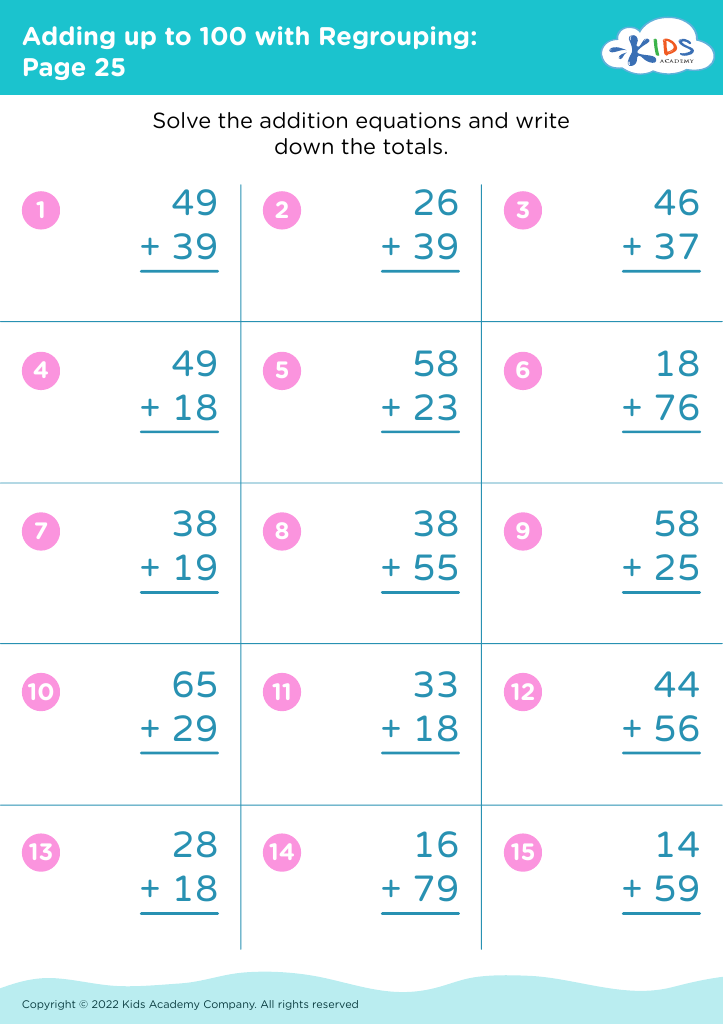
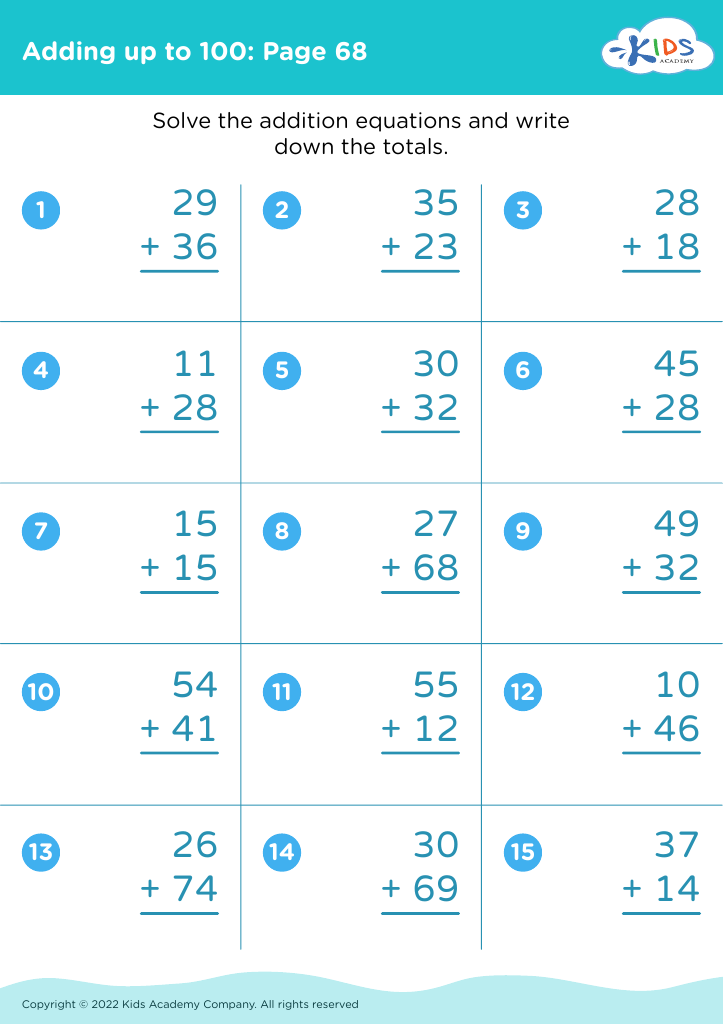








Teaching number patterns to children aged 7-8 is crucial for several reasons. At this developmental stage, children are becoming more adept at understanding mathematical concepts, and number patterns serve as a foundation for their future learning in mathematics. Recognizing patterns enhances logical thinking and problem-solving skills, enabling children to make connections between different concepts and see the bigger picture in math.
Number patterns also improve children’s ability to recognize sequences and relationships in numbers, which is essential for mastering addition, subtraction, multiplication, and division. This foundational knowledge facilitates a smoother transition to more complex math topics, such as algebra and geometry.
Moreover, engaging with number patterns fosters a sense of curiosity and exploration in students. It encourages them to look for relationships and develop reasoning skills, as they seek to find what comes next in a pattern or to understand why certain numbers fit into a sequence.
For parents and teachers, recognizing the importance of these skills can lead to targeted support and enrichment opportunities. Encouraging activities around number patterns ensures children's success in mathematics, promotes critical thinking, and builds confidence as they tackle more challenging concepts in the years to come.








