Mathematical reasoning Worksheets for Ages 7-8 - Page 3
52 filtered results
-
From - To
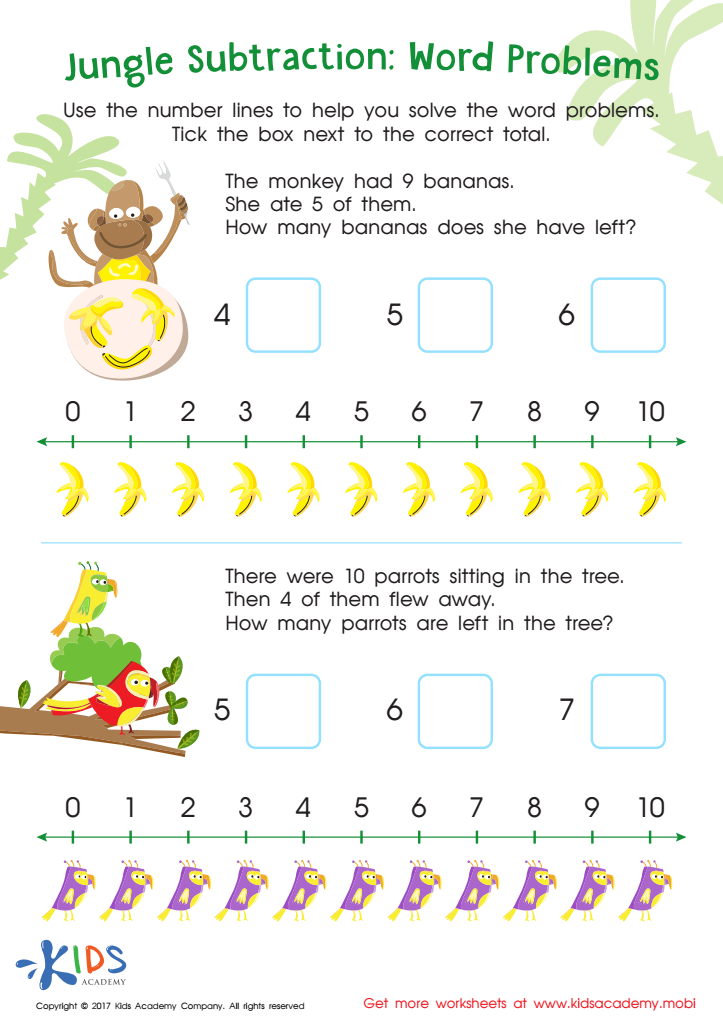
Jungle Subtraction Word Problems Substraction Worksheet
 Assign to My Students
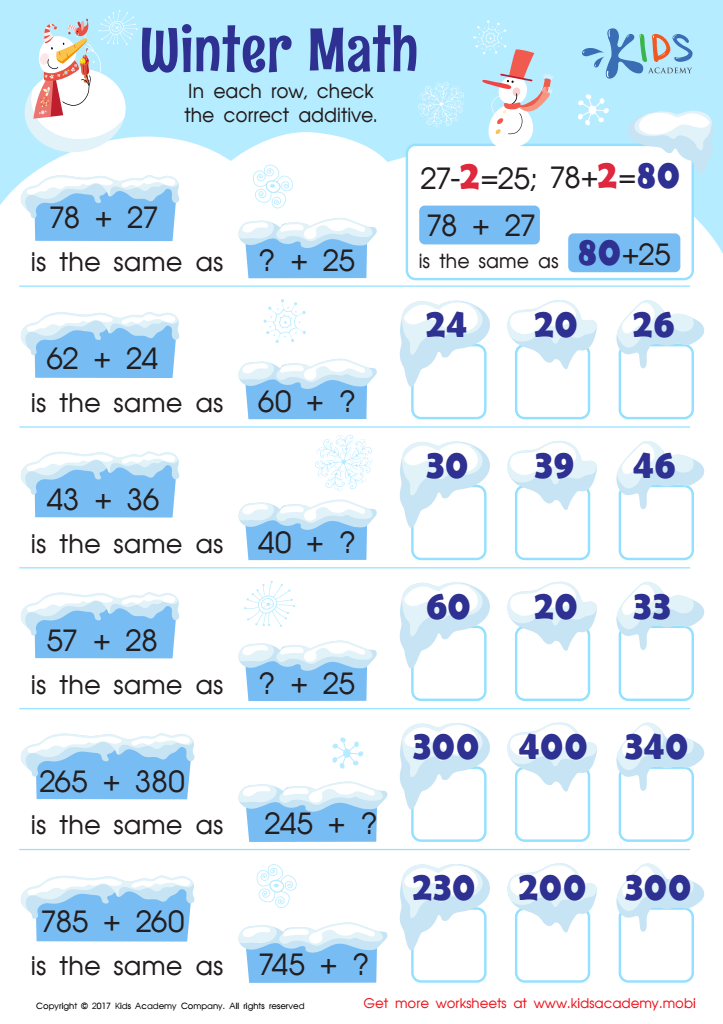
Free Addition Worksheet



.jpg)



Mathematical reasoning is a crucial skill for children aged 7 to 8, forming the foundation for their future academic success and problem-solving abilities. At this age, children begin to encounter more complex mathematical concepts, and effective reasoning skills enable them to understand these concepts deeply rather than just memorizing procedures.
By fostering mathematical reasoning, parents and teachers help children learn how to analyze problems, identify relevant information, and devise strategies to find solutions. This skill not only enhances their performance in math but also encourages logical thinking and critical analysis, which are valuable in all subjects and real-life situations.
Moreover, mastering mathematical reasoning at this stage instills confidence and a positive attitude toward mathematics, helping to mitigate anxiety or aversion many children face as the subject grows more challenging. Engaging children in discussions about how they arrive at answers nurtures communication skills and encourages a growth mindset, emphasizing that mistakes are learning opportunities.
Ultimately, investing time in developing mathematical reasoning during this critical age lays the groundwork for lifelong learning and equips children with essential skills needed in an increasingly complex world. Thus, every parent and teacher should prioritize fostering this vital area of cognitive development.








