
Measurement skills Worksheets for Ages 7-8
4 filtered results
Difficulty Level
Grade
Age
-
From - To
Subject
Activity
Standards
Empower your child's mathematical journey with our comprehensive Measurement Skills Worksheets for Ages 7-8. Curated by educational experts, these printable activities focus on key concepts such as length, weight, volume, and time. Each worksheet combines visual aids and clear instructions to make learning engaging and fun. Ideal for classroom or home use, our resources are designed to build confidence and proficiency in young learners, ensuring a solid foundation in measurement skills. Help your 7-8-year-old explore the fascinating world of measurement and excel in math, one enjoyable worksheet at a time! Visit our page and start today!
Favorites
With answer key
Interactive
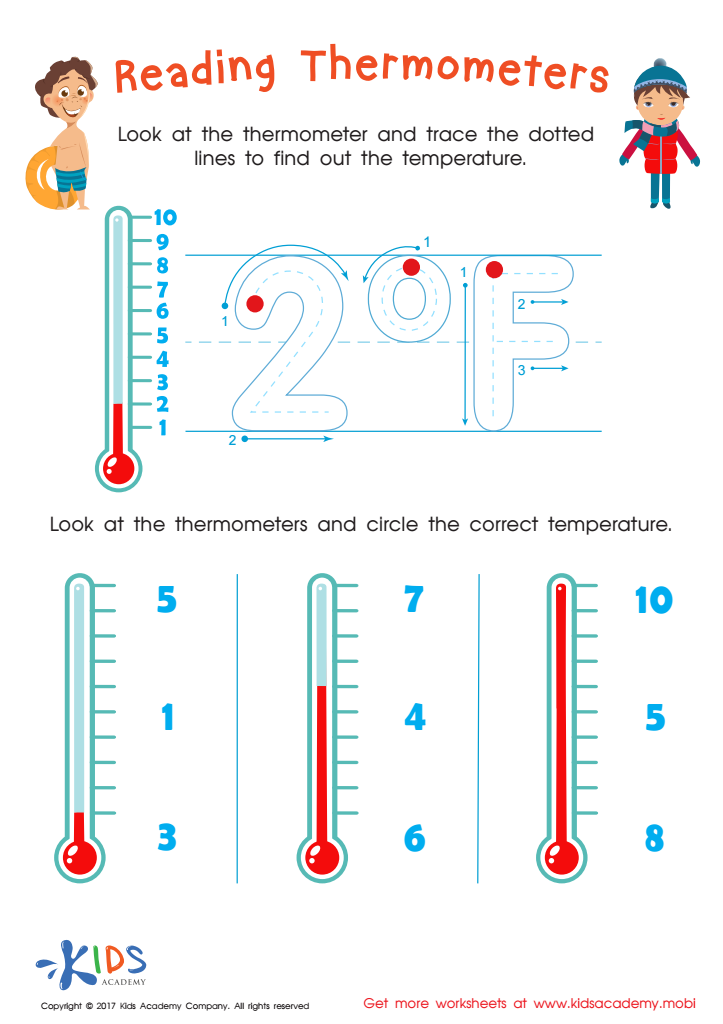
Reading Thermometers Printable
For kids to grasp temperature, they need to learn how to read a thermometer. Use this worksheet to teach them early on - whether they're sick or in the cold. It's an important life skill!
 Assign to My Students
Reading Thermometers Printable
Worksheet
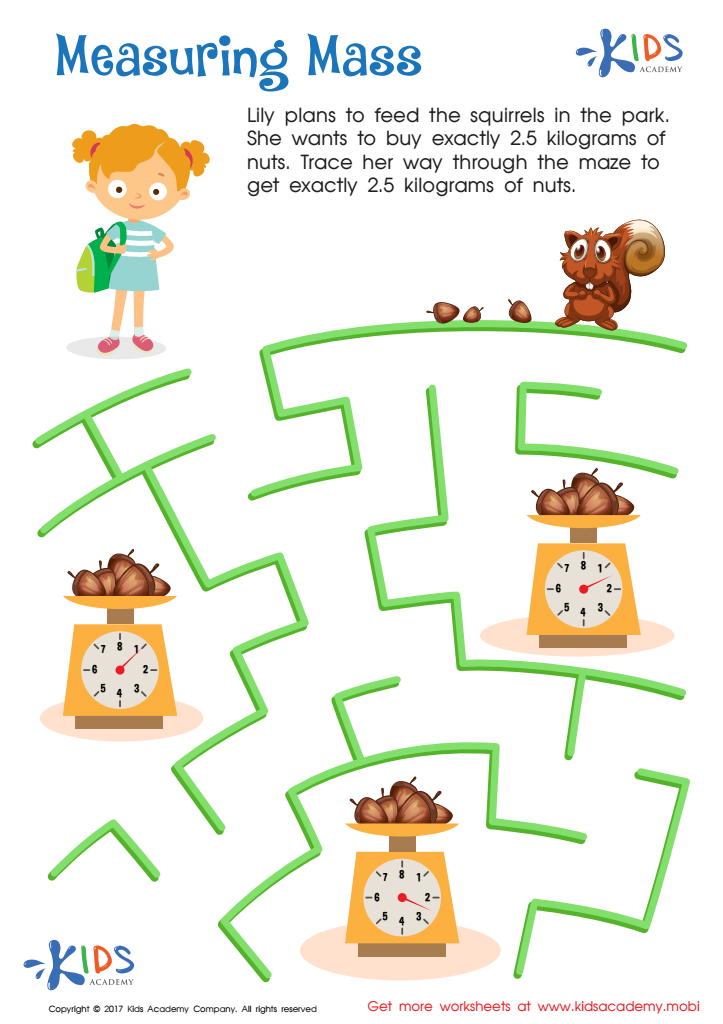
Measuring Mass Worksheet
Lily needs your child's help to find the right number of nuts to feed the squirrels. Ideal for 3rd grade!
Measuring Mass Worksheet
Worksheet
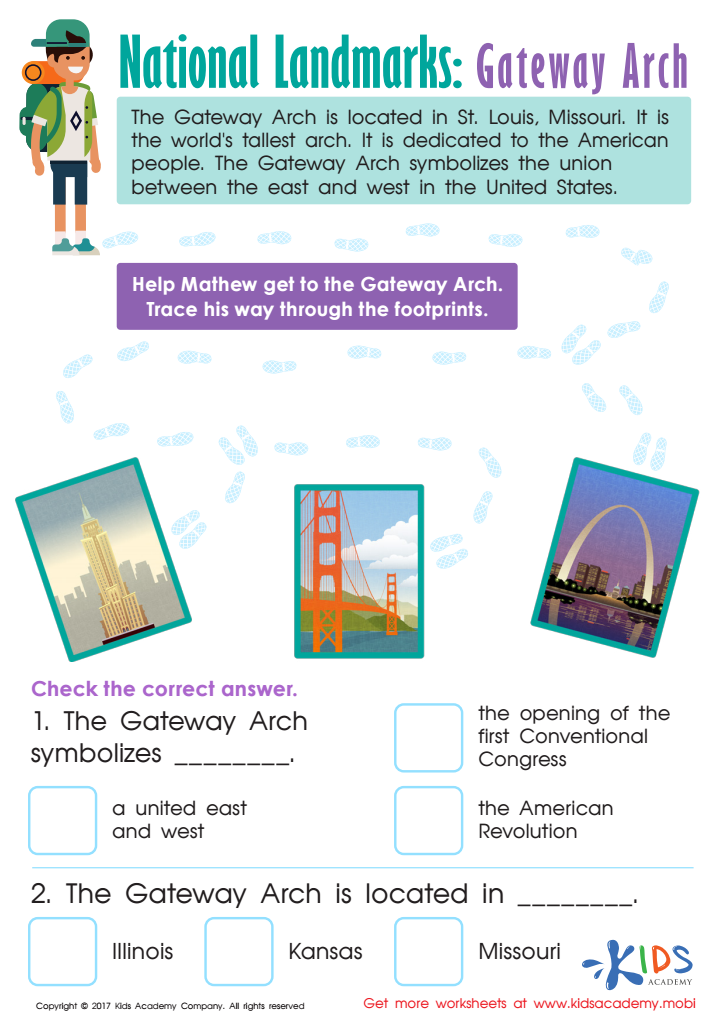
Gateway Arch Printable Worksheet
Explore America with your child! This printable worksheet takes them to St. Louis, Missouri's iconic Gateway Arch. As they learn about its history, they'll be quizzed with fun-filled facts. A great way to discover and appreciate this amazing national landmark! (80 words)
Gateway Arch Printable Worksheet
Worksheet
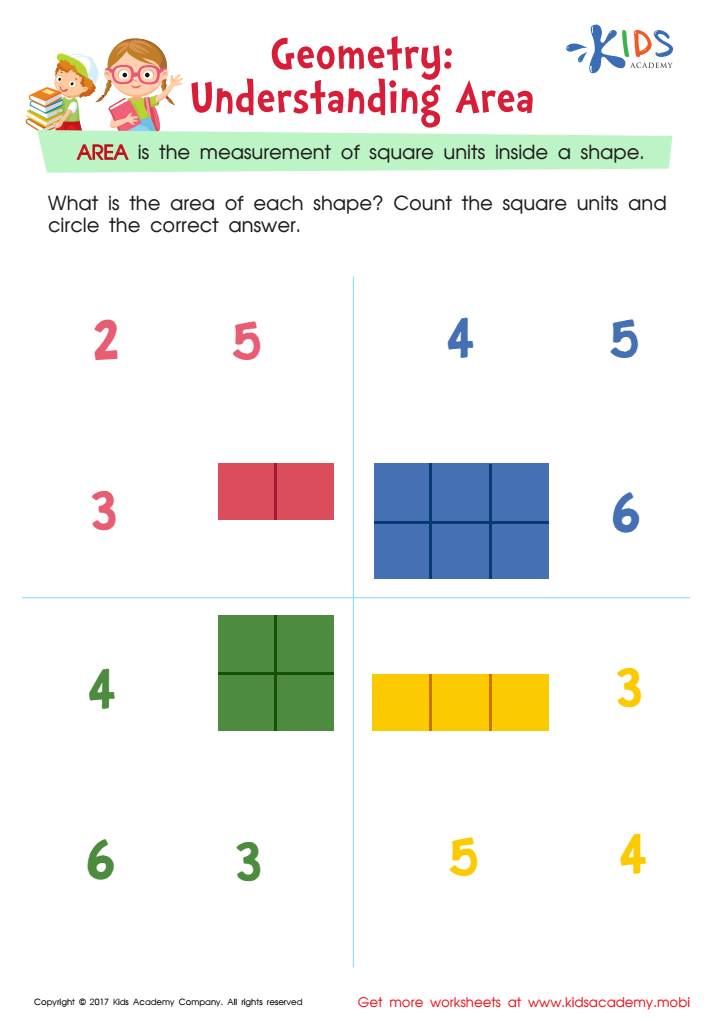
Understanding Area Worksheet
This helps them develop a better understanding and an easier way to learn instead of memorizing a formula.
Understanding Area Worksheet
Worksheet
Join Kids Academy for Free
Who is primarily going to use this learning content?








Measurement skills are crucial for children aged 7-8 as they form the foundation for more advanced mathematical concepts and daily life applications. At this developmental stage, kids are naturally curious about the world around them, and measurement helps satisfy this curiosity by allowing them to compare, comprehend, and quantify different aspects of their environment, such as length, weight, volume, and time.
Strong measurement skills facilitate better understanding in subjects like science and geography, where concepts such as distance, speed, and temperature are fundamental. Additionally, real-life applications—such as cooking, where measuring ingredients accurately is key, or building projects involving dimensions—become more manageable and less intimidating with a solid measurement foundation.
Beyond academics, measurement skills also play a significant role in developing a child’s cognitive abilities. These skills enhance problem-solving and logical thinking, encourage precision and accuracy, and boost confidence as tasks are completed successfully. For example, learning to tell time teaches responsibility and time management, crucial life skills that impact a child’s future success.
By emphasizing measurement skills, parents and teachers provide essential tools that help children navigate the world more effectively, fostering both academic and practical growth. Cultivating these abilities early encourages a lifelong appreciation for mathematics and its real-world applications.








