Spatial understanding Worksheets for Ages 7-8
3 filtered results
-
From - To
Unlock the power of visualization and improve problem-solving skills with our Spatial Understanding Worksheets for ages 7-8. Designed by experts and aligned with learning standards, these engaging activities cover essential spatial concepts such as shape recognition, symmetry, and spatial relationships. Perfect for young learners, these worksheets promote critical thinking and creativity through fun, interactive exercises. Easy to download and print, our resources offer an enjoyable way to enhance spatial awareness and boost confidence in mathematics and everyday tasks. Discover the joy of learning with Kids Academy's comprehensive collection tailored for young minds eager to explore and learn.
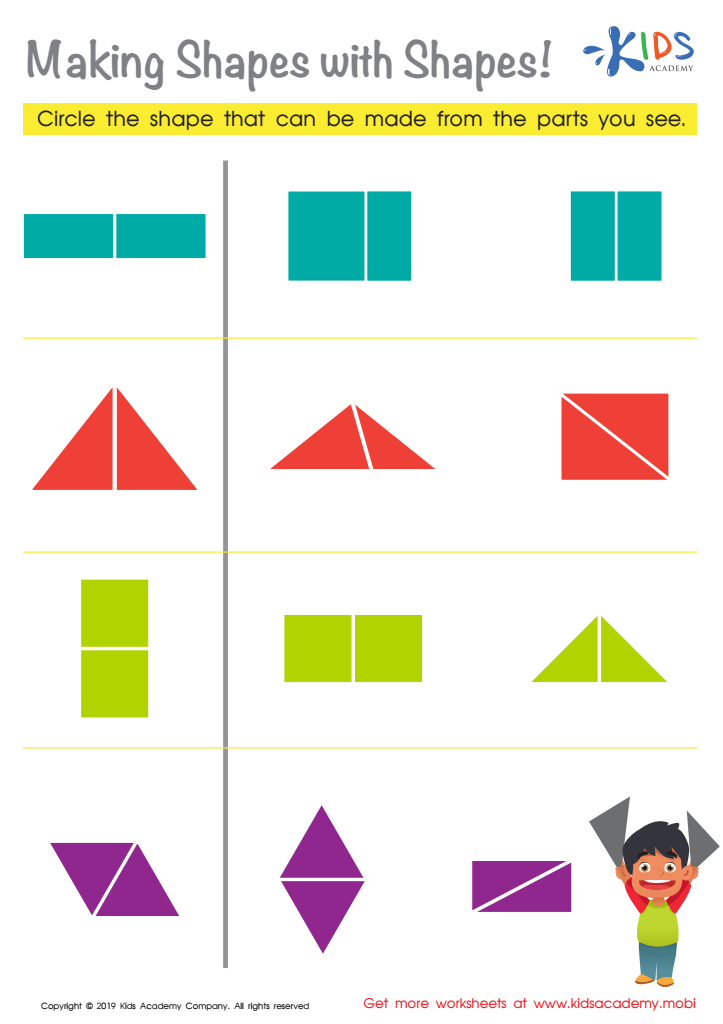
Making Shapes with Shapes Worksheet
 Assign to My Students
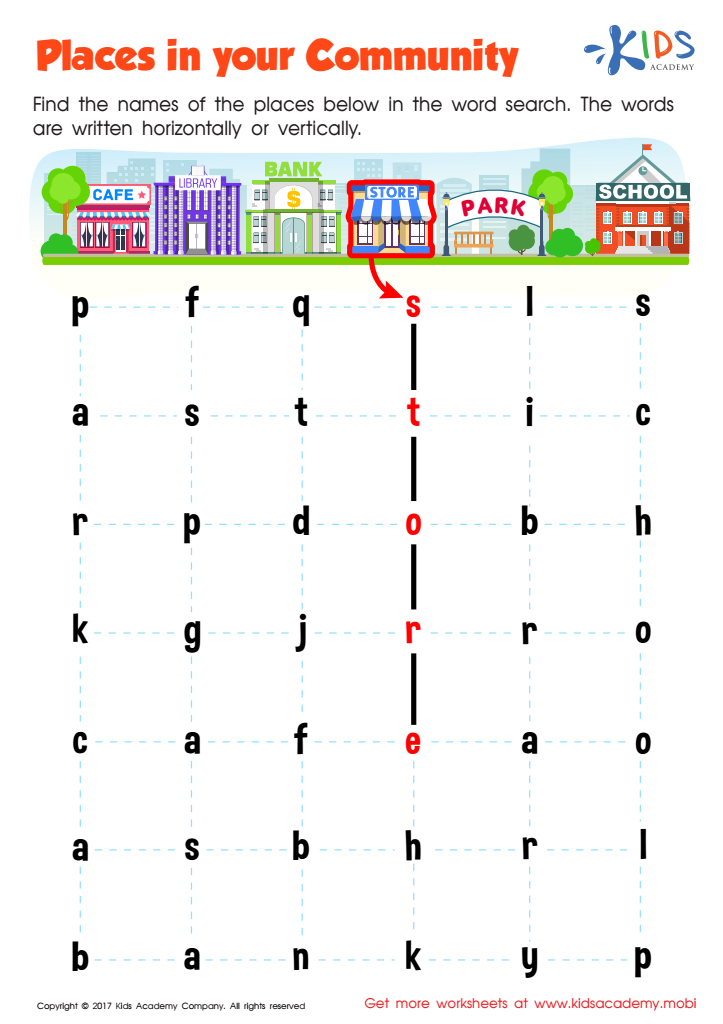
Places in Your Community Worksheet







Spatial understanding is crucial for children aged 7-8 as it lays the foundation for essential cognitive and practical skills they will use throughout their lives. At this developmental stage, children’s brains are highly adaptable, making it an optimal time to strengthen spatial abilities. Boys and girls with good spatial skills are better equipped to visualize and manipulate objects, which is incredibly beneficial for subjects like math, science, and technology.
When youngsters develop strong spatial understanding, it enhances their problem-solving abilities. For example, they can more easily comprehend geometric relationships and patterns, which directly contributes to their performance in math. Spatial skills also help with reading and writing, as they aid children in recognizing letter shapes and navigating the spatial arrangement of text on a page.
Moreover, spatial awareness impacts everyday activities. Understanding how to navigate spaces and gauge distances can make tasks like following directions, packing a backpack, or even engaging in sports smoother and safer.
Teachers and parents can nurture these skills using puzzles, building blocks, drawing activities, and interactive play. By promoting enhanced spatial comprehension in enjoyable and engaging ways, adults are setting children up for greater academic success and confidence in their abilities to navigate both the physical and conceptual worlds.








