Understanding bar graphs Worksheets for Ages 7-8
6 filtered results
-
From - To
Enhance your child's data interpretation skills with our "Understanding Bar Graphs Worksheets" tailored for ages 7-8. These engaging and colorful worksheets are designed to help young learners grasp the basics of reading, interpreting, and creating bar graphs. Perfect for developing math and analytical skills, each worksheet offers fun, educational activities that make learning about bar graphs an enjoyable experience. Through practical examples and structured exercises, children will build a strong foundation in graph-related concepts, preparing them for more advanced data handling. Make learning dynamic and interactive with our expertly crafted bar graph worksheets!
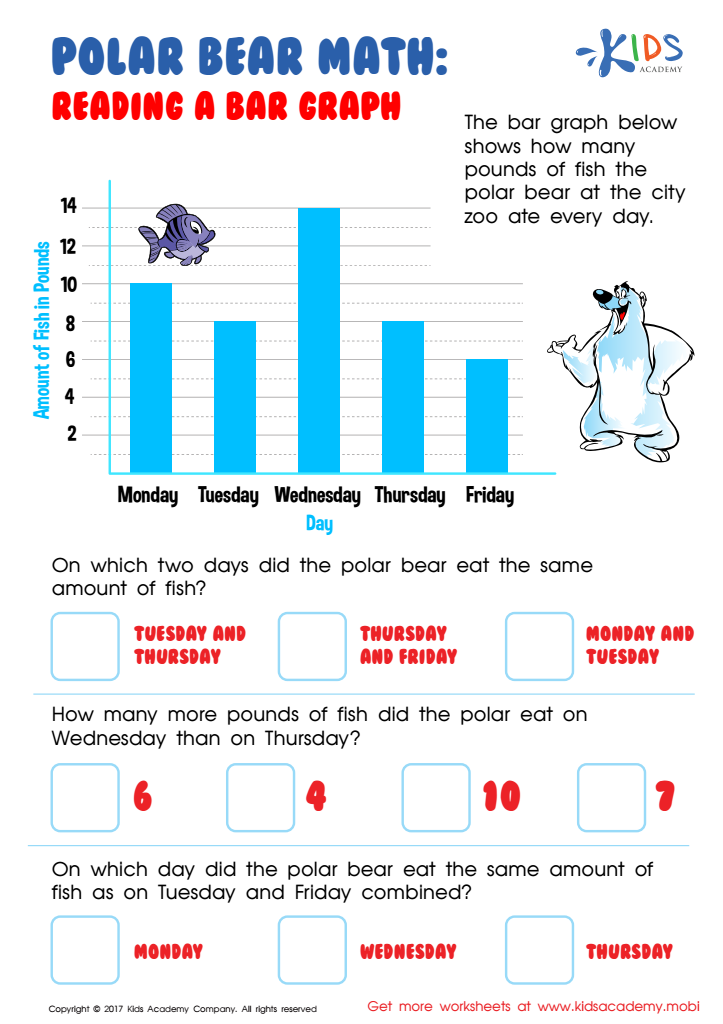
Reading Bar Graph Worksheet
 Assign to My Students
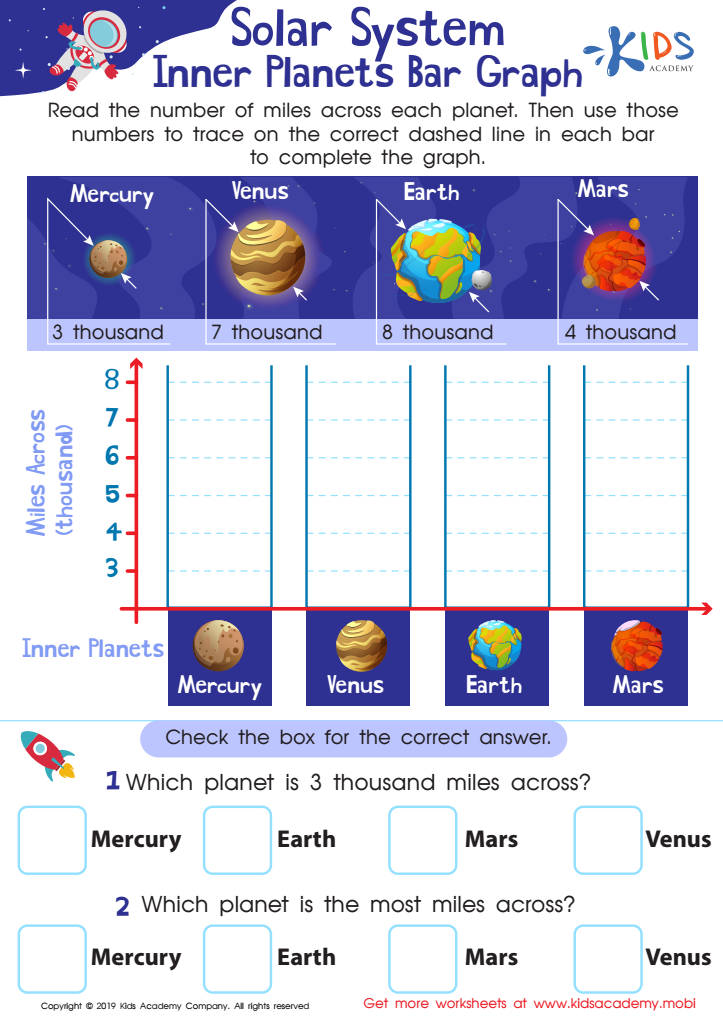
Planets Bar Graph Worksheet
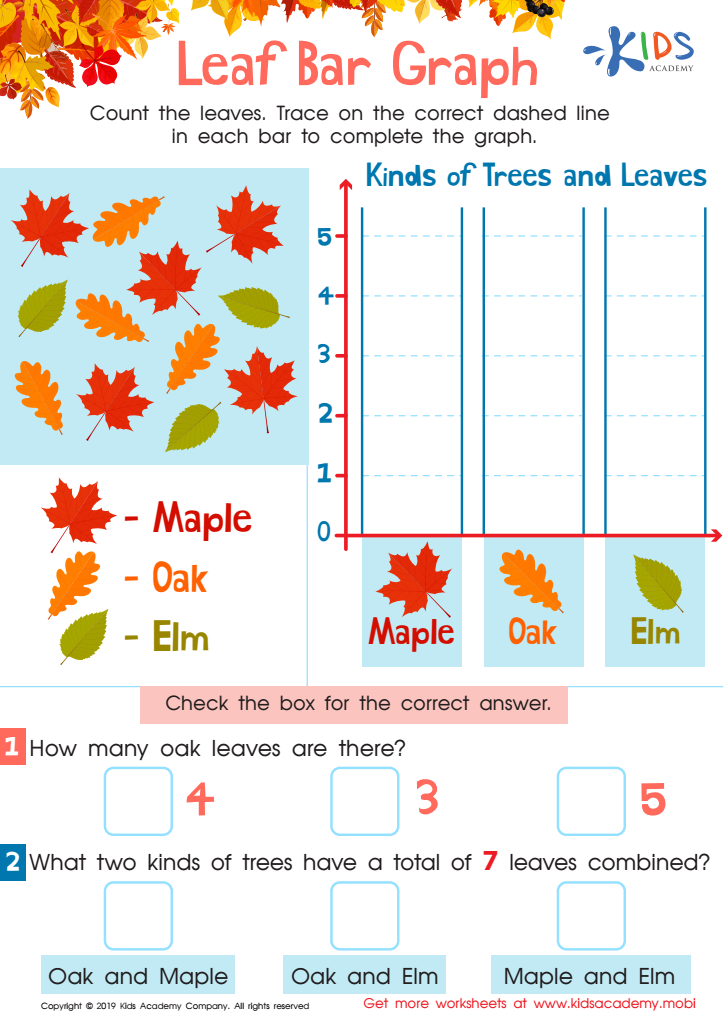
Leaf Bar Graph Worksheet
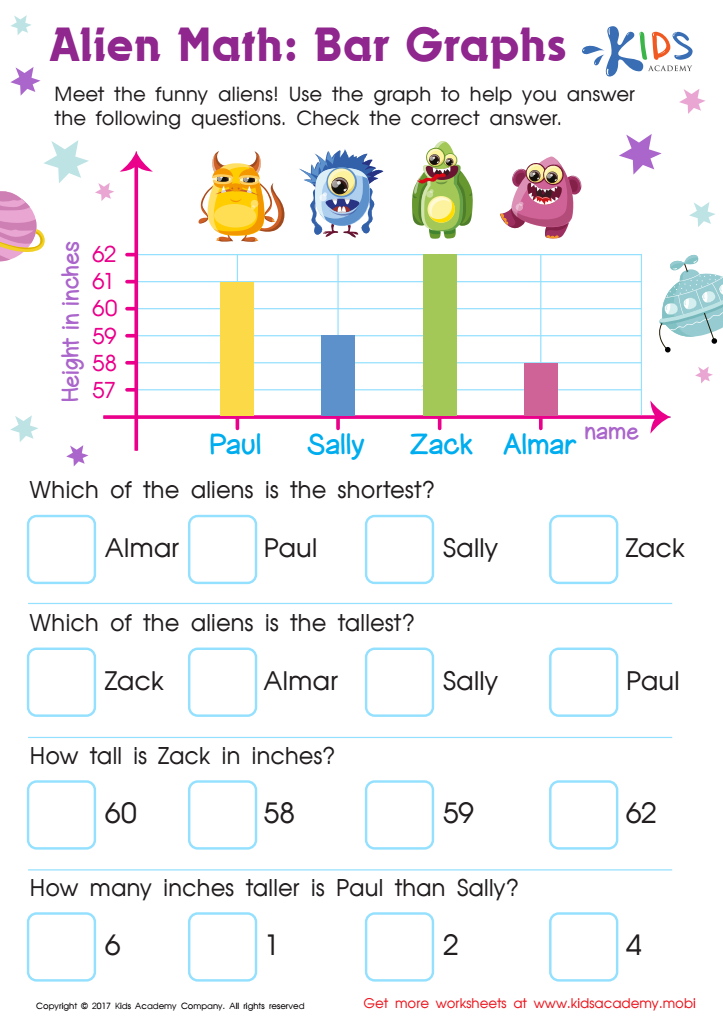
Bar Graphs Worksheet
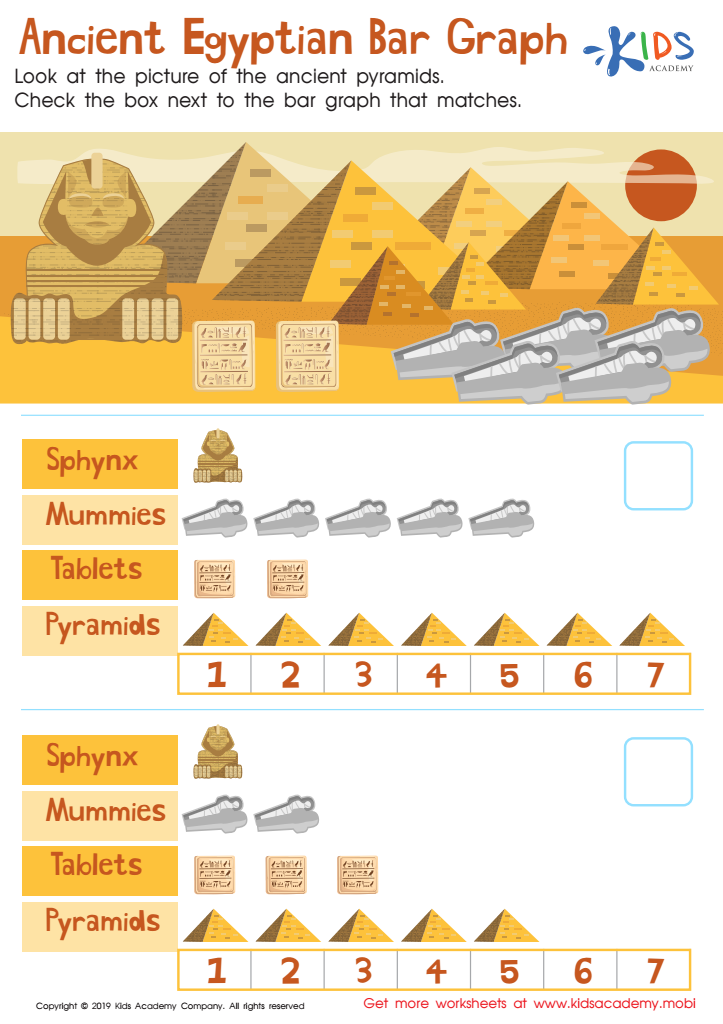
Egyptian Bar Graph Worksheet








Understanding bar graphs is crucial for children aged 7-8 because it serves as a foundational skill in their mathematical development. At this age, kids are learning to interpret and analyze data, skills that are essential across various academic subjects and real-world situations. Bar graphs, with their simple, visual representation of information, make complex data easy to understand for young learners.
Firstly, bar graphs support basic numeracy and literacy skills. They help children grasp concepts like comparison, counting, addition, and subtraction. When students learn to read bar graphs, they are better equipped to handle more advanced math topics later on, including algebra and statistics.
Secondly, understanding bar graphs enhances critical thinking. Children learn to draw conclusions based on visual data, which hones their analytical skills. For example, they may answer questions like, "Which category has the highest or lowest number?"
Additionally, bar graphs encourage communication skills. When students create and interpret bar graphs, they must describe their findings. This verbalizes their thought process and boosts their ability to articulate complex ideas clearly.
As children grow up in a data-driven society, competency in reading bar graphs will be invaluable. Thus, parents and teachers should prioritize this skill to ensure children are well-prepared for future academic challenges and everyday decision-making.








