Understanding comparisons Worksheets for Ages 7-8
4 filtered results
-
From - To
Unlock your child's potential with our “Understanding Comparisons Worksheets” designed specifically for kids aged 7-8. These engaging printable worksheets help young learners develop essential comparison skills focusing on more, less, greater than, and fewer than concepts. Utilizing fun visuals and interactive exercises, children will master comparing numbers, objects, and quantities in a friendly setting. Each worksheet encourages critical thinking and problem-solving, enriching their understanding of mathematical relationships. Perfect for both classroom activities and home learning, our worksheets pave the way for effective learning while keeping students motivated. Explore the joy of comparisons today and boost your child's confidence in mathematics!
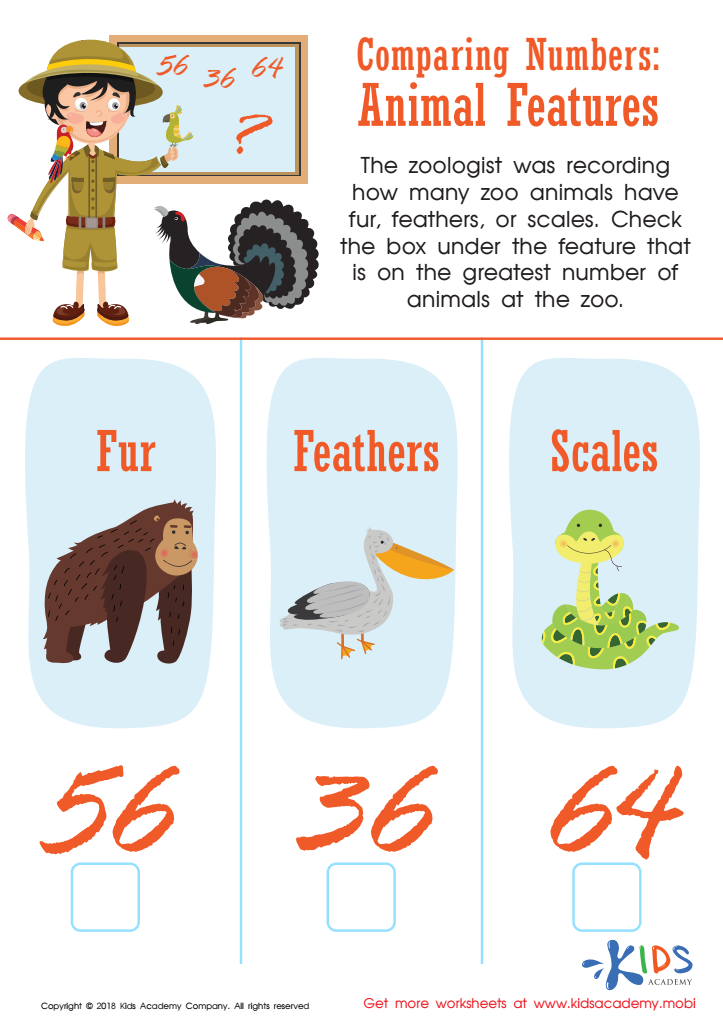
Animal Features Worksheet
 Assign to My Students
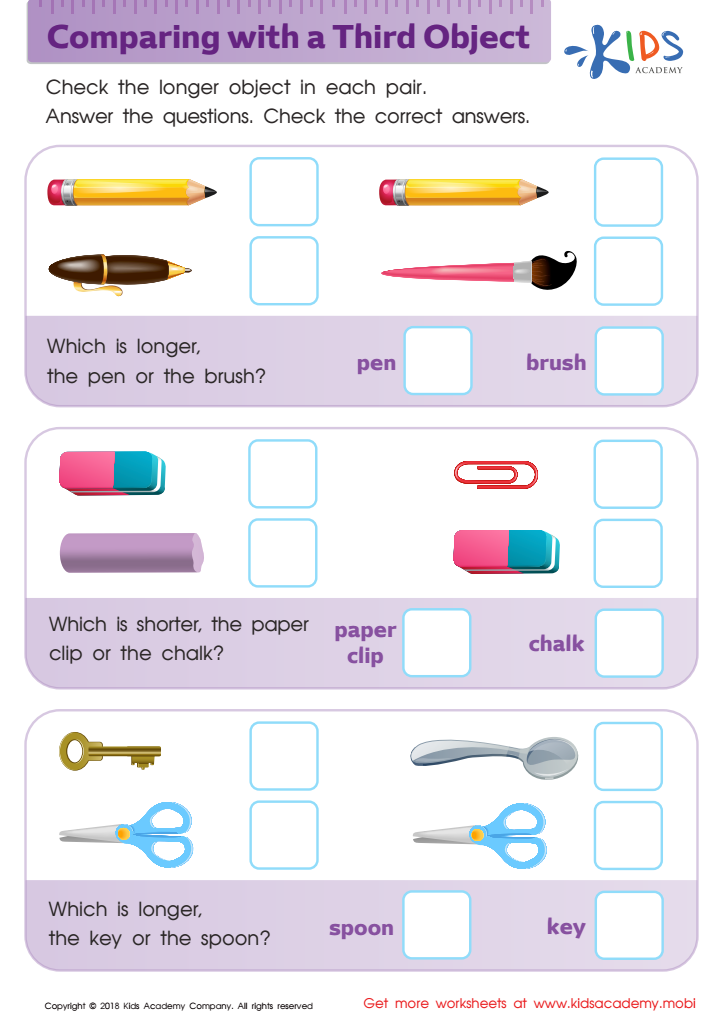
Comparing with a Third Object Worksheet
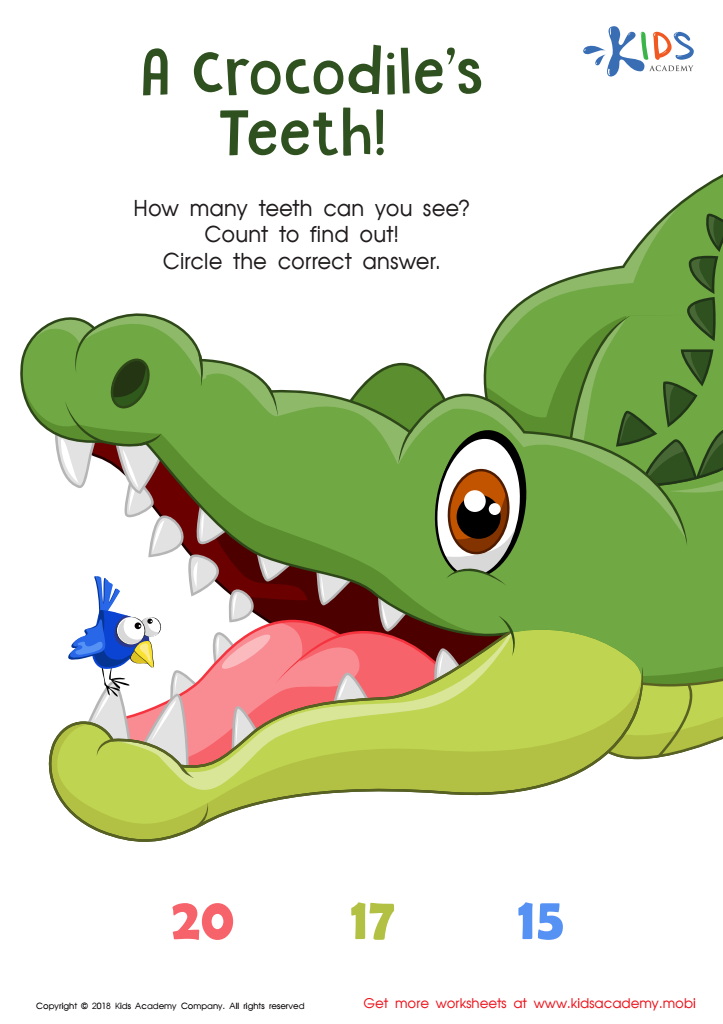
A Crocodile's Teeth Worksheet
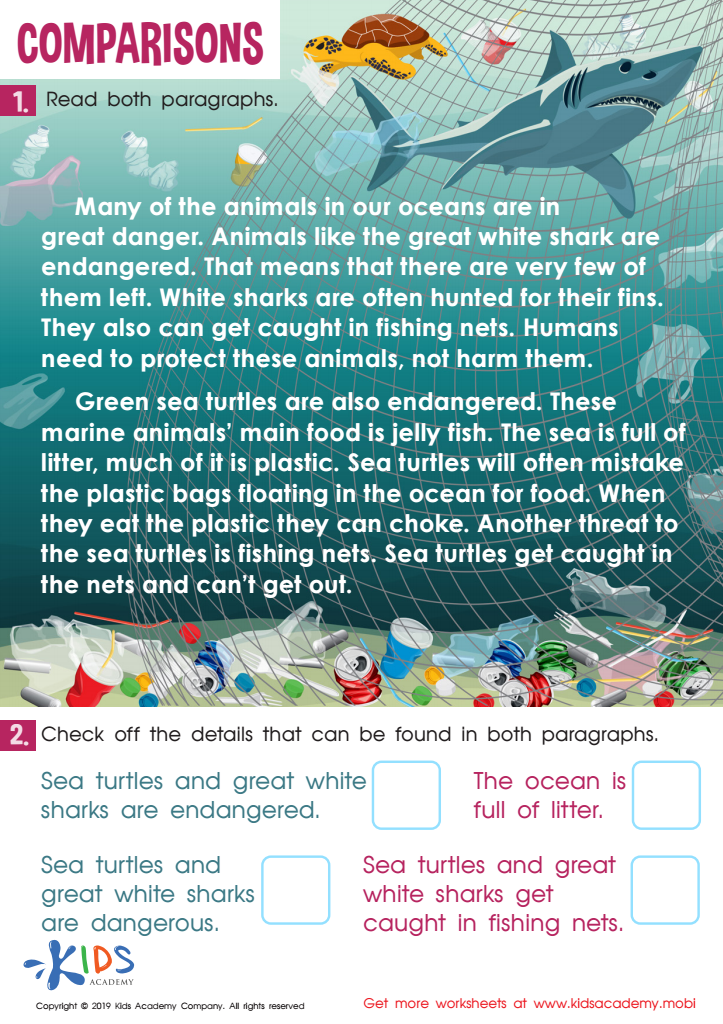
Comparisons Worksheet




.jpg)


Understanding comparisons is a crucial skill for children aged 7-8, as it lays the foundation for various academic competencies and everyday decision-making. At this stage, children are not only learning basic math but are also developing critical thinking skills. By comparing numbers, sizes, and quantities, they enhance their analytical abilities, which are essential for problem-solving and logical reasoning.
Engaging in comparisons helps students excel in mathematics, where concepts such as greater than, less than, and equal to are introduced. This understanding is key for grasping more complex concepts, like addition and subtraction, later in their education. Additionally, comparisons extend beyond math; they are essential in reading comprehension, enabling children to identify similarities and differences in texts, enhancing their analytical thinking about characters, events, and themes.
For parents and teachers, fostering comparison skills encourages a deeper understanding of relationships and categorization in the world around them. This can be incorporated into daily activities, from cooking to shopping, where setting benchmarks and evaluating choices empower children to make informed decisions. Overall, fostering this skill not only supports academic growth but promotes lifelong critical thinking abilities too.








