Understanding equality Worksheets for Ages 7-8
5 filtered results
-
From - To
Empower your 7-8-year-olds with our engaging "Understanding Equality" worksheets, designed to enhance their grasp of mathematical equality concepts. These worksheets offer fun activities and exercises to help kids recognize and balance numbers and equations effectively. By exploring these essentials, children develop critical thinking and problem-solving skills that are foundational for future math success. Our expertly crafted materials cater to young learners, making abstract concepts accessible and enjoyable. Transform math practice into an exciting adventure and solidify your child’s understanding of equality with our comprehensive and interactive worksheets, tailored to foster development through practice and play.
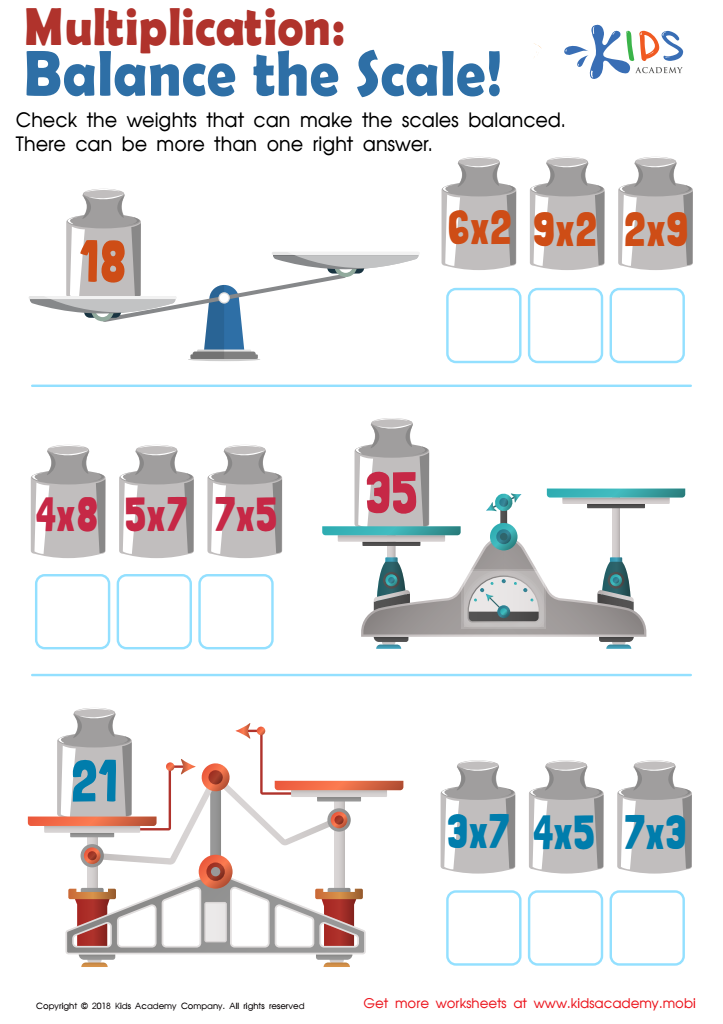
Balance the Scales Multiplication Worksheet
 Assign to My Students
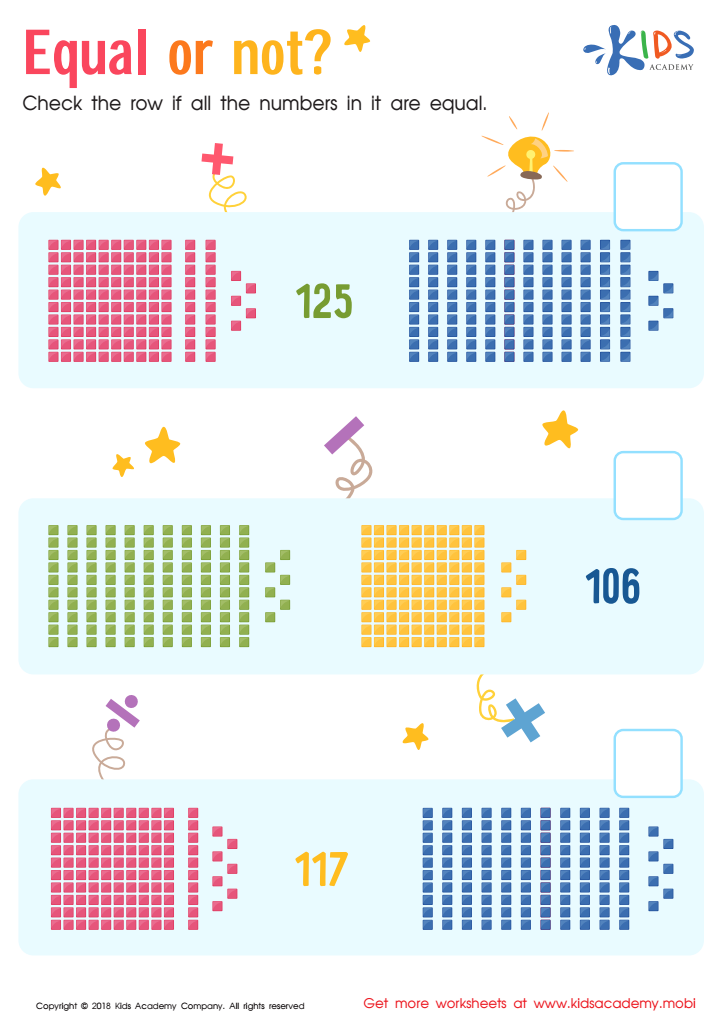
Equal or not Worksheet
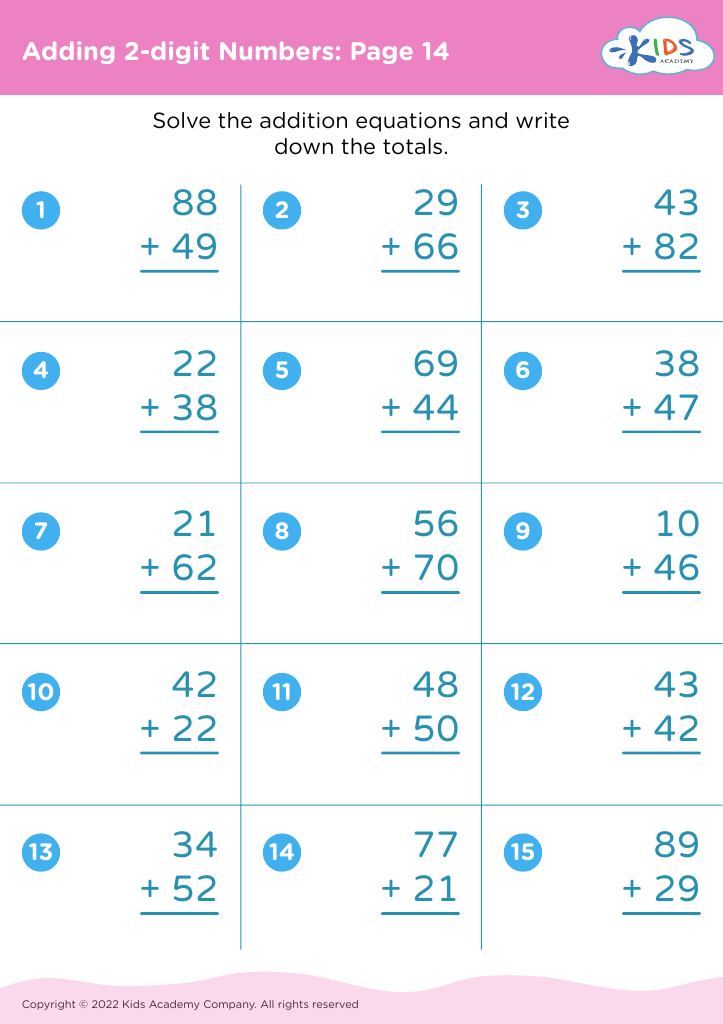
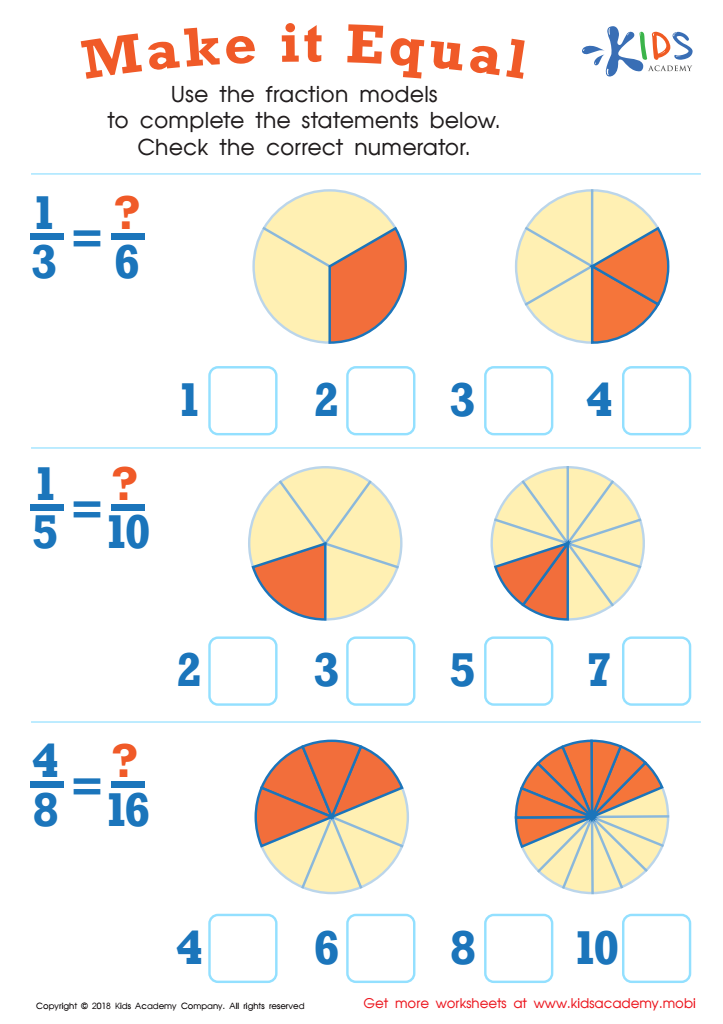
Make It Equal Worksheet
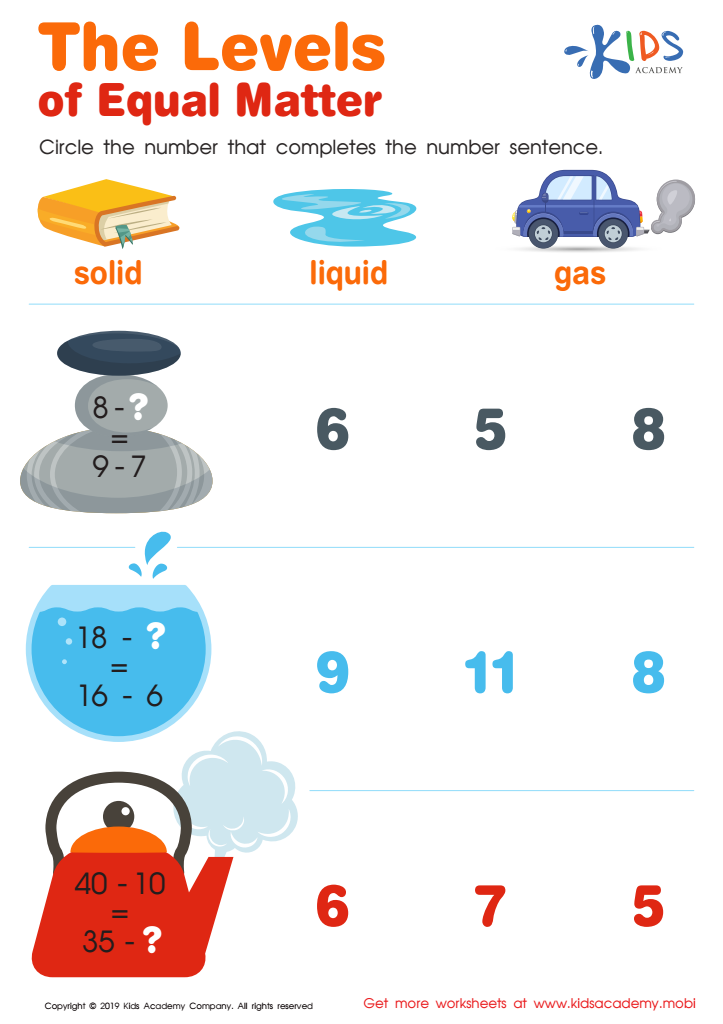
The Levels of Equal Matter Worksheet






Understanding equality is crucial for children aged 7-8 because it lays a foundation for fairness, empathy, and social justice. At this age, children begin to form their own opinions and understand complex ideas, so it’s the perfect time to instill the principles of equality. For parents and teachers, promoting equality teaches children to respect and value individual differences, fostering an inclusive environment where every child feels safe and accepted. This early education helps in diminishing prejudices and biases, leading to more harmonious communities both inside and outside the classroom.
Moreover, understanding equality supports academic and personal development. Children who are taught to see everyone as equals are more likely to work collaboratively and engage positively with peers, enhancing their social skills and learning experiences. Concepts of equality also help children grasp basic democratic values, such as fairness and justice, which are essential for responsible citizenship in a diverse society.
Furthermore, teaching equality nurtures self-esteem and positive self-identity. When children understand and practice equality, they can better appreciate their worth and the worth of others, promoting mental and emotional well-being. Parents and teachers play a vital role by modeling equitable behavior, addressing stereotypes and biases, and ensuring every child’s voice is heard and valued.








