
Understanding fact families Worksheets for Ages 7-8
8 filtered results
Difficulty Level
Grade
Age
-
From - To
Subject
Activity
Standards
Boost your child's math skills with our Understanding Fact Families worksheets designed for ages 7-8. These engaging, colorful printables help children grasp the relationships between addition, subtraction, and related number sentences. Our worksheets provide comprehensive practice for mastering basic math concepts through fun, interactive exercises. With these resources, kids will gain confidence in solving problems, enhance their arithmetic fluency, and develop a strong foundation in early math learning. Ideal for classroom or home use, these worksheets support teachers and parents in making learning both effective and enjoyable. Explore more and watch your child’s math skills grow!
Favorites
With answer key
Interactive
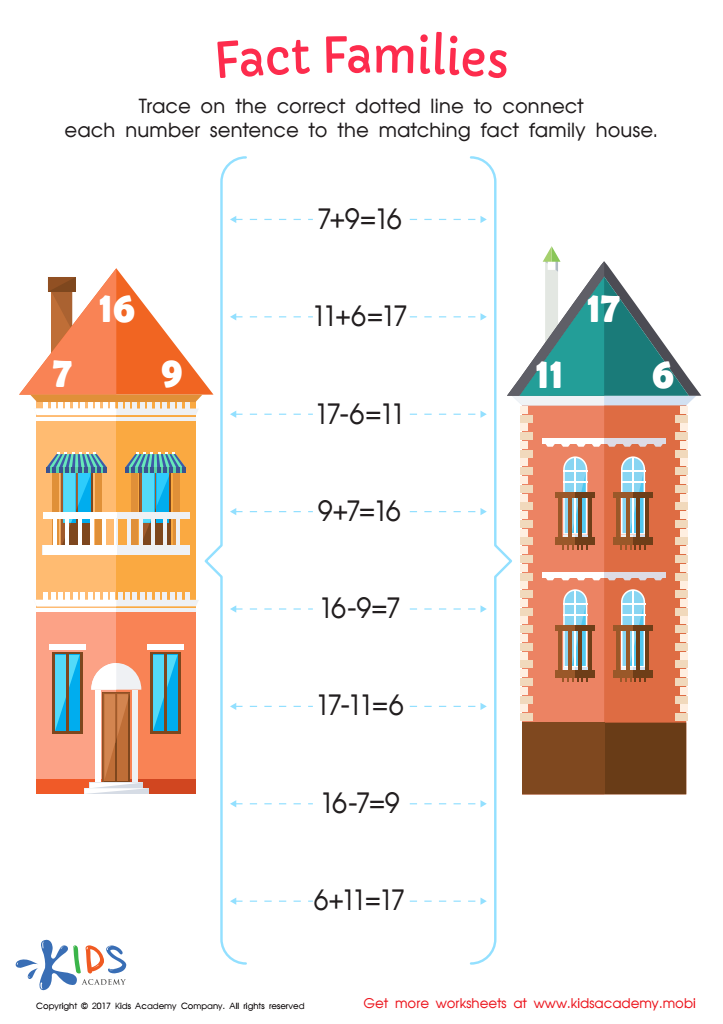
Fact Families — Add and Subtract Worksheet
Kids will love seeing how families of numbers "live" in their own houses!
 Assign to My Students
Fact Families — Add and Subtract Worksheet
Worksheet
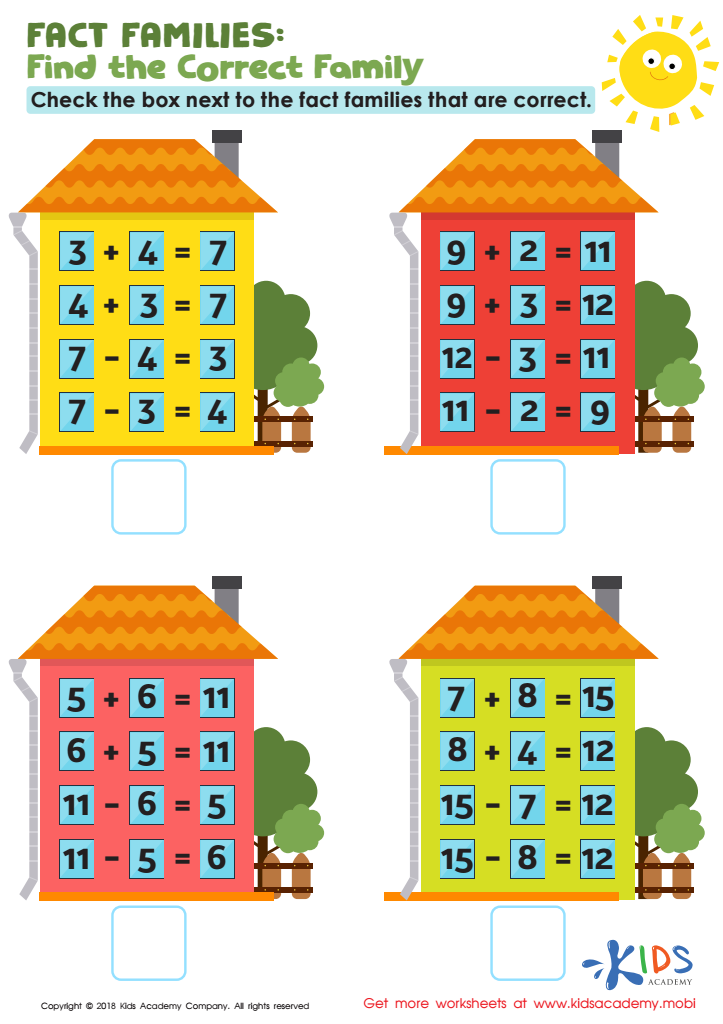
Fact Families: Find Correct Family Worksheet
Test your students' math and reasoning skills with this worksheet. It features 4 houses, each with a group of fact families on it. Some are correct, some are wrong - help students identify which are correct and circle the box next to them. This will help them progress in school.
Fact Families: Find Correct Family Worksheet
Worksheet
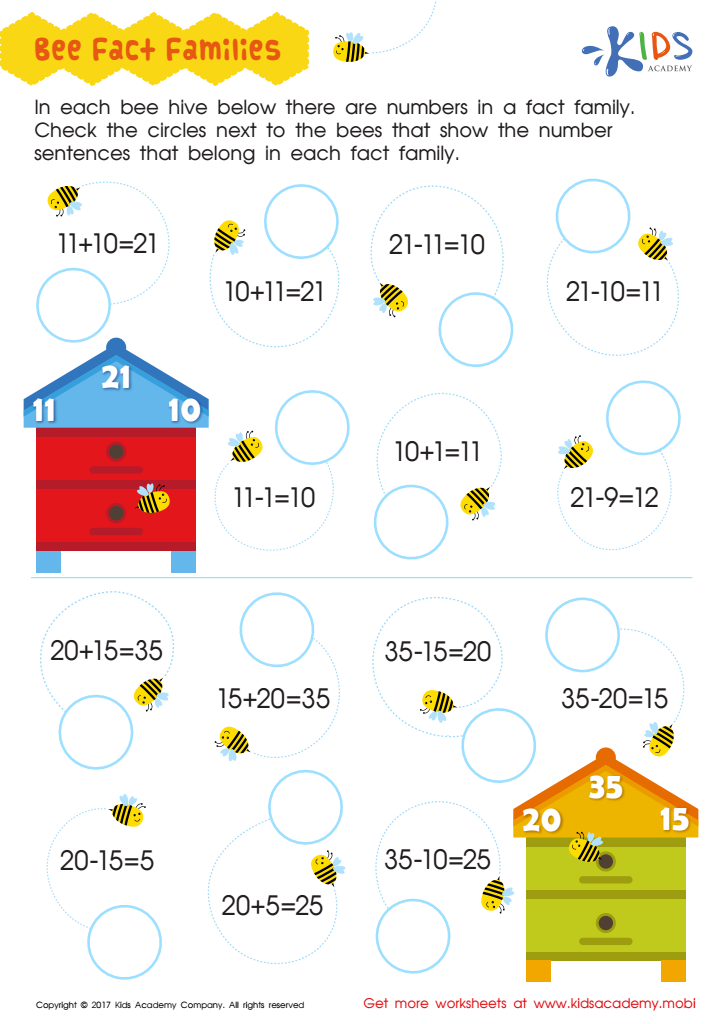
Fact Families Worksheet
Your 2nd grader will love this engaging activity.
Kids will buzz about fact families with this fun worksheet! Images of bees and their hives make learning numeracy enjoyable. Engaging and entertaining, your 2nd grader will love this activity.
Fact Families Worksheet
Worksheet
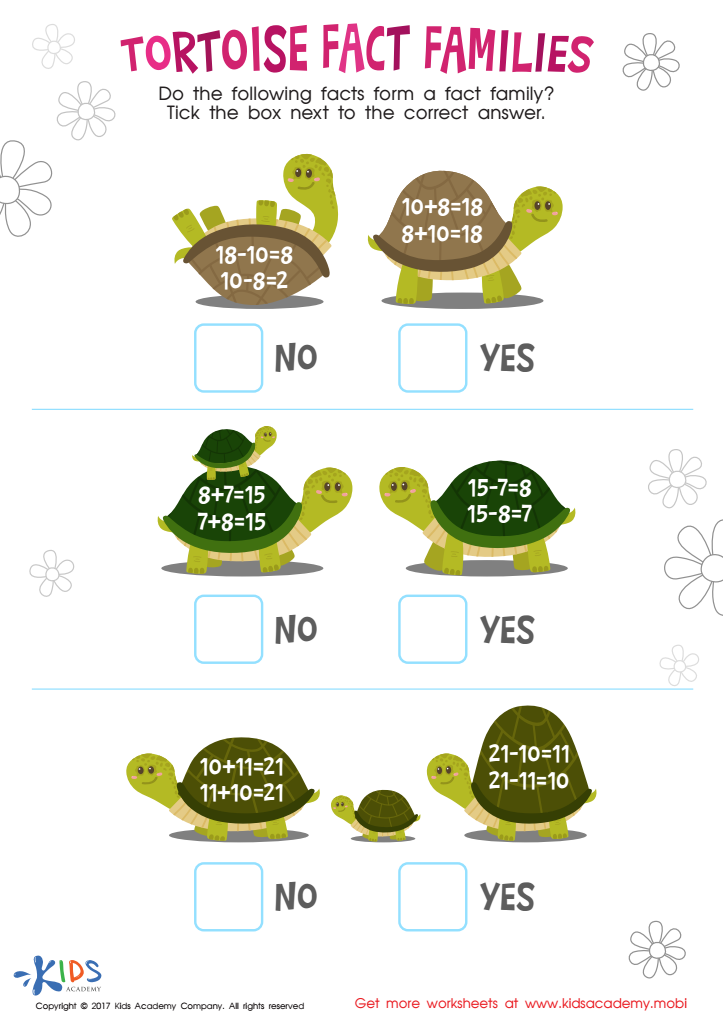
Tortoise Fact Families Printable
With 1st grade add & subtract tortoises, kids can improve their math understanding and skills. Enjoy fun, hands-on practice with fact families and strengthen logical reasoning and critical thinking!
Tortoise Fact Families Printable
Worksheet
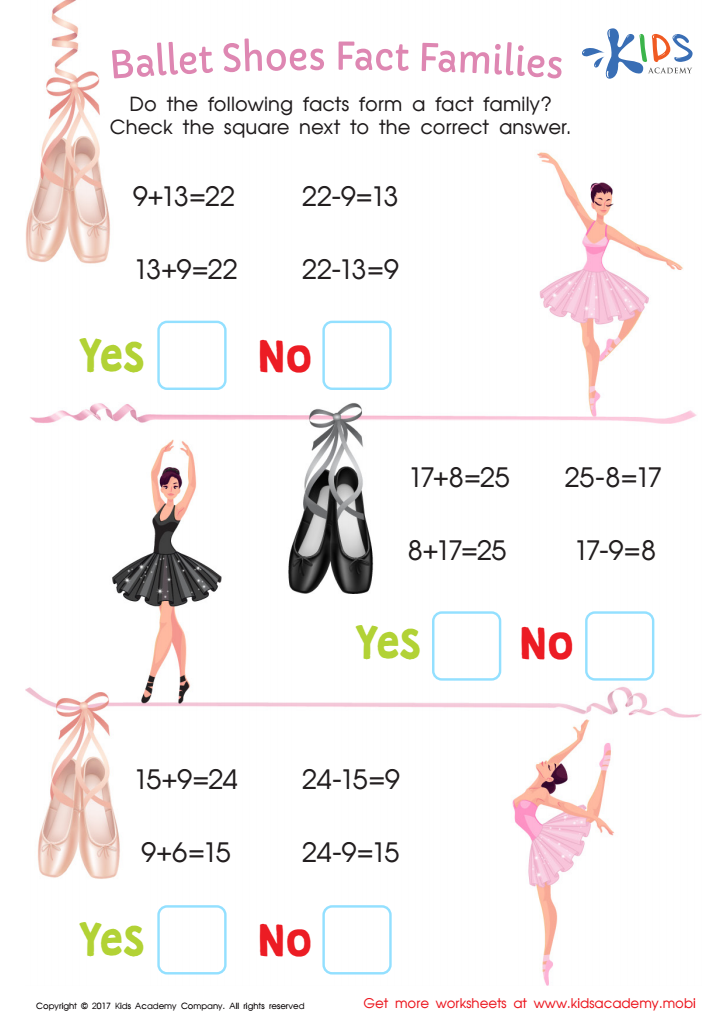
Ballet Shoes Fact Family Printable
Have them observe the equations and determine which groupings are fact families for a delightful learning experience. It encourages critical thinking, showing how addition and subtraction are related.
Ballet Shoes Fact Family Printable
Worksheet
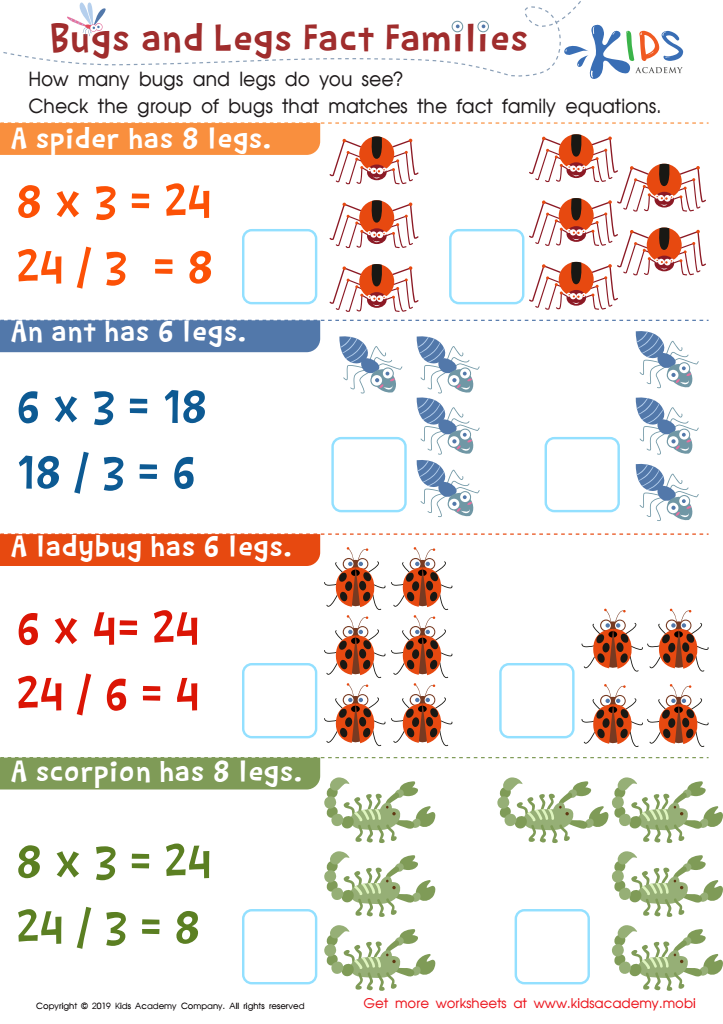
Bugs and Legs Fact Families Worksheet
This free worksheet uses bugs and insects to help young math students learn about fact families and recognize patterns in multiplication and division. It's a fun and colorful way to gain automaticity and efficiency in computation skills, without even realizing it's math!
Bugs and Legs Fact Families Worksheet
Worksheet
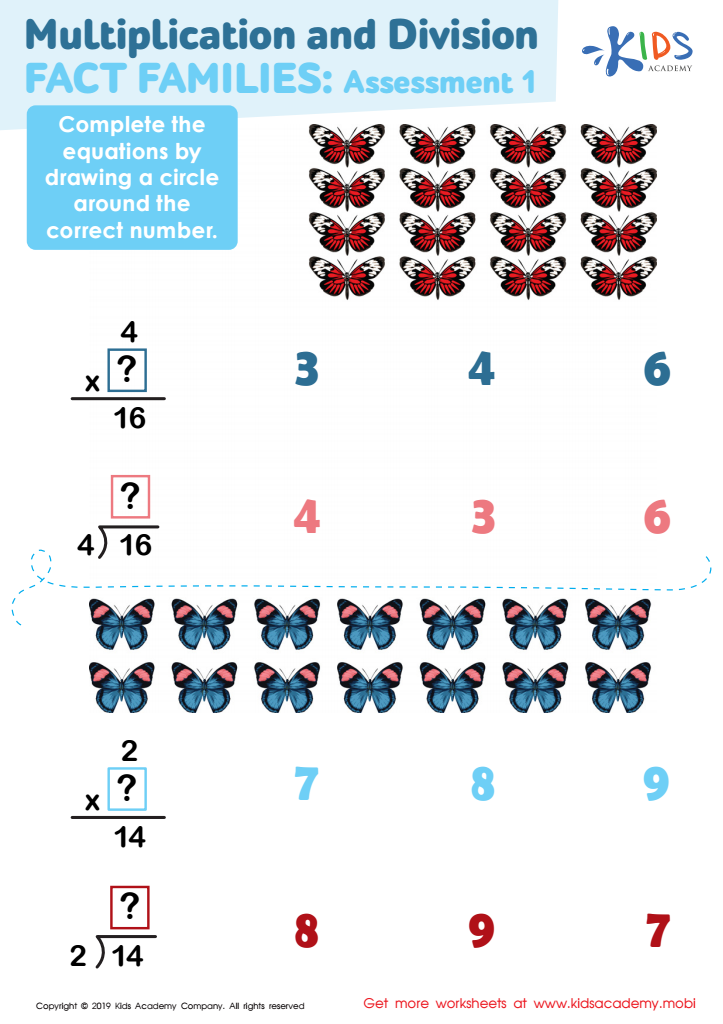
Multiplication and Division Fact Families Assessment 1 Worksheet
When it comes to multiplication and division, automaticity and efficiency are key. Test your child's understanding of fact families with this free butterfly worksheet. They'll practice equations, picture concepts and fact families to arrive at the correct number. Repetition will help them develop strong skills and confidence.
Multiplication and Division Fact Families Assessment 1 Worksheet
Worksheet
Join Kids Academy for Free
Who is primarily going to use this learning content?





Understanding fact families is fundamental for children aged 7-8 as it helps to establish a strong foundation in mathematics. A fact family is a group of related math facts using the same numbers. For example, the numbers 2, 3, and 5 create the fact family equations: 2 + 3 = 5, 3 + 2 = 5, 5 - 3 = 2, and 5 - 2 = 3.
First, fact families enhance children's comprehension of addition and subtraction as interconnected operations rather than isolated skills. This deep, relational understanding aids in quicker recall of basic facts, reducing cognitive load and making advanced math more accessible.
Second, children gain confidence in their math capabilities as they recognize these relationships. For instance, knowing that if 3 + 4 = 7, then 7 - 4 must also equal 3, empowers them to solve more problems independently.
Third, recognizing patterns through fact families fosters critical thinking and problem-solving skills. It teaches children to see relationships and patterns between numbers, which is a transferrable skill across various areas of math and real-life scenarios.
Therefore, focusing on fact families is not merely about memorizing numbers—it's about building blocks for higher-order math and boosting overall cognitive development. Teachers and parents should care because it lays the groundwork for academic success and logical thinking agility in their children.








