Visual perception improvement Worksheets for Ages 7-8
12 filtered results
-
From - To
Boost your child's visual processing skills with our specialized Visual Perception Improvement Worksheets for ages 7-8. These expertly designed activities focus on enhancing visual discrimination, attention to detail, and spatial awareness, crucial for academic success. Each worksheet offers engaging tasks, from matching similar shapes and finding hidden objects to complex pattern recognition exercises. Perfectly tailored for young learners, our resources make learning enjoyable while promoting essential cognitive skills. Enhance your child's visual memory and observational prowess, preparing them for academic challenges ahead. Visit Kids Academy for top-quality educational materials that turn skill-building into fun adventures!
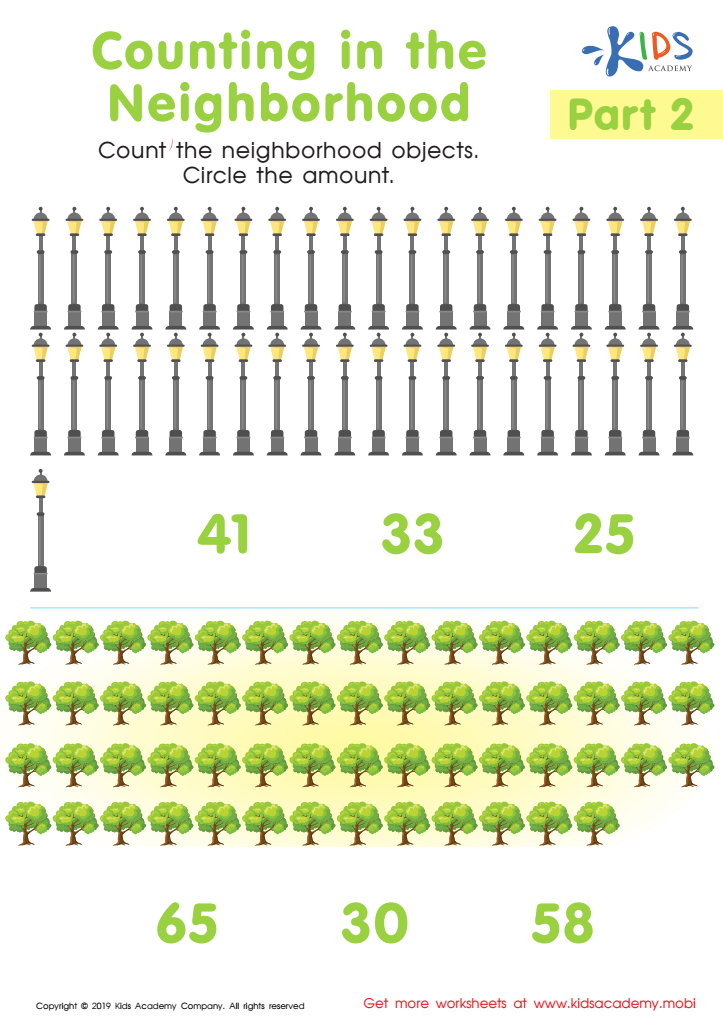
Counting In The Neighborhood Part 2 Worksheet
 Assign to My Students
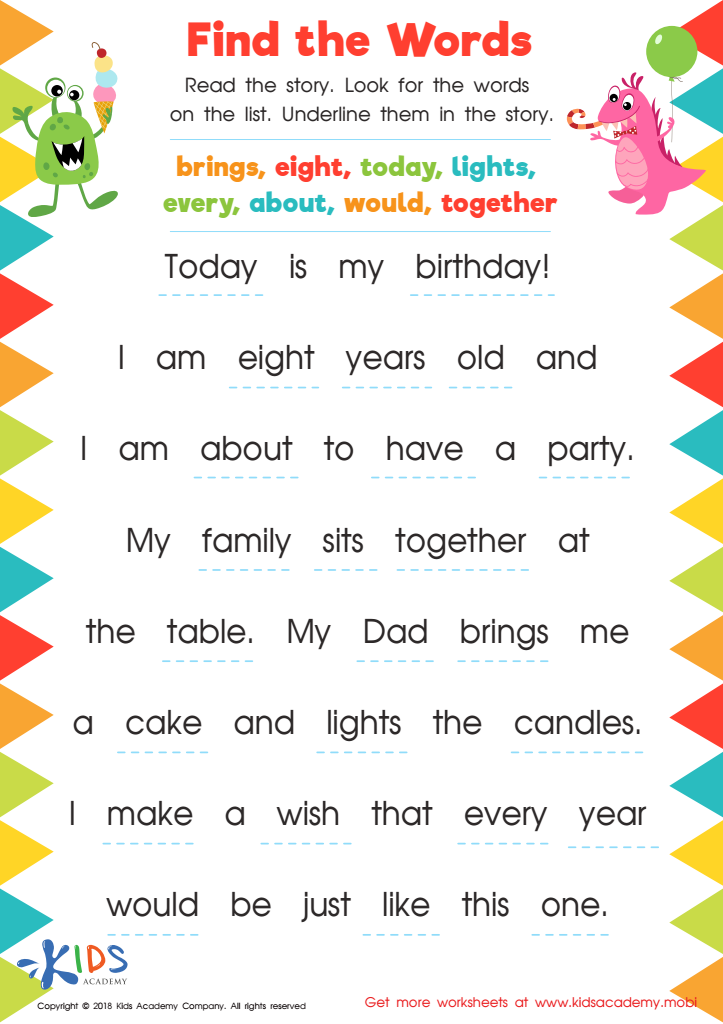
Find The Words Printable Worksheet
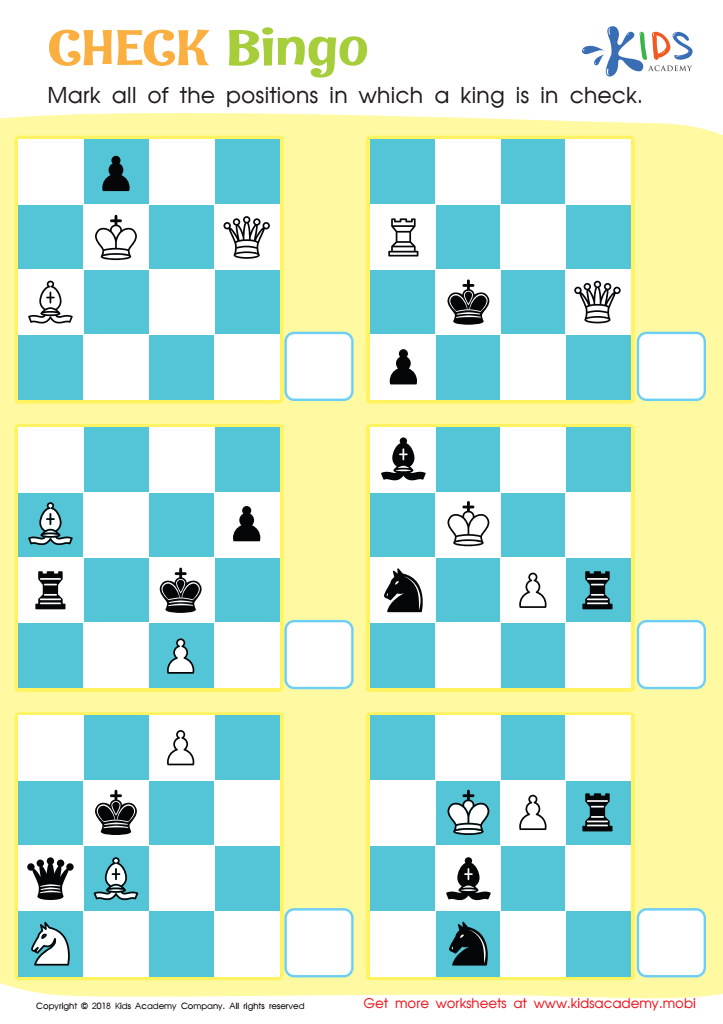
Check Bingo Worksheet
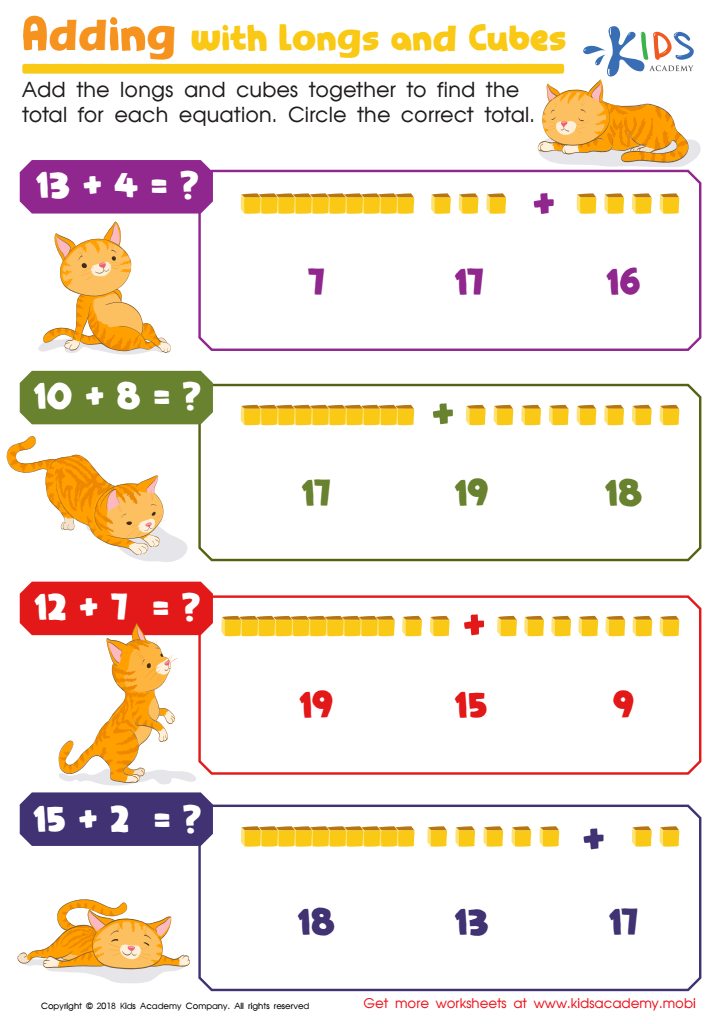
Adding With Longs and Cubes Worksheet
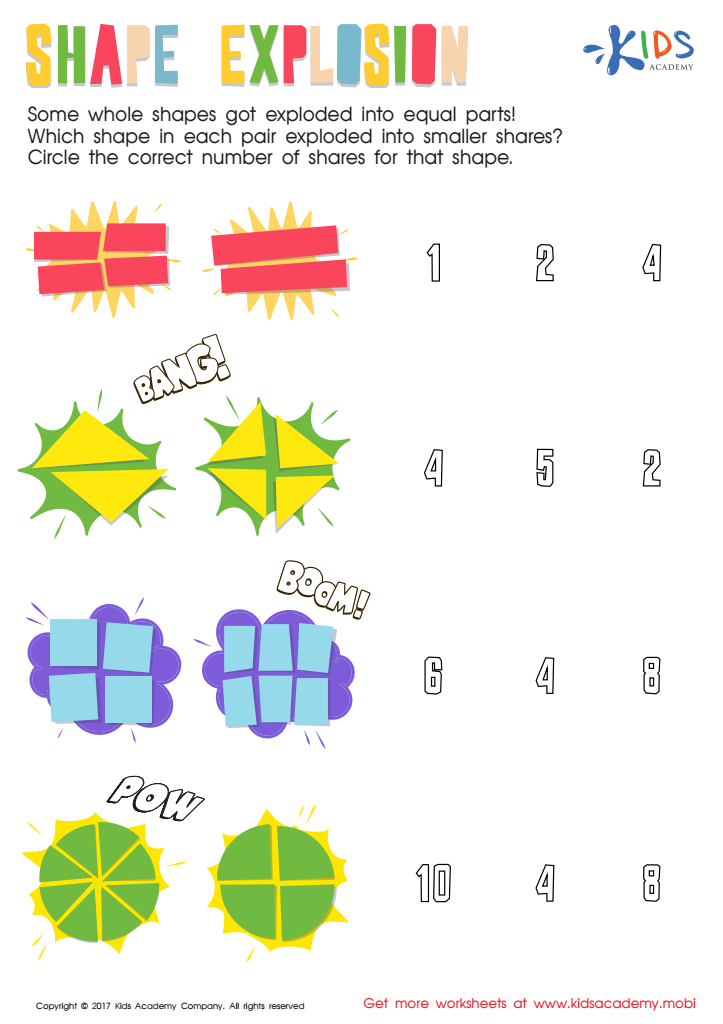
Shape Explosion Worksheet
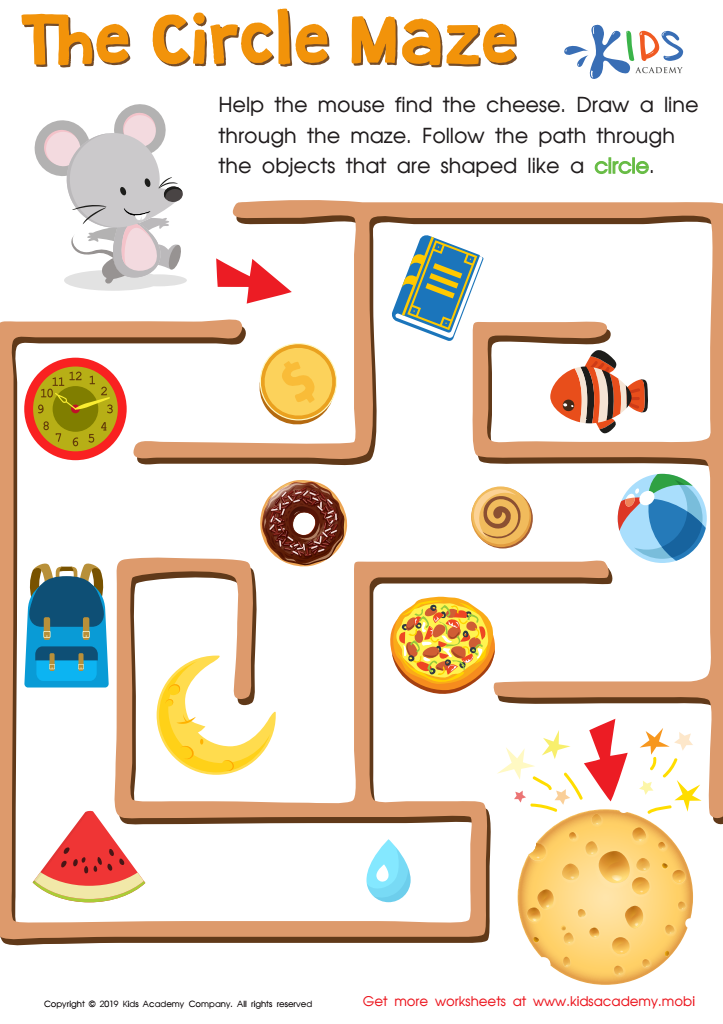
The Circle Maze Worksheet
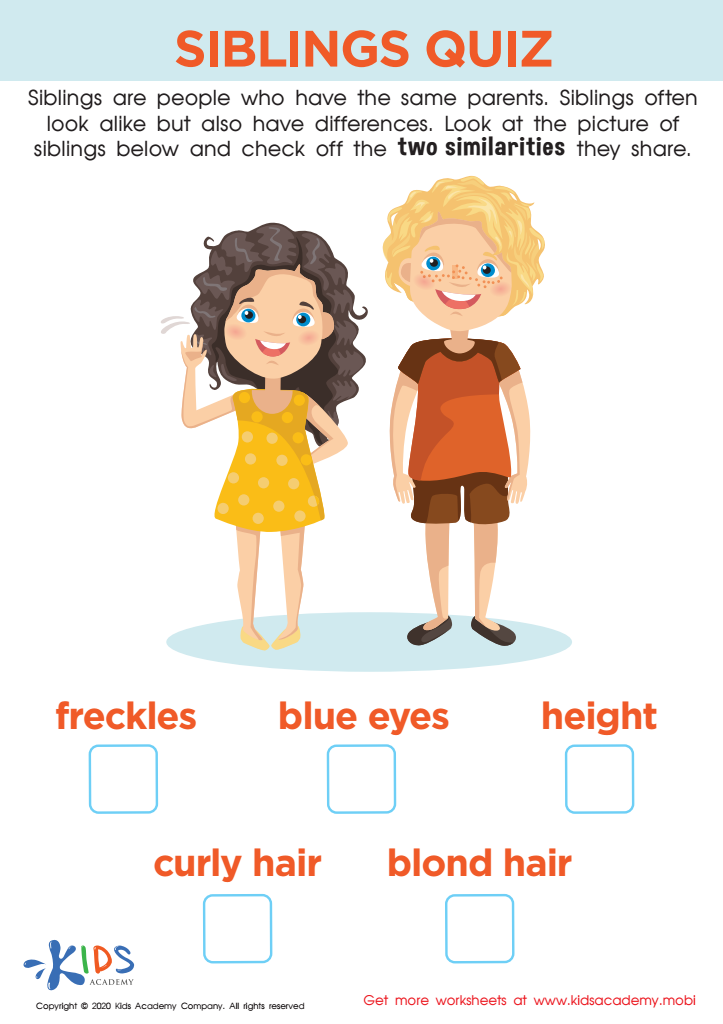
Siblings Quiz Worksheet
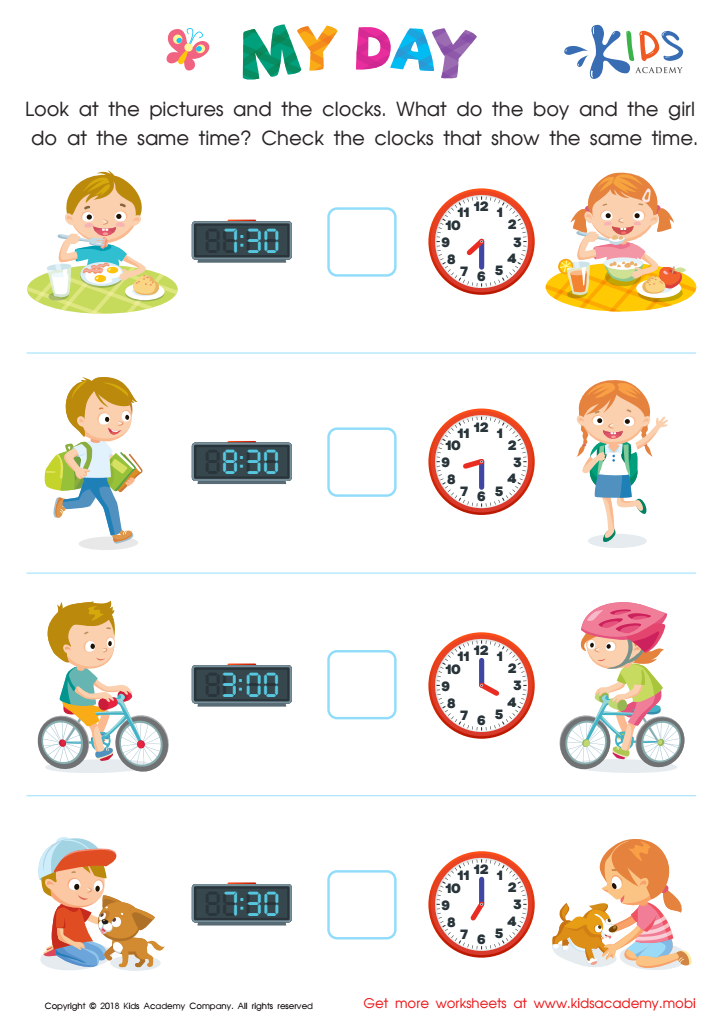
My Day Worksheet
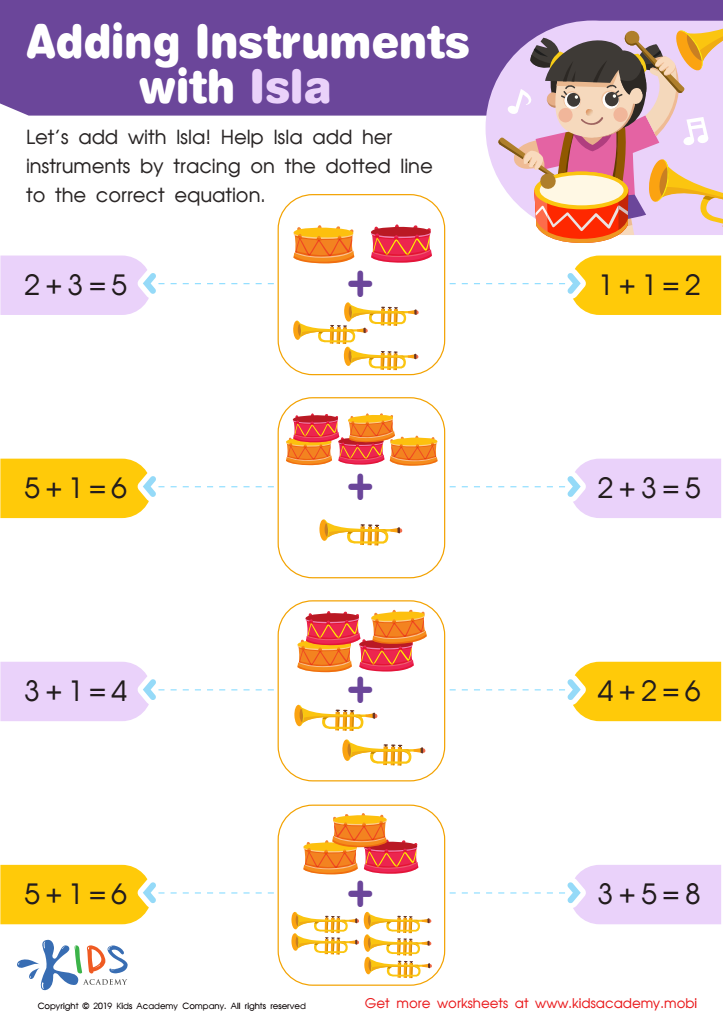
Adding Instruments with Isla Worksheet






Visual perception is crucial for children aged 7-8 as it significantly impacts their readiness and ability to learn. This skill allows them to interpret and process visual information from their surroundings, which in turn influences reading, writing, math, and general classroom performance. By enhancing visual perception, parents and teachers can help children better distinguish letter shapes, notice subtle differences, and understand spatial relationships — all foundational for academic success.
Reading, in particular, relies heavily on good visual perception. Recognizing words, tracking lines of text, and understanding the relationship between letters and sounds all depend on this skill. Children who struggle with visual perception may find reading challenging, which can lead to frustration, lower self-esteem, and reluctance to participate in activities involving literacy.
In mathematics, visual perception helps children grasp concepts like shapes, sizes, patterns, and spatial awareness. It also plays a role in solving puzzles, completing mazes, and participating in other hands-on activities that develop critical thinking and problem-solving skills.
Promoting visual perception through playful activities such as puzzles, drawing, and interactive games not only supports academic achievement but also nurtures a child's cognitive and motor development. By prioritizing this aspect of learning, parents and teachers can set a strong foundation for lifelong education and personal growth.








