Recognizing shapes Adding up to 100 Worksheets for Ages 7-8
8 filtered results
-
From - To
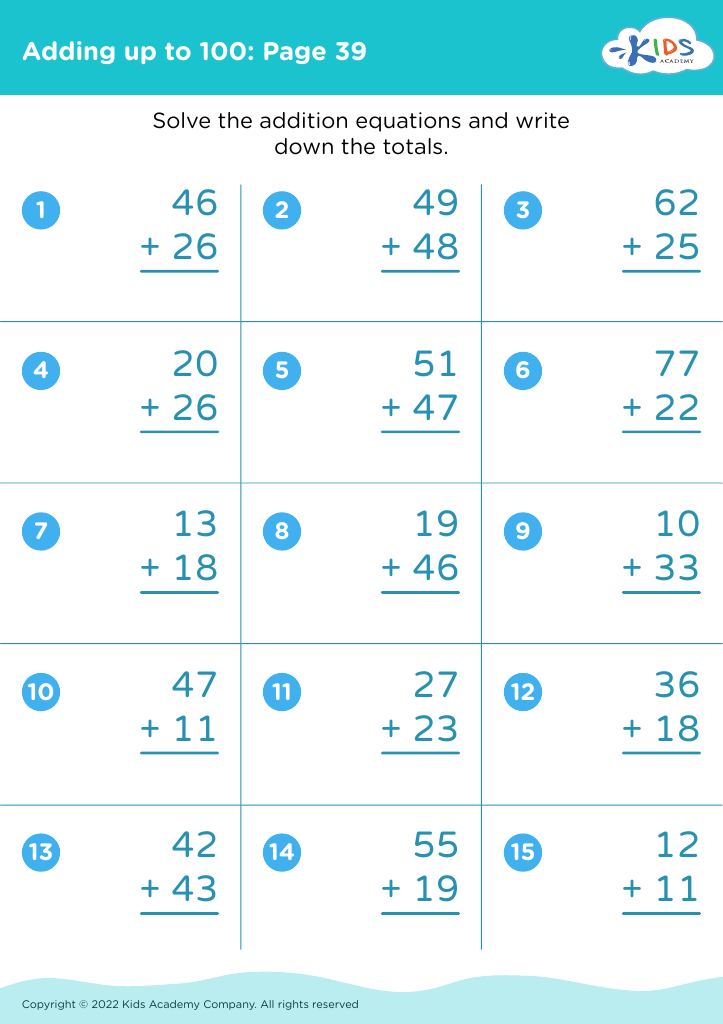
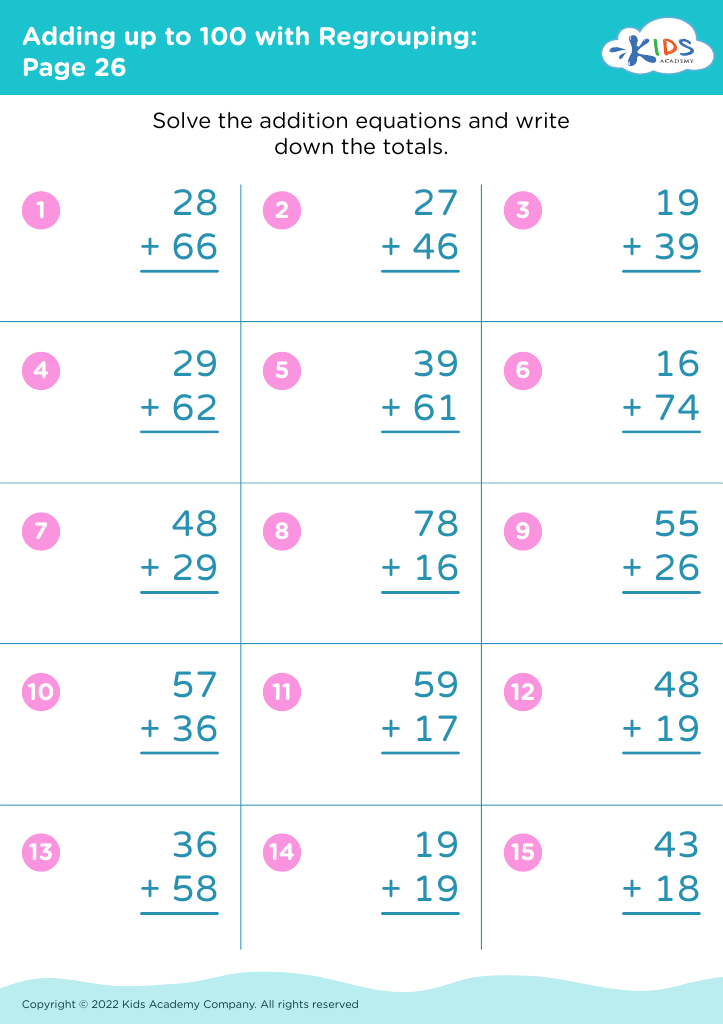
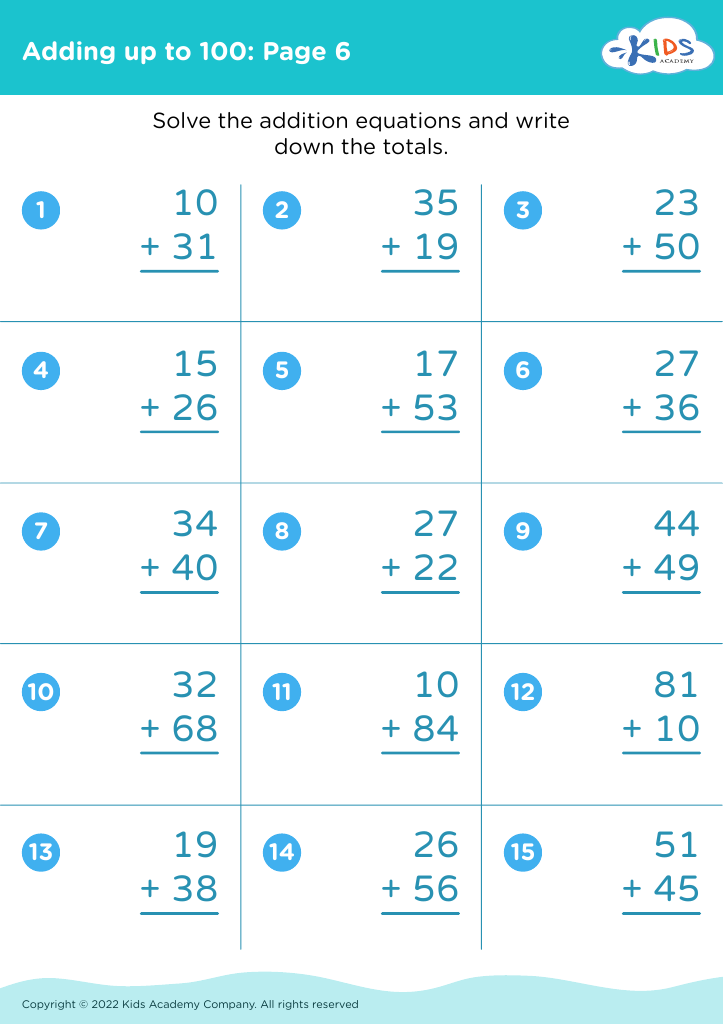
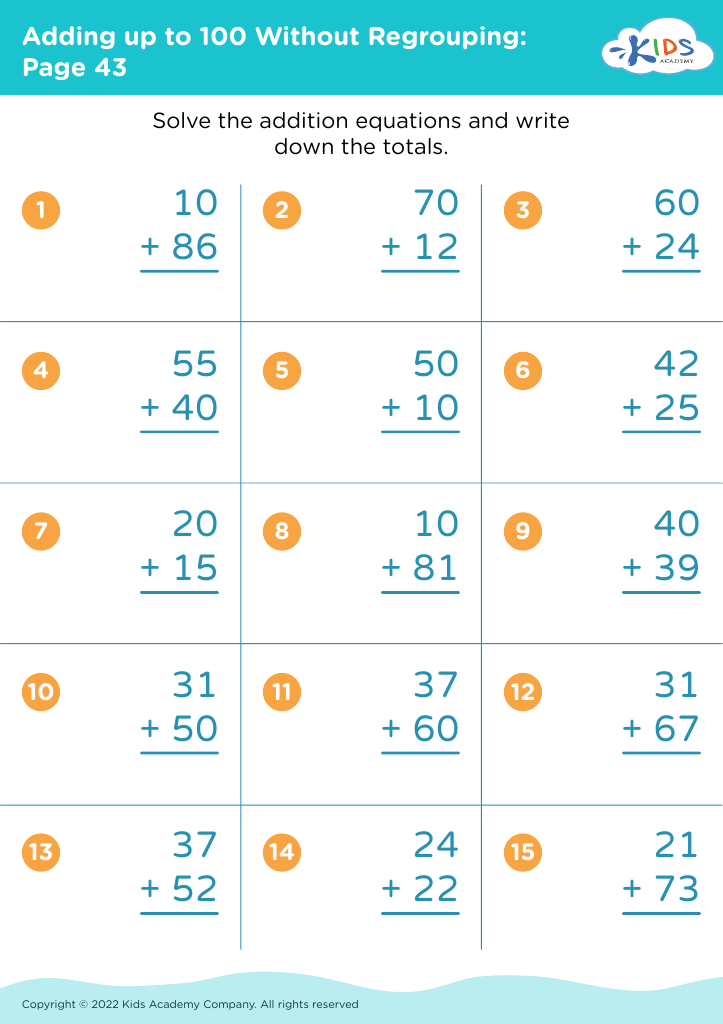
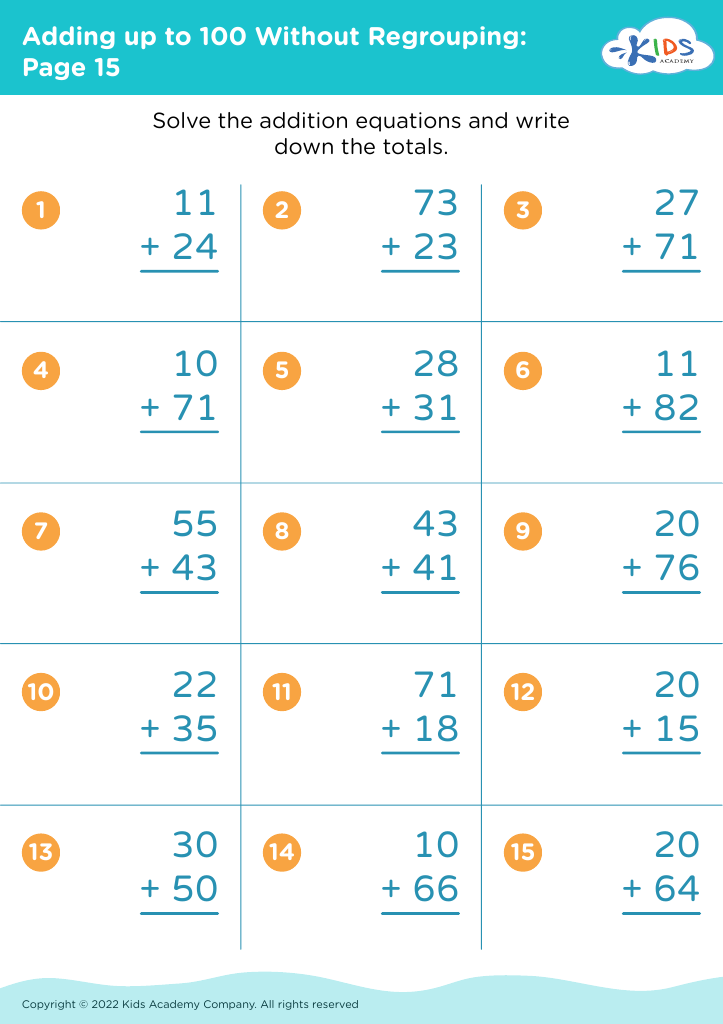
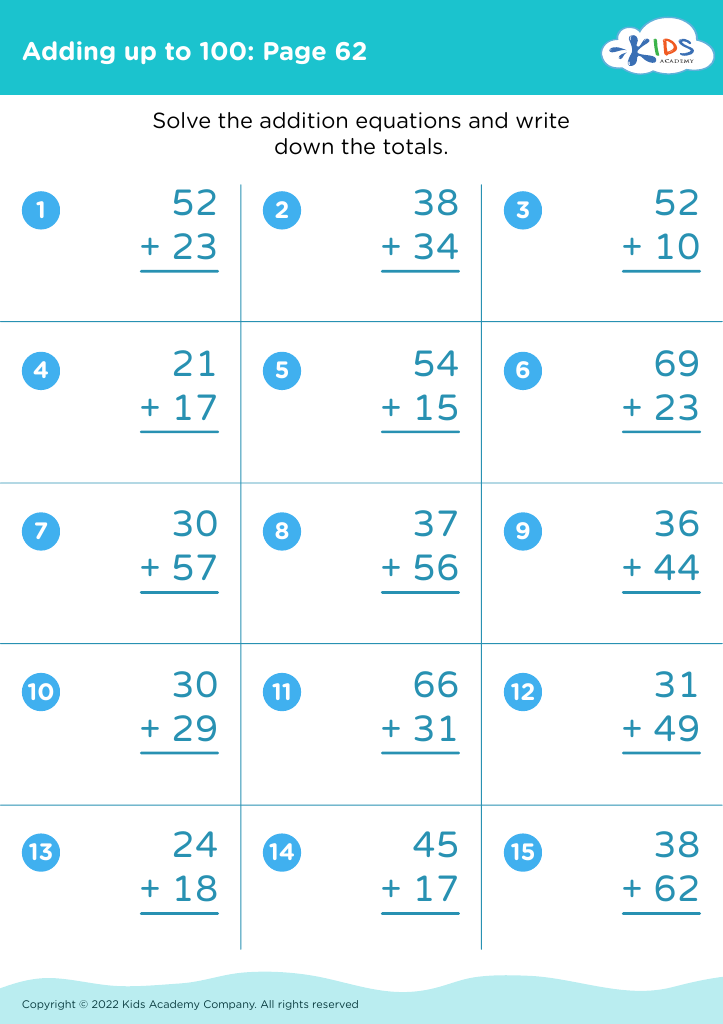
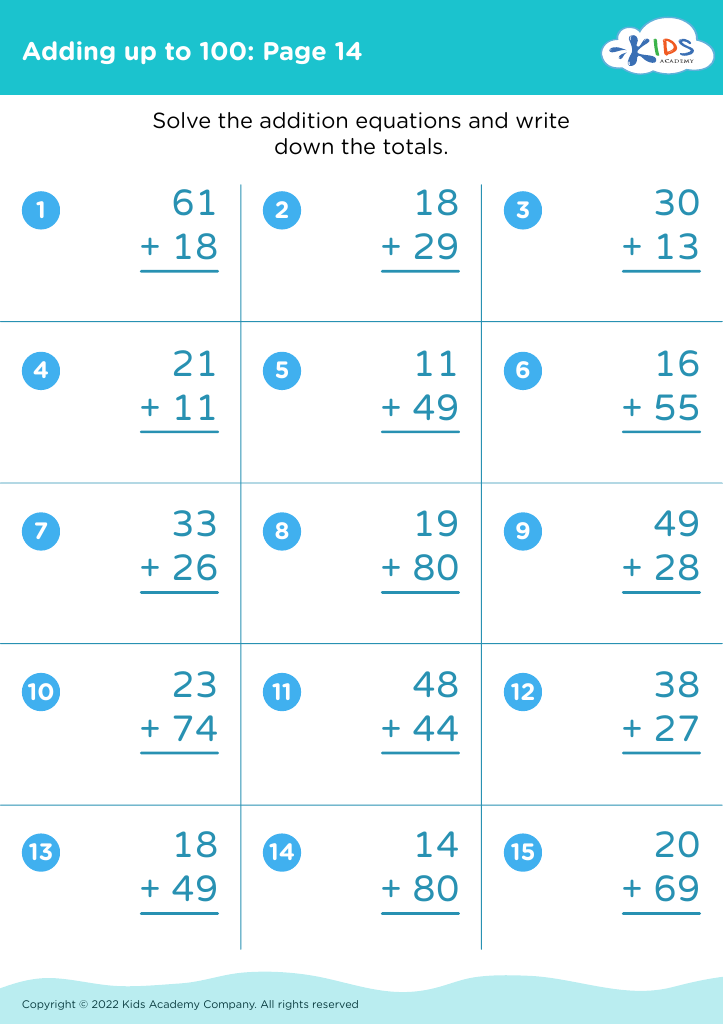
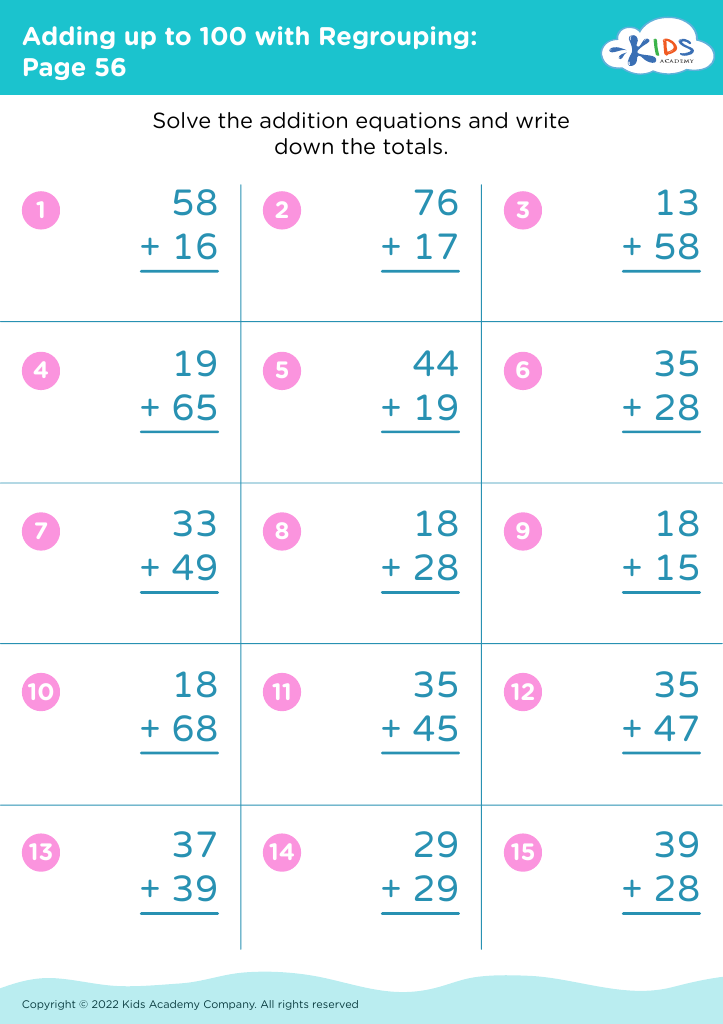
Discover our engaging "Recognizing Shapes Adding up to 100 Worksheets" designed specifically for children aged 7-8! These worksheets seamlessly blend shape recognition with math skills, making learning fun and interactive. Young learners will identify various shapes while practicing addition to enhance their mathematical understanding. Each worksheet is crafted to develop critical thinking and problem-solving skills, ensuring that your child gains confidence in both geometry and arithmetic. Perfect for home or classroom use, these resources are tailored to support young minds in mastering essential math concepts. Get started today and watch your child's love for learning flourish!




%20(1).jpg)


Recognizing shapes and mastering addition skills are essential components of early mathematics education for children ages 7-8. These skills lay the foundation for more complex mathematical concepts and critical thinking abilities in later years. Recognizing shapes helps children develop spatial awareness, which is crucial for problem-solving, in fields like architecture, engineering, and science. By understanding the properties and categories of shapes, children build essential visual and cognitive skills that enhance their ability to think logically.
Adding up to 100 reinforces basic arithmetic understanding and encourages a strong number sense. At this age, children begin to work with larger numbers, and comprehending how to manipulate these through addition is vital for their progress in math. Mastering addition up to 100 increases confidence in mathematical abilities and lays the groundwork for subtraction, multiplication, and division.
Moreover, these skills correlate with real-life applications, from measuring ingredients for a recipe to budgeting allowances. When parents and teachers emphasize the importance of these foundational skills, children are more likely to develop a positive attitude towards math and build resilience in tackling more challenging mathematical concepts as they progress in their education. Investing time in these areas ultimately promotes academic success and life-long learning.








