Counting skills Adding up to 50 Worksheets for Ages 7-8 - Page 2
34 filtered results
-
From - To
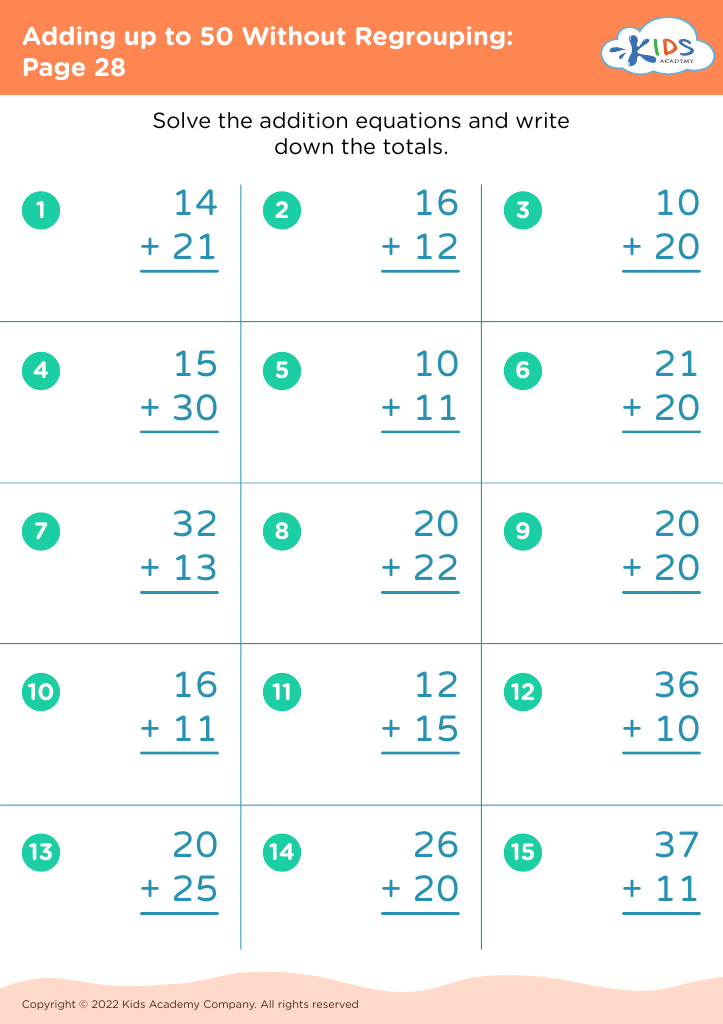
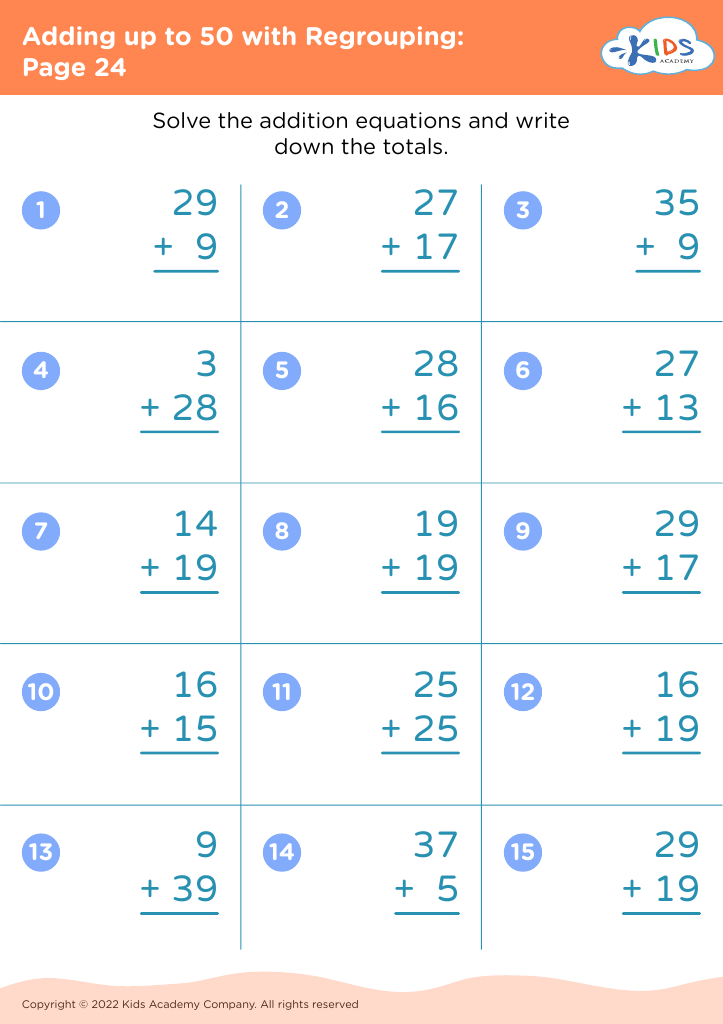
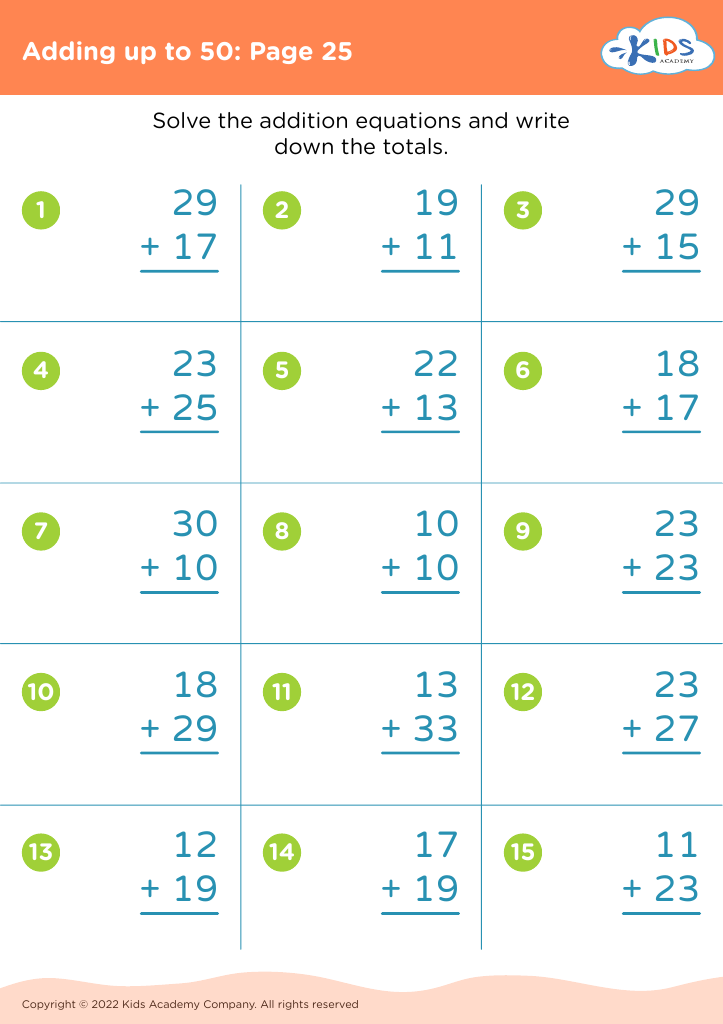
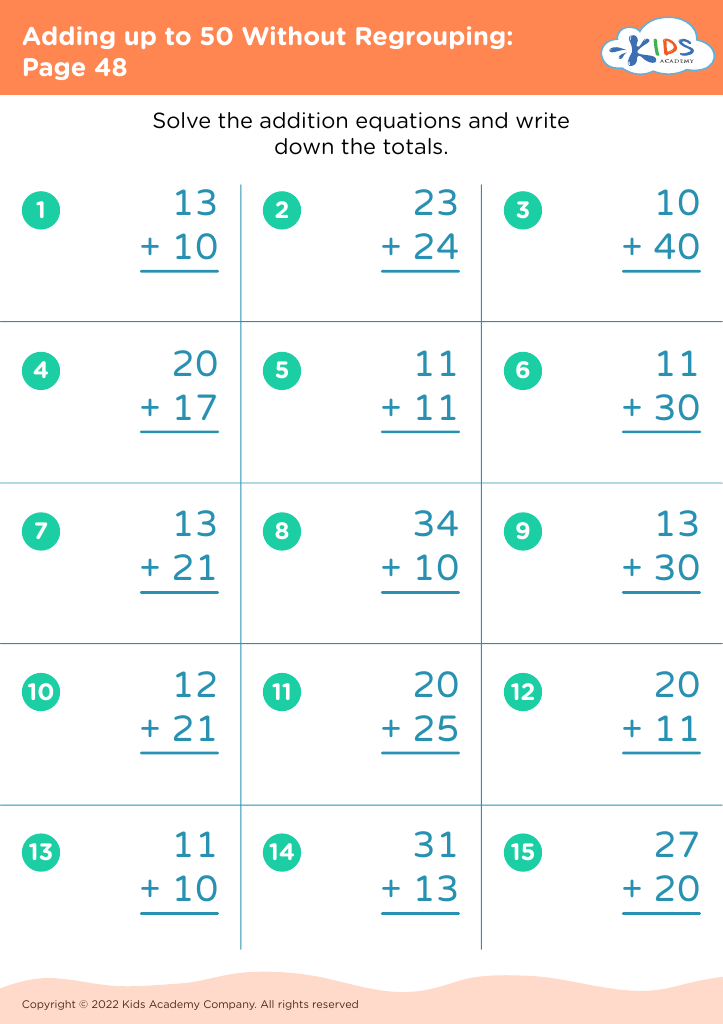
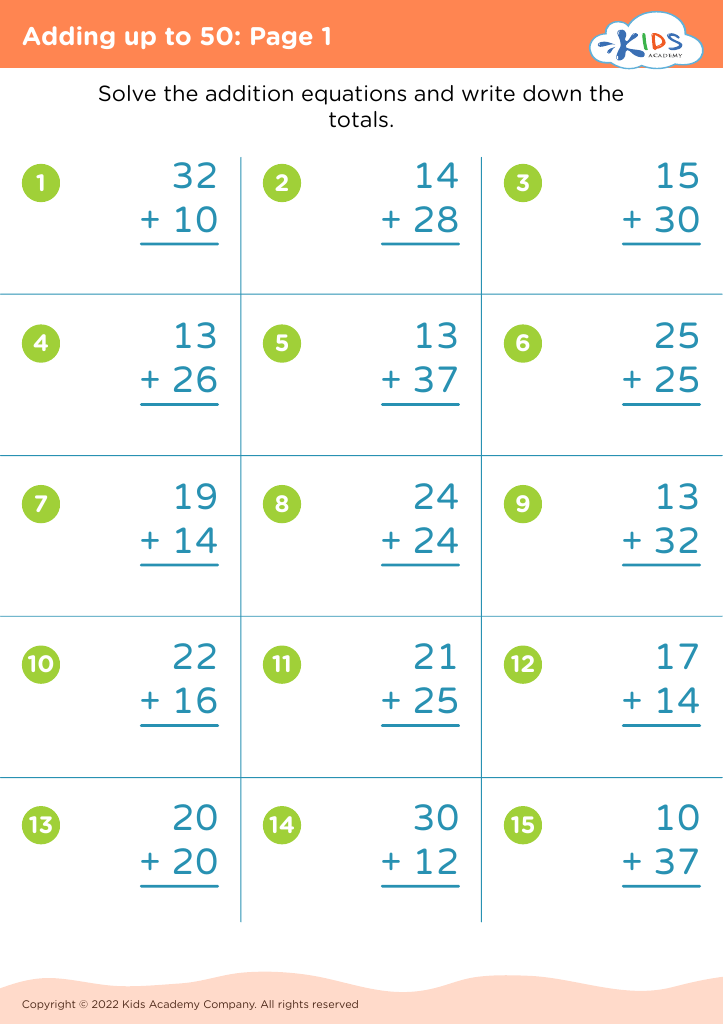
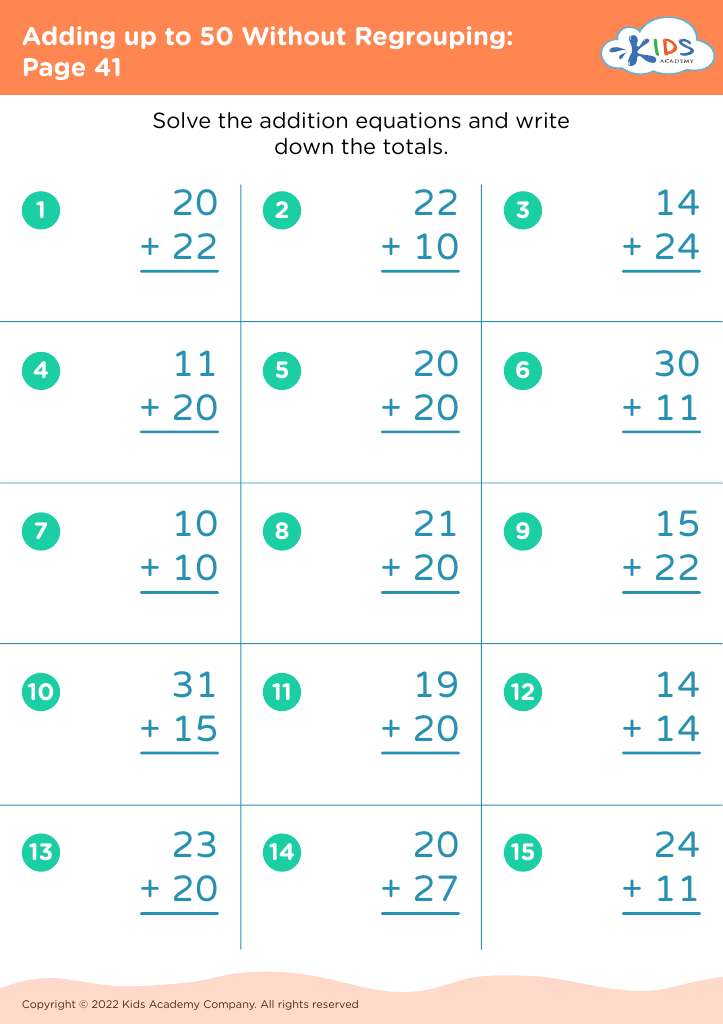
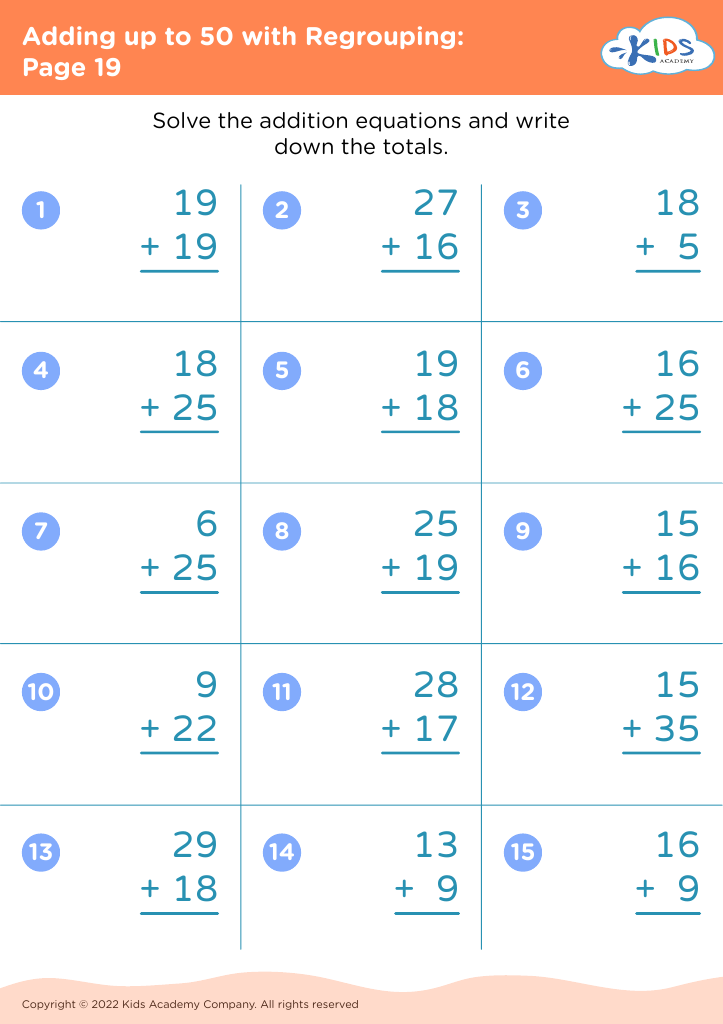
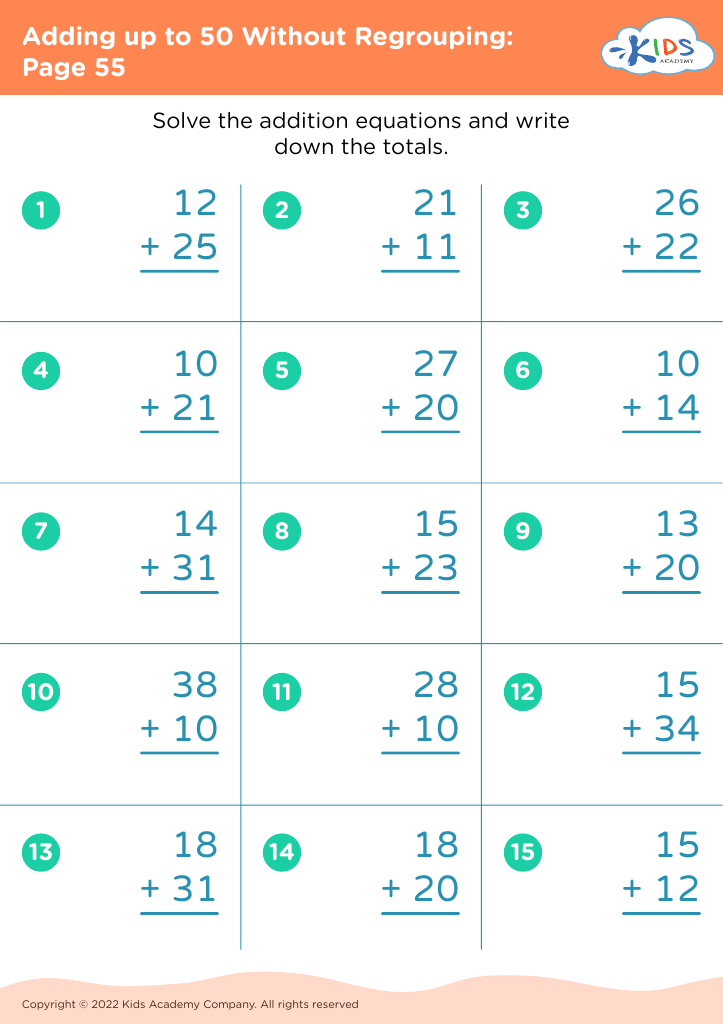
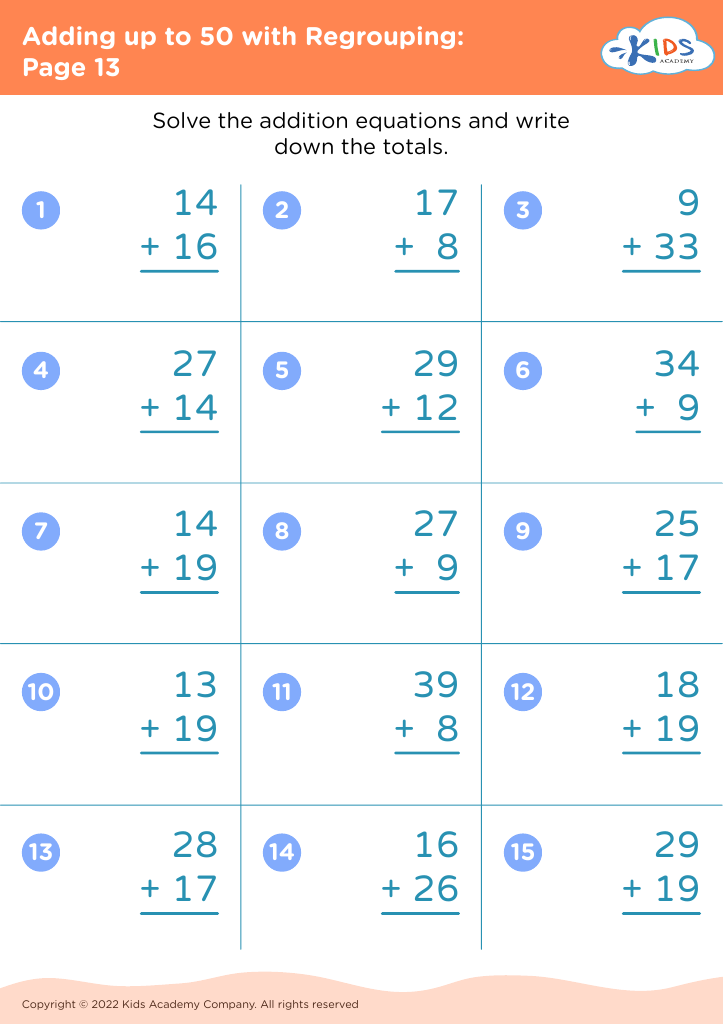
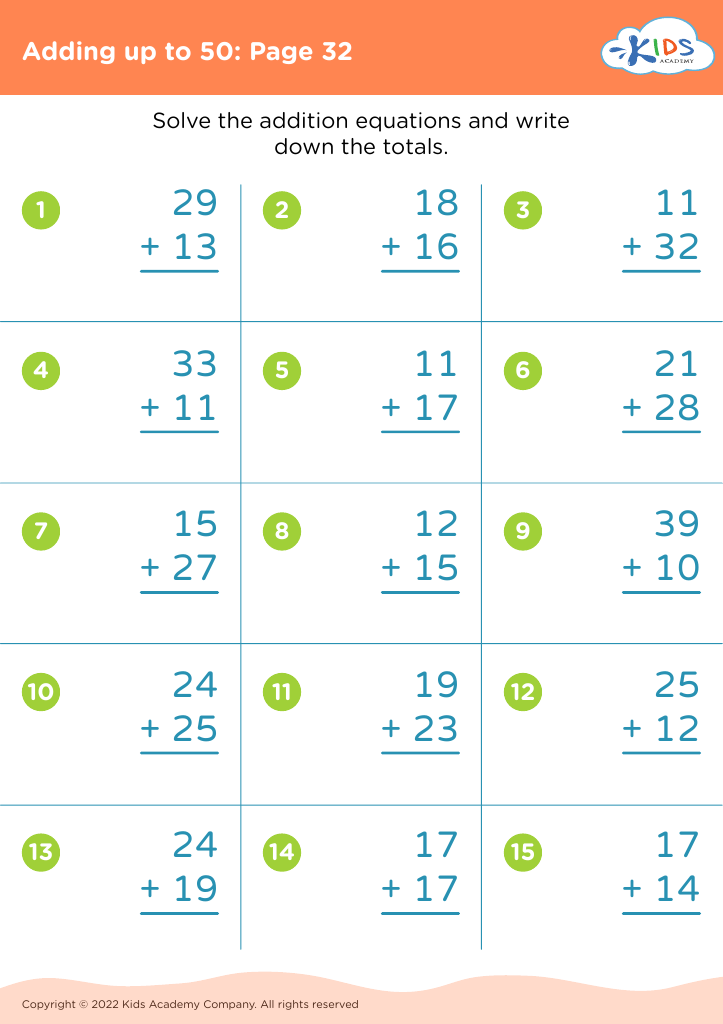




Counting skills, particularly adding up to 50, are foundational for children aged 7-8. Mastering these skills not only enhances mathematical understanding but also builds confidence in young learners. At this developmental stage, children are transitioning from simple counting to more complex operations, making this an ideal time to solidify their numerical fluency.
Firstly, strong counting skills contribute to a child’s ability to tackle more advanced math concepts later on, such as addition, subtraction, and even basic multiplication. Understanding how numbers interact lays the groundwork for problem-solving skills that are essential throughout their educational journey. Additionally, engaging with numbers encourages logical reasoning and critical thinking.
Moreover, proficiency in counting reinforces cognitive development. It helps children learn to organize information, recognize patterns, and approach tasks methodically. These skills transcend mathematics and can enhance abilities in subjects like science and technology.
Lastly, when parents and teachers actively foster strong counting skills, they create a collaborative learning environment that nurtures a child’s curiosity and enjoyment in learning. By emphasizing counting and addition up to 50, educators and caregivers are not just teaching math; they are instilling a love for numbers that will serve children well into the future.








