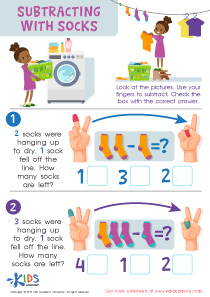
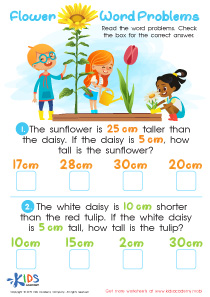
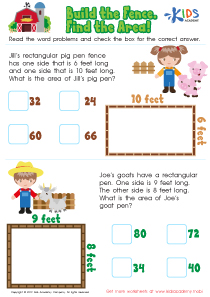
Cognitive Development Addition and Subtraction Word Problems Worksheets for Ages 7-8
4 filtered results
-
From - To
Enhance your child's cognitive development with our engaging Addition and Subtraction Word Problems Worksheets designed for ages 7-8. These interactive worksheets challenge young learners to think critically and apply their mathematical skills to solve real-life scenarios. Ideal for fostering problem-solving abilities, each worksheet features age-appropriate word problems that stimulate logical reasoning and arithmetic understanding. Students will encounter diverse situations that encourage them to visualize and dissect challenges, making math both fun and intuitive. Perfect for classroom use or at-home practice, our resources support cognitive growth while reinforcing essential math concepts. Start building confidence and competence in addition and subtraction today!
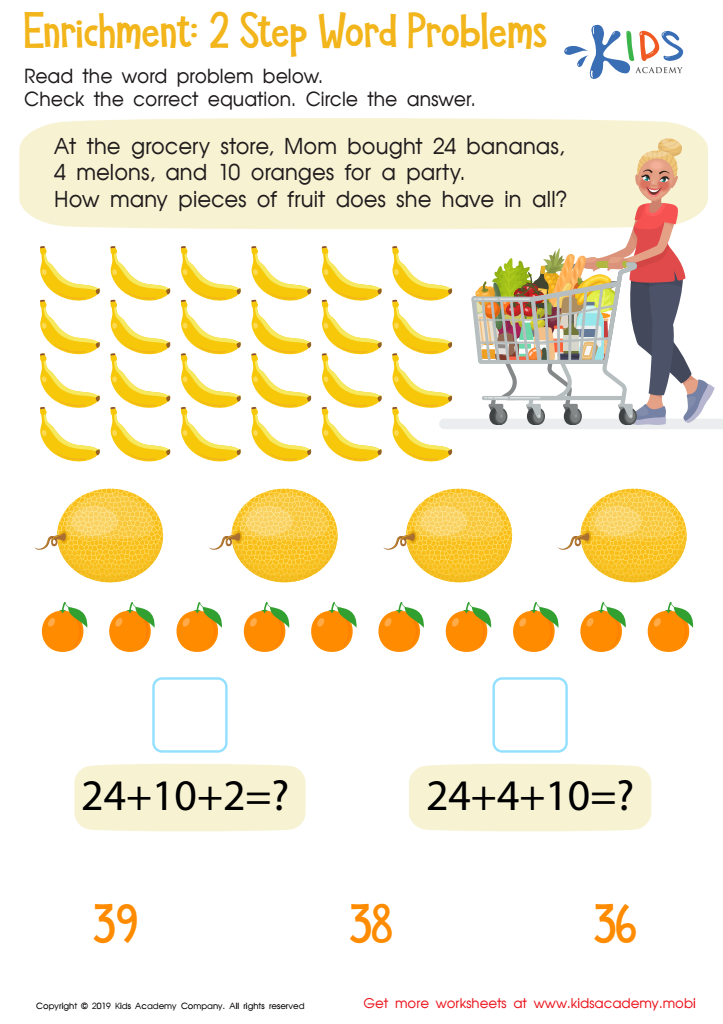
Enrichment -2 Step Word Problems Worksheet
 Assign to My Students
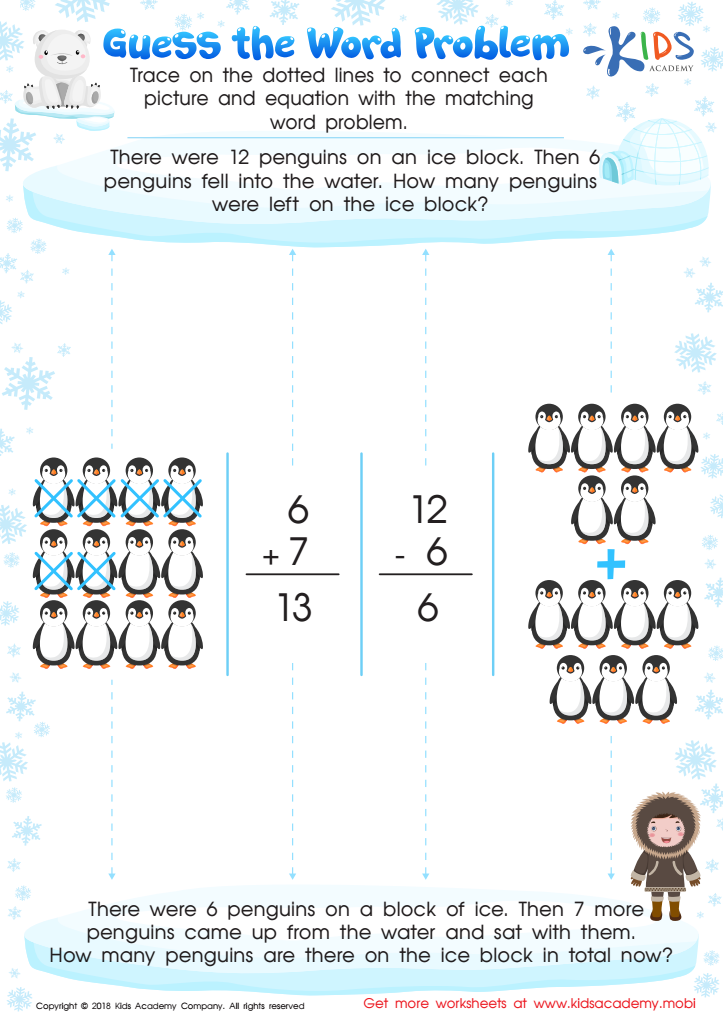
Guess the Word Problem Worksheet
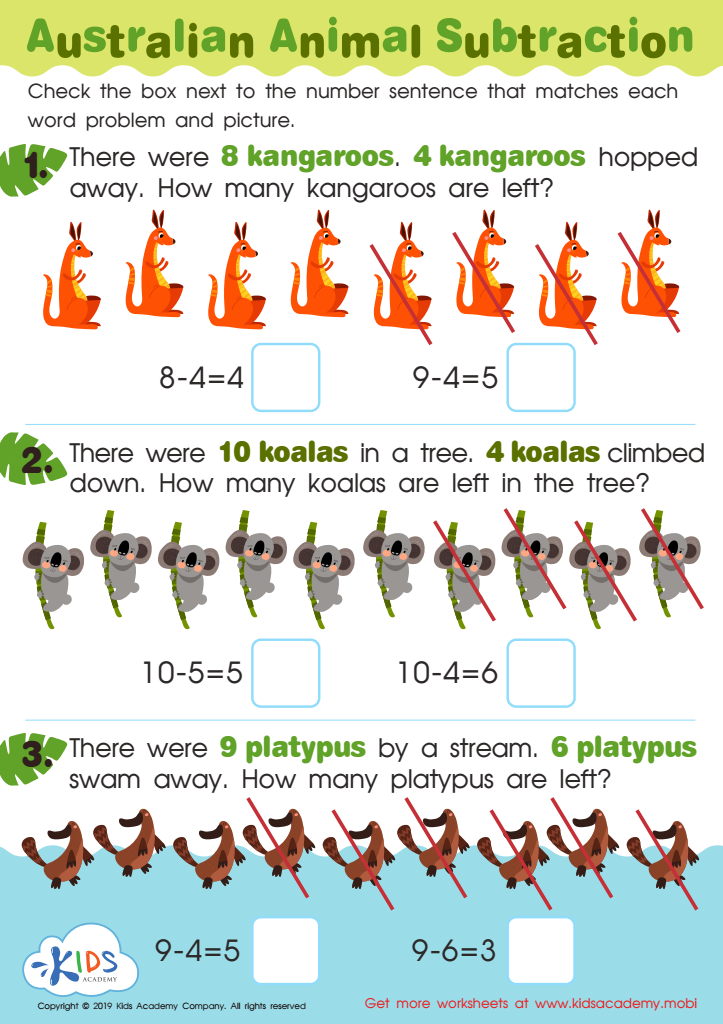
Australian Animal Subtraction Worksheet
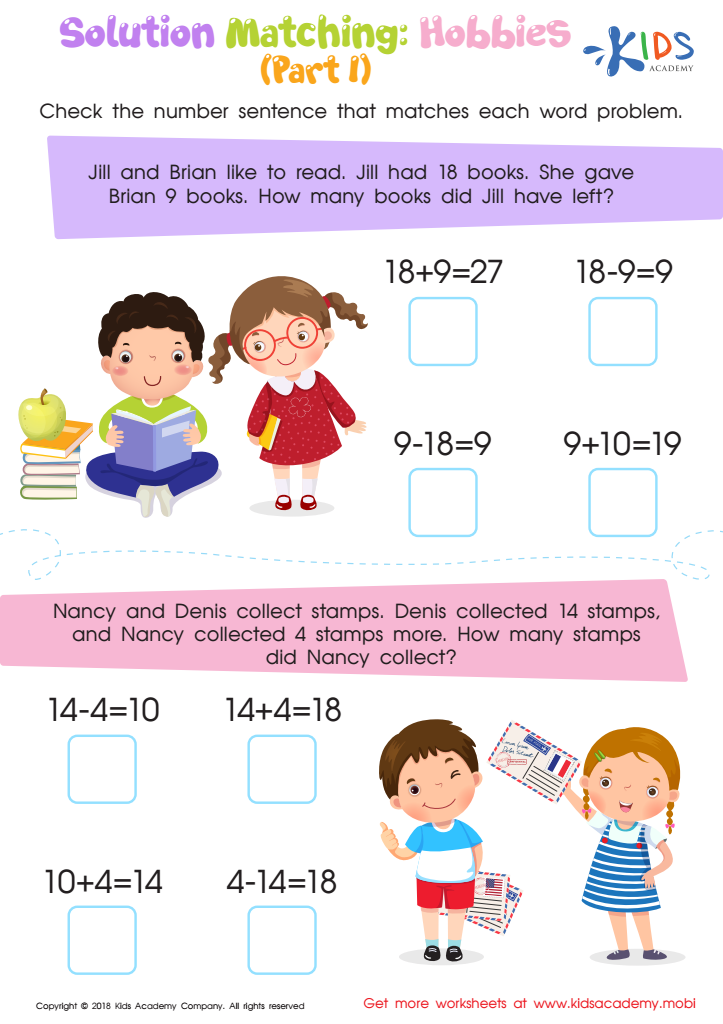
Solution Matching: Hobbies. Part 1 Worksheet








Cognitive development during ages 7-8 is crucial as children transition into more complex thinking and problem-solving skills. Focusing on addition and subtraction word problems significantly enhances their cognitive abilities. This age marks a point where children start to understand not just the mechanics of math, but also how to apply these skills in real-life scenarios.
Teachers and parents should care about this because solving word problems helps children improve critical thinking, and reasoning capabilities, and develop comprehension skills. These problems require kids to interpret text, make connections, and develop strategies before arriving at a solution, fostering deeper cognitive processing. Moreover, engaging with word problems encourages children to communicate mathematically, articulating their thought processes, which is essential for their overall literacy development.
Furthermore, mastering addition and subtraction word problems lays the groundwork for more advanced math concepts in later grades, ensuring a strong foundation in mathematics. By actively supporting their cognitive development in this area, parents and teachers not only boost academic success but also cultivate lifelong problem-solving skills, necessary for personal and academic fulfillment. Therefore, prioritizing these skills at this critical stage can significantly influence children's future learning and overall confidence in math.