Learn addition Addition & Subtraction Worksheets for Ages 7-8
3 filtered results
-
From - To
Explore our engaging Addition and Subtraction Worksheets, specifically designed for children aged 7-8! Our resources offer a fun and interactive way for young learners to master essential math skills. The worksheets feature colorful illustrations and varied exercises to keep kids motivated, enhancing their understanding of addition and subtraction concepts. Perfect for reinforcing classroom learning, these worksheets cater to different learning styles and paces. Parents and educators can use them at home or in the classroom to support math readiness and build confidence. Discover the joy of learning math with engaging activities that make addition and subtraction easy and enjoyable!
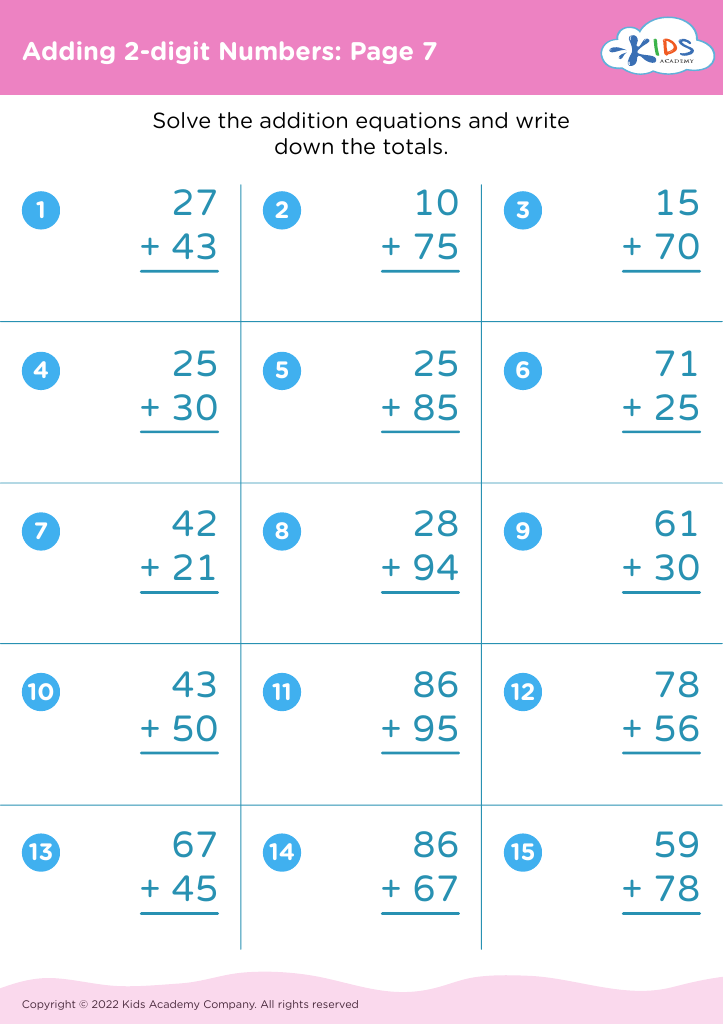
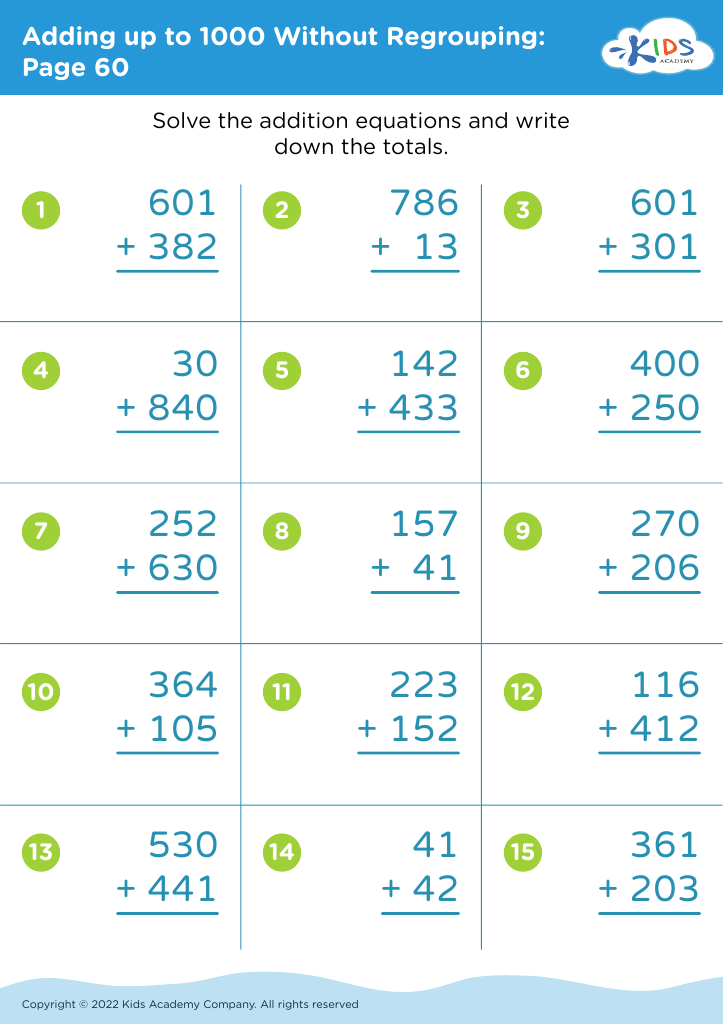
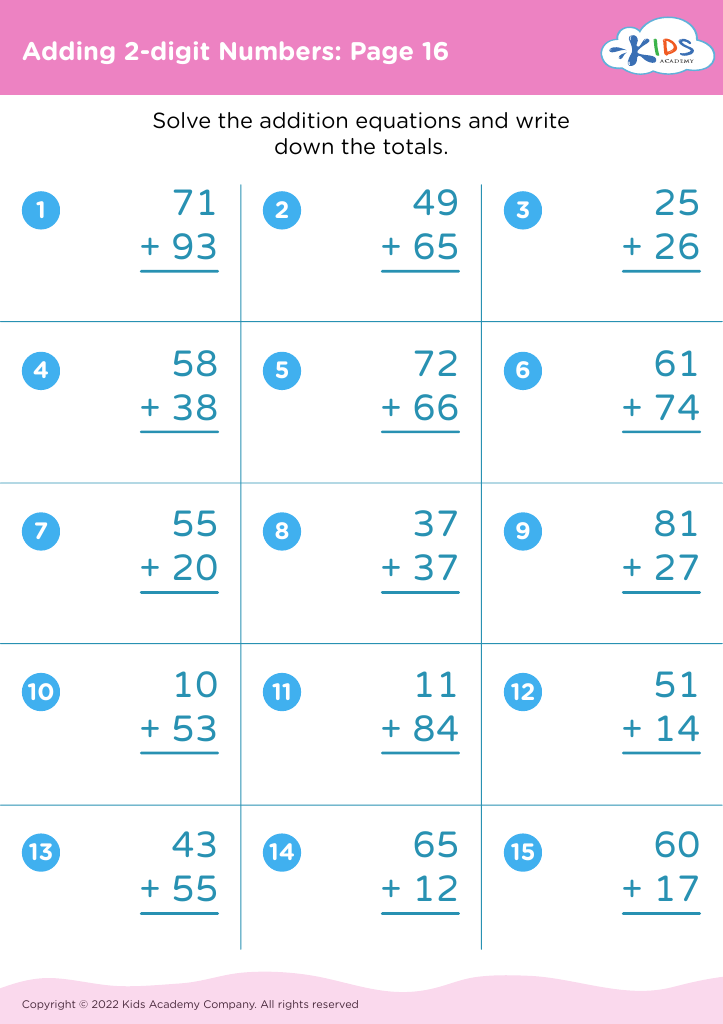








Parents and teachers should care about teaching addition and subtraction to children aged 7-8 because these skills are fundamental to a child's development and future learning. At this age, children are transitioning from simple arithmetic to more complex problem-solving, and mastering thesebasic operations lays the groundwork for understanding larger math concepts such as multiplication, division, and even fractions.
Moreover, achieving fluency in addition and subtraction enhances children's confidence, allowing them to tackle math-related tasks with assurance. These skills are not just academic; they are essential for everyday life. Simple activities such as budgeting, shopping, and cooking involve practical application of these operations.
Additionally, strong number sense developed through addition and subtraction helps children excel in standardized tests and builds critical thinking skills. By fostering a positive attitude toward math at this stage, parents and teachers can prevent future math anxiety and encourage a love for learning.
Lastly, working together on these skills allows for deeper family connections as parents reinforce classroom teachings at home. When caregivers actively participate in a child’s education, it creates a supportive environment that cultivates curiosity and enhances overall academic performance.








