Check out this FREE Trial Lesson on Addition & Subtraction for age 7-8!

H

Favorites
With answer key
Interactive
  • 7-8
  • Understanding fractions
  • Addition & Subtraction
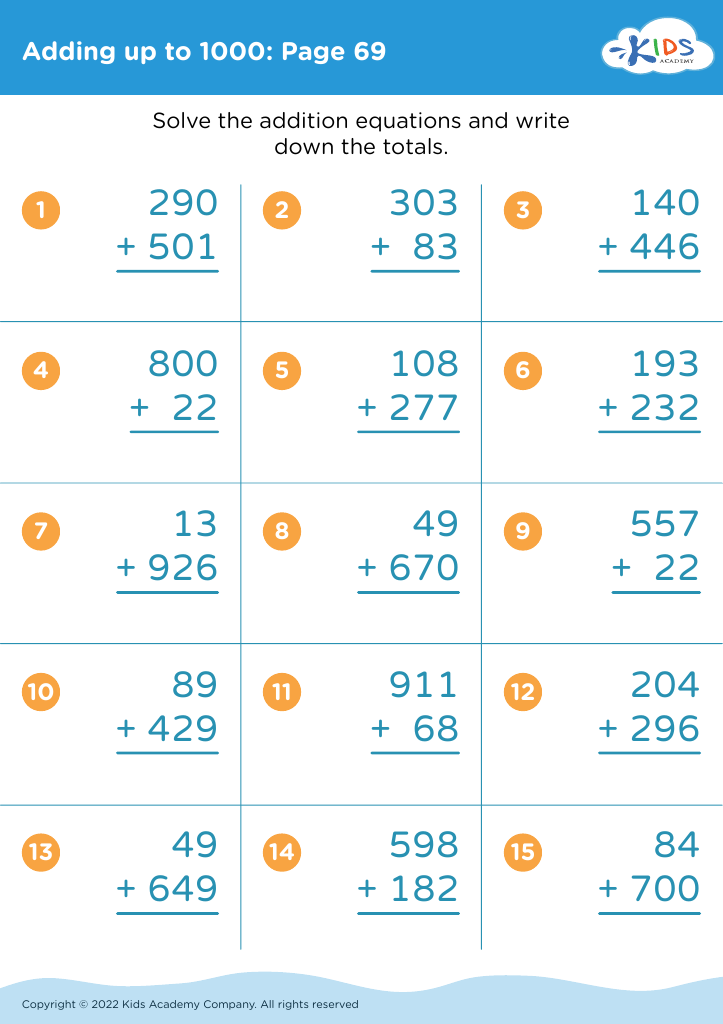
Adding up to 1000: Page 69

Adding up to 1000: Page 69

Adding up to 1000: Page 69
Worksheet
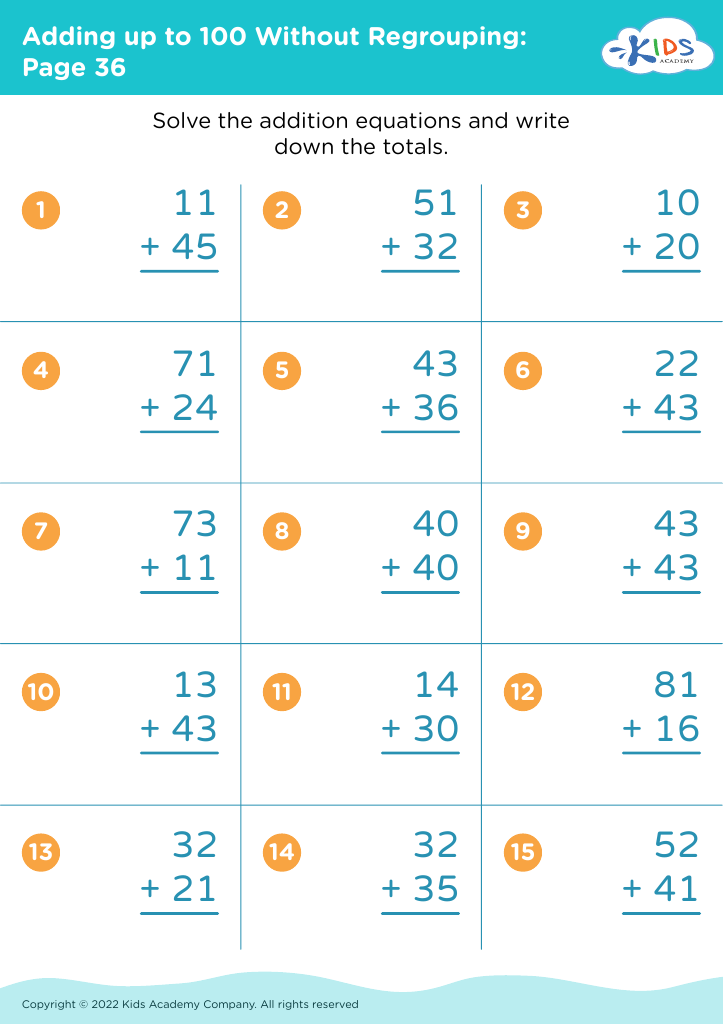
Adding up to 100 Without Regrouping: Page 36
Worksheet
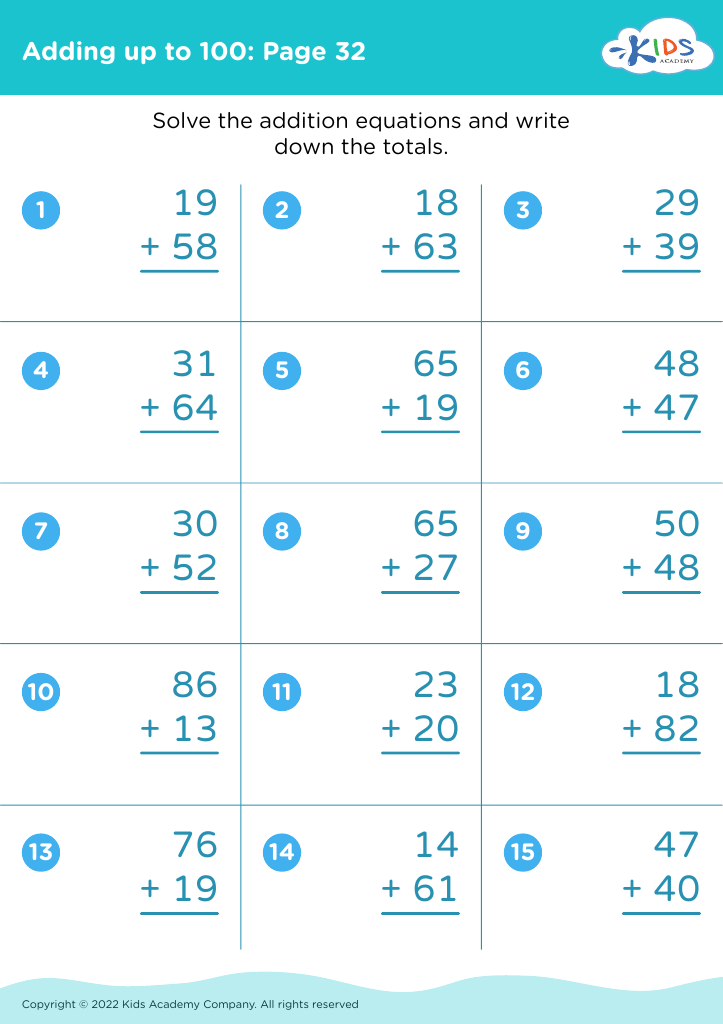
Adding up to 100: Page 32

Adding up to 100: Page 32

Adding up to 100: Page 32
Worksheet
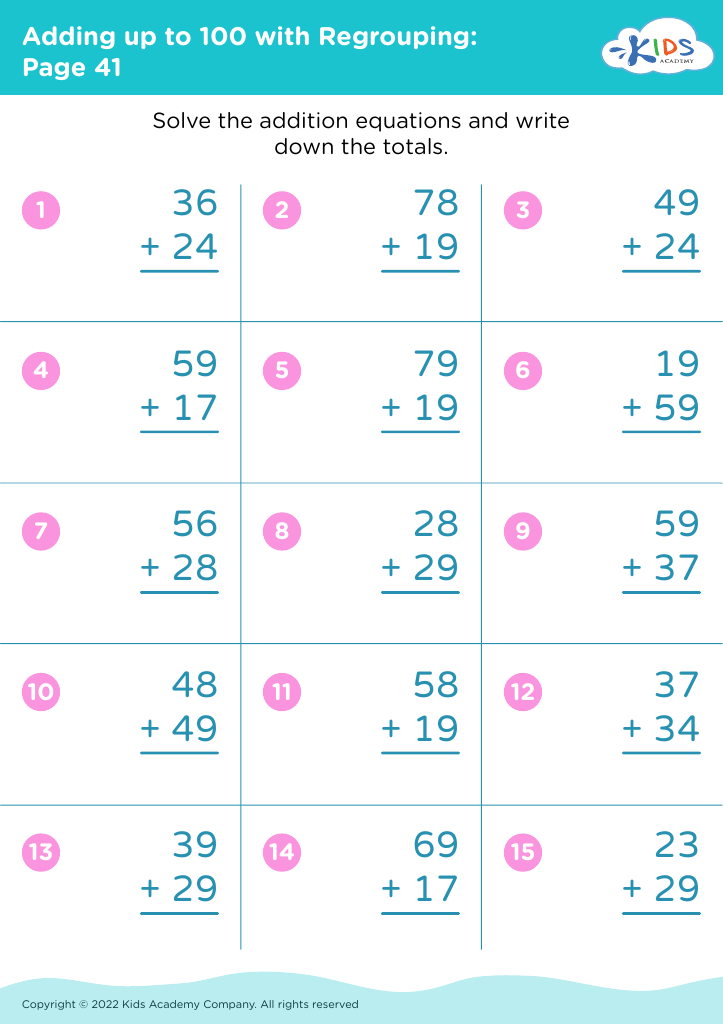
Adding up to 100 with Regrouping: Page 41
Worksheet
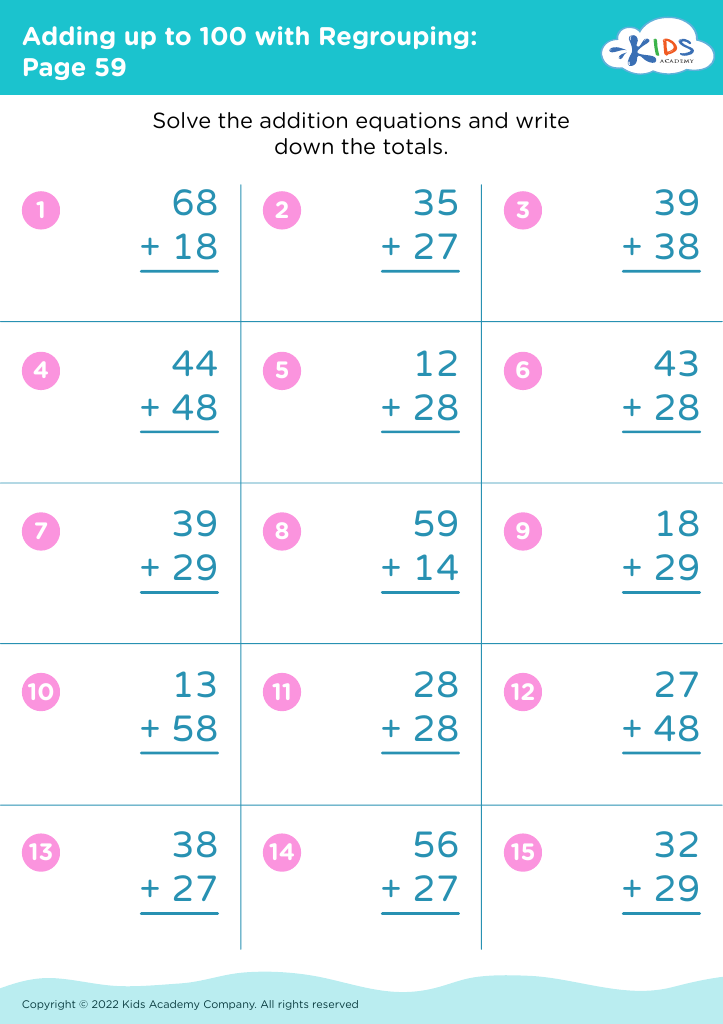
Adding up to 100 with Regrouping: Page 59
Worksheet
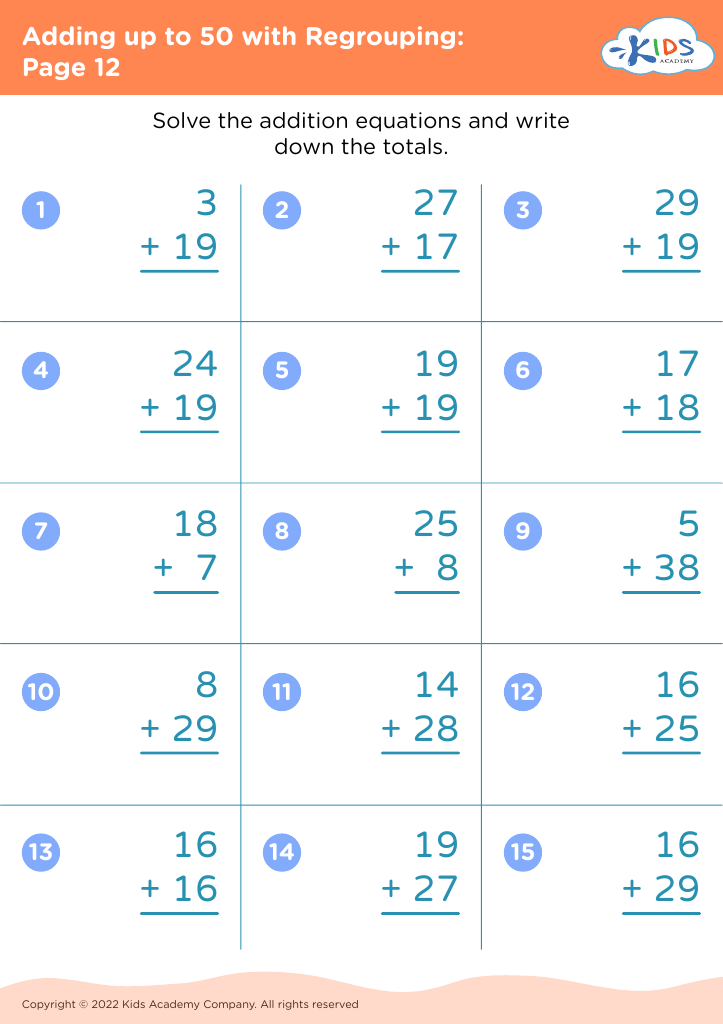
Adding up to 50 with Regrouping: Page 12
Worksheet
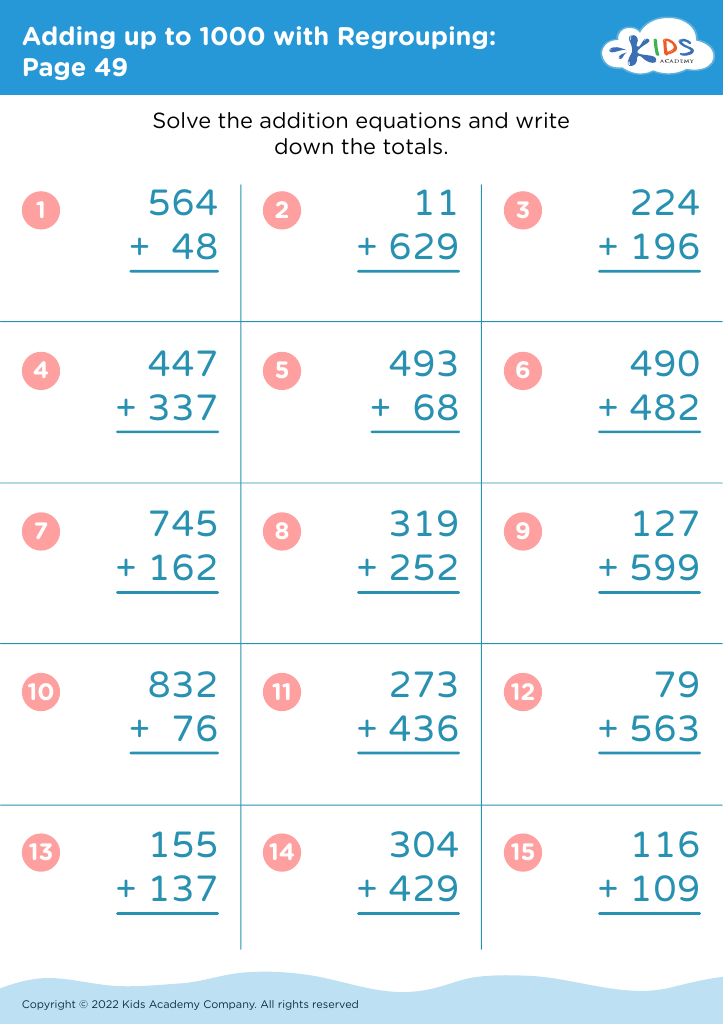
Adding up to 1000 with Regrouping: Page 49
Worksheet
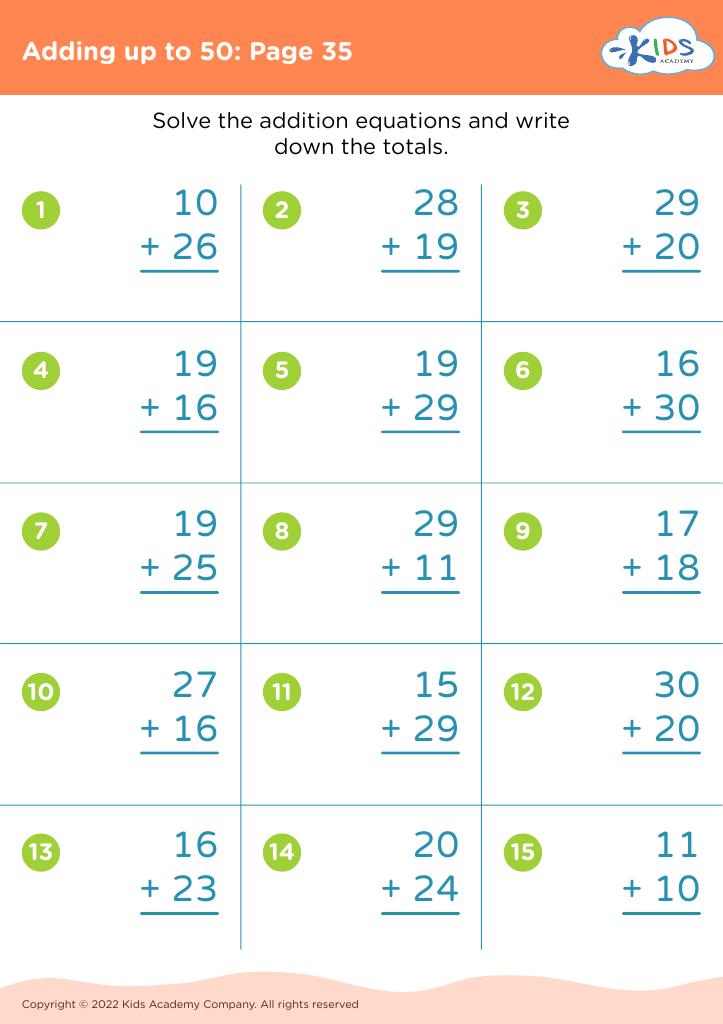
Adding up to 50: Page 35

Adding up to 50: Page 35

Adding up to 50: Page 35
Worksheet
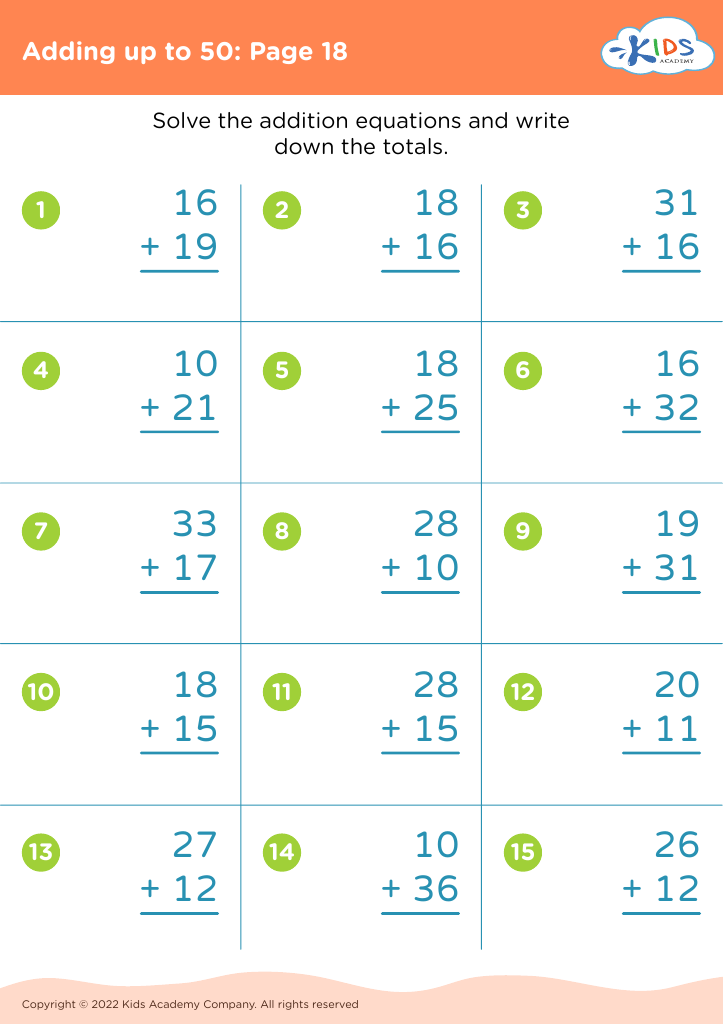
Adding up to 50: Page 18

Adding up to 50: Page 18

Adding up to 50: Page 18
Worksheet
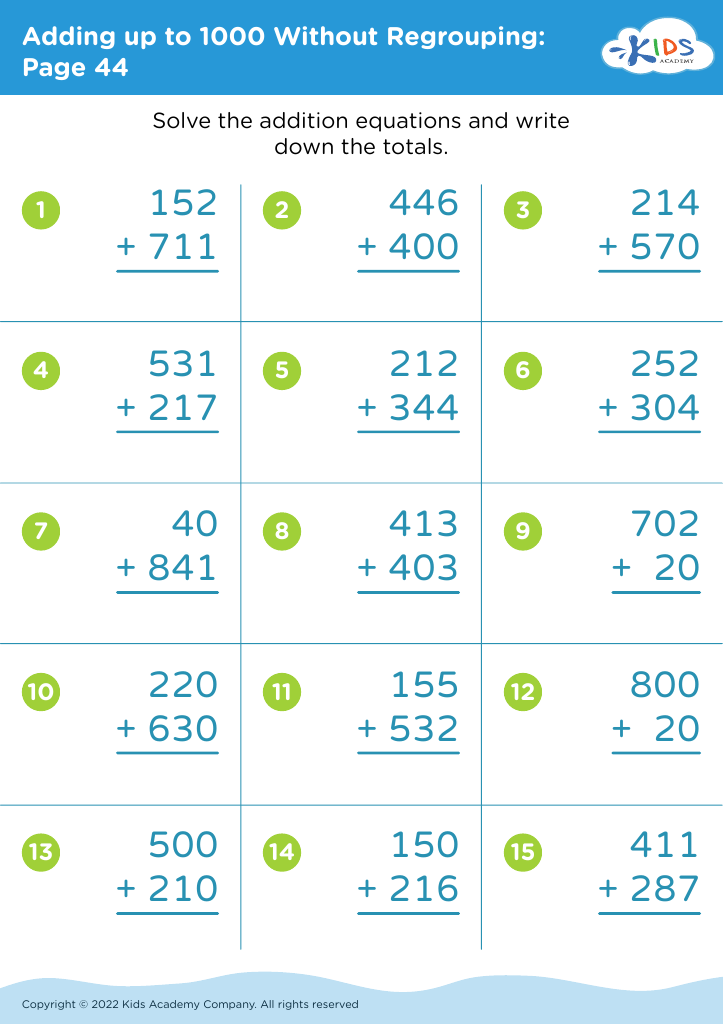
Adding up to 1000 Without Regrouping: Page 44
Worksheet
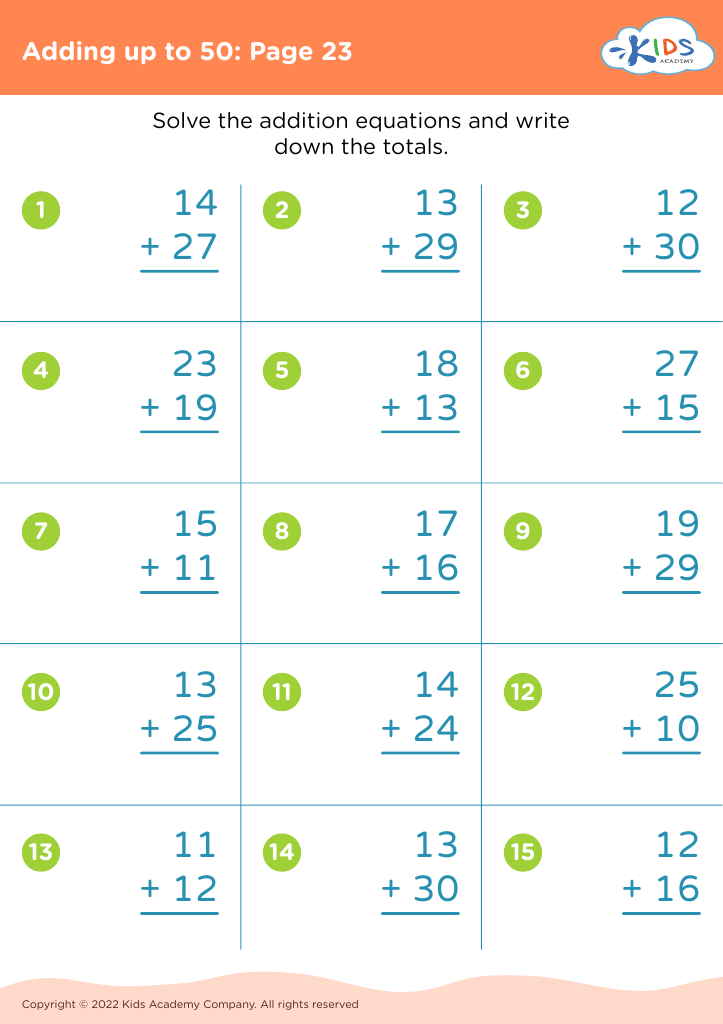
Adding up to 50: Page 23

Adding up to 50: Page 23

Adding up to 50: Page 23
Worksheet
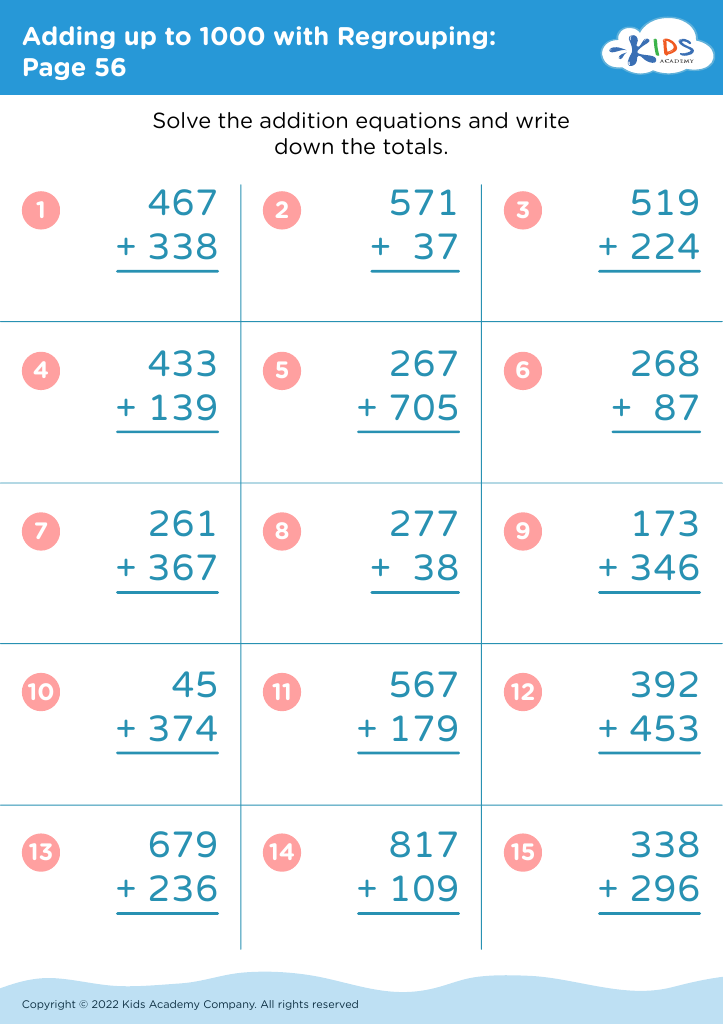
Adding up to 1000 with Regrouping: Page 56
Worksheet
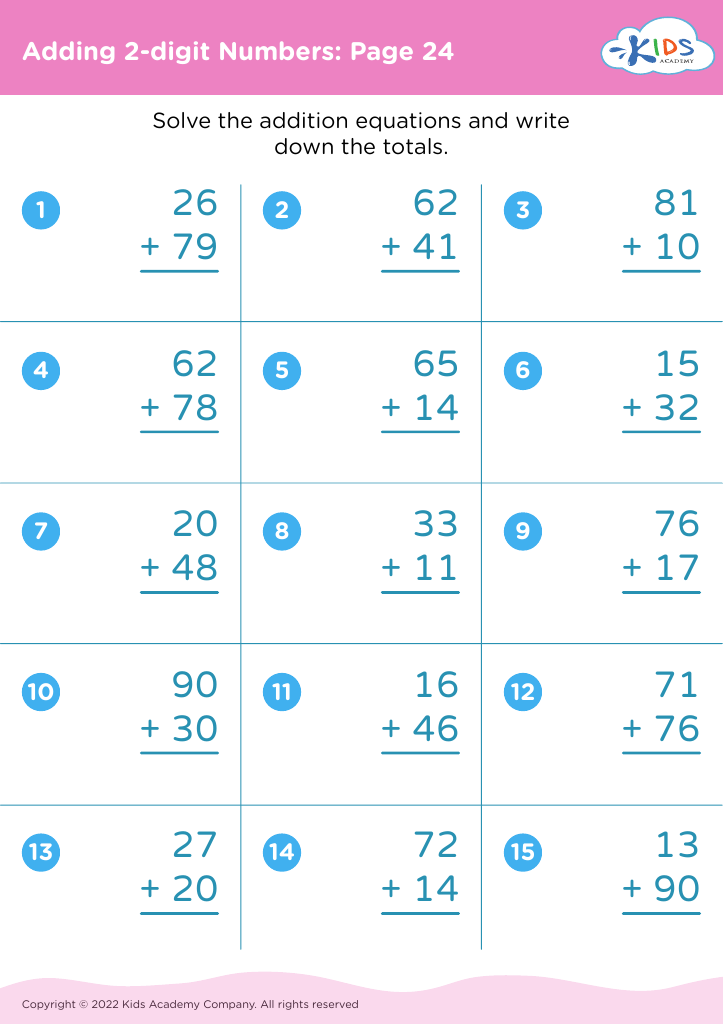
Adding 2-digit Numbers: Page 24

Adding 2-digit Numbers: Page 24

Adding 2-digit Numbers: Page 24
Worksheet
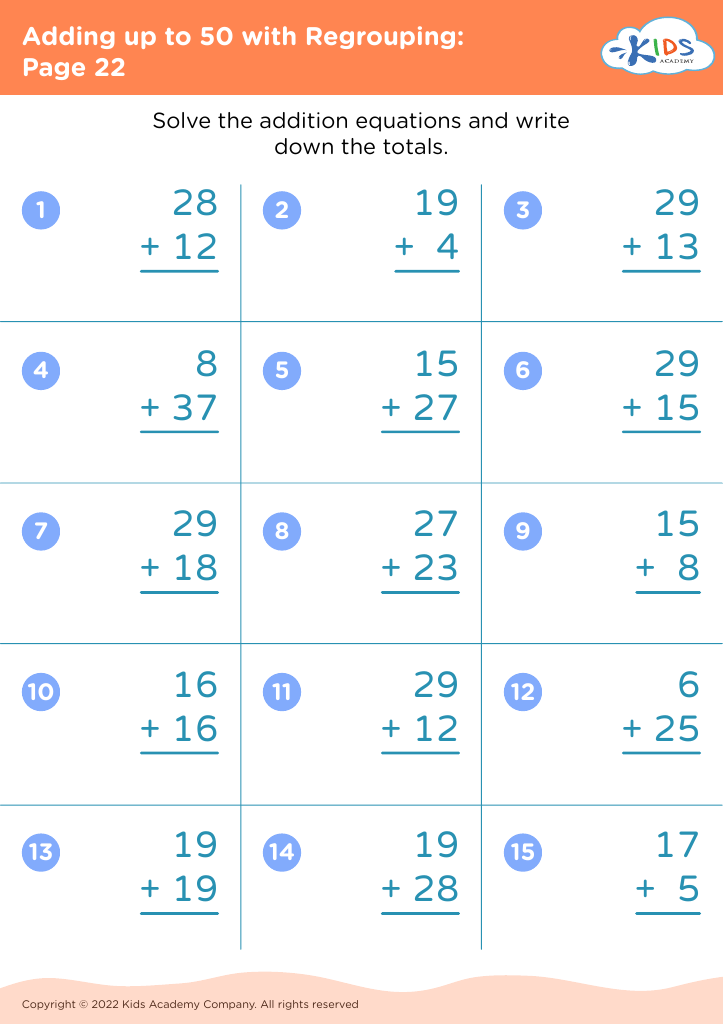
Adding up to 50 with Regrouping: Page 22
Worksheet
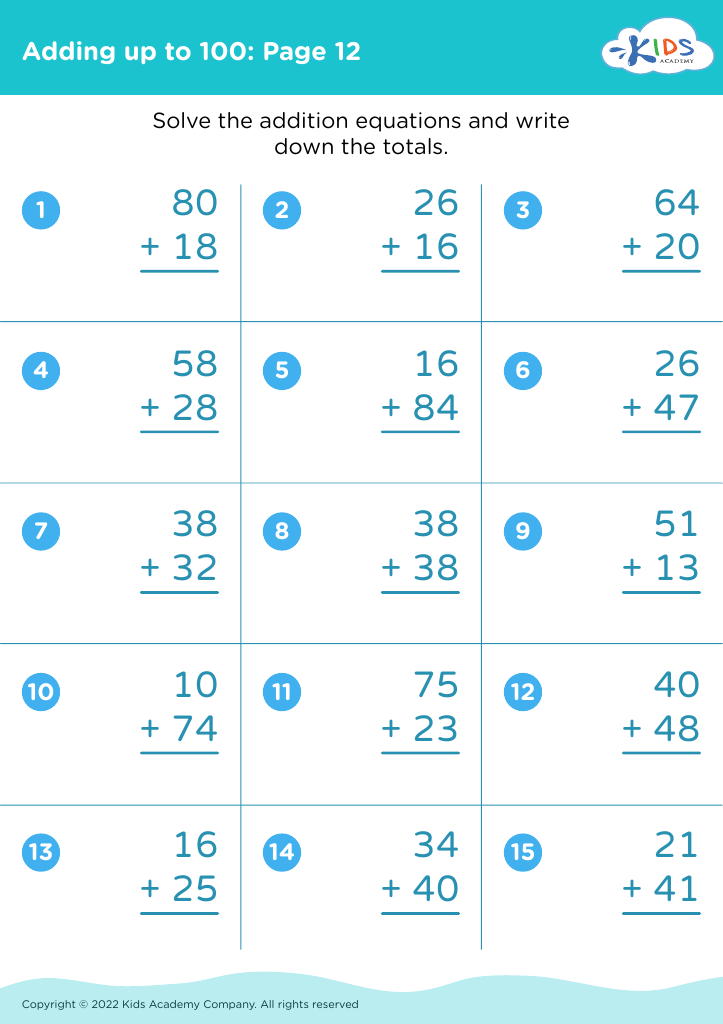
Adding up to 100: Page 12

Adding up to 100: Page 12

Adding up to 100: Page 12
Worksheet
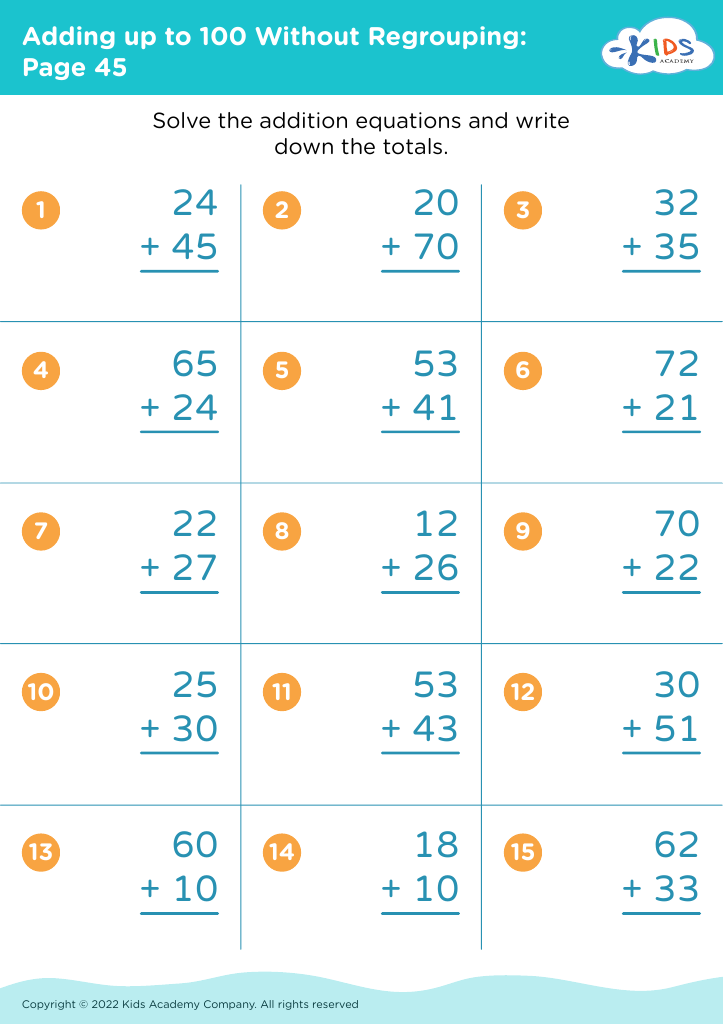
Adding up to 100 Without Regrouping: Page 45
Worksheet
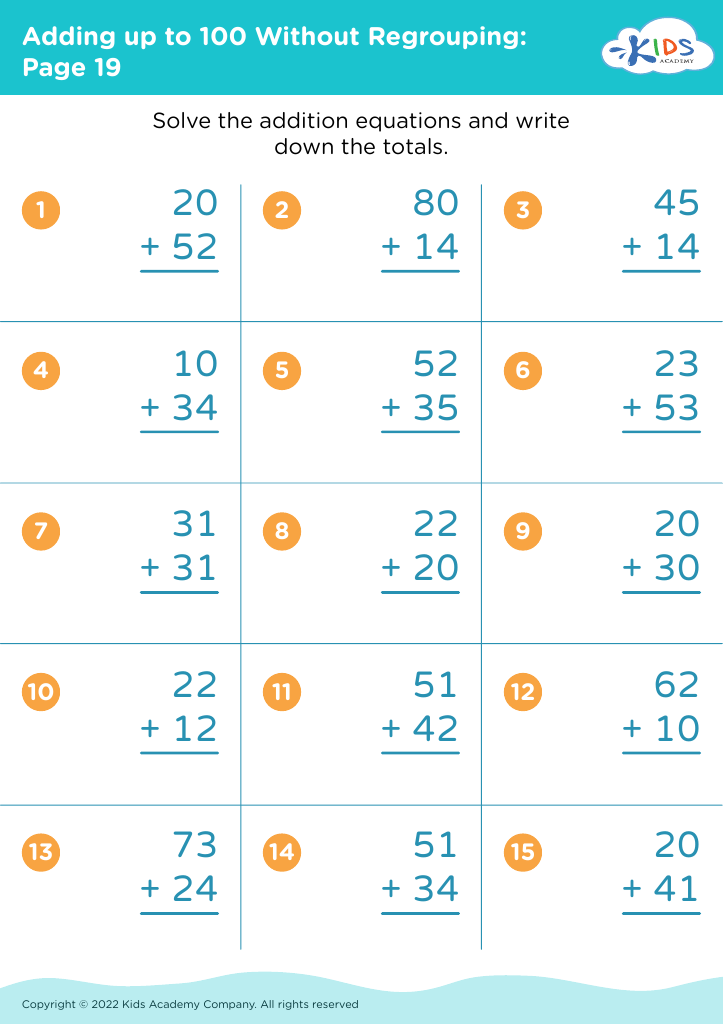
Adding up to 100 Without Regrouping: Page 19
Worksheet
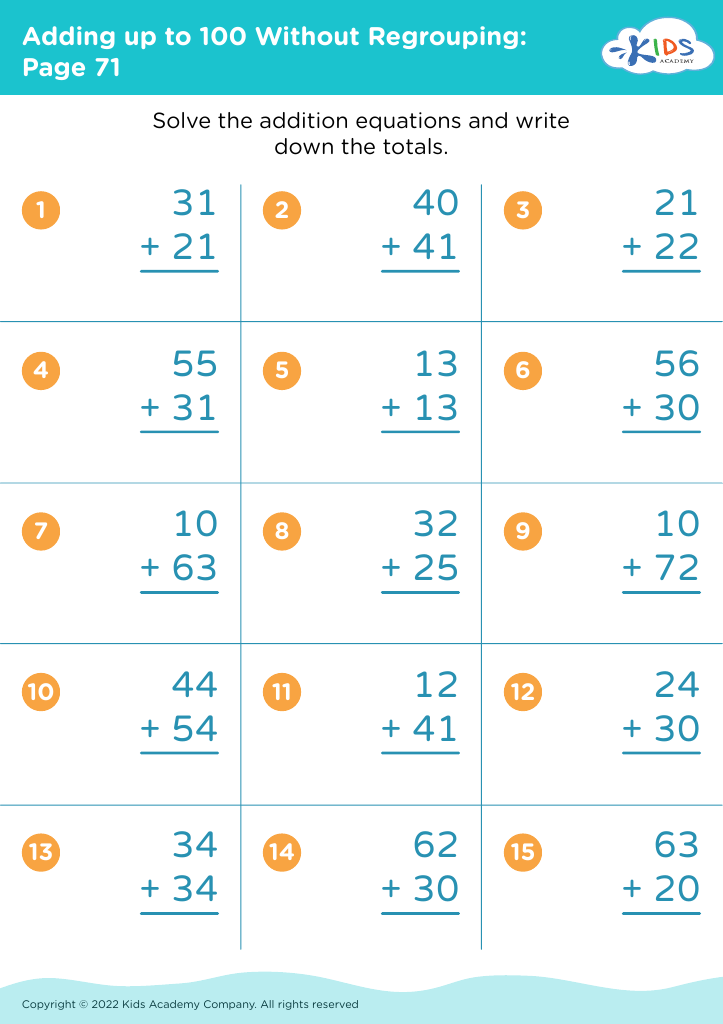
Adding up to 100 Without Regrouping: Page 71
Worksheet
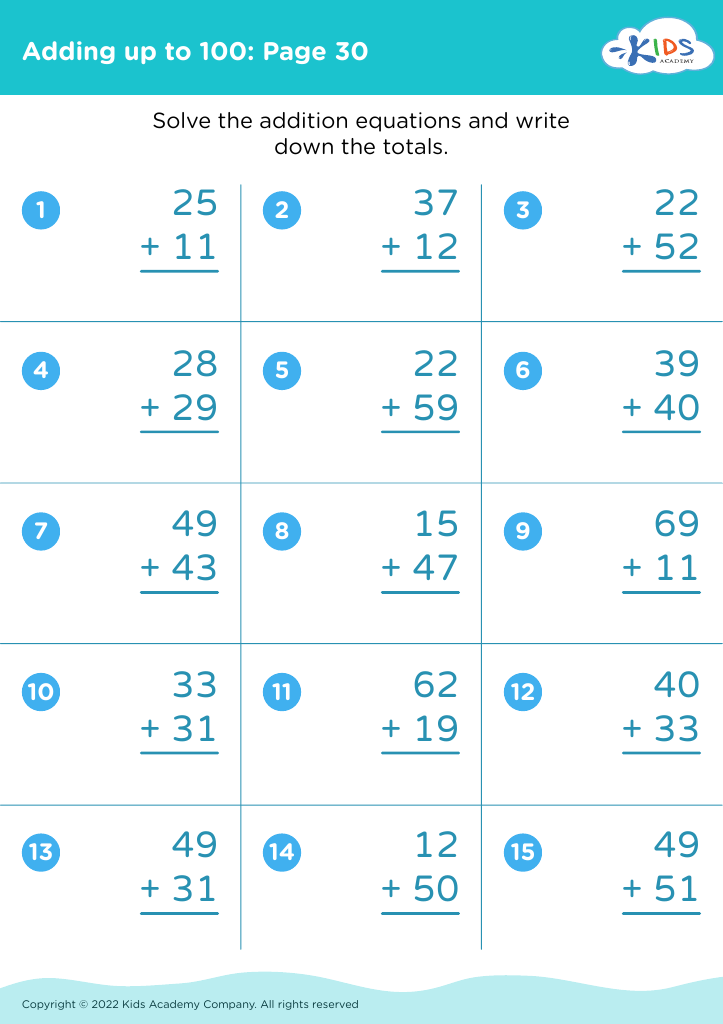
Adding up to 100: Page 30

Adding up to 100: Page 30

Adding up to 100: Page 30
Worksheet
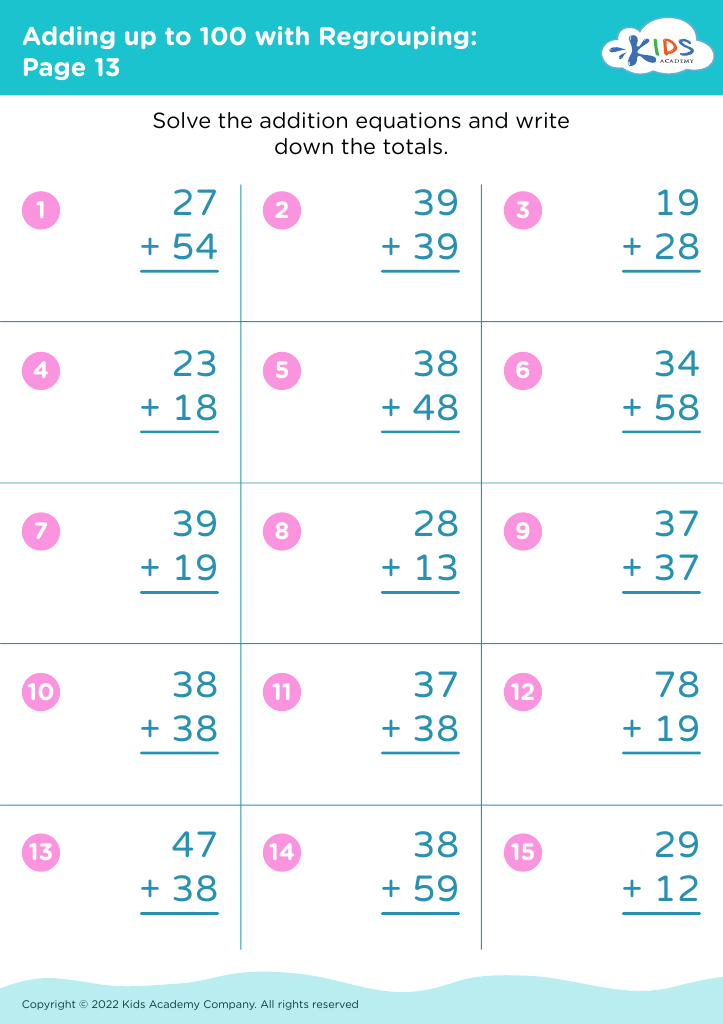
Adding up to 100 with Regrouping: Page 13
Worksheet
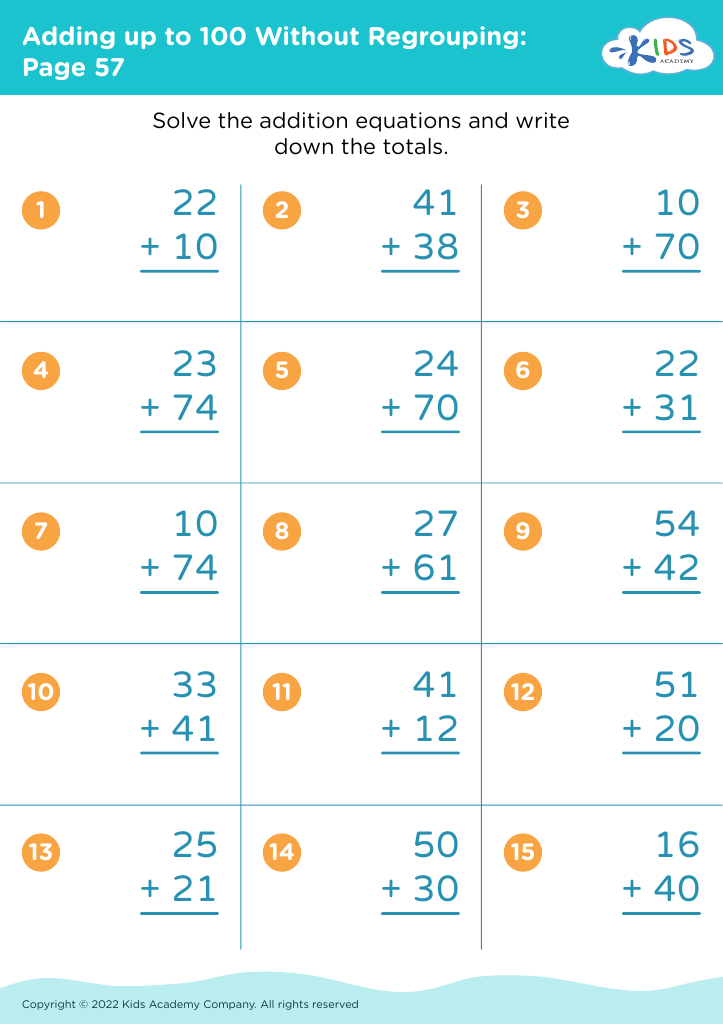
Adding up to 100 Without Regrouping: Page 57
Worksheet
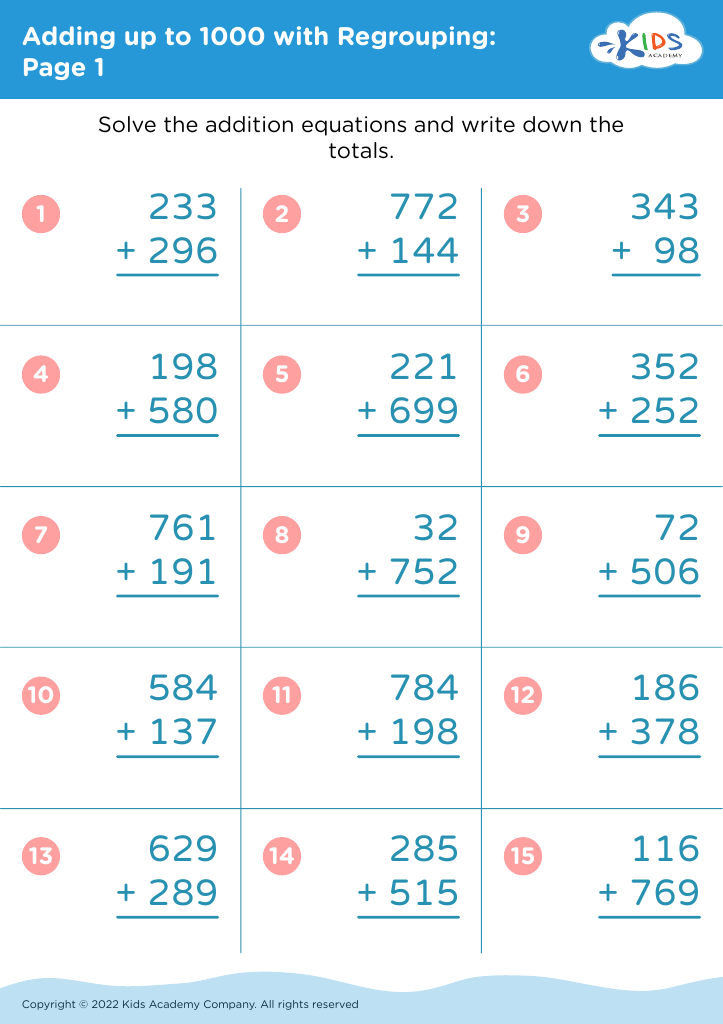
Adding up to 1000 with Regrouping: Page 1
Worksheet
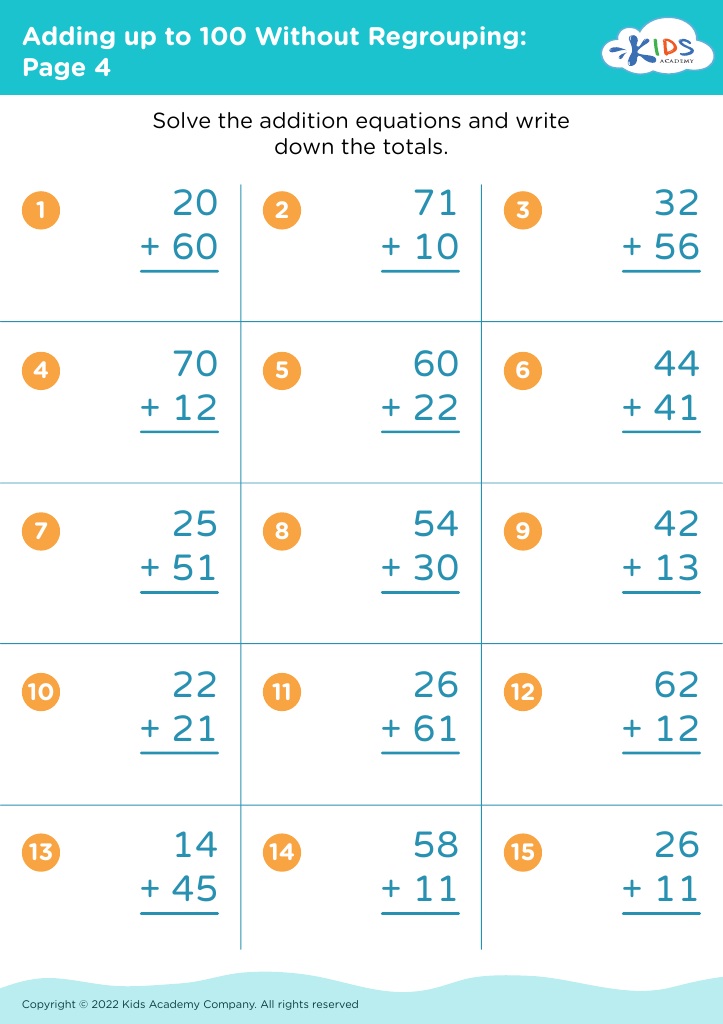
Adding up to 100 Without Regrouping: Page 4
Worksheet
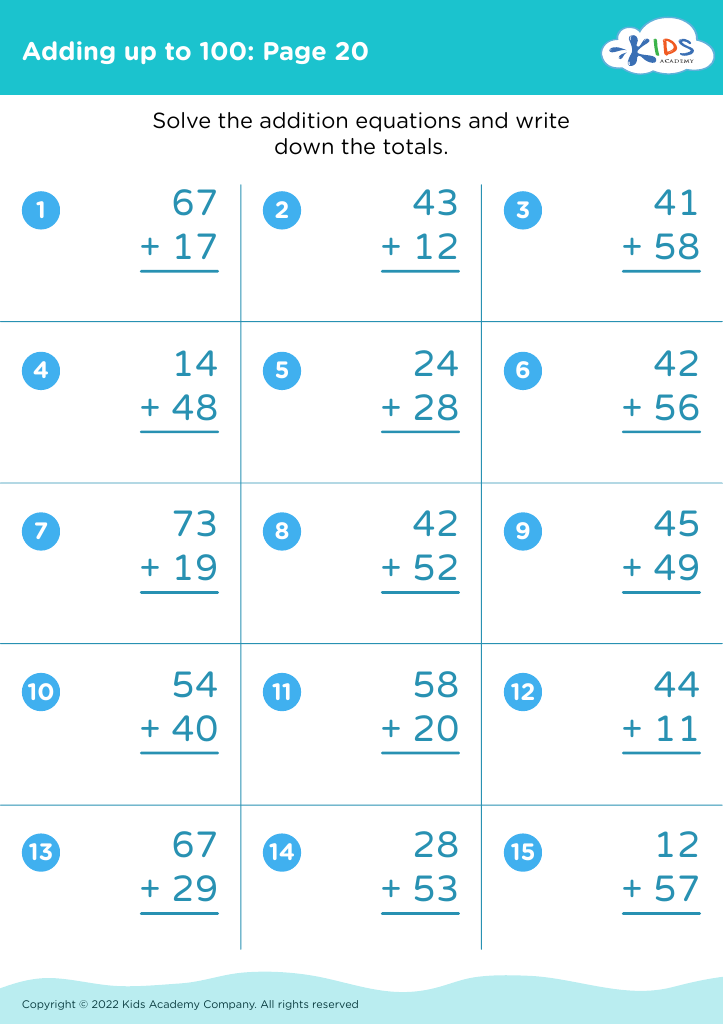
Adding up to 100: Page 20

Adding up to 100: Page 20

Adding up to 100: Page 20
Worksheet


Understanding fractions, especially addition and subtraction, is crucial for children ages 7-8 as it forms a foundational math skill that they will use throughout their education and in everyday life. At this age, students are transitioning from basic arithmetic to more complex concepts that require critical thinking and problem-solving skills. Fractions appear in various real-world contexts, such as cooking, sharing, and measuring, making them essential for practical understanding.

When parents and teachers prioritize fractions in the curriculum, they help children develop number sense and numeracy skills, fostering confidence in tackling mathematical challenges. Furthermore, mastering addition and subtraction of fractions aids in comprehension of larger concepts like ratios and proportions, which are integral in later grades.

In this stage of learning, engaging activities and real-life applications can deepen understanding and show the relevance of math. Support from adults, through encouragement and resources, can enhance learning experiences. Ultimately, a strong grasp of fractions paves the way for academic success in mathematics and beyond, encouraging a positive attitude toward the subject as children grow. This early investment in their education sets the stage for future achievements across various disciplines.