Filters

16 filtered results

Clear all filters
Favorites
With answer key
Interactive

16 filtered results

Difficulty Level

Grade


Discover our engaging "Basic Addition Worksheets for Ages 7-8," designed to enhance young learners' math skills. These worksheets are perfect for children striving to master fundamental addition concepts, including single and double-digit sums. Each activity is crafted to encourage practice while making learning enjoyable, featuring colorful visuals and interactive challenges. Our materials are easy to print and ideal for both classroom and home use. As kids work through these exercises, they'll build confidence in their math abilities, laying a strong foundation for future success. Help your child become a confident mathematician with our fun and educational addition worksheets! Happy learning!
Check out this FREE Trial Lesson on Addition for age 7-8!

P

Favorites
With answer key
Interactive
  • 7-8
  • Basic Addition
  • Addition
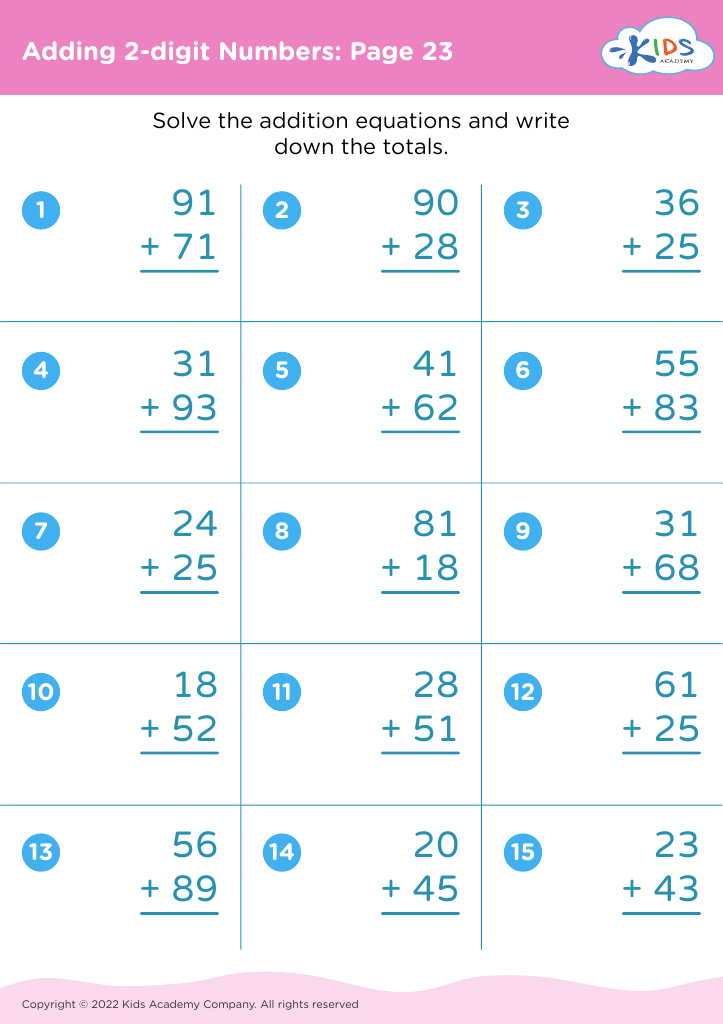
Adding 2-digit Numbers: Page 23

Adding 2-digit Numbers: Page 23

Adding 2-digit Numbers: Page 23
Worksheet
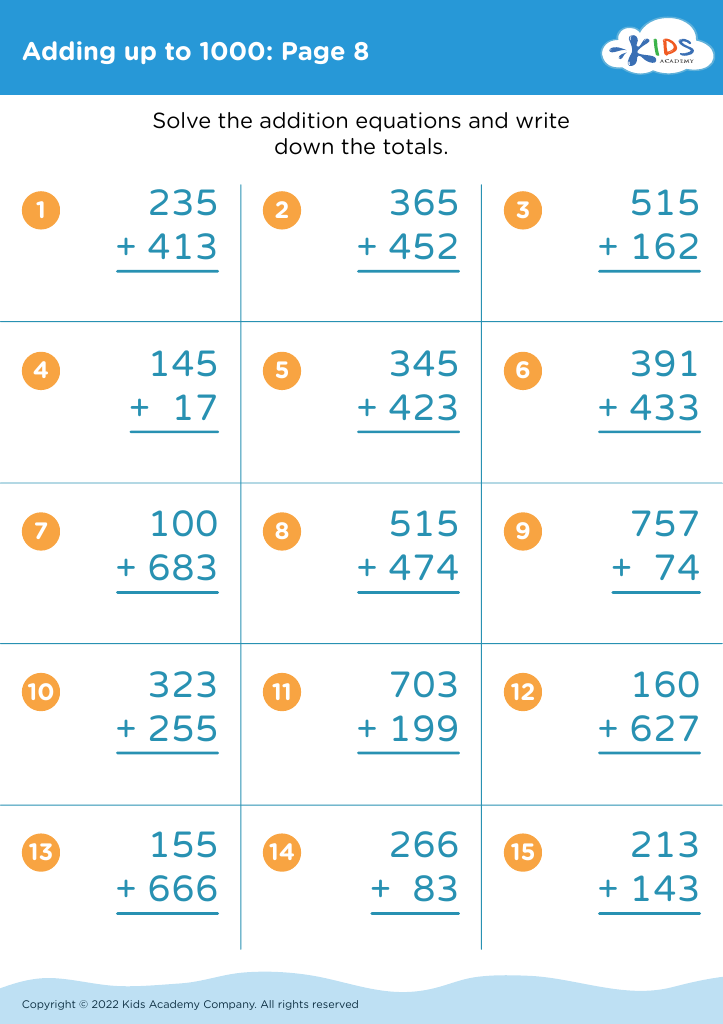
Adding up to 1000: Page 8

Adding up to 1000: Page 8

Adding up to 1000: Page 8
Worksheet
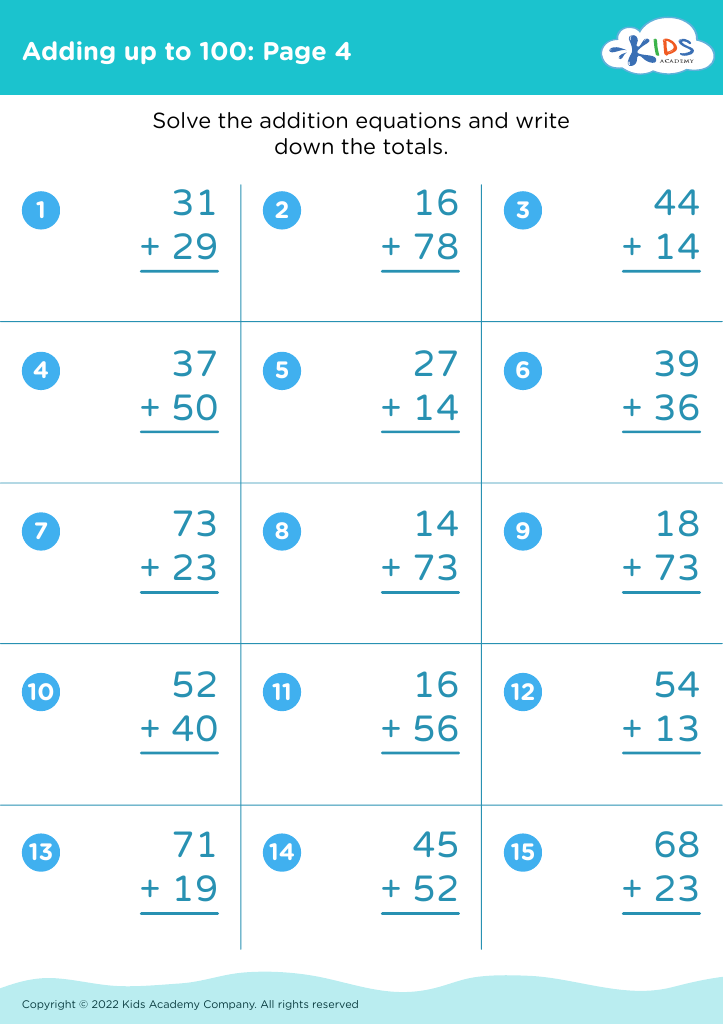
Adding up to 100: Page 4

Adding up to 100: Page 4

Adding up to 100: Page 4
Worksheet
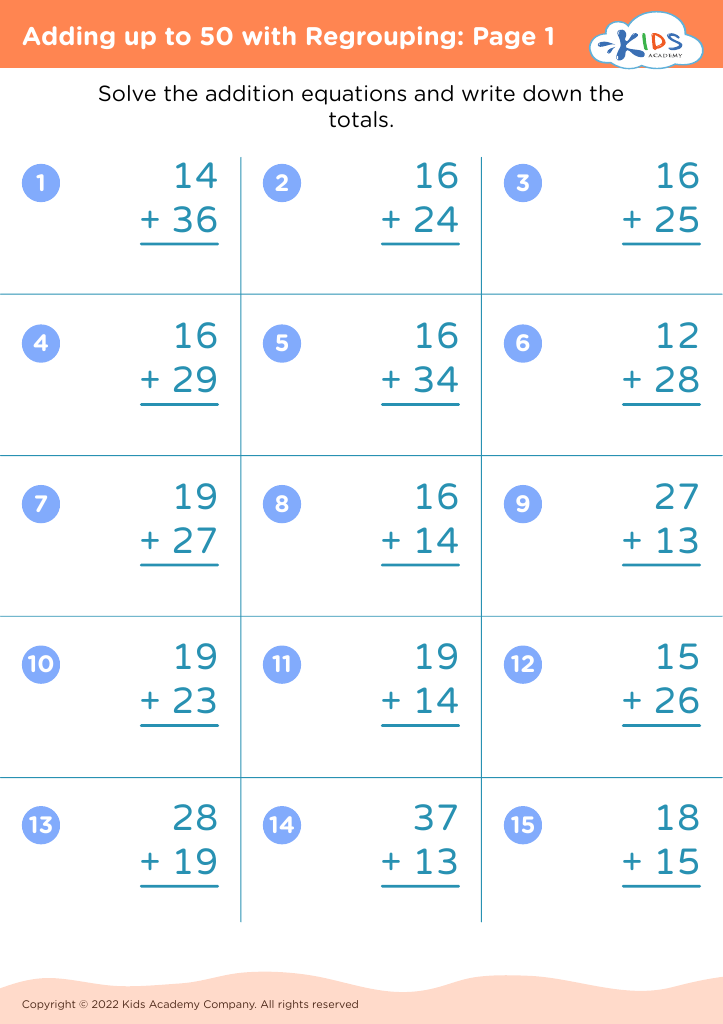
Adding up to 50 with Regrouping: Page 1
Worksheet
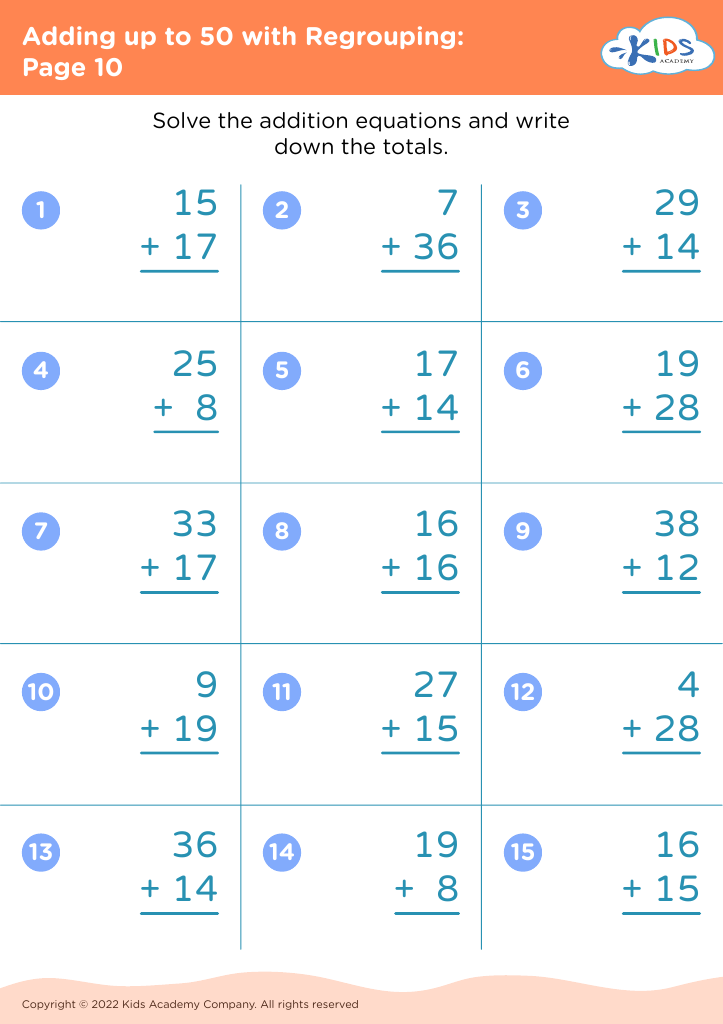
Adding up to 50 with Regrouping: Page 10
Worksheet
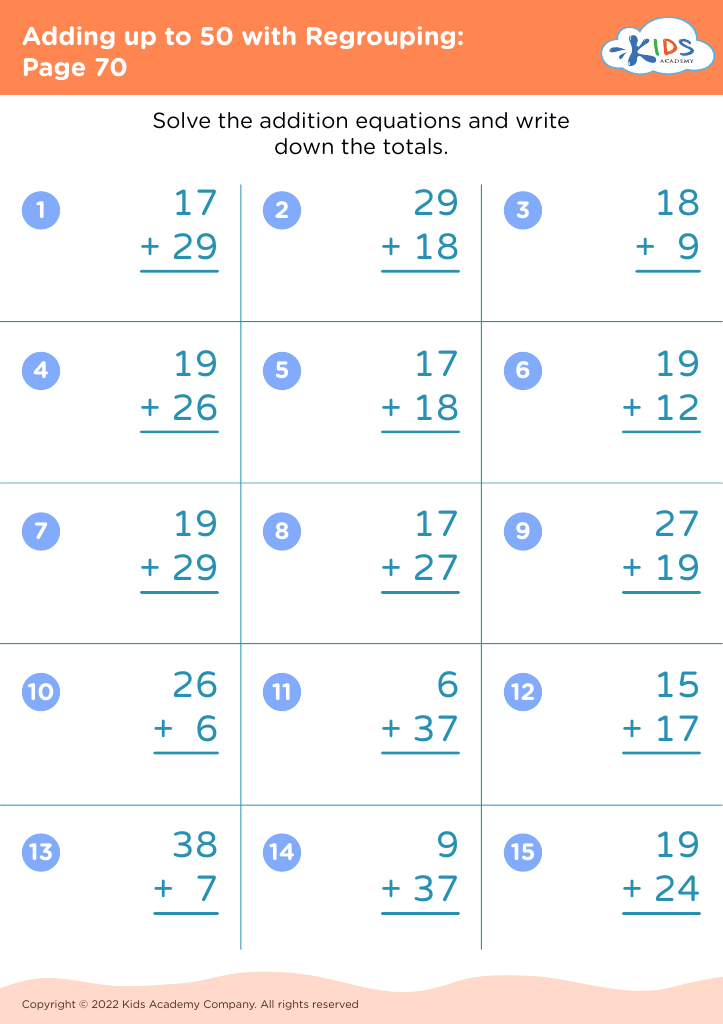
Adding up to 50 with Regrouping: Page 70
Worksheet
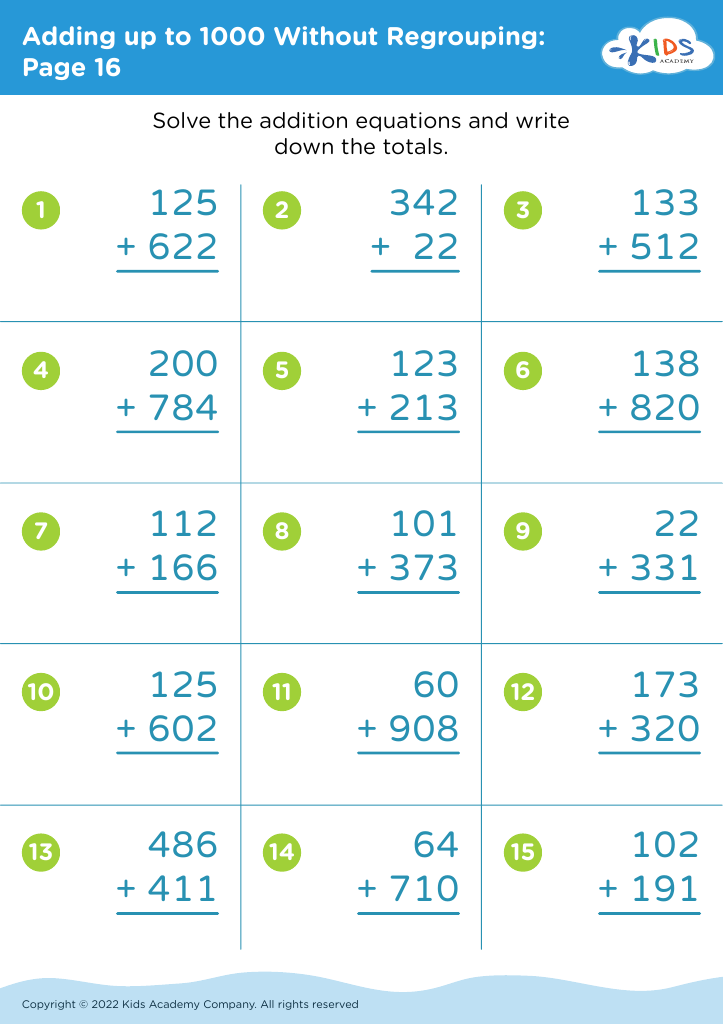
Adding up to 1000 Without Regrouping: Page 16
Worksheet
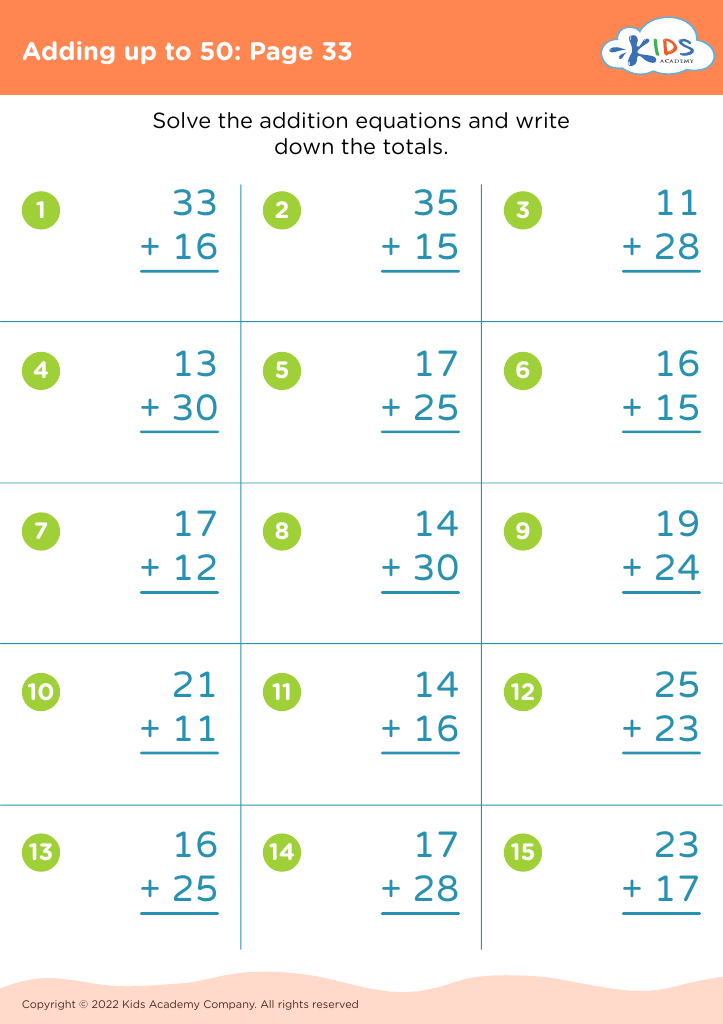
Adding up to 50: Page 33

Adding up to 50: Page 33

Adding up to 50: Page 33
Worksheet
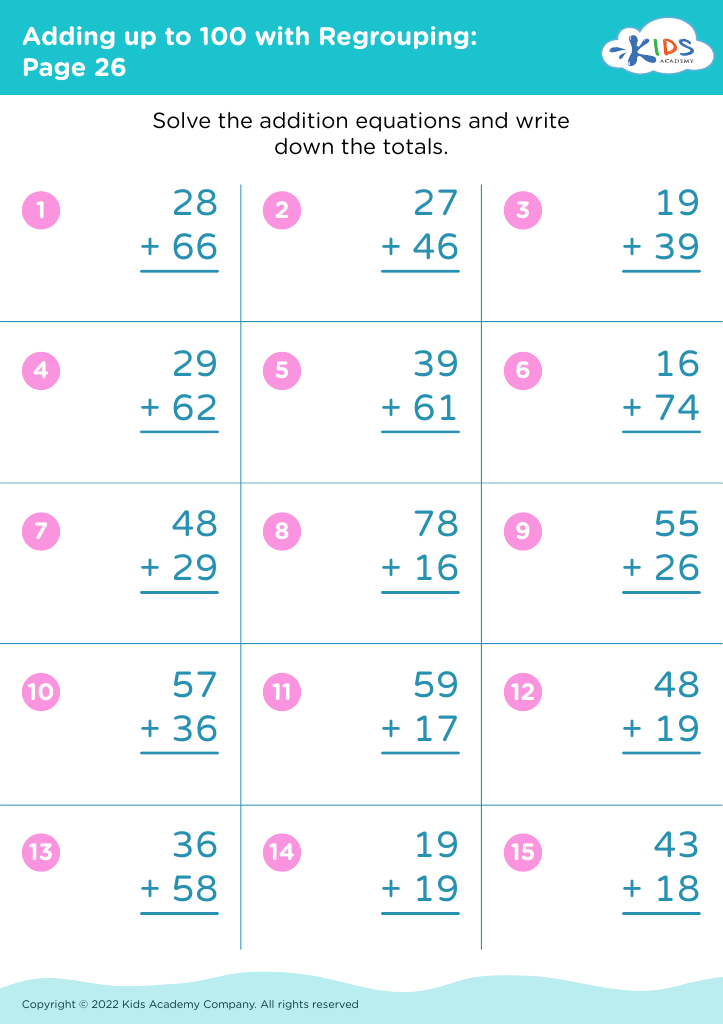
Adding up to 100 with Regrouping: Page 26
Worksheet
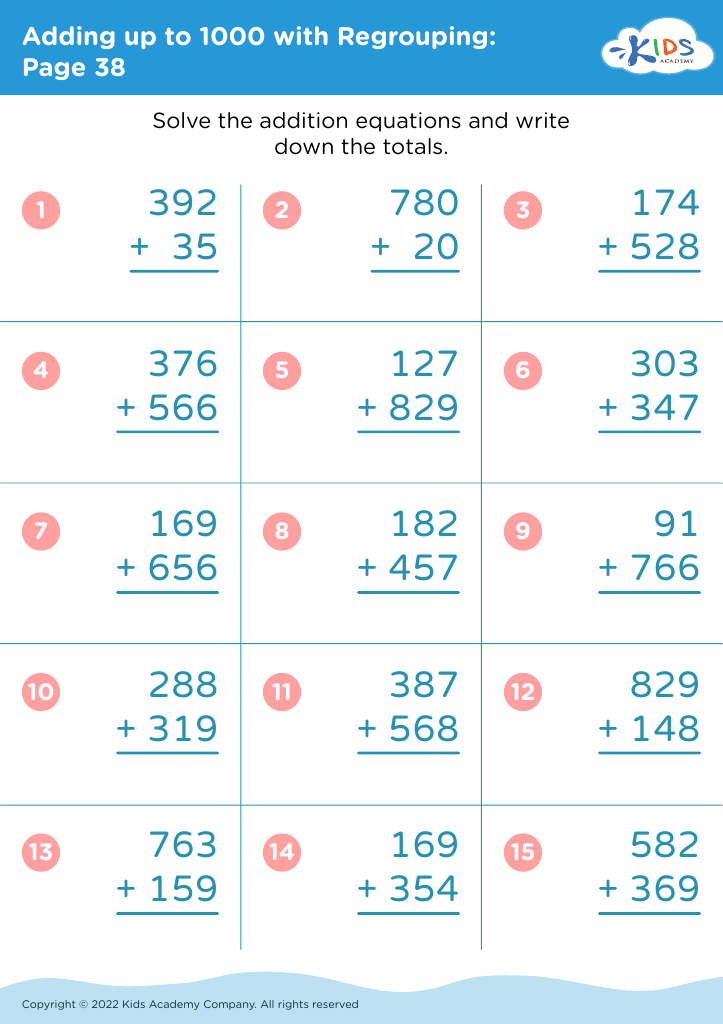
Adding up to 1000 with Regrouping: Page 38
Worksheet
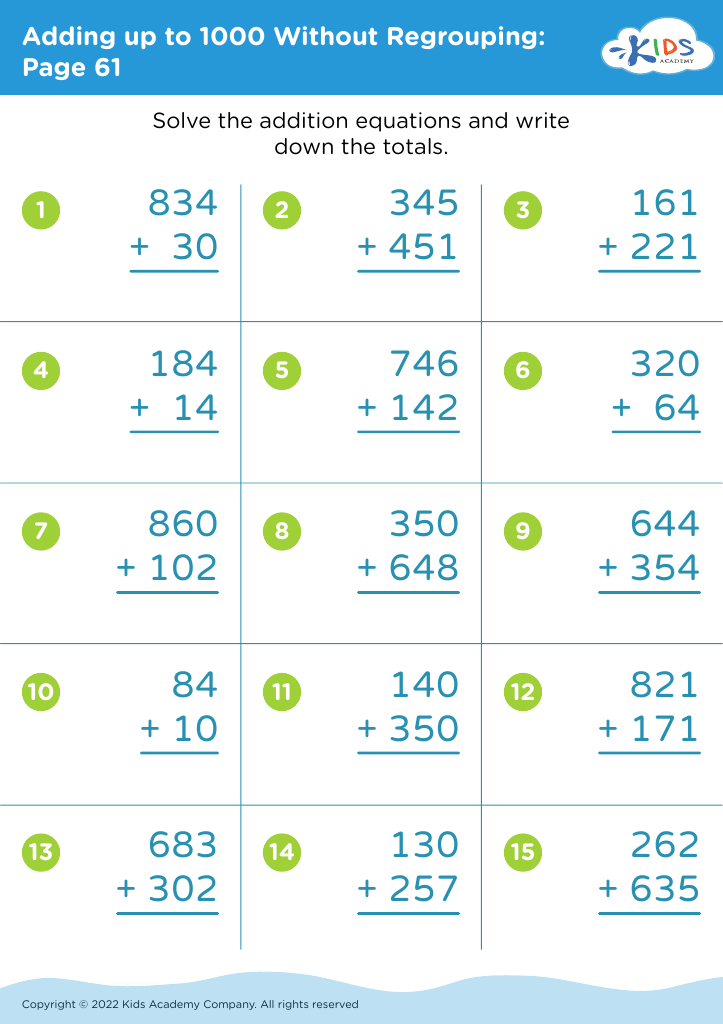
Adding up to 1000 Without Regrouping: Page 61
Worksheet
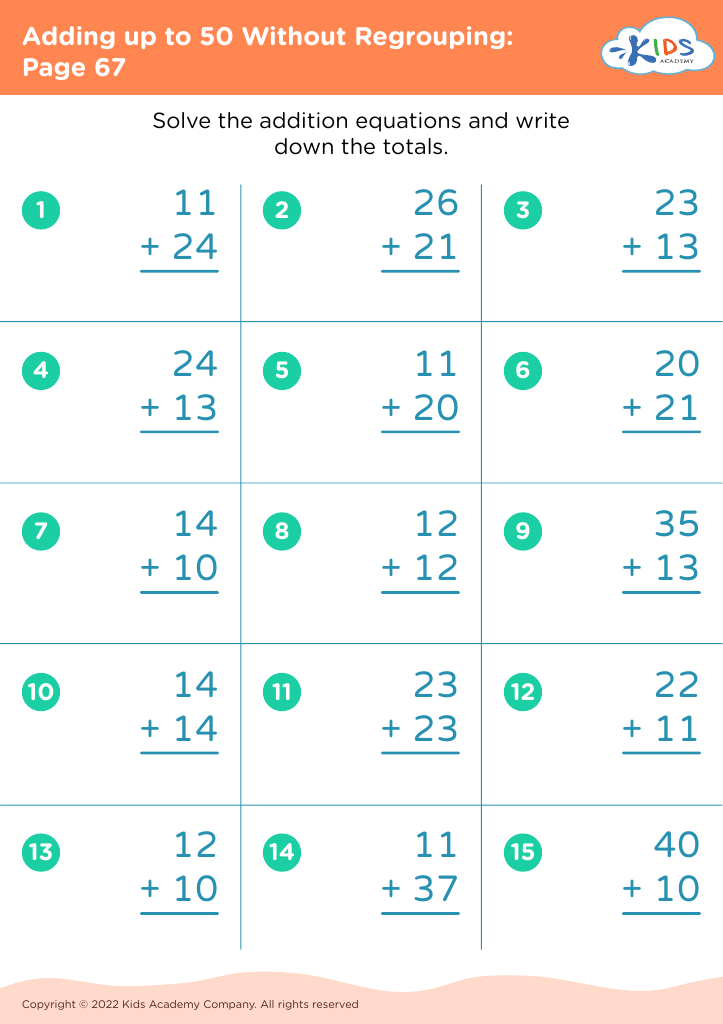
Adding up to 50 Without Regrouping: Page 67
Worksheet
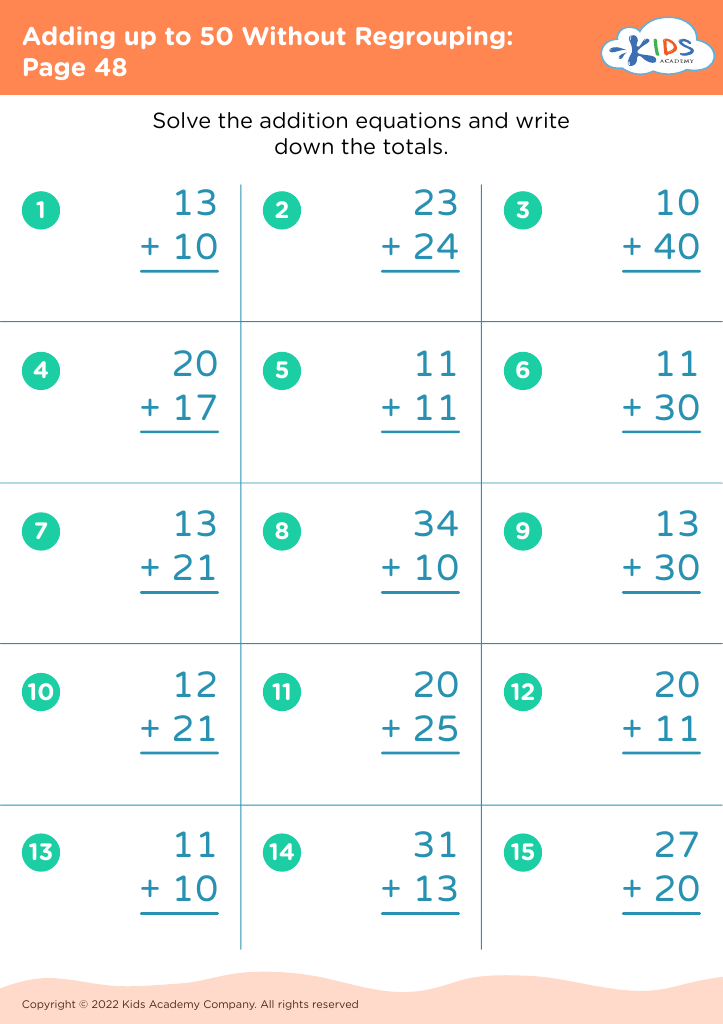
Adding up to 50 Without Regrouping: Page 48
Worksheet
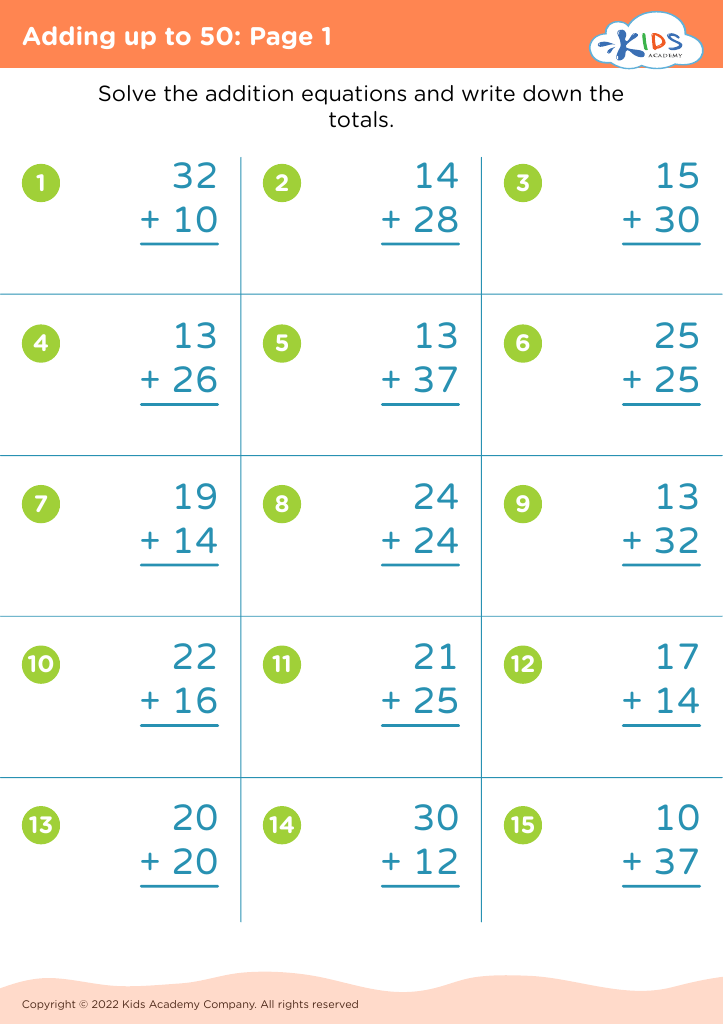
Adding up to 50: Page 1

Adding up to 50: Page 1

Adding up to 50: Page 1
Worksheet
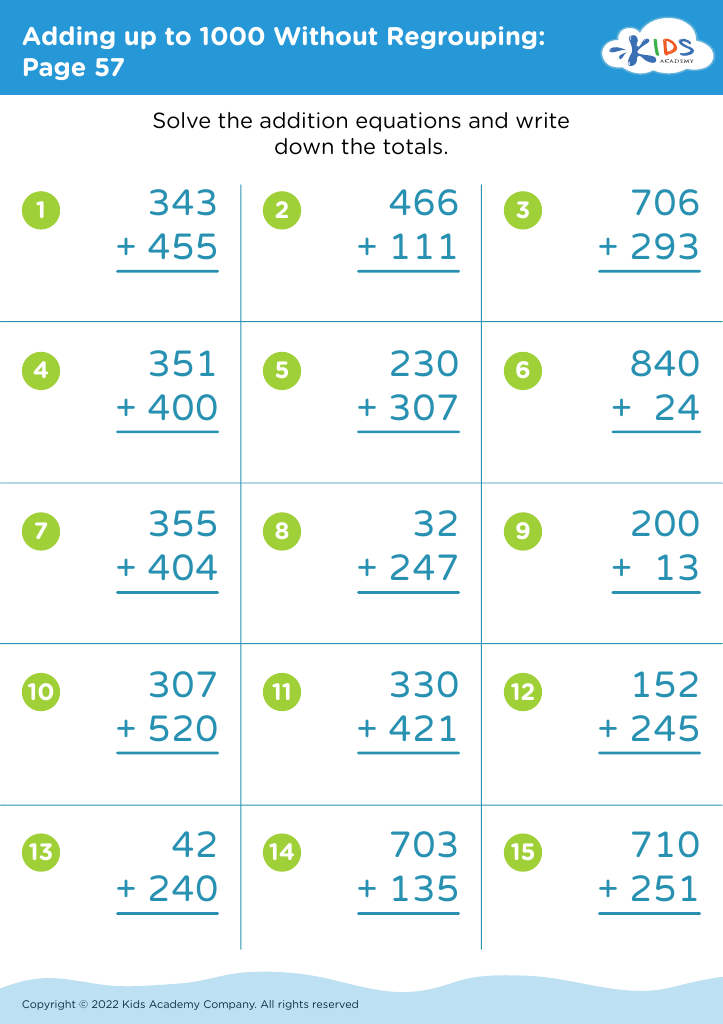
Adding up to 1000 Without Regrouping: Page 57
Worksheet
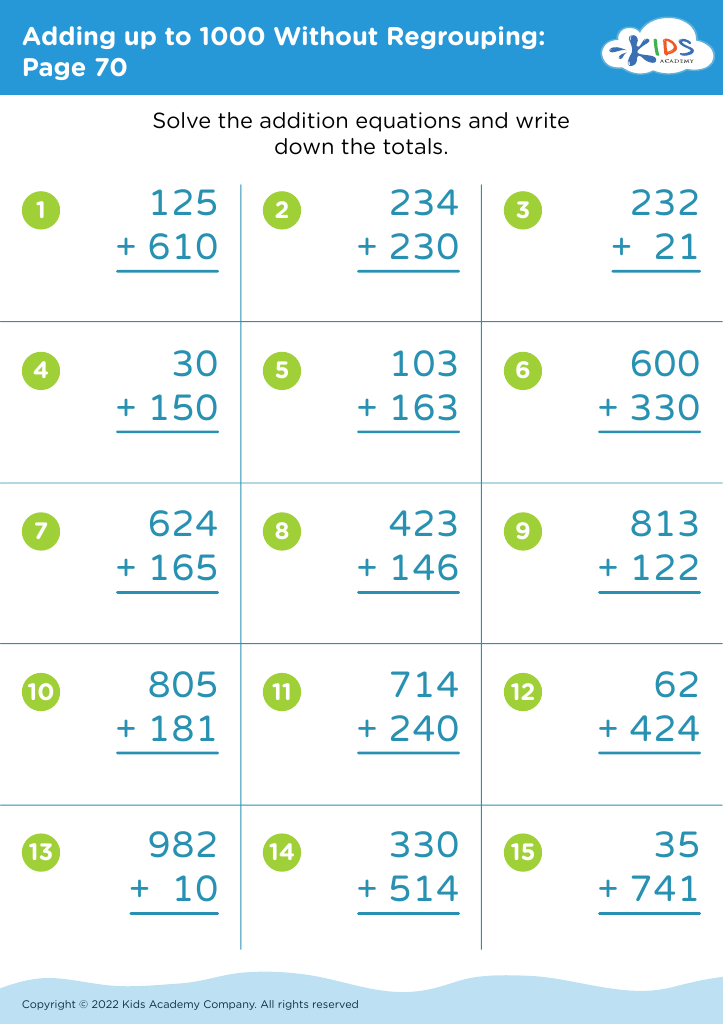
Adding up to 1000 Without Regrouping: Page 70
Worksheet


Basic addition skills are crucial for children aged 7-8, laying the foundational stones for their mathematical understanding and overall academic success. At this developmental stage, children are transitioning from simple counting to more complex calculations, making proficiency in addition integral. Mastery of basic addition not only enhances their arithmetic capabilities but also builds confidence in handling numbers, which is essential for tackling more advanced topics as they progress in their education.

Furthermore, these skills have real-world applications that extend beyond the classroom. Understanding addition helps children solve everyday problems, like managing money, measuring quantities in recipes, or calculating time—a vital skill as they become more independent.

Moreover, ensuring that young learners grasp basic addition fosters critical thinking and analytical skills, enabling them to approach challenges methodically. For parents and teachers, investing time in reinforcing these skills can make a significant difference in a child's academic journey. Engaging activities like games, puzzles, and practical exercises can make learning enjoyable and effective. Additionally, tracking progress and celebrating successes can motivate students, instilling a positive attitude toward mathematics. By prioritizing basic addition at this age, parents and teachers play a crucial role in shaping competent learners ready for future challenges.