Filters

136 filtered results

Clear all filters
Favorites
With answer key
Interactive

136 filtered results

Difficulty Level

Grade


Check out this FREE Trial Lesson on Addition for age 7-8!

L

Favorites
With answer key
Interactive
  • 7-8
  • Number Recognition
  • Addition
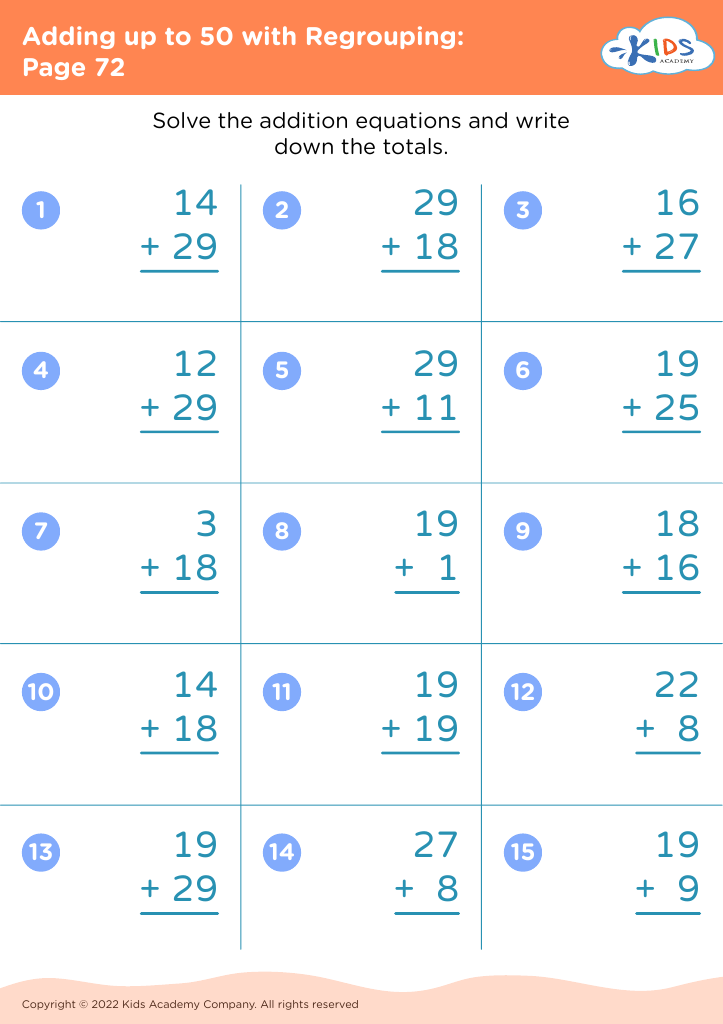
Adding up to 50 with Regrouping: Page 72
Worksheet
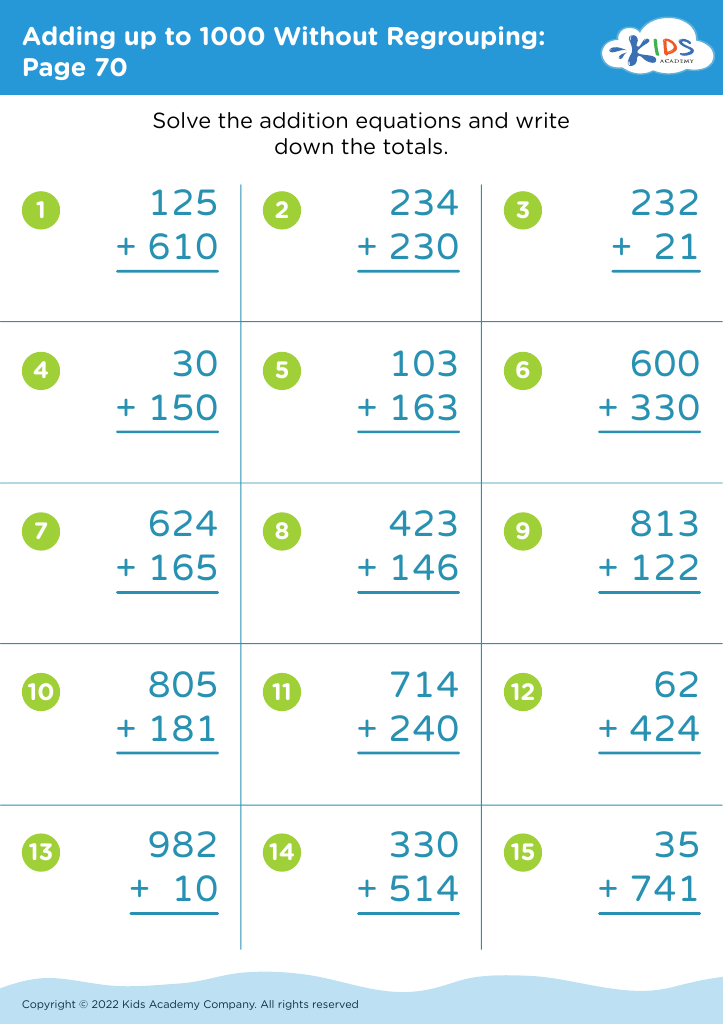
Adding up to 1000 Without Regrouping: Page 70
Worksheet
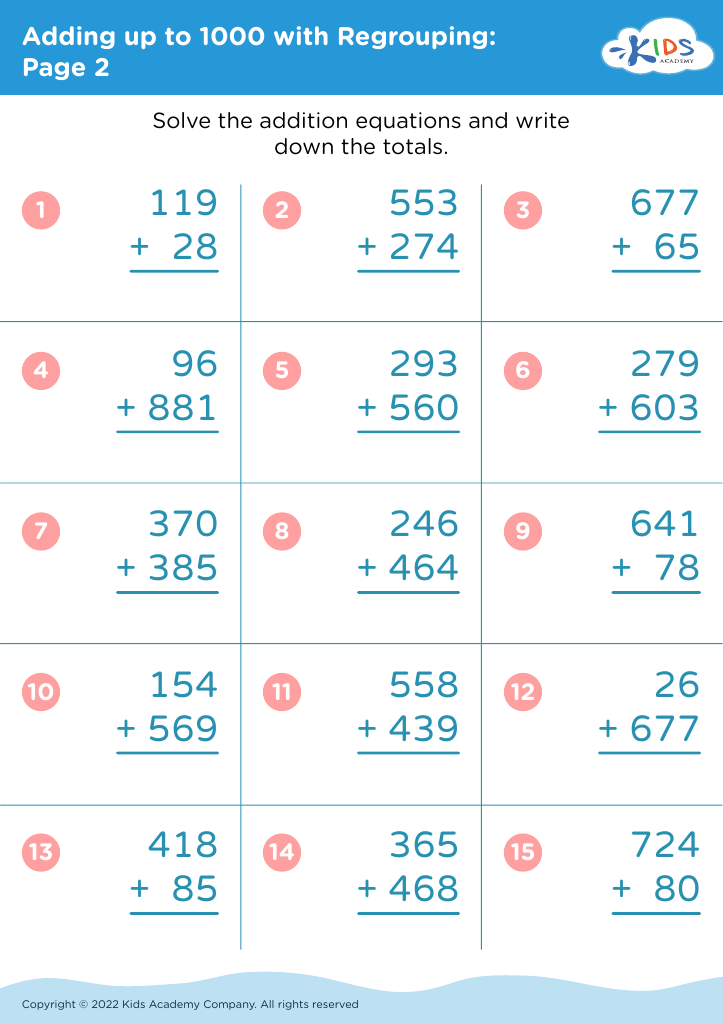
Adding up to 1000 with Regrouping: Page 2
Worksheet
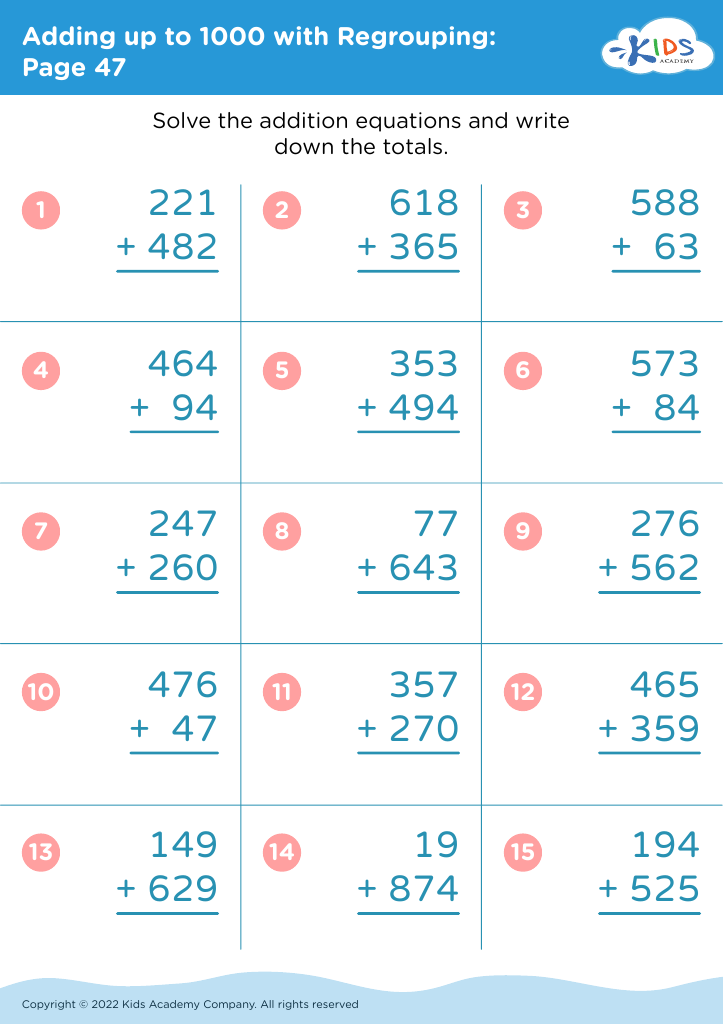
Adding up to 1000 with Regrouping: Page 47
Worksheet
Adding up to 50: Page 49

Adding up to 50: Page 49

Adding up to 50: Page 49
Worksheet
Adding up to 50 with Regrouping: Page 19
Worksheet
Adding up to 1000 with Regrouping: Page 53
Worksheet
Free addition PDF worksheet for 3rd grade

Free Addition Worksheet

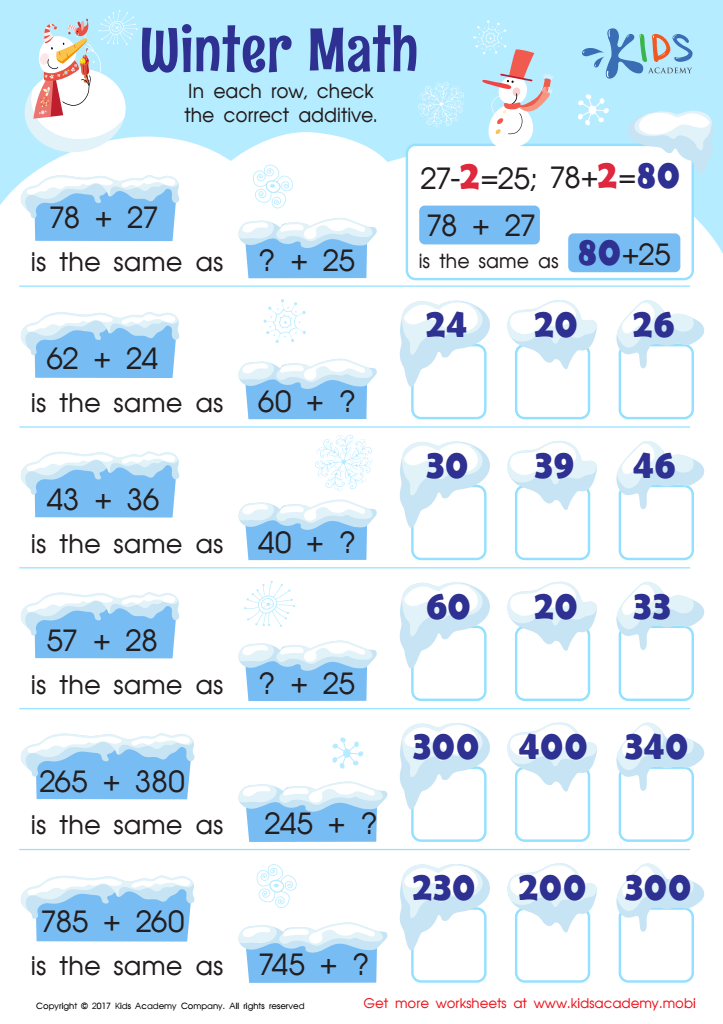
Perfect for a wintry day, challenge your 3rd grader to compare addition equations and fill in the missing numbers in the PDF. This winter-themed worksheet is sure to bring a smile while your 3rd grader practices their addition skills. Perfect for a blustery day, challenge your child to compare addition equations and complete the missing numbers in the PDF.
Free Addition Worksheet
Worksheet
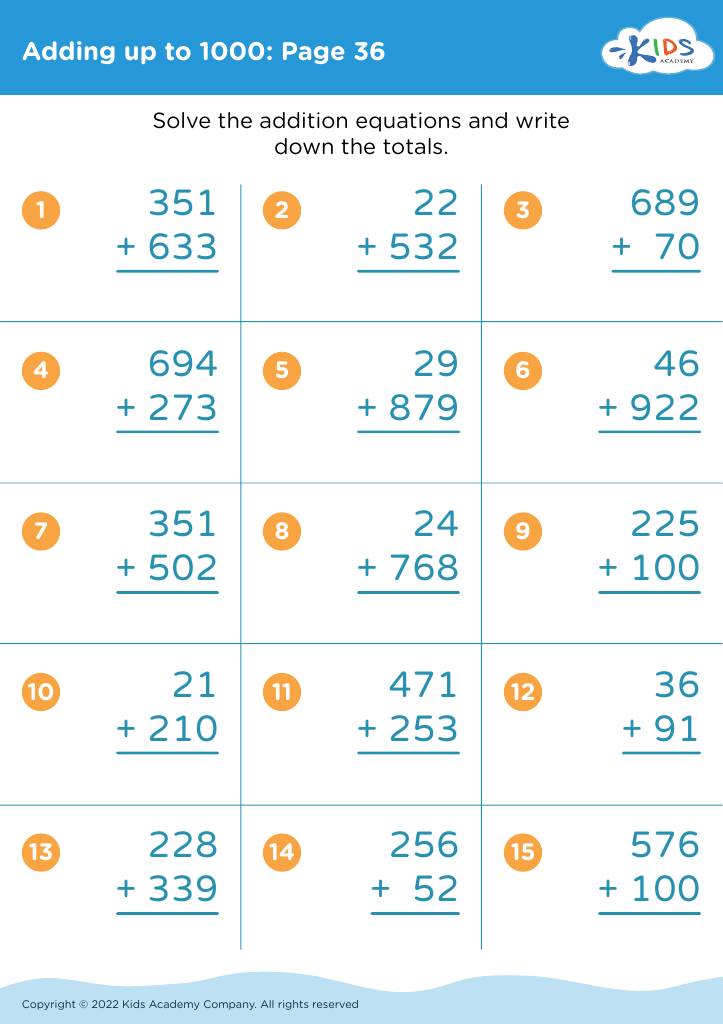
Adding up to 1000: Page 36

Adding up to 1000: Page 36

Adding up to 1000: Page 36
Worksheet
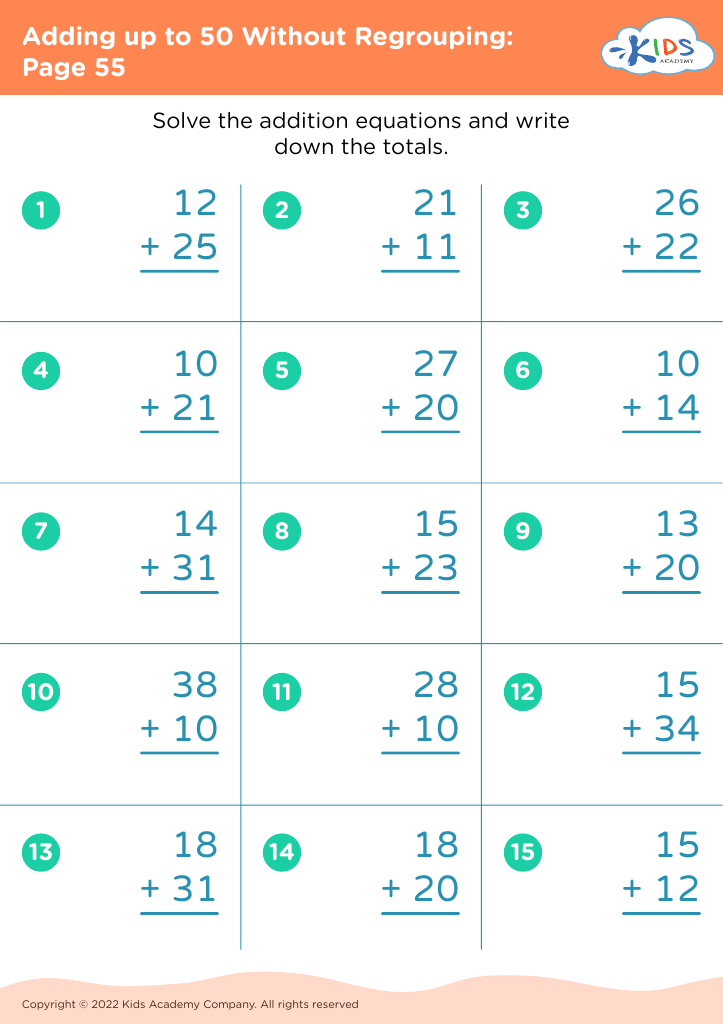
Adding up to 50 Without Regrouping: Page 55
Worksheet
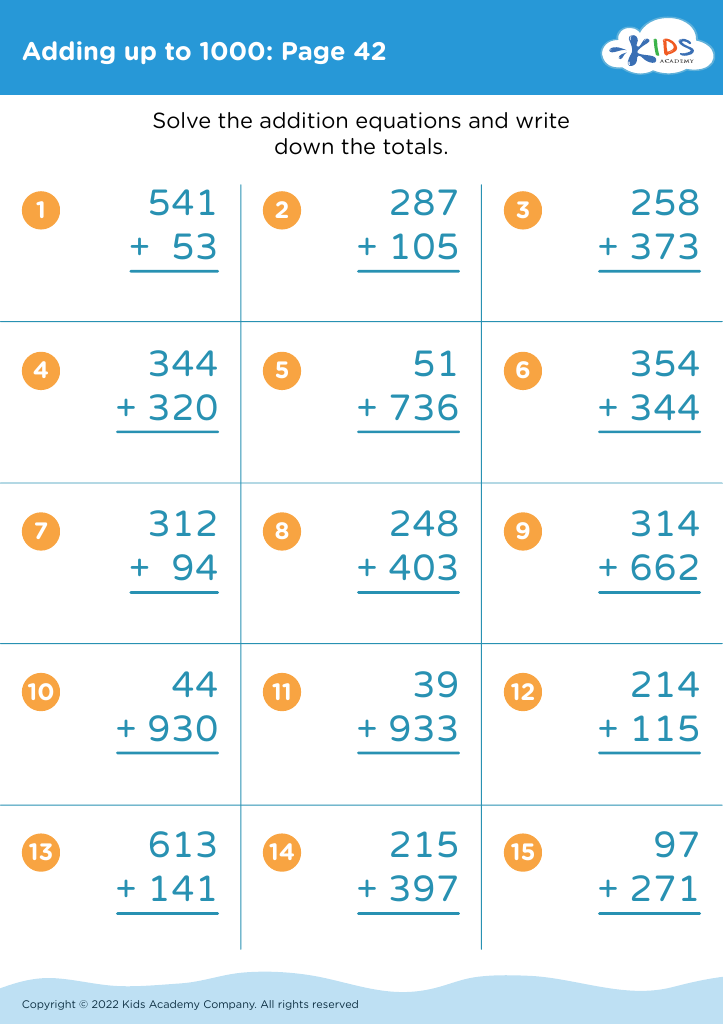
Adding up to 1000: Page 42

Adding up to 1000: Page 42

Adding up to 1000: Page 42
Worksheet
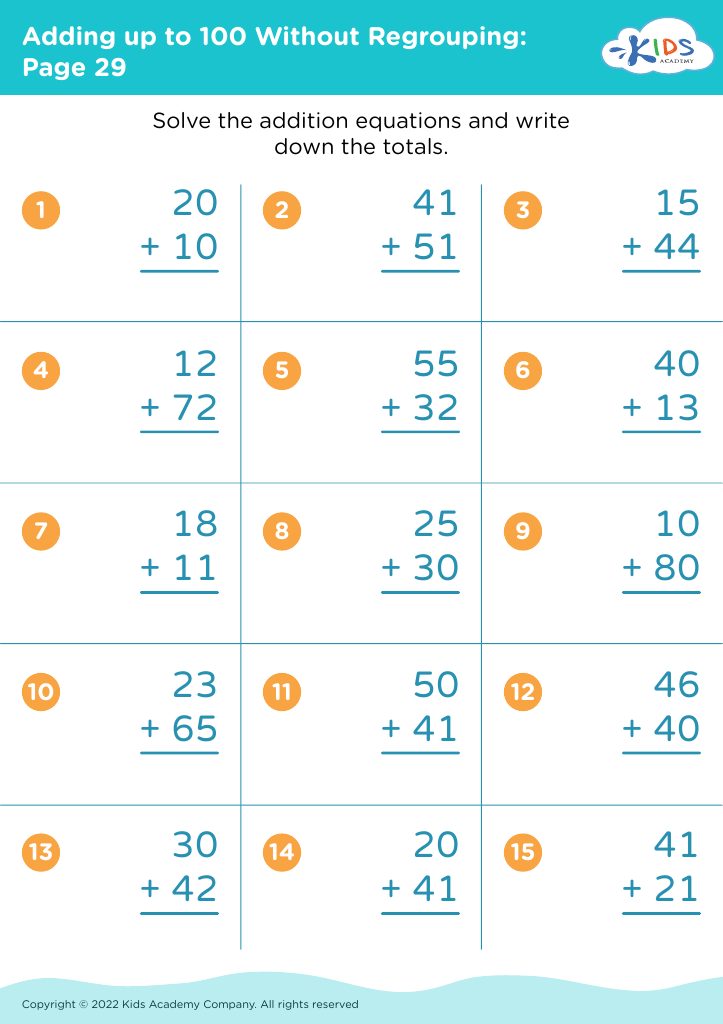
Adding up to 100 Without Regrouping: Page 29
Worksheet
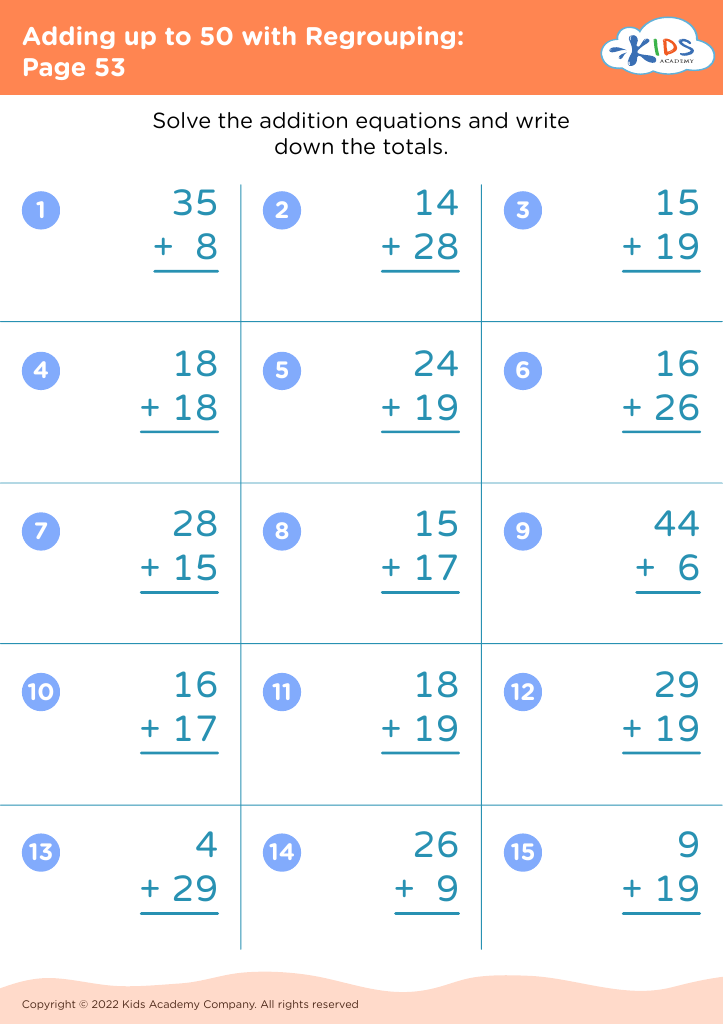
Adding up to 50 with Regrouping: Page 53
Worksheet
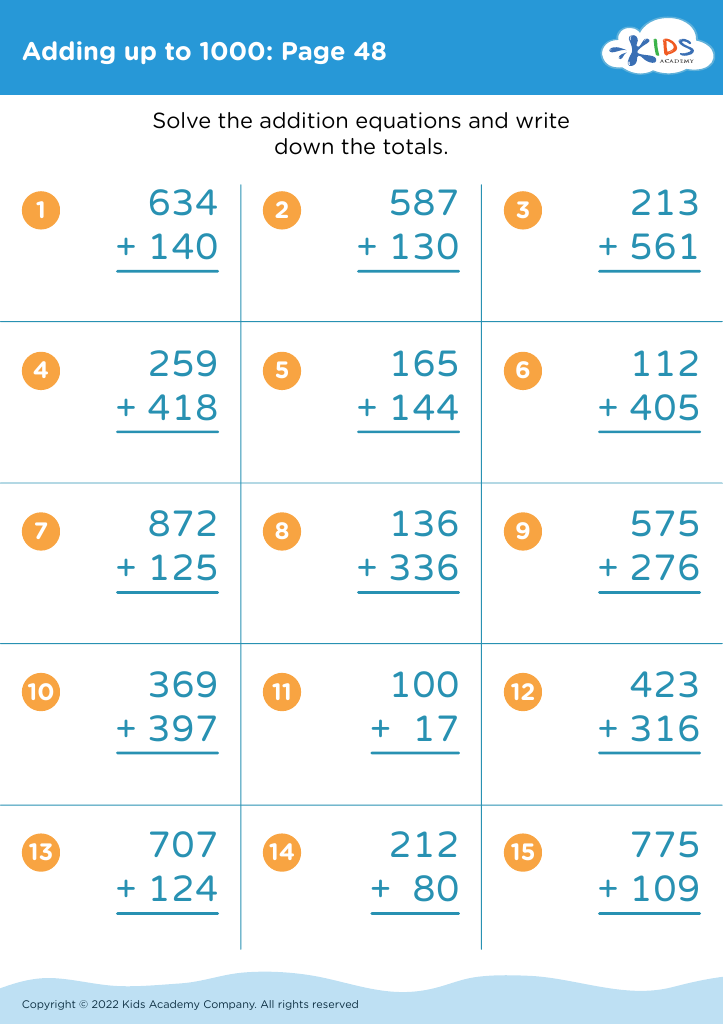
Adding up to 1000: Page 48

Adding up to 1000: Page 48

Adding up to 1000: Page 48
Worksheet
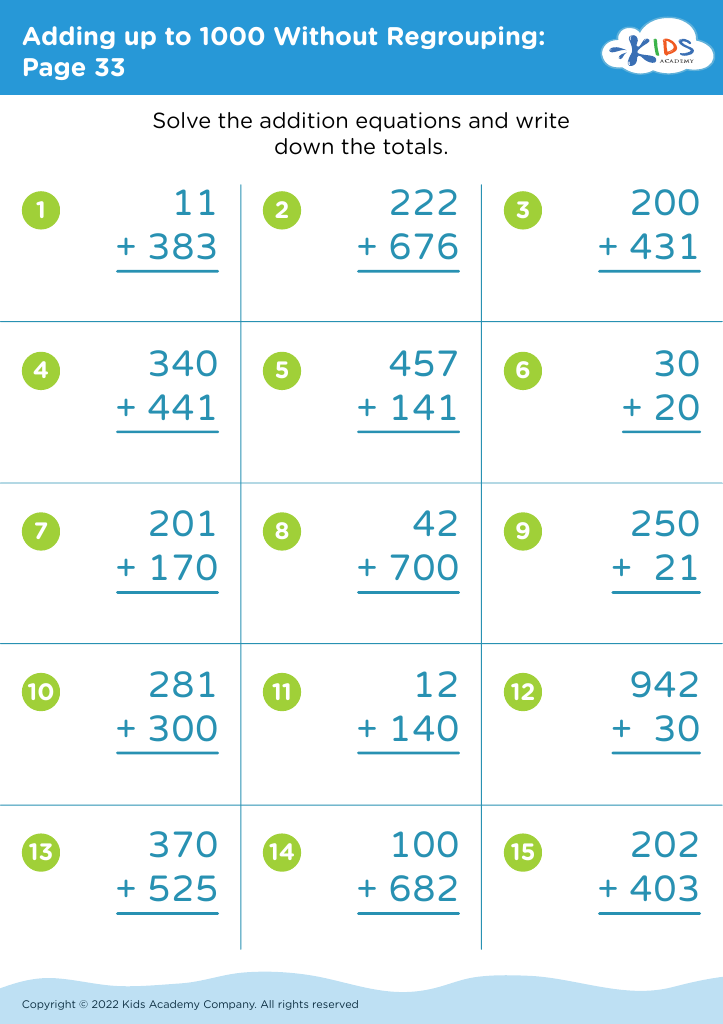
Adding up to 1000 Without Regrouping: Page 33
Worksheet
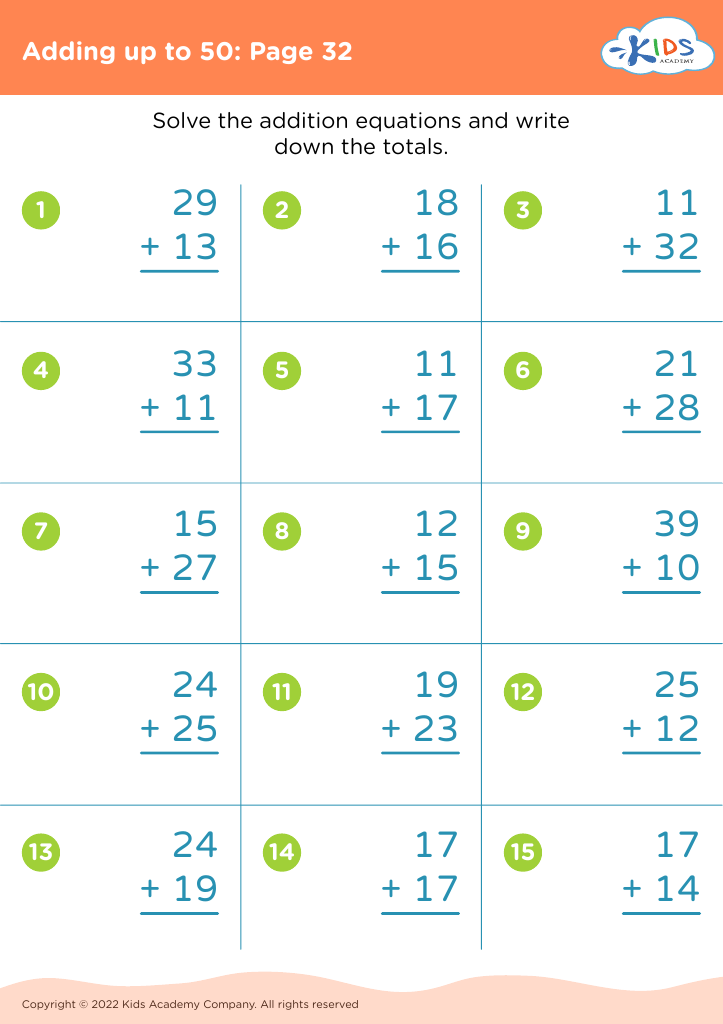
Adding up to 50: Page 32

Adding up to 50: Page 32

Adding up to 50: Page 32
Worksheet


... 5 6

Number recognition and addition form the foundation of early mathematics, making them crucial for children aged 7-8. At this stage, students are transitioning from basic counting to understanding numerical concepts, which significantly impacts their academic success. When children can recognize numbers and perform simple additions, they develop essential problem-solving skills and confidence in their abilities.

Parents and teachers should prioritize number recognition and addition because they are pivotal in shaping a child's mathematical literacy. Proficient number recognition allows children to identify quantities and engage with mathematical operations more intuitively. As they tackle addition, they reinforce their understanding of relationships between numbers, which builds a crucial cognitive framework for more complex mathematical concepts in later grades.

Moreover, mastering these skills at a young age can prevent gaps in learning that may lead to future struggles with mathematics. Engaging activities such as games, puzzles, and daily applications of addition help solidify these concepts in fun and interactive ways. By supporting children in number recognition and addition, parents and teachers lay a strong groundwork that empowers them for future academic challenges, enhances critical thinking skills, and fosters a lifelong positive attitude toward mathematics.