
Reading clocks Addition Worksheets for Ages 7-8
3 filtered results
Difficulty Level
Grade
Age
-
From - To
Subject
Activity
Standards
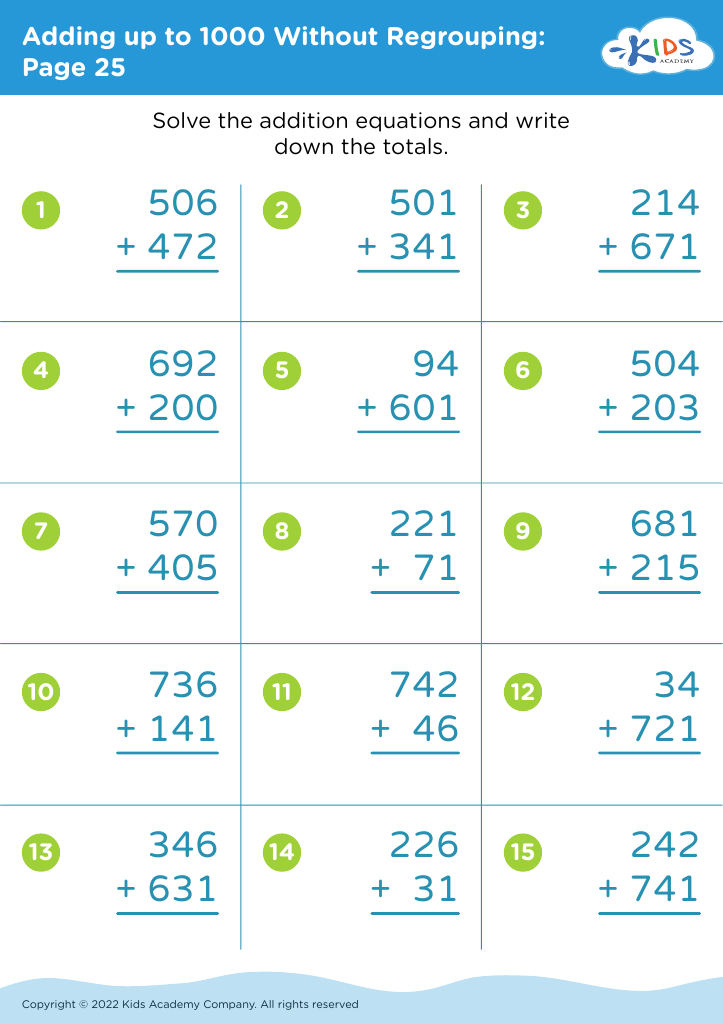
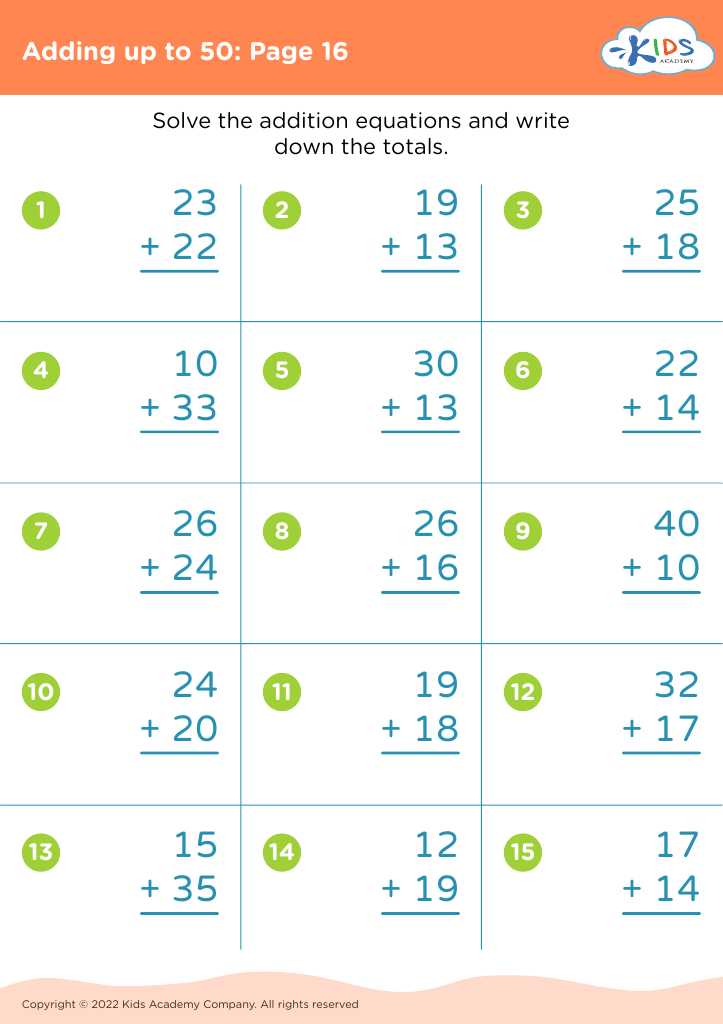
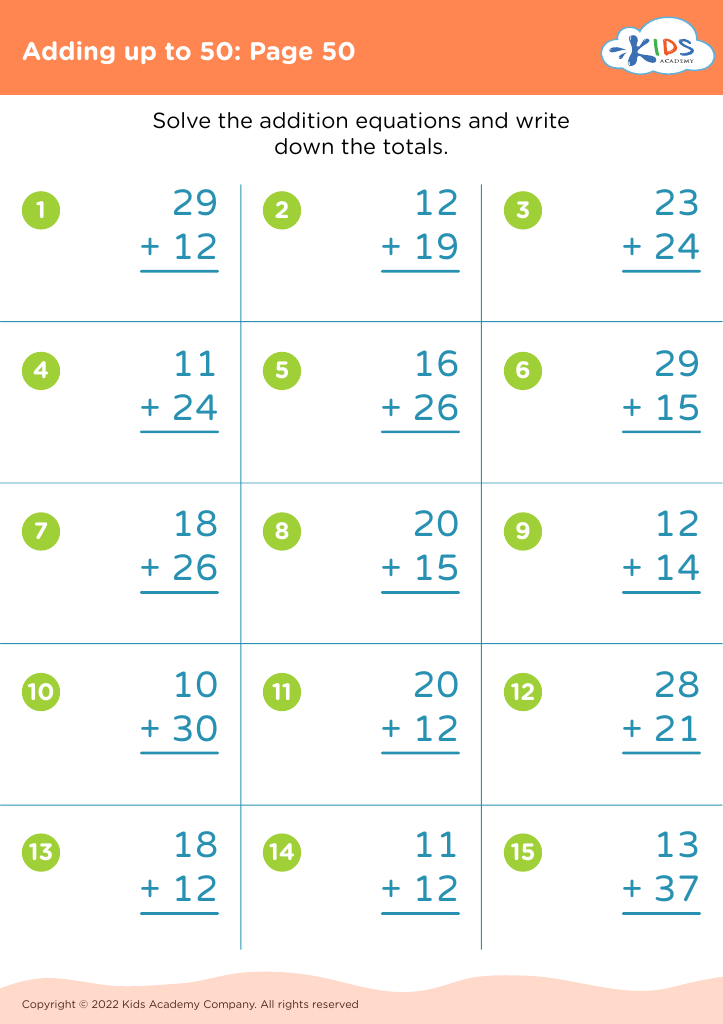
Boost your child's math and time-telling skills with our "Reading Clocks Addition Worksheets for Ages 7-8." Perfectly crafted for young learners, these worksheets combine basic addition practice with clock-reading exercises. By engaging with a mix of analog and digital clocks, children will enhance their ability to read time accurately and perform addition problems simultaneously. Each worksheet is designed to be both educational and fun, making learning enjoyable and effective. Ideal for classroom use or at-home practice, these printable resources help build a strong foundation in math while reinforcing essential time-telling skills.
Favorites
With answer key
Interactive
Join Kids Academy for Free
Who is primarily going to use this learning content?








At ages 7-8, children typically begin mastering fundamental skills in both reading clocks and basic addition. These abilities are fundamental for a child's overall educational development and practical day-to-day living.
Understanding how to read clocks is crucial because it introduces children to the concept of time, which is essential for following schedules, developing punctuality, and managing routines both at home and school. It enables them to be more independent in managing activities such as knowing when to wake up, eat, play, and do homework. Reading analog clocks also enhances cognitive skills by teaching children to interpret numerical information and comprehend sequences and durations.
Meanwhile, learning addition lays the groundwork for more complex mathematical concepts that they will encounter in future academic years. Proficiency in basic arithmetic is essential for solving everyday problems, such as calculating allowances, counting change, or following recipes. Addition helps in developing logical thinking, problem-solving skills, and the ability to perform mathematical reasoning, which are critical across all STEM (Science, Technology, Engineering, and Mathematics) subjects.
Ensuring children are proficient in both reading clocks and addition provides them with essential tools to navigate their daily lives as well as to succeed in their educational journey, fostering confidence and independence. Hence, parents and teachers should prioritize and support their development in these areas.








