Filters

21 filtered results

Clear all filters
Favorites
With answer key
Interactive

21 filtered results

Difficulty Level

Grade


Unlock the power of math with our "Recognizing Patterns Addition Worksheets for Ages 7-8"! Specially structured to boost addition skills, these worksheets effortlessly teach young minds to identify patterns. Designed to make learning engaging, your children will enhance their critical thinking while discovering mathematical sequences. Ideal for kids ages 7-8, each colorful worksheet not only improves arithmetic abilities but also fosters a love for problem-solving. Perfect for both classroom and home use, let your child shine in math with our expertly crafted educational tools. Explore today and watch your child’s confidence soar! #KidsAcademy #MathSkills #AdditionPatterns
Check out this FREE Trial Lesson on Addition for age 7-8!

H

Favorites
With answer key
Interactive
  • 7-8
  • Recognizing Patterns
  • Addition
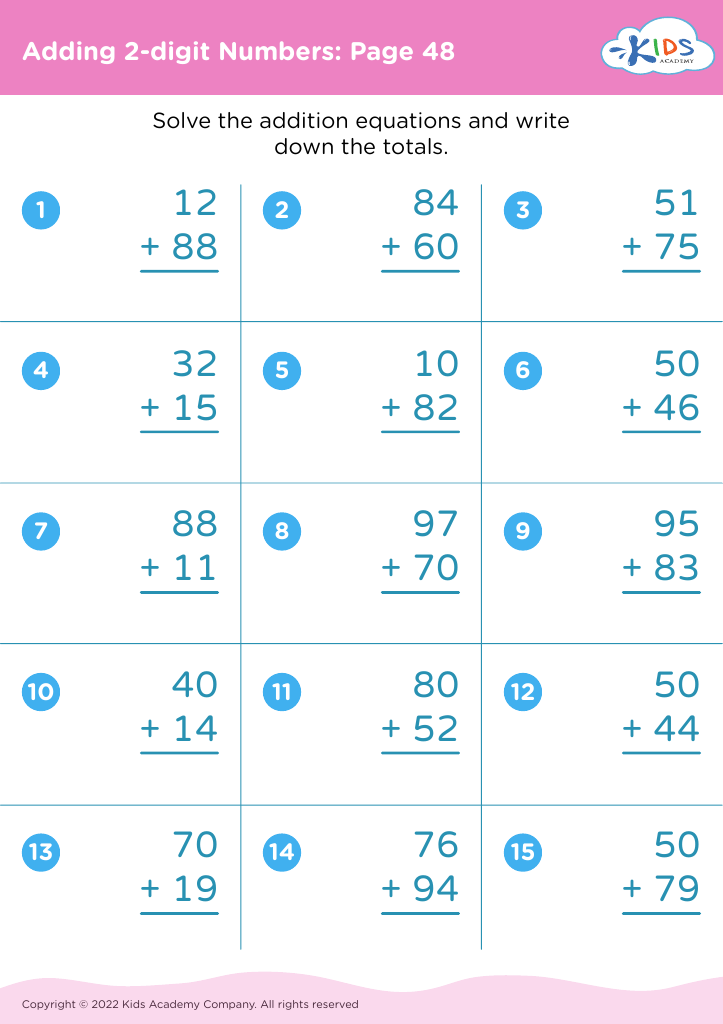
Adding 2-digit Numbers: Page 48

Adding 2-digit Numbers: Page 48

Adding 2-digit Numbers: Page 48
Worksheet
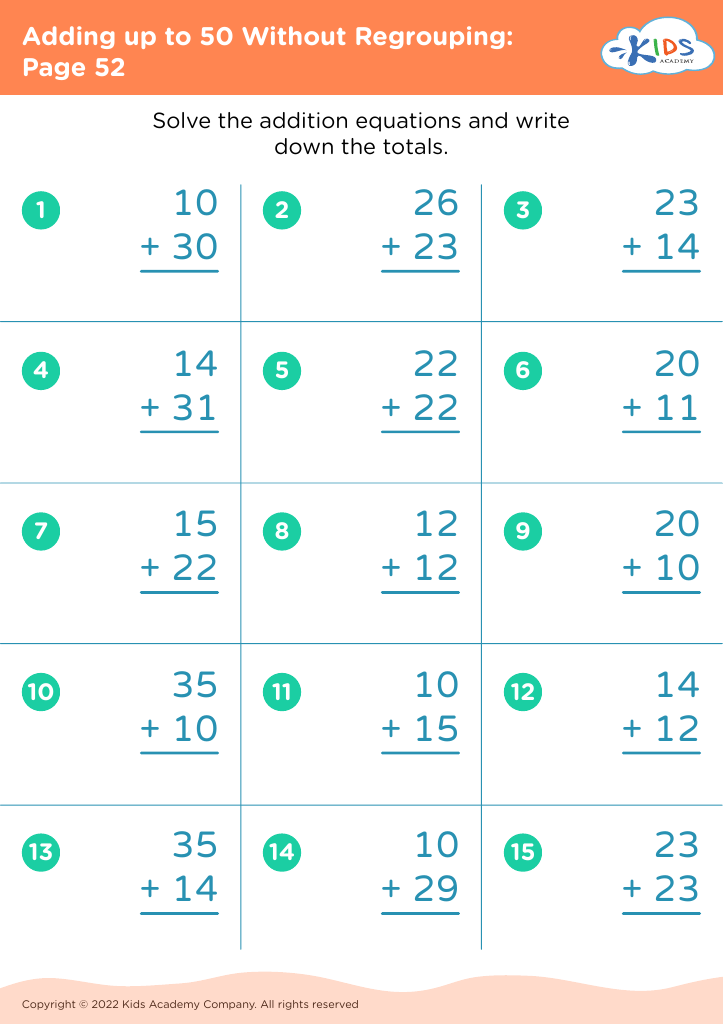
Adding up to 50 Without Regrouping: Page 52
Worksheet
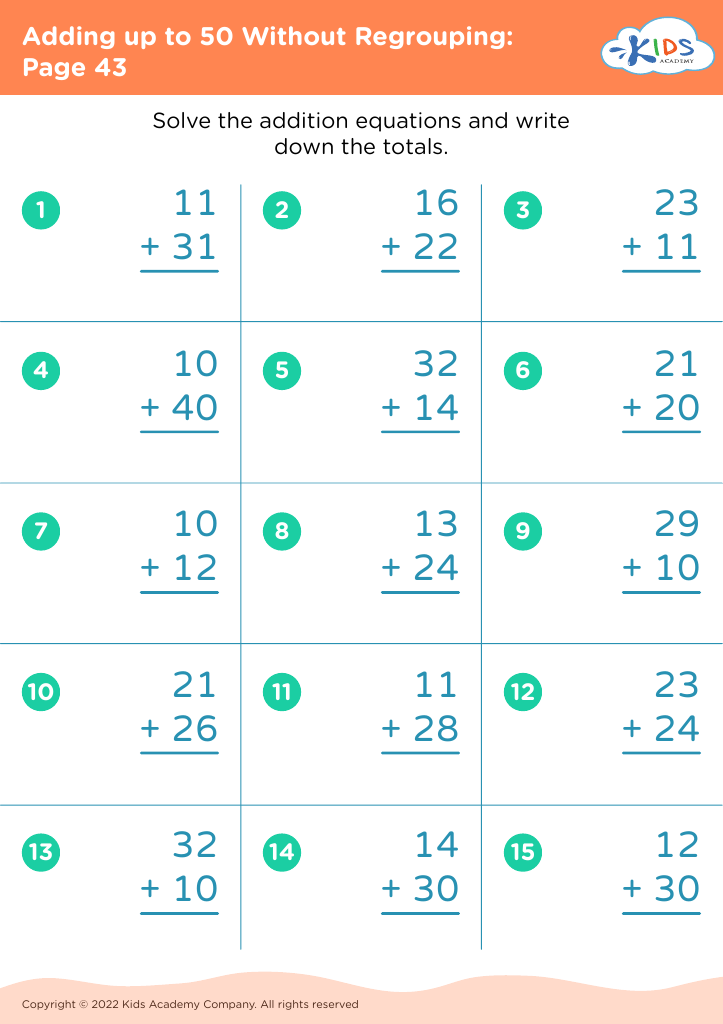
Adding up to 50 Without Regrouping: Page 43
Worksheet
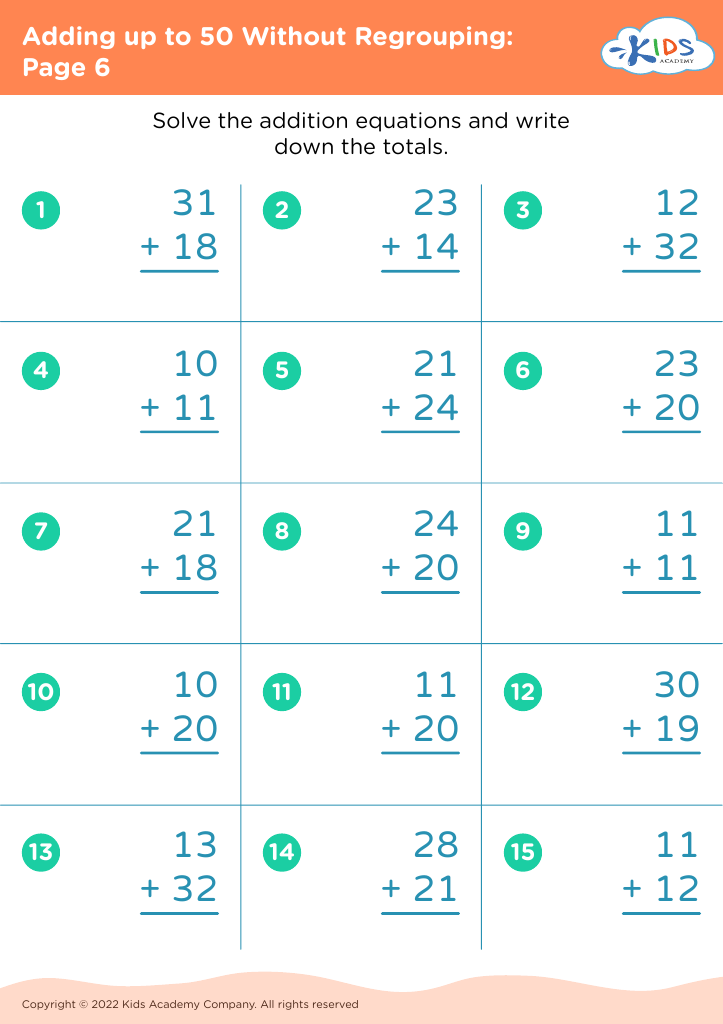
Adding up to 50 Without Regrouping: Page 6
Worksheet
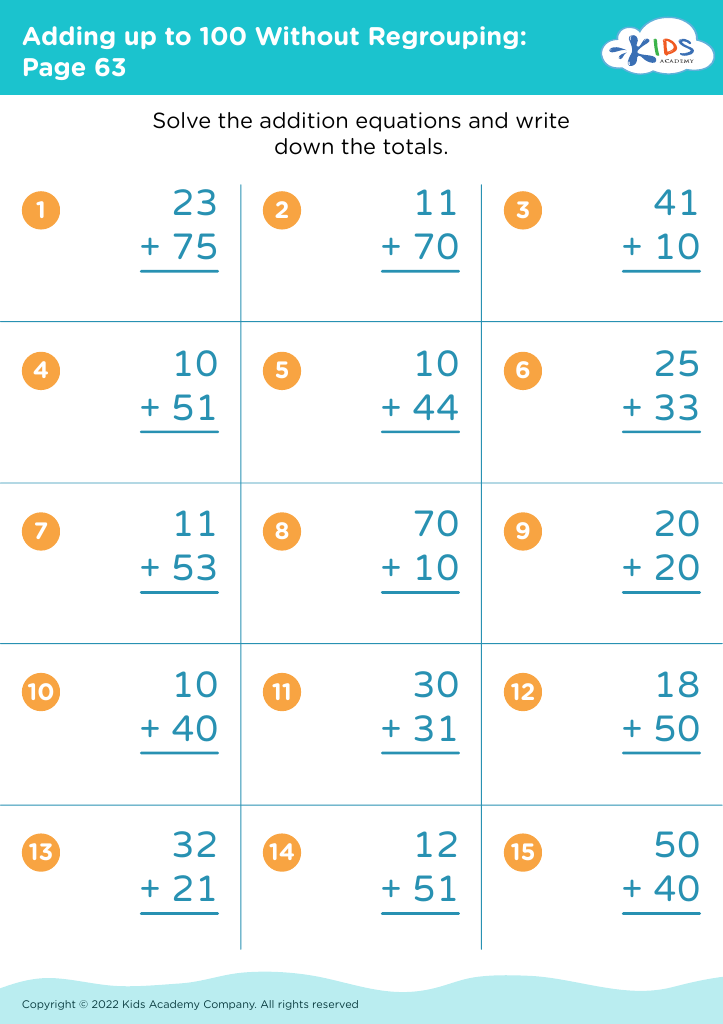
Adding up to 100 Without Regrouping: Page 63
Worksheet
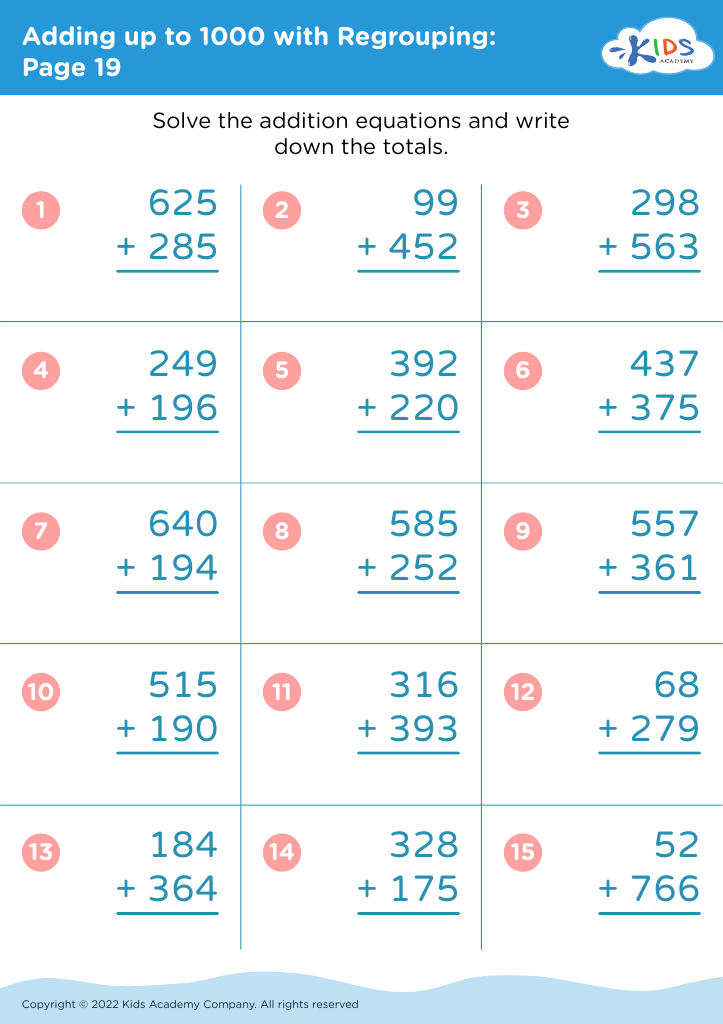
Adding up to 1000 with Regrouping: Page 19
Worksheet
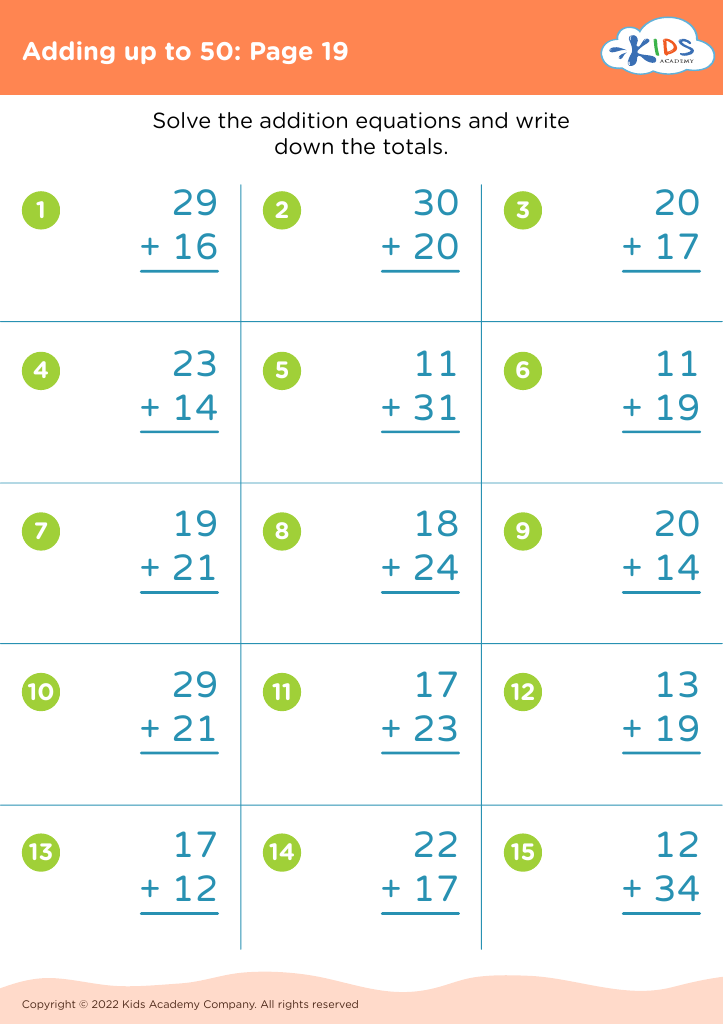
Adding up to 50: Page 19

Adding up to 50: Page 19

Adding up to 50: Page 19
Worksheet
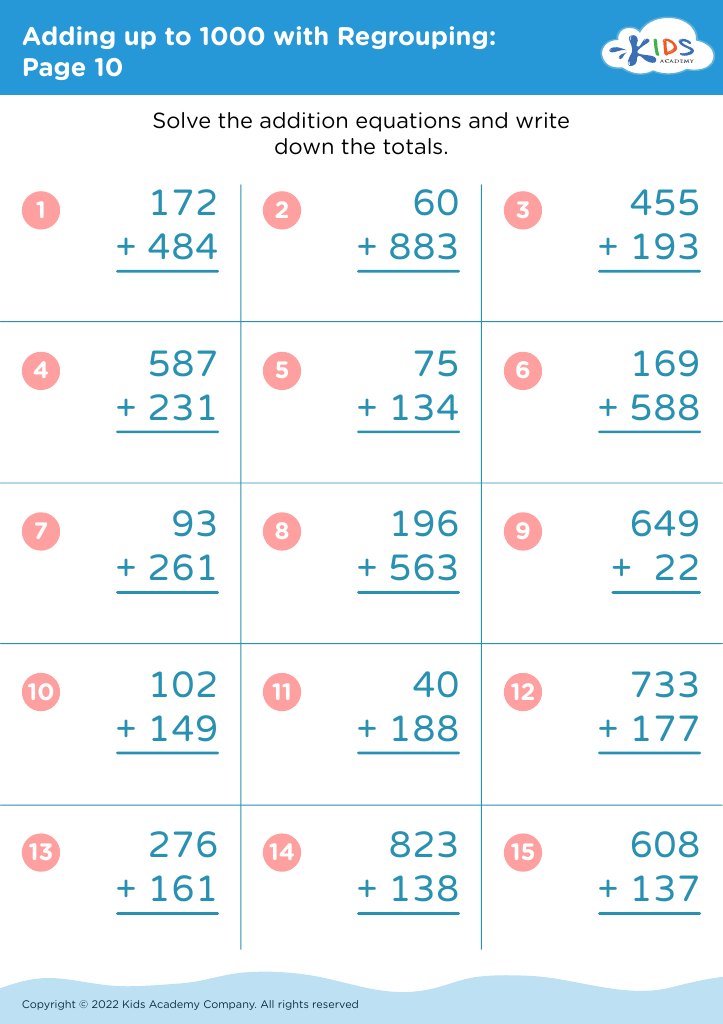
Adding up to 1000 with Regrouping: Page 10
Worksheet
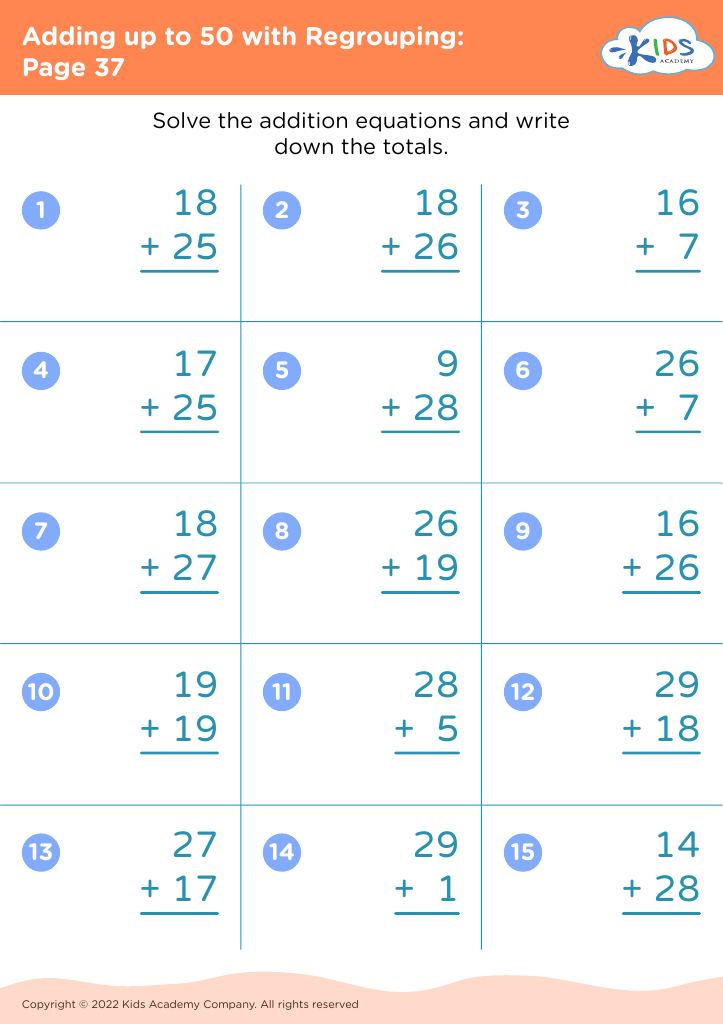
Adding up to 50 with Regrouping: Page 37
Worksheet
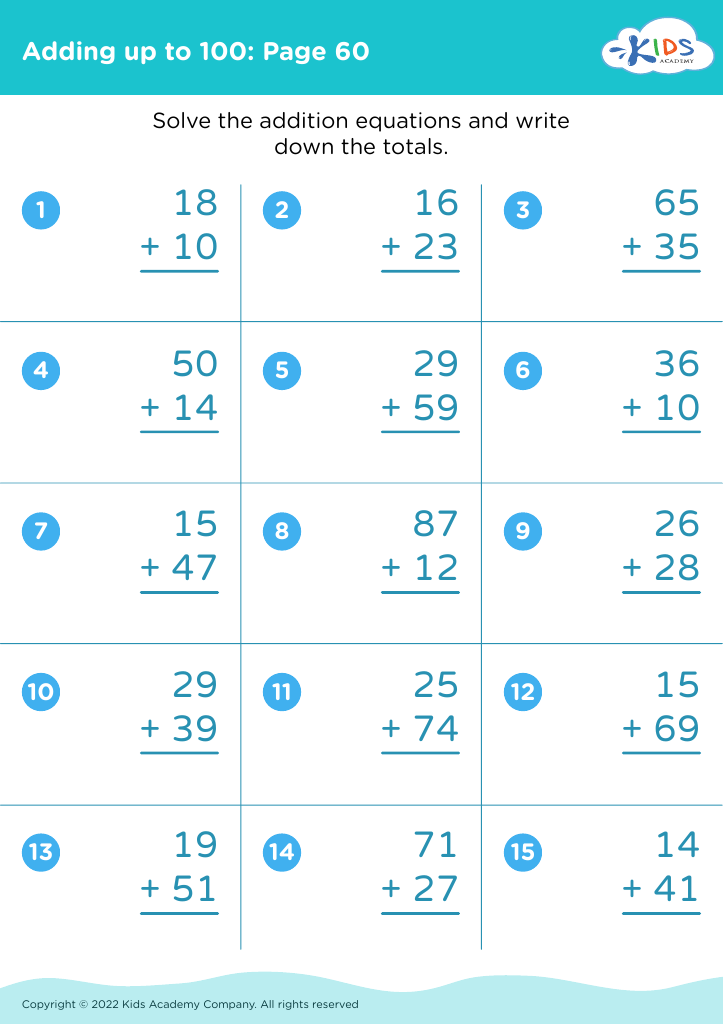
Adding up to 100: Page 60

Adding up to 100: Page 60

Adding up to 100: Page 60
Worksheet
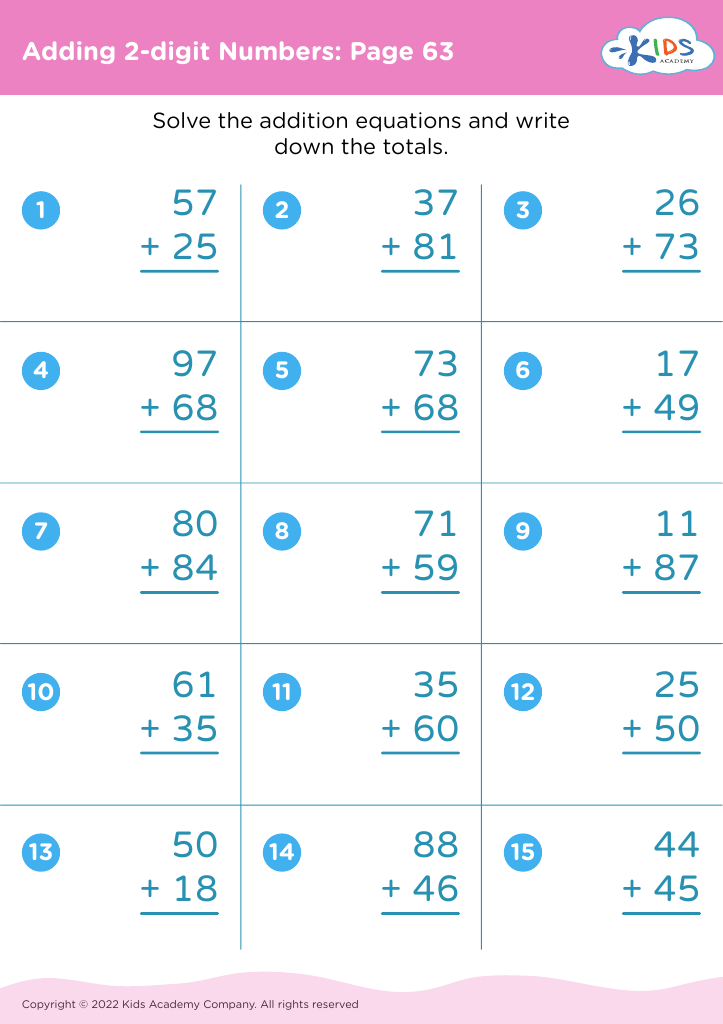
Adding 2-digit Numbers: Page 63

Adding 2-digit Numbers: Page 63

Adding 2-digit Numbers: Page 63
Worksheet
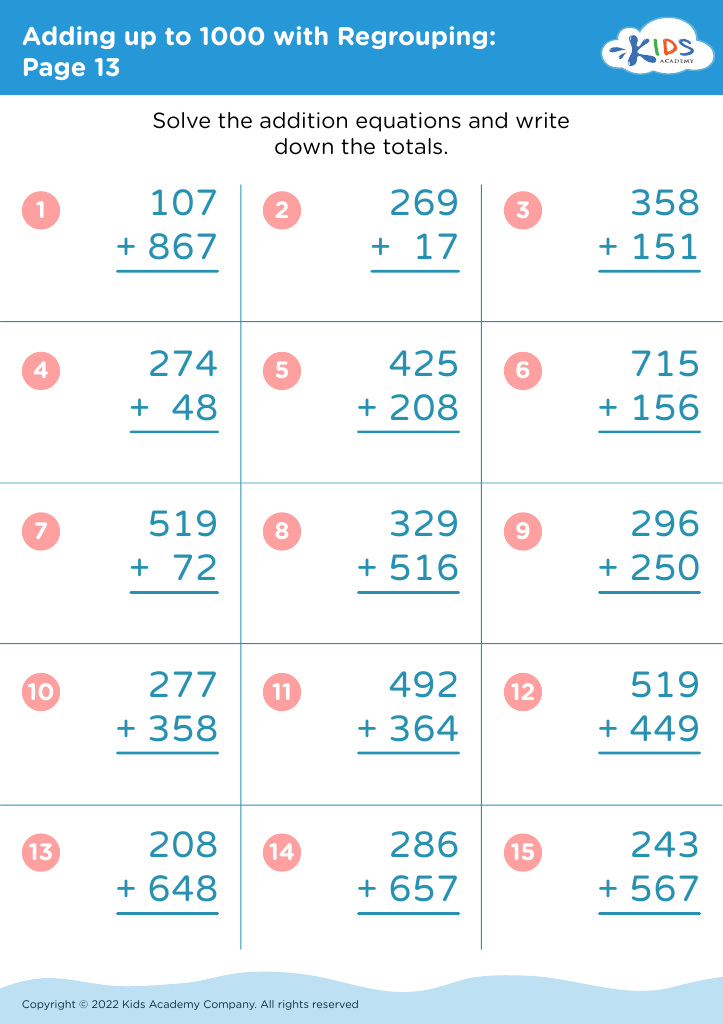
Adding up to 1000 with Regrouping: Page 13
Worksheet
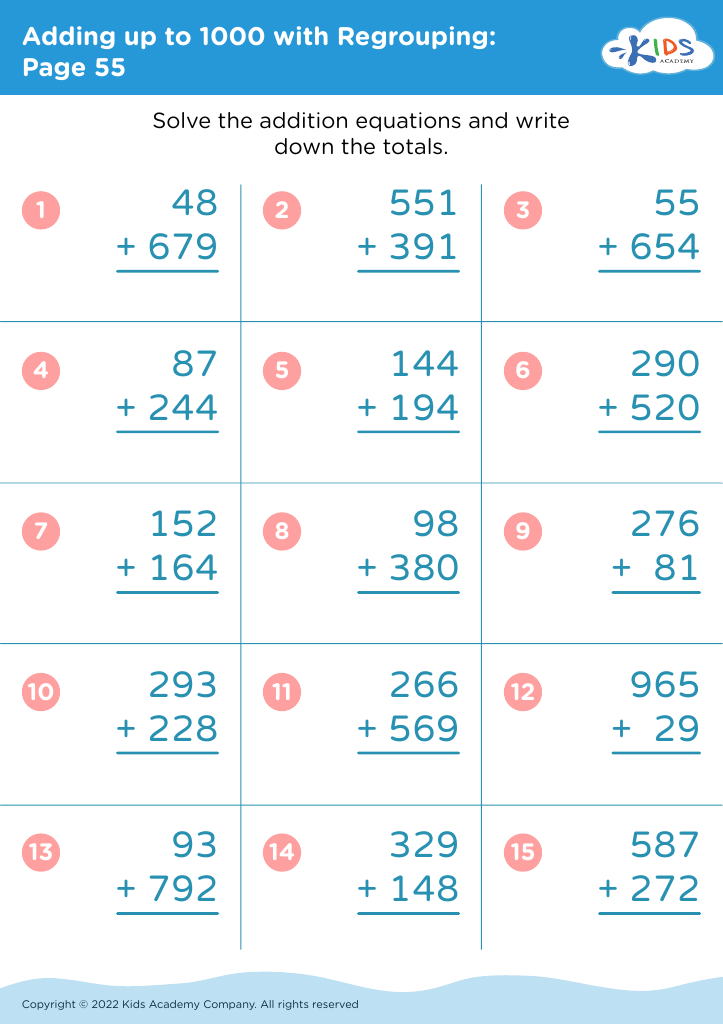
Adding up to 1000 with Regrouping: Page 55
Worksheet
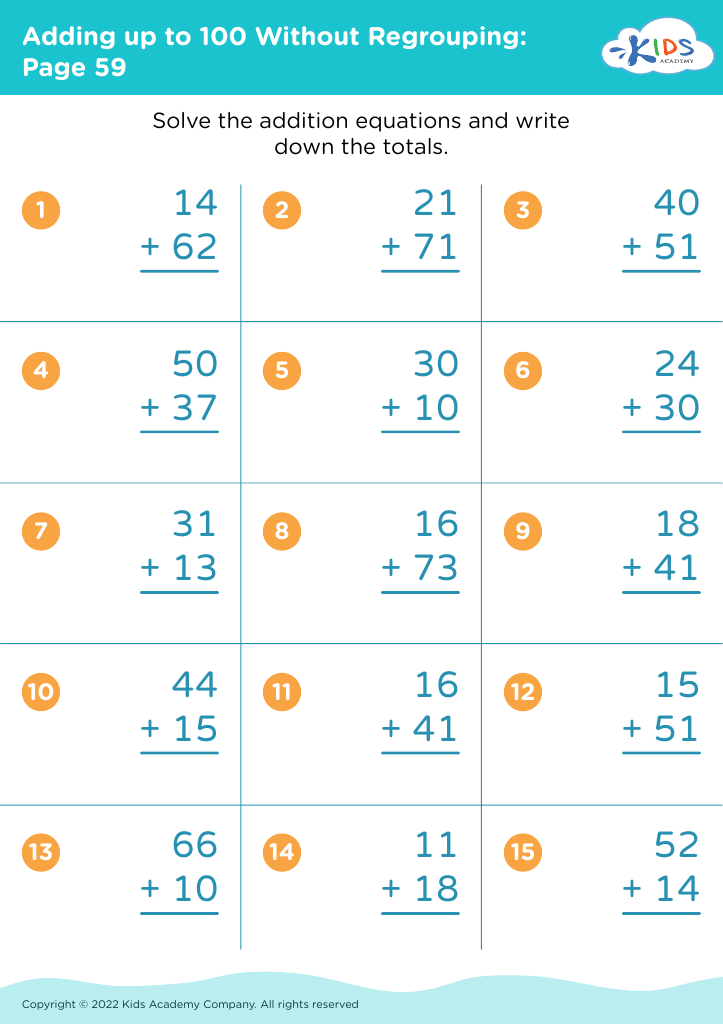
Adding up to 100 Without Regrouping: Page 59
Worksheet
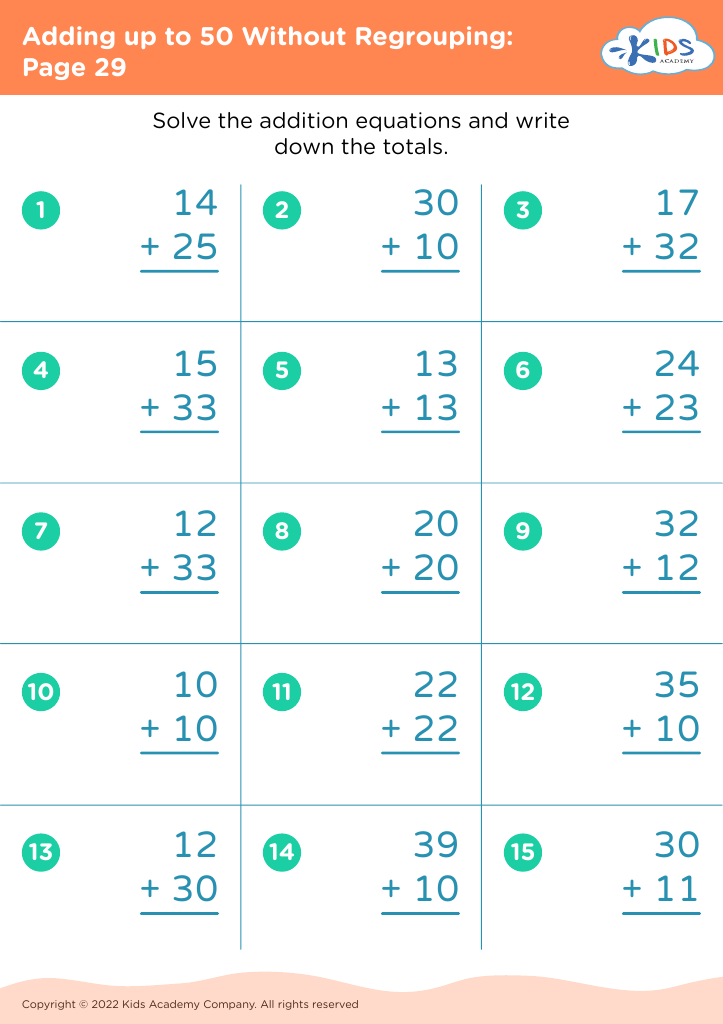
Adding up to 50 Without Regrouping: Page 29
Worksheet
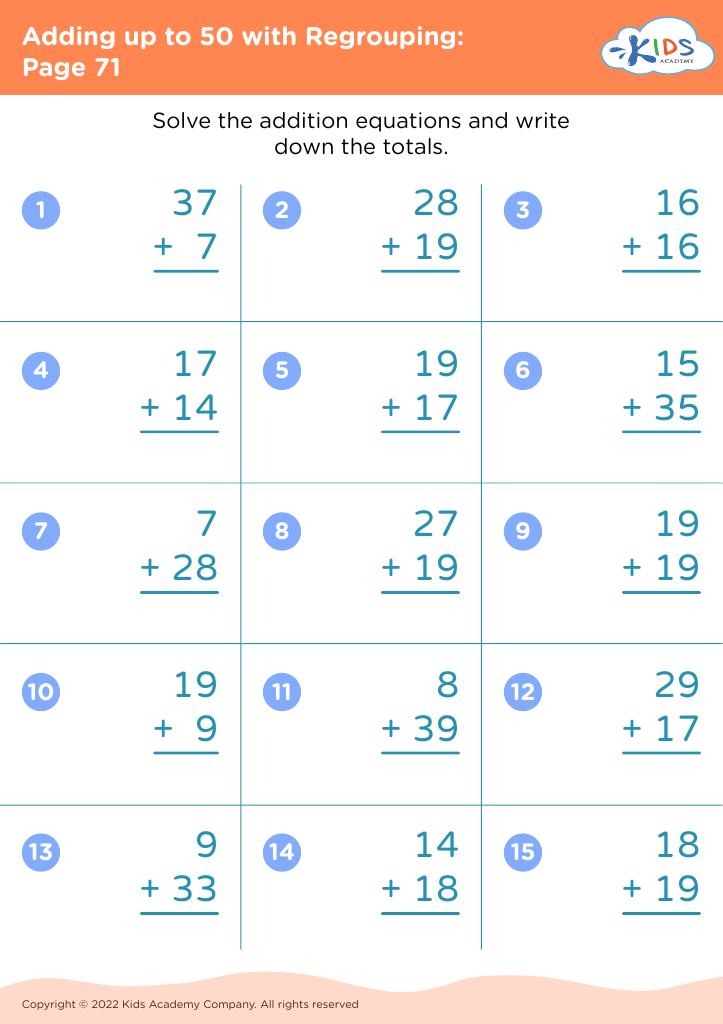
Adding up to 50 with Regrouping: Page 71
Worksheet
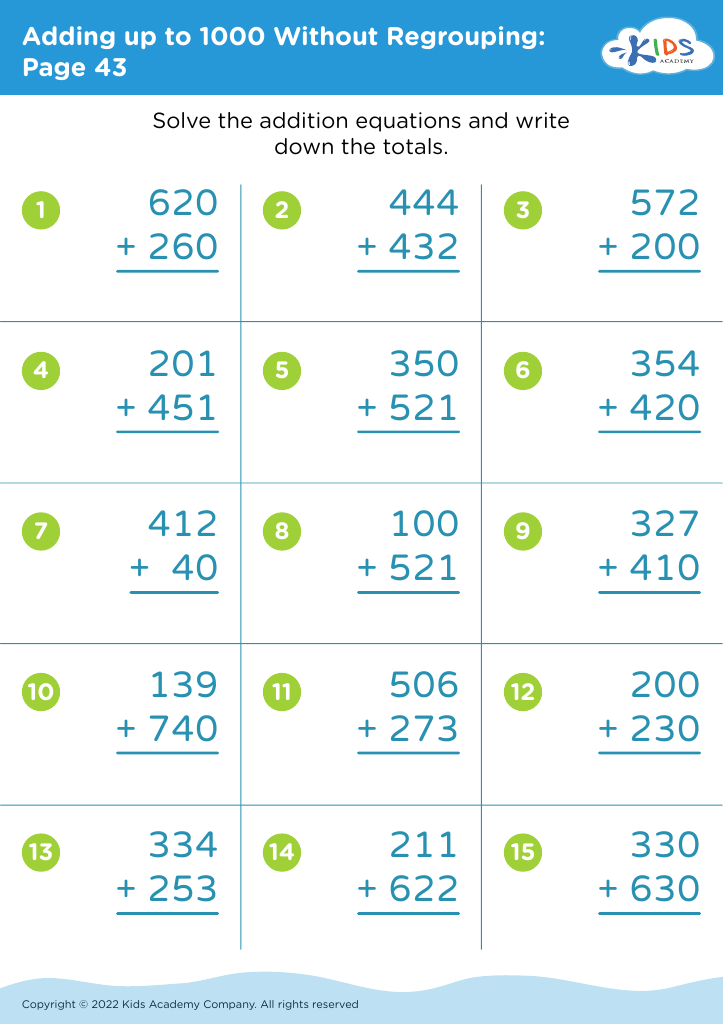
Adding up to 1000 Without Regrouping: Page 43
Worksheet
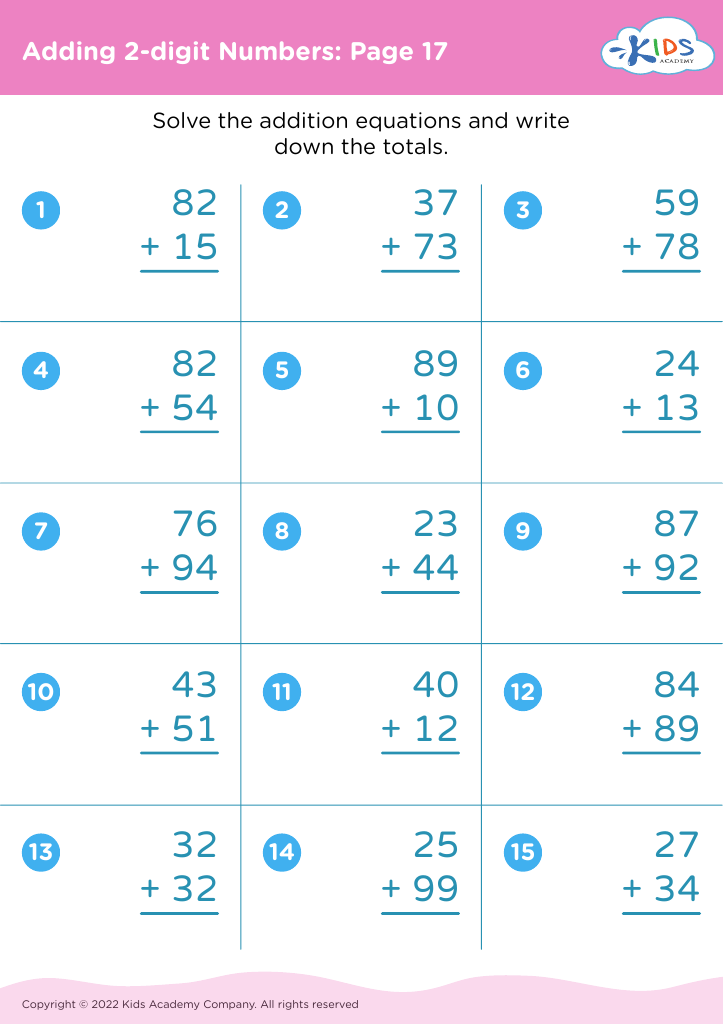
Adding 2-digit Numbers: Page 17

Adding 2-digit Numbers: Page 17

Adding 2-digit Numbers: Page 17
Worksheet
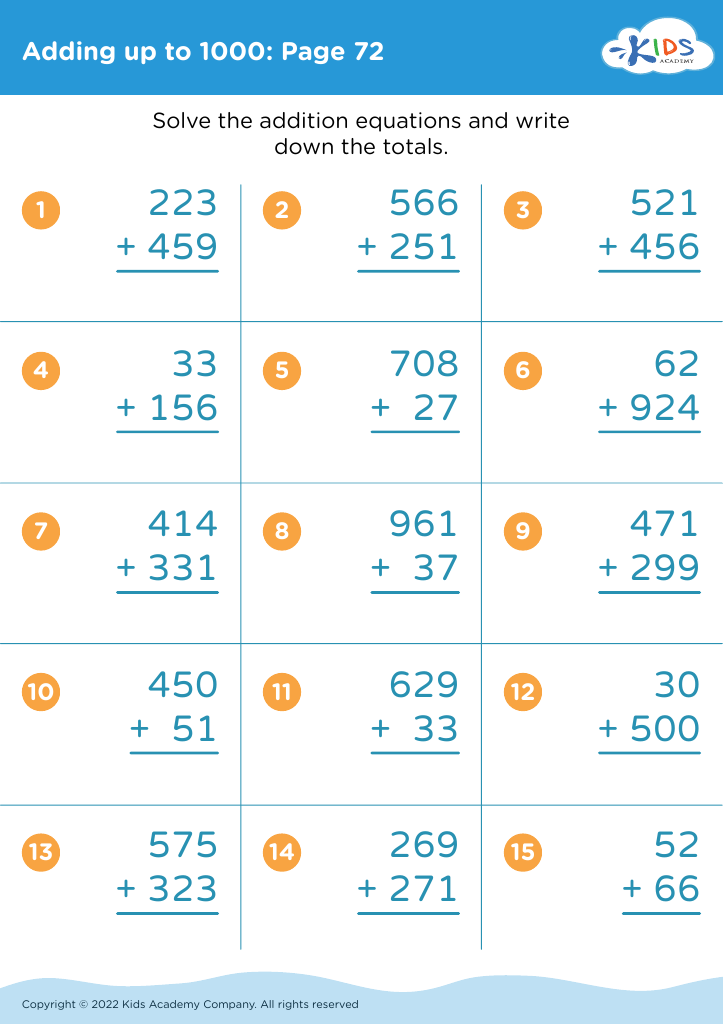
Adding up to 1000: Page 72

Adding up to 1000: Page 72

Adding up to 1000: Page 72
Worksheet
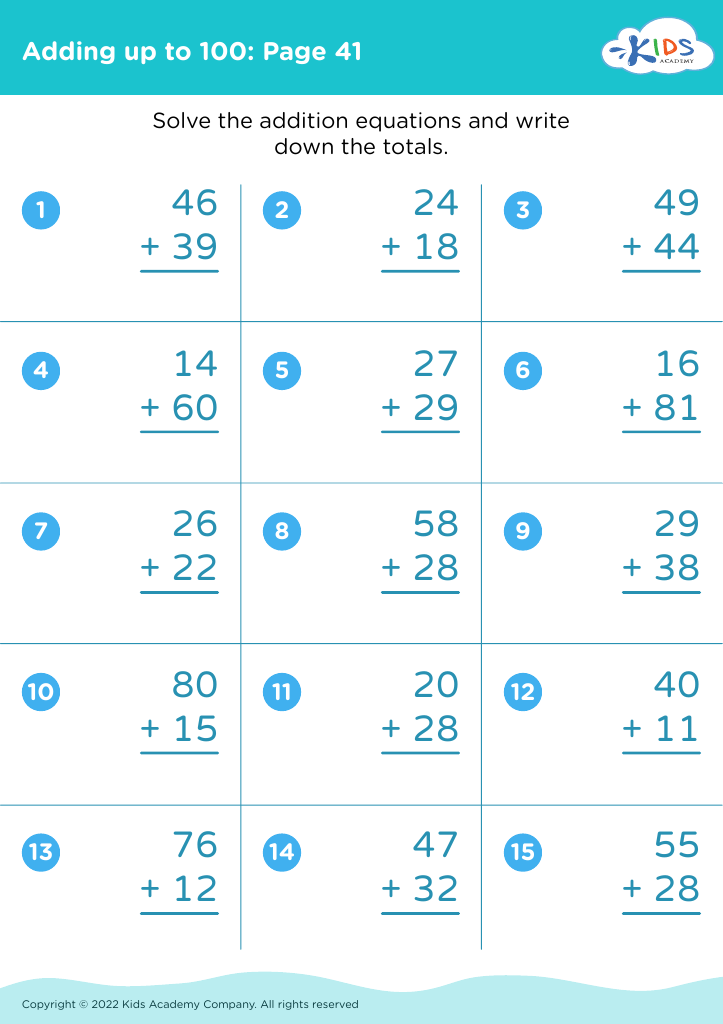
Adding up to 100: Page 41

Adding up to 100: Page 41

Adding up to 100: Page 41
Worksheet
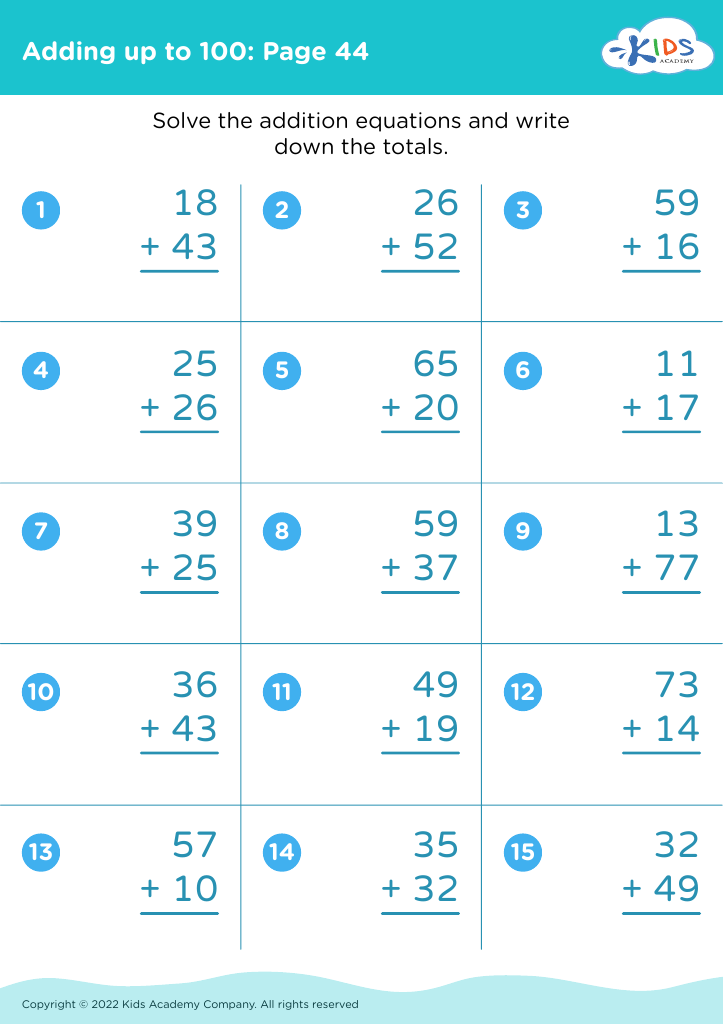
Adding up to 100: Page 44

Adding up to 100: Page 44

Adding up to 100: Page 44
Worksheet


Recognizing patterns in addition is crucial for children aged 7-8 as it forms the foundation for more advanced mathematical thinking and problem-solving skills. At this developmental stage, kids transition from concrete to more abstract thinking, and grasping patterns in addition helps solidify their understanding of numbers and arithmetic operations.

Patterns in addition, such as identifying sequences or recognizing predictable outcomes, empower children to make educated guesses, verify results, and understand the consistency within numbers. For instance, realizing that adding one to any number always moves them to the next number, or that sums of even numbers result in even numbers. Such insights build fluency with addition facts and reduce reliance on rote memorization.

Furthermore, recognizing these patterns bolsters critical thinking and analytical skills. Children learn to generalize rules, an ability paramount not only in mathematics but across multiple subjects. This analytical approach encourages flexible thinking and problem-solving, ultimately boosting the child's academic self-concept and confidence.

Parents and teachers play a critical role in fostering an environment where pattern recognition is encouraged. By providing activities that highlight theses patterns, such as visual aids or interactive games, they can help children become confident mathematicians and enthusiastic learners, paving the way for future academic and real-life success.