Basic multiplication Geometry Worksheets for Ages 7-8
3 filtered results
-
From - To
Our "Basic Multiplication Geometry Worksheets for Ages 7-8" offer an engaging way for young learners to master early math concepts. These carefully designed worksheets blend geometry with basic multiplication to deepen understanding and make math fun. Children will explore shapes, patterns, and spatial relationships while practicing multiplication skills essential for future success. Ideal for classroom use or homeschooling, our worksheets cater to various learning styles, helping kids build confidence in mathematics and develop critical thinking skills. Give your child a head start in math with our interactive and educational workbook tailored for young minds.
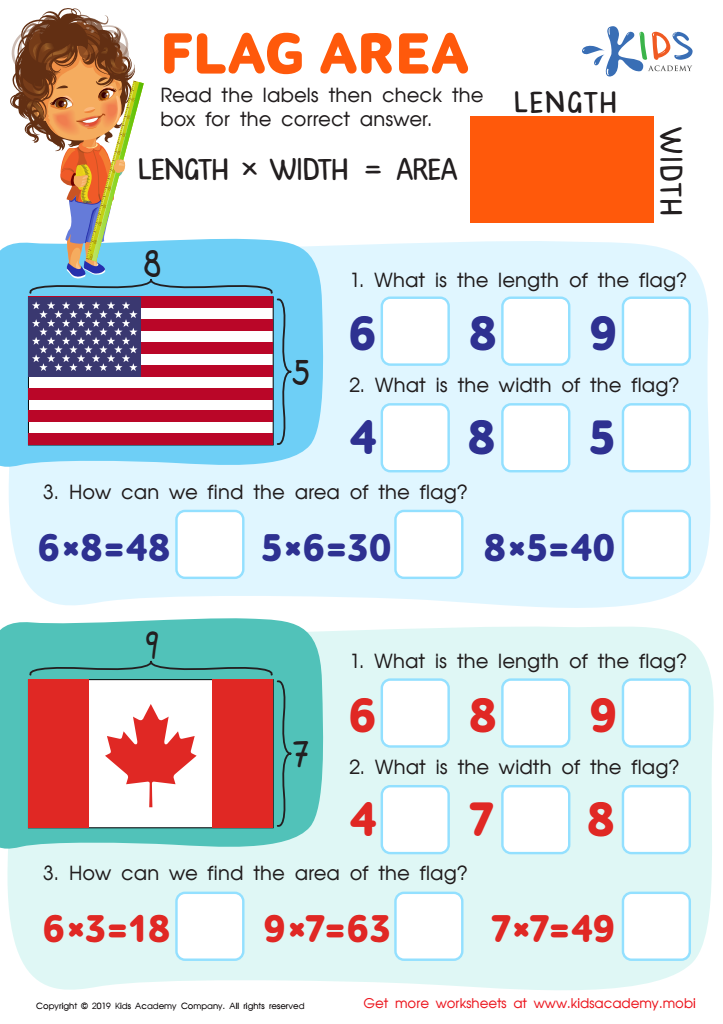
Flag Area Worksheet
 Assign to My Students











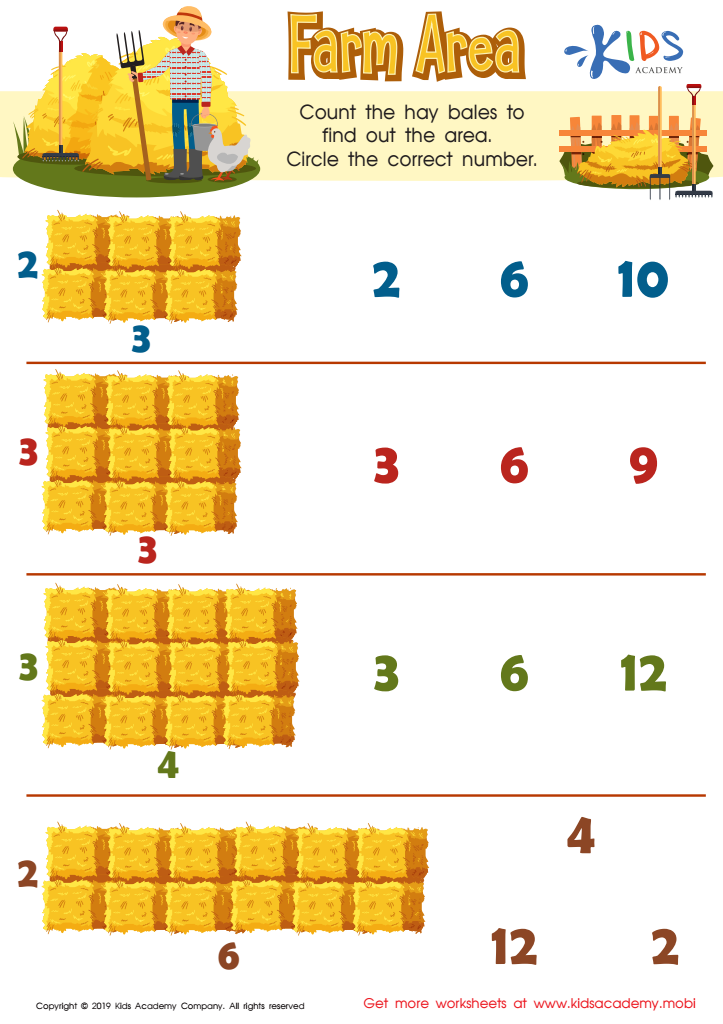
Farm Area Worksheet
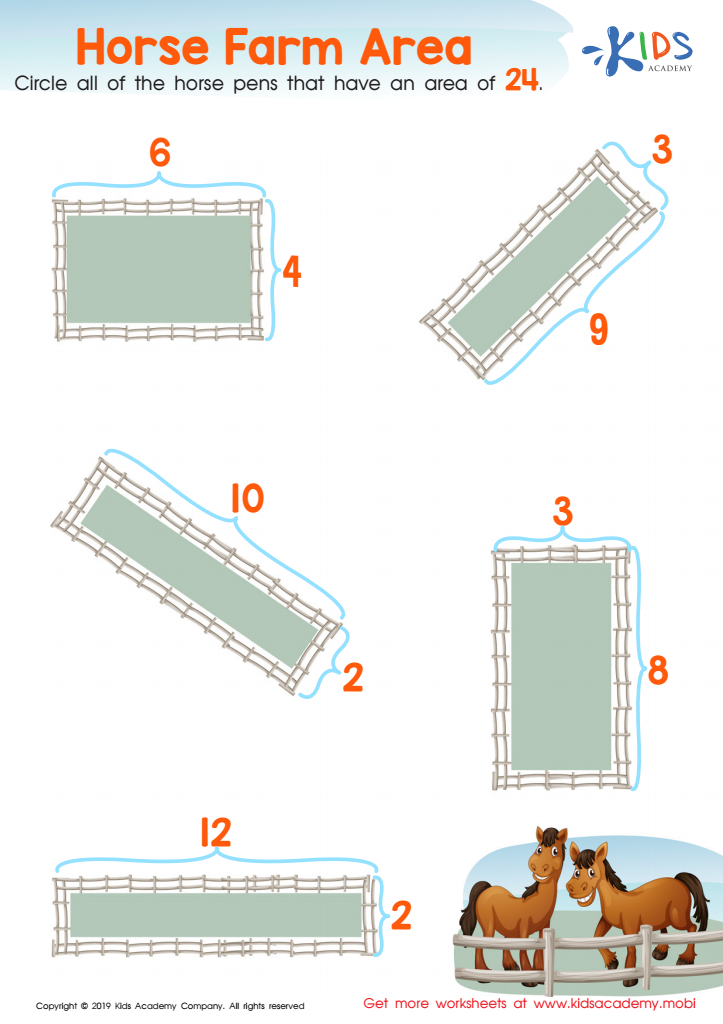
Horse Farm Area Worksheet








Basic multiplication and geometry are foundational concepts that support a child's overall mathematical development and critical thinking. At ages 7-8, children are at a crucial stage where they are capable of understanding more abstract concepts, but they still benefit from concrete learning experiences.
Learning multiplication at this age helps children grasp the concept of repeated addition, which is key for more advanced arithmetic. It bolsters their number sense and prepares them for other operations such as division and fractions. Being fluent in multiplication boosts their confidence and equips them with practical skills for everyday problem-solving, like calculating the total cost of items or understanding time.
Geometry, on the other hand, supports spatial awareness, which is important for understanding the world around them. By learning basic geometric shapes and their properties, children develop the ability to discover patterns and relationships. This skill extends beyond math, aiding in fields such as science, art, and even in activities like sports or video games where spatial reasoning plays a part.
Engaging children in fun, hands-on activities, like building projects or drawing, makes learning these concepts enjoyable. By caring about these subjects, parents and teachers lay a strong groundwork that enriches the child’s cognitive,intellectual growth.and fosters a lifelong love for learning.








