Categorization skills Geometry Worksheets for Ages 7-8
4 filtered results
-
From - To
Enhance your child's geometric understanding with our engaging Categorization Skills Geometry Worksheets designed specifically for ages 7-8. These worksheets focus on helping young learners identify, classify, and categorize various geometric shapes and objects, fostering critical thinking and analytical skills. With colorful visuals and age-appropriate activities, these resources encourage hands-on exploration and boost confidence in math. Perfect for home or classroom use, our worksheets help boost students' ability to recognize patterns and similarities among shapes. Explore a world of geometry fun while developing essential skills through interactive learning experiences. Start building a strong foundation in geometry today!
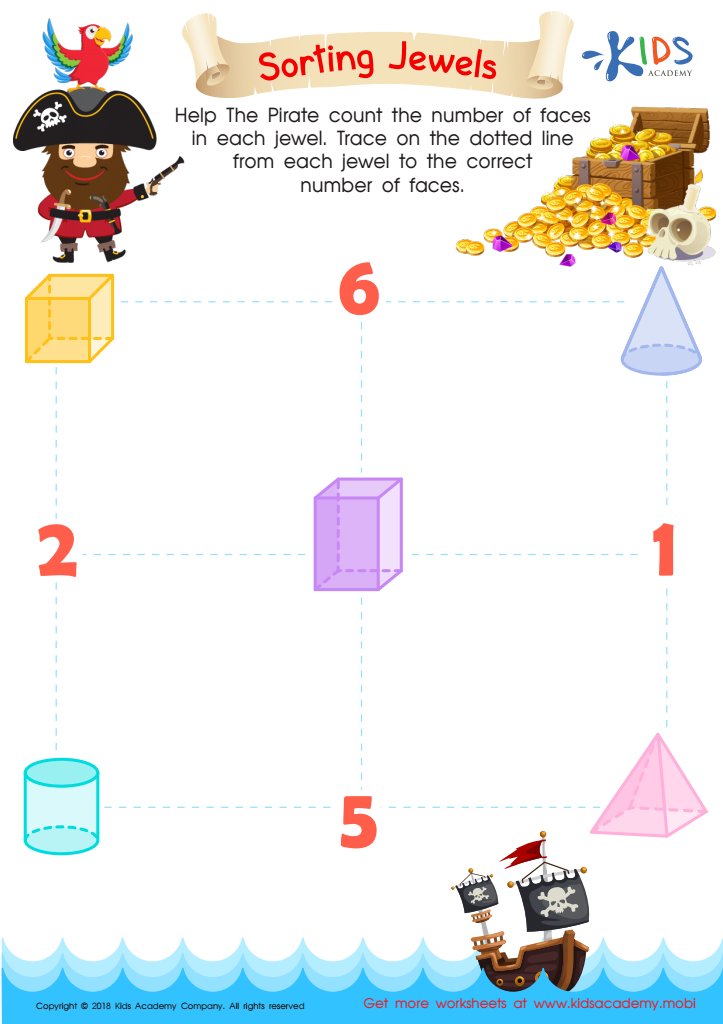
Sorting Jewels Worksheet
 Assign to My Students











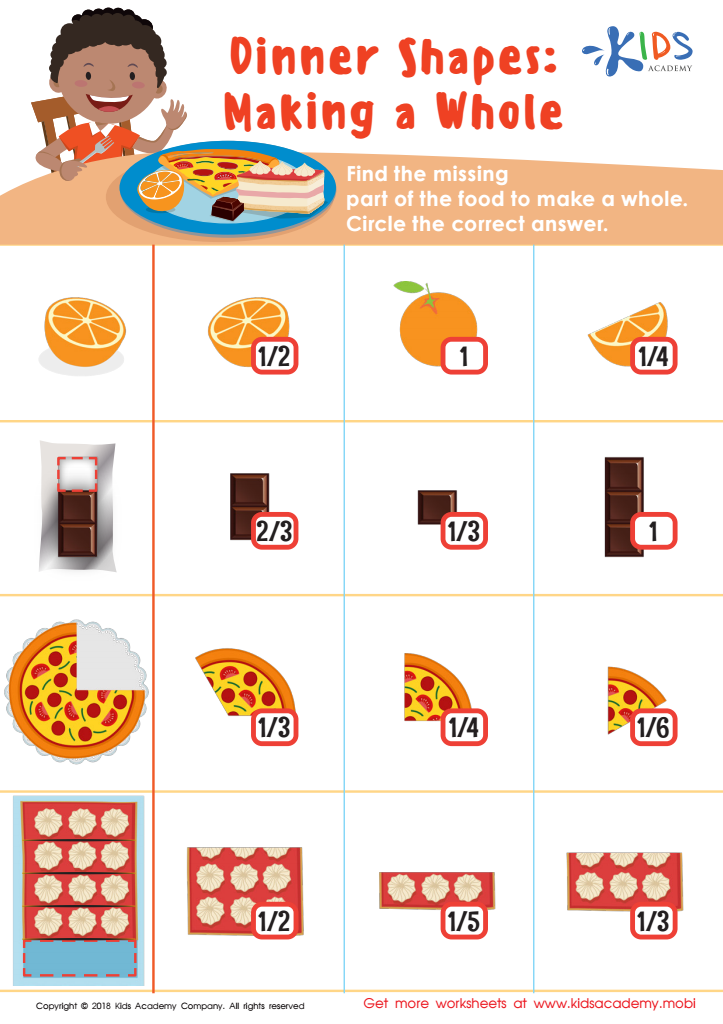
Dinner Shapes: Making a Whole Worksheet
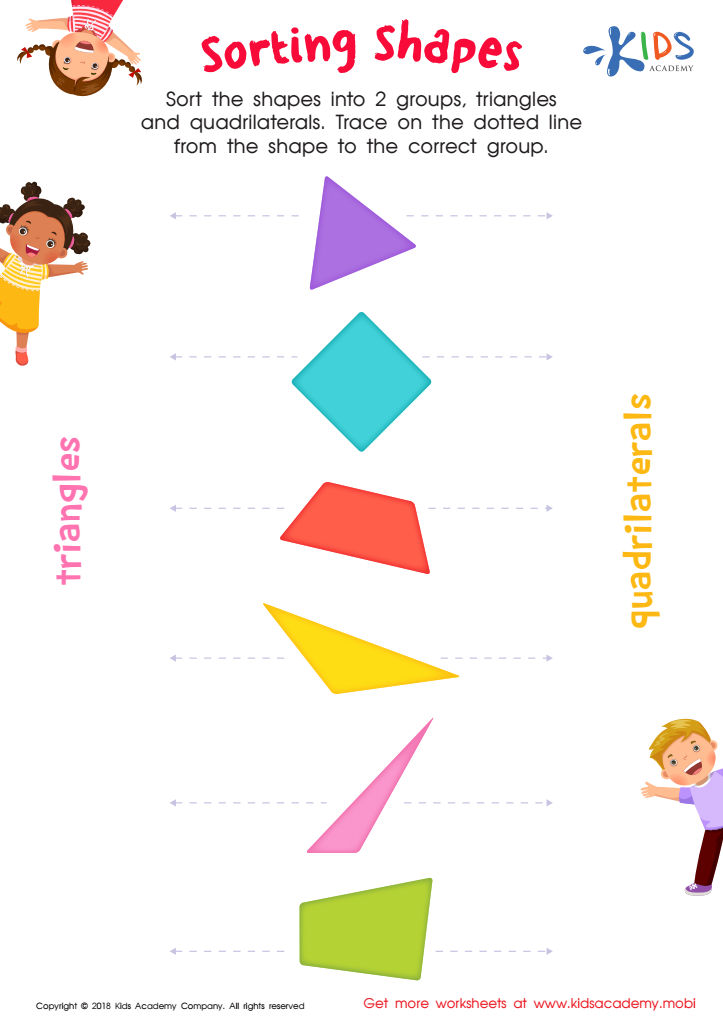
Sorting Shapes Worksheet
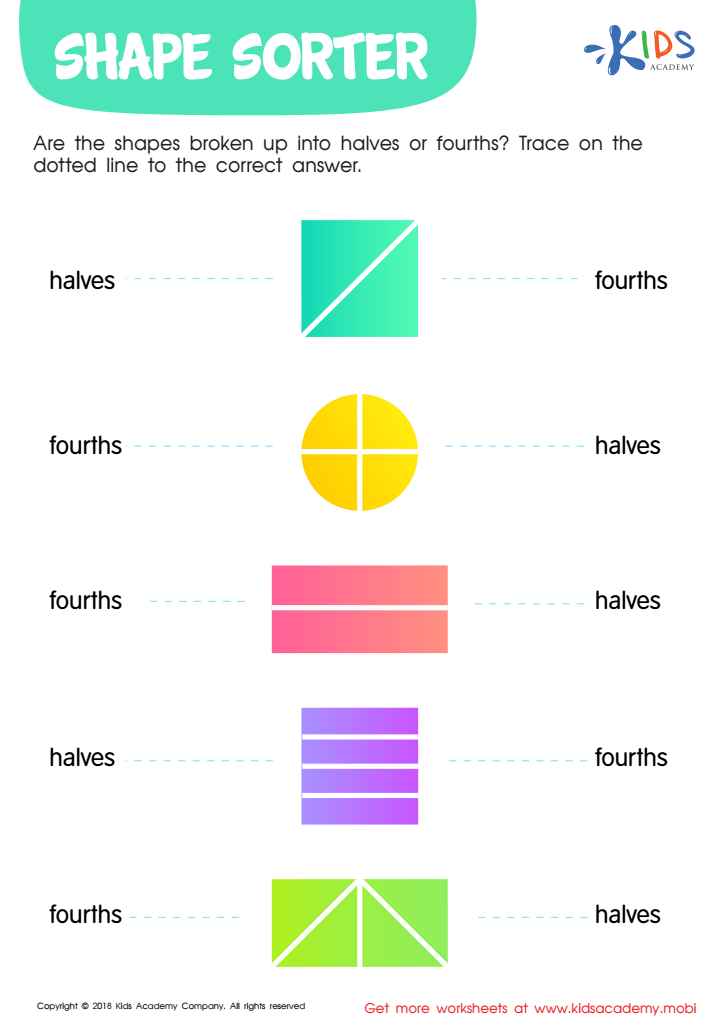
Shape Sorter Worksheet








Categorization skills in geometry are crucial for children aged 7-8 as they lay the foundation for critical thinking and problem-solving abilities. At this age, children are beginning to explore the world of shapes, sizes, and spatial relationships. By understanding how to categorize geometric concepts, children can better organize and connect their knowledge, which enhances learning outcomes.
These skills help students identify, classify, and describe shapes, fostering a deeper understanding of geometry's foundational principles and encouraging logical reasoning. It empowers students to categorize shapes based on attributes such as size, angles, and sides, providing a framework for recognizing patterns in mathematics and real-world contexts.
Moreover, mastering categorization skills aids in developing vocabulary related to geometry, enhancing communication both in school and at home. This can enhance collaboration in group activities and build confidence in sharing ideas.
For parents and teachers, promoting categorization skills means supporting children's cognitive development, which is critical for higher-level math success later on. Encouraging exploration through engaging activities, games, and discussions helps make geometry interesting and relevant. Ultimately, instilling these skills during early elementary years can create a solid mathematical foundation for lifelong learning.








