Understanding area Geometry Worksheets for Ages 7-8
3 filtered results
-
From - To
Unlock the world of geometry for your child with our "Understanding Area Geometry Worksheets for Ages 7-8." These comprehensive, engaging worksheets help young learners grasp fundamental concepts of area, using fun, interactive activities. Designed for 2nd graders, our printables teach kids how to measure and calculate the area of different shapes, enhancing spatial reasoning and problem-solving skills. Each worksheet is created to captivate young minds with colorful visuals and clear instructions, fostering a love for math. Ideal for classroom use or at-home practice, these worksheets ensure solid mathematical foundations for your budding scholars. Start their geometry adventure today!
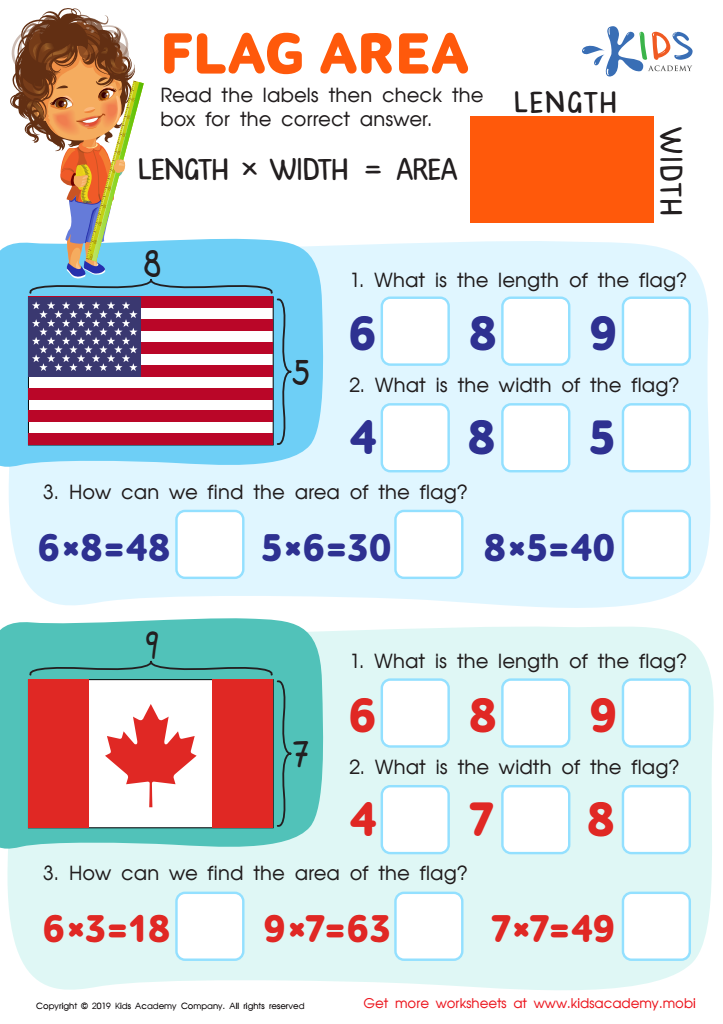
Flag Area Worksheet
 Assign to My Students











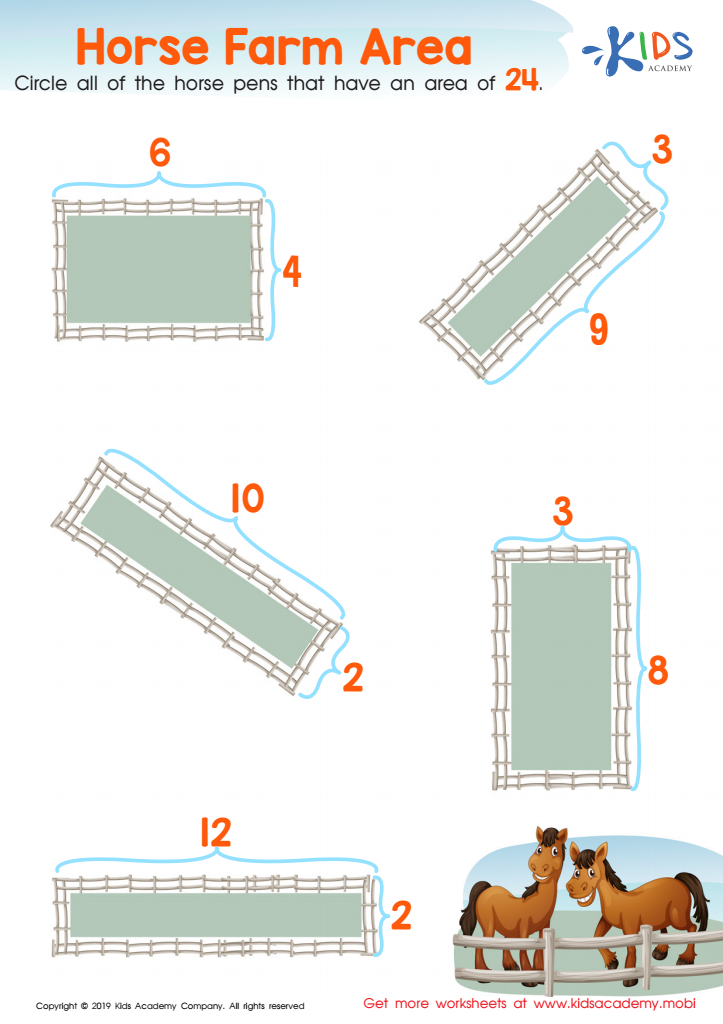
Horse Farm Area Worksheet
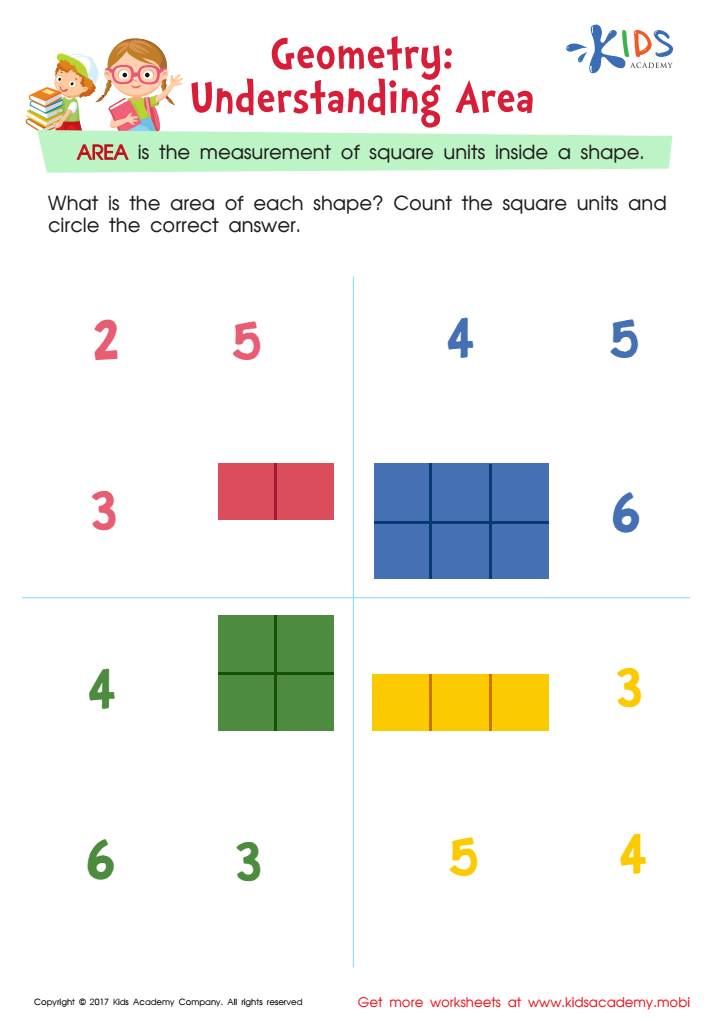
Understanding Area Worksheet








Understanding area geometry for children aged 7-8 is crucial as it builds foundational skills necessary for their overall mathematical development. At this age, kids are naturally curious and capable of grasping basic arithmetic, making it a prime time to introduce geometric concepts in a fun and engaging manner. Learning about area helps children develop spatial awareness and logical reasoning, skills that are useful across various subjects and everyday activities.
Firstly, grasping area helps children better understand space, size, and measurement. This isn't just important for math, but for real-life scenarios like arranging a room, playing sports, or even in art projects where size and space matter. Secondly, it boosts their problem-solving abilities. When children learn to measure areas, they engage in critical thinking, learn to compare and contrast different shapes, and develop formulas, fostering their analytical skills.
Teachers and parents who focus on these concepts early on help children gain confidence in their mathematical abilities. This can lead to a more positive attitude toward math as they progress through their education. Furthermore, a solid understanding of area provides a stepping stone for more advanced math topics such as algebra, calculus, and geometry, ensuring the child's long-term academic success. By investing time in teaching and practicing area geometry, educators and parents equip children with essential tools for both academic and everyday problem-solving skills.








