Addition Practice Numbers Worksheets for Ages 7-8 - Page 2
25 filtered results
-
From - To
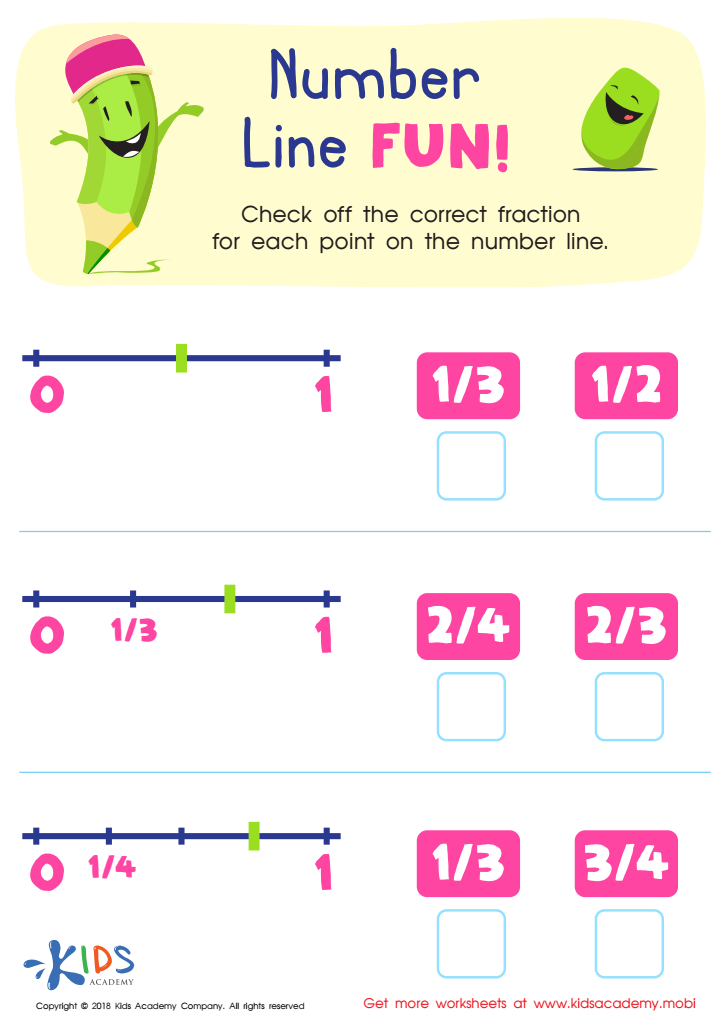
Number Line Fun Worksheet
 Assign to My Students








Parents and teachers should prioritize addition practice for children aged 7-8 because it lays the foundation for critical mathematical skills needed throughout their education. At this age, children are transitioning from basic arithmetic to more complex concepts, such as solving multi-digit problems and understanding place value. Regular addition practice helps reinforce these skills, building confidence and fluency that are crucial for future success in math-related subjects.
Moreover, mastering addition aids in the development of other essential areas, such as problem-solving, logical reasoning, and critical thinking. As children learn to perform addition quickly and accurately, they become better equipped to tackle more advanced operations, including subtraction, multiplication, and division.
In addition, consistent practice aids in retention and enhances memory, helping children to eliminate barriers that can lead to math anxiety later on. By cultivating a strong foundation in addition, parents and teachers can foster a positive attitude towards mathematics, instilling a love for learning that can carry into adolescence and beyond. Ultimately, prioritizing addition practice ensures that children are not only prepared for classroom success but also equipped with vital life skills useful in everyday situations, such as budgeting and problem-solving.








