Comparing lengths Numbers Worksheets for Ages 7-8
4 filtered results
-
From - To
Explore our engaging "Comparing Lengths Numbers Worksheets" designed for kids aged 7-8! These interactive worksheets provide a fun and educational way for young learners to grasp the concept of comparing lengths. Through various exercises, children will measure, compare, and analyze different objects, enhancing their understanding of measurement vocabulary and numerical relationships. Our resources encourage critical thinking and problem-solving skills while offering a hands-on approach to math. Perfect for classroom or home use, these worksheets make learning about lengths enjoyable and accessible. Help your child develop essential math skills with our thoughtfully designed materials that cater to their age group!
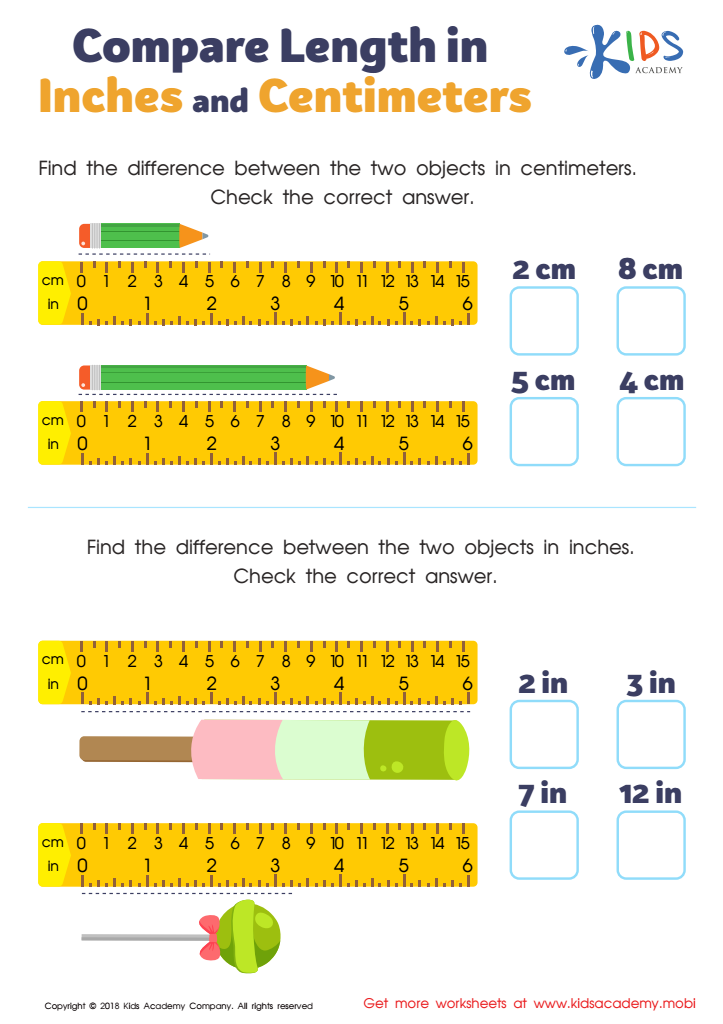
Compare Length in Inches and Centimeters Worksheet
 Assign to My Students
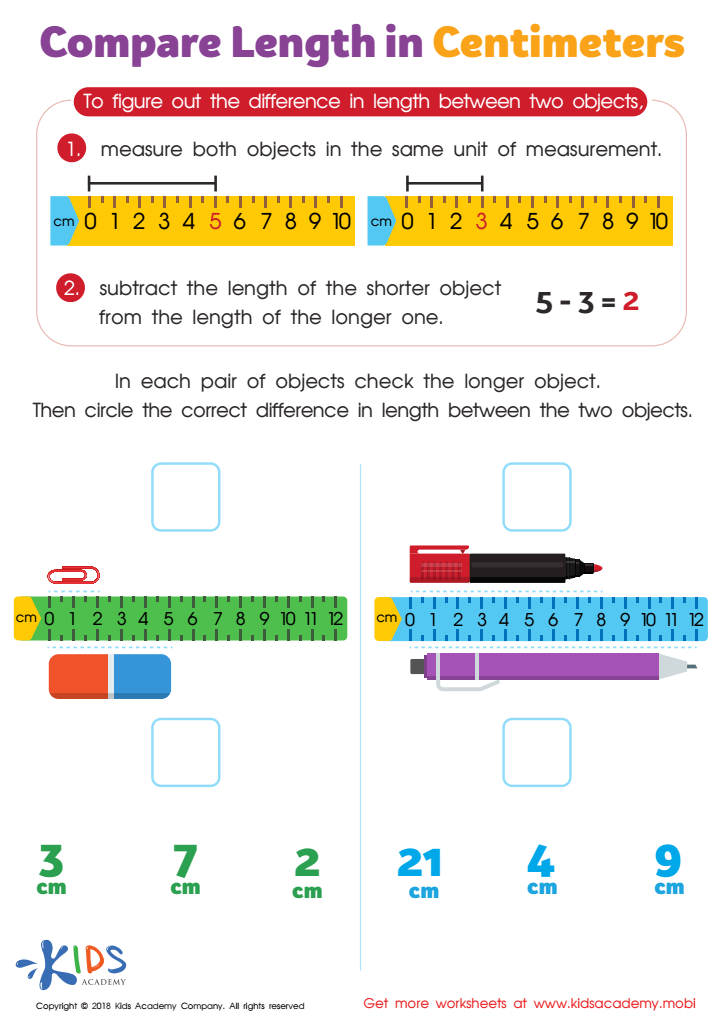
Compare Length in Centimeters Worksheet
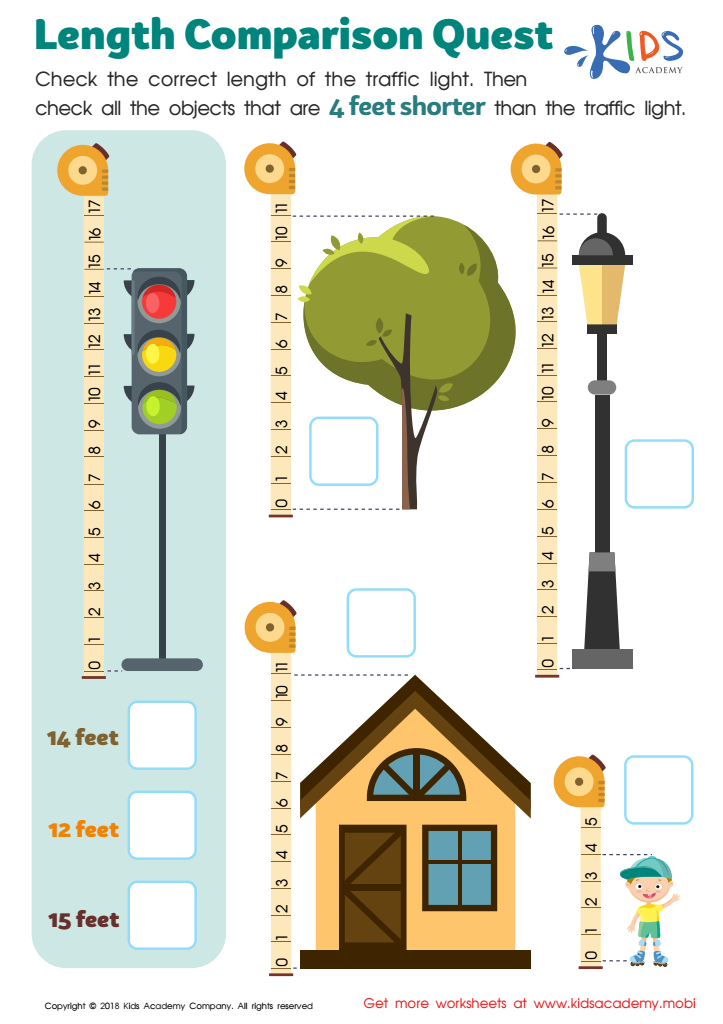
Length Comparison Quest Worksheet
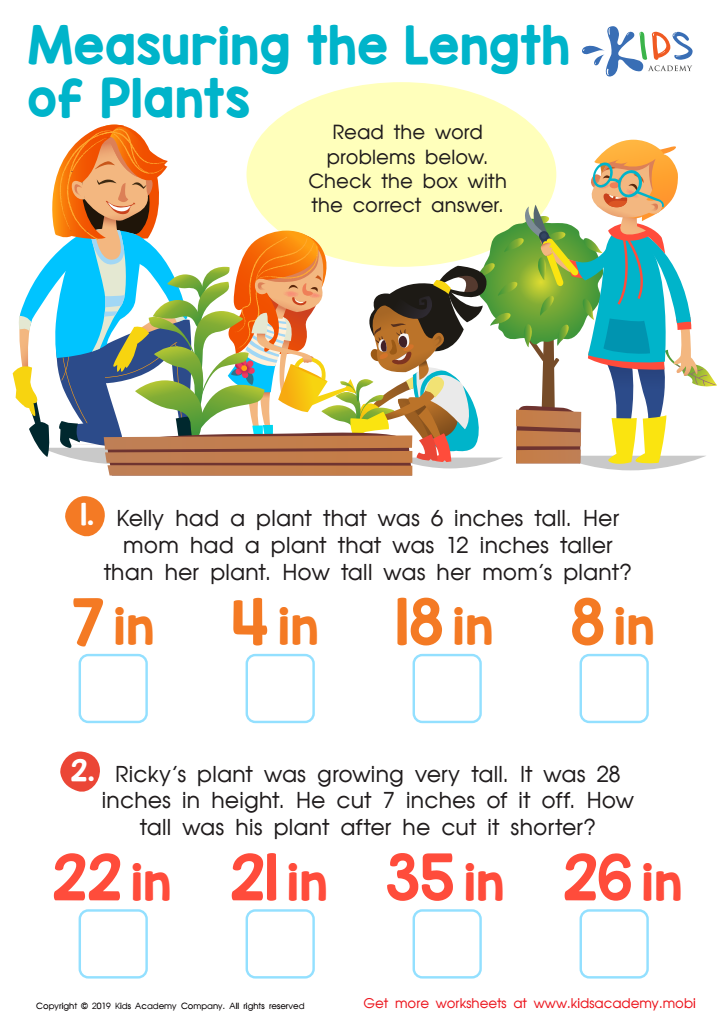
Measuring the Length of Plants Worksheet








Comparing lengths is a fundamental mathematical skill that enables children aged 7-8 to develop a deeper understanding of measurement and spatial reasoning. At this age, children are not just learning to measure objects, but also beginning to think critically about relative sizes. By introducing concepts of comparing lengths, parents and teachers can help students become competent in applying mathematical principles to real-world situations, such as cooking, shopping, and organizing their spaces.
Engaging in activities that involve comparing lengths fosters mathematical communication and encourages teamwork during collaborative learning experiences. This fosters a positive attitude towards mathematics, helping to eliminate any anxiety students may have towards the subject. Moreover, it allows children to connect their math knowledge with everyday life; for instance, they can compare the sizes of items in their kitchens or measure the lengths of different playground equipment.
Ultimately, mastering the concept of comparing lengths in early grades sets the stage for more complex mathematical problem-solving in the future. It helps children grasp concepts like greater than, less than, and understanding measurement units, which are essential for their academic growth and overall confidence in mathematics. For these reasons, both parents and teachers should prioritize this skill in young learners.








