Understanding tens Numbers Worksheets for Ages 7-8
4 filtered results
-
From - To
Dive into the world of numbers with our "Understanding Tens Numbers Worksheets for Ages 7-8." Designed specifically for young learners, these worksheets help children grasp the fundamental concept of tens and ones. By breaking down numbers into easier-to-understand segments, kids develop strong number sense and place value skills. Engaging exercises featuring colorful illustrations make learning both fun and effective. Perfect for classroom or at-home practice, these worksheets align with educational standards and ensure your child builds a solid math foundation. Equip your 7-8 year old with the tools needed for math success through interactive learning with our comprehensive, thoughtfully designed worksheets.
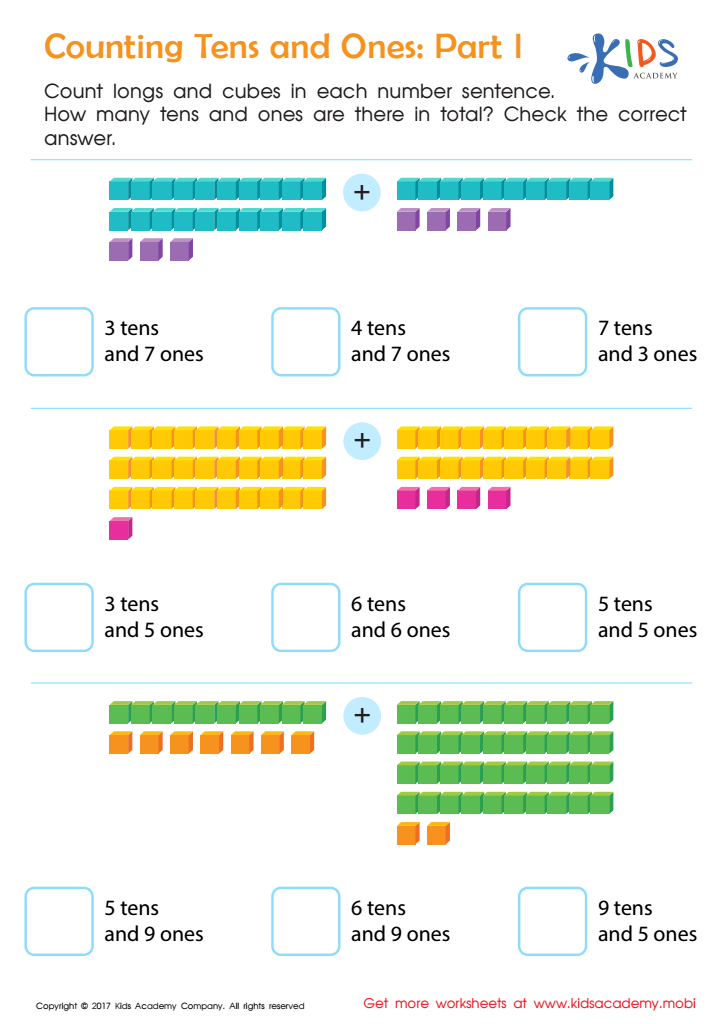
Counting Tens and Ones: Part 1 Worksheet
 Assign to My Students
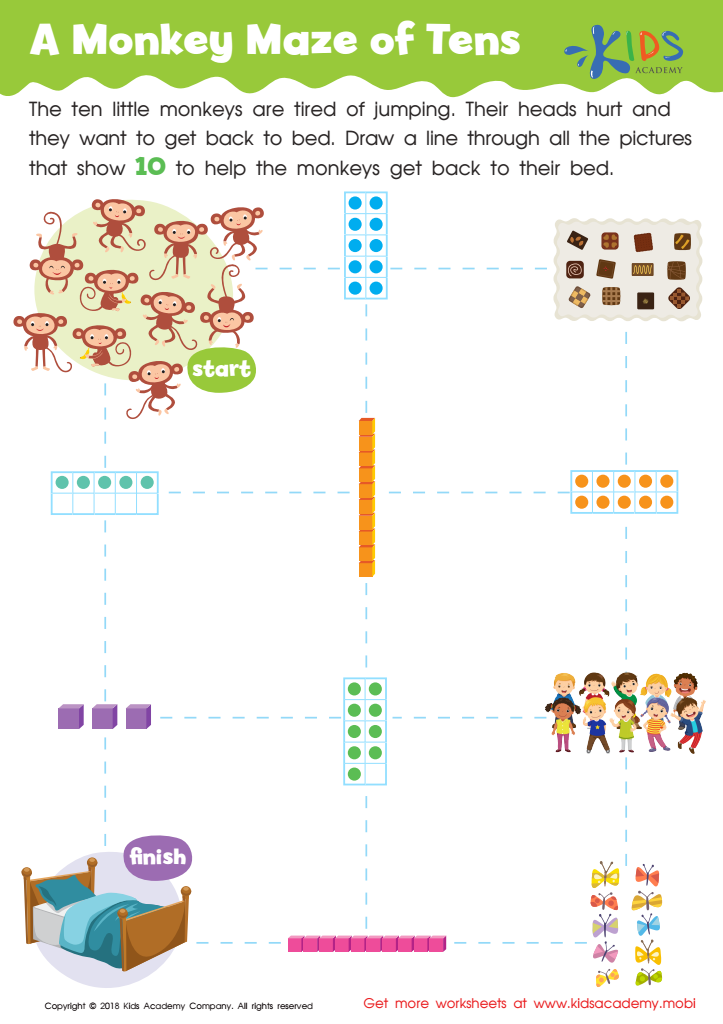
A Monkey Maze of Tens Worksheet
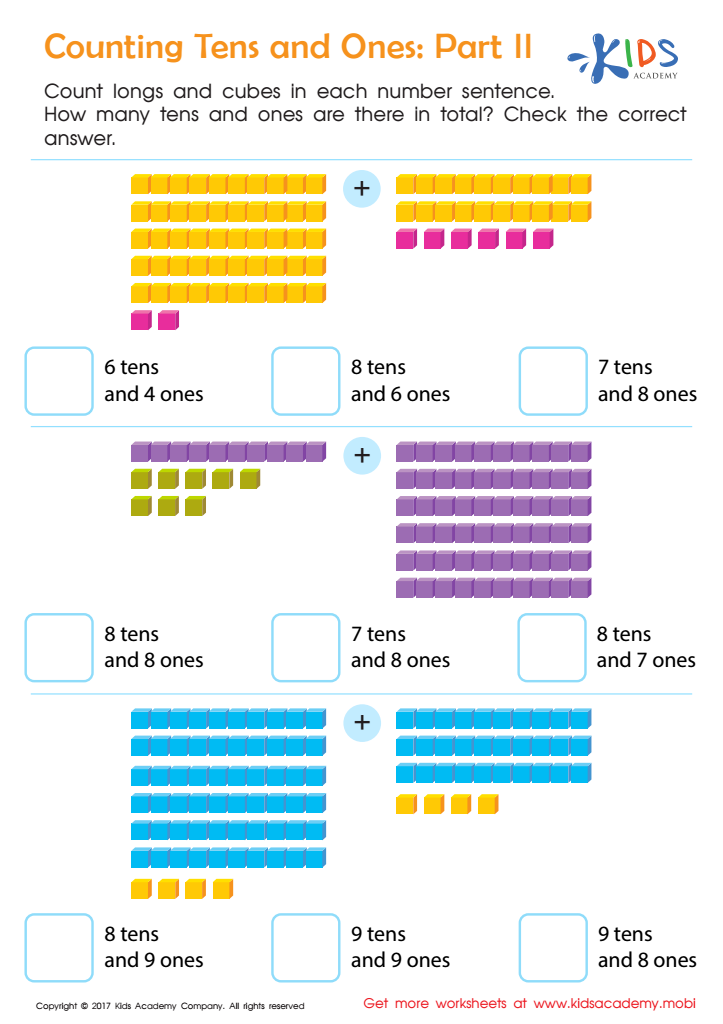
Counting Tens and Ones: Part 2 Worksheet
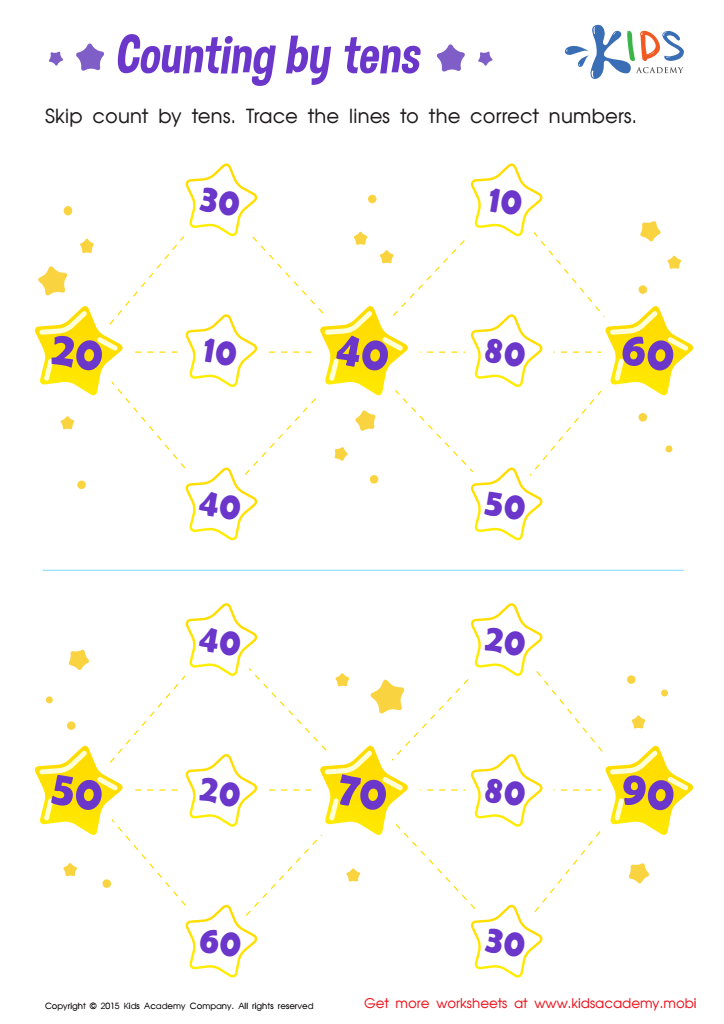
Learn Dozens: Counting by Tens Printable








Understanding tens numbers is fundamental for children aged 7-8 as it lays the groundwork for essential mathematical skills they will use throughout their education and daily life. During these formative years, grasping the concept of tens numbers helps students navigate a key component of our number system—the base ten system. This understanding enhances their ability to recognize patterns, perform mental math, and apply strategies for addition, subtraction, multiplication, and division more efficiently.
For parents and teachers, ensuring that children are proficient in understanding tens aids in future math success. When children can easily group and regroup numbers around the anchor of ten, they can better manage more complex mathematical operations and solve problems more logically. This foundational skill also boosts their confidence and reduces math anxiety, making them more enthusiastic and open to tackling advanced concepts as they progress in their education.
Additionally, proficiency with tens numbers translates into everyday practical skills. Children begin to grasp money management, time-telling, and measurement concepts, which are often grounded in units of ten. By emphasizing the importance of understanding tens numbers, parents and teachers can empower children to develop a strong mathematical foundation, preparing them not just for academic success, but for real-world applications.








