Basic Addition Skills Math Worksheets for Ages 7-8 - Page 2
30 filtered results
-
From - To
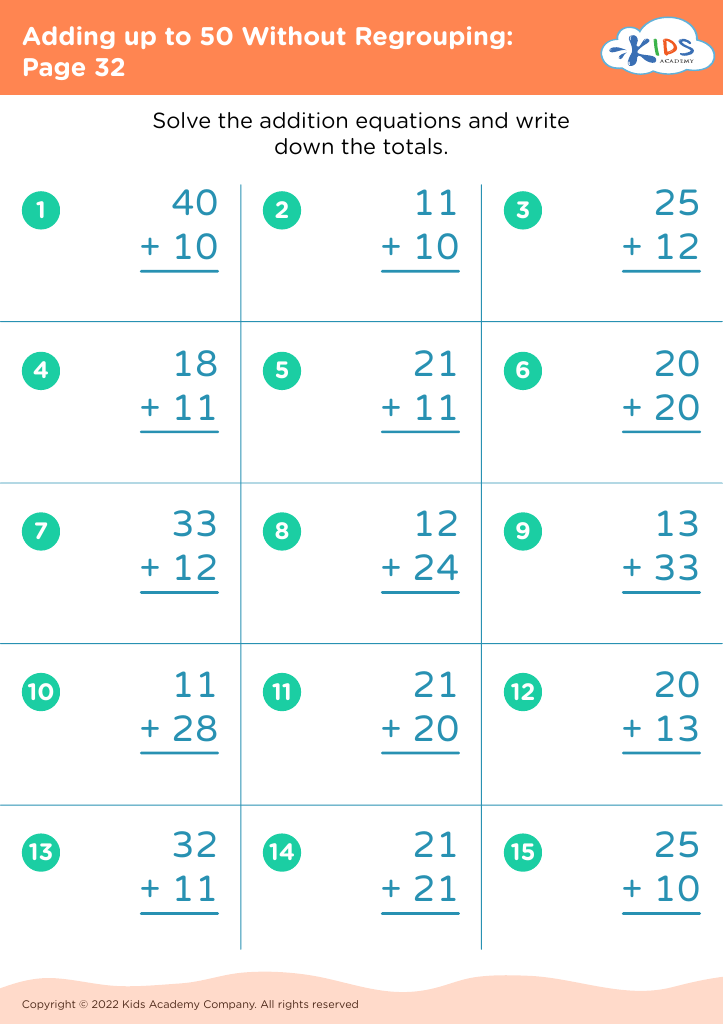
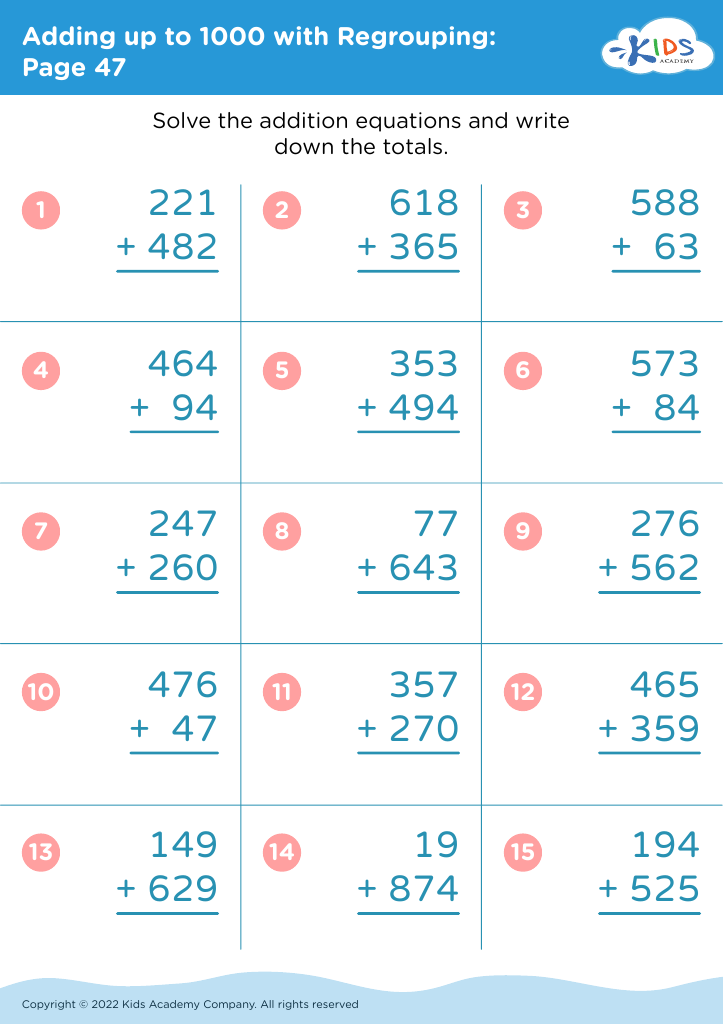
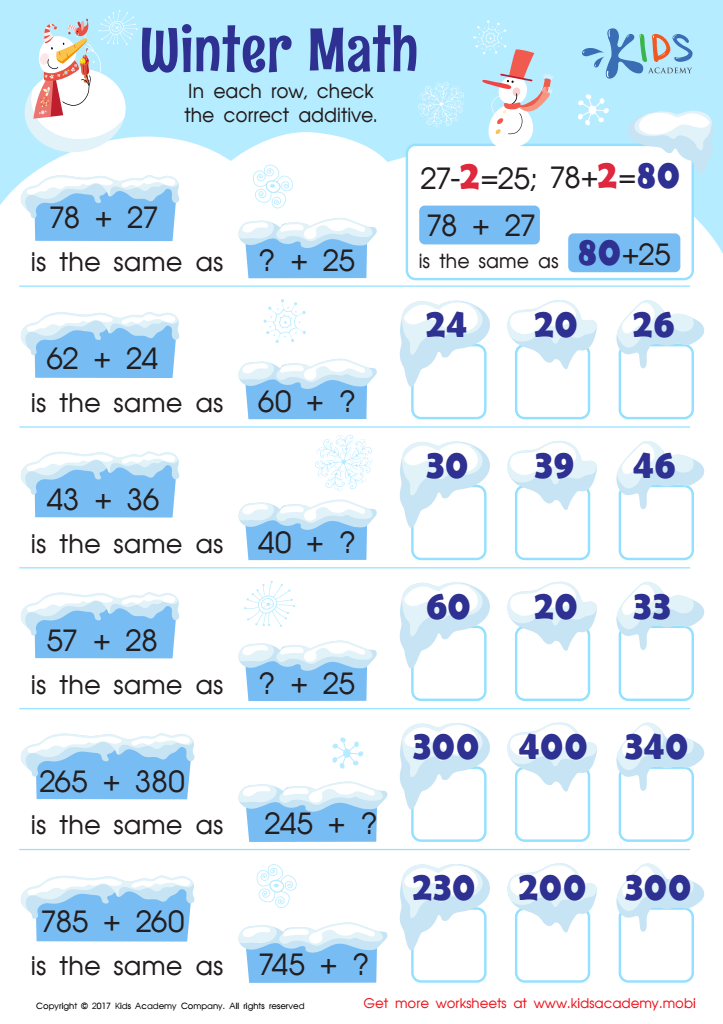
Free Addition Worksheet
 Assign to My Students
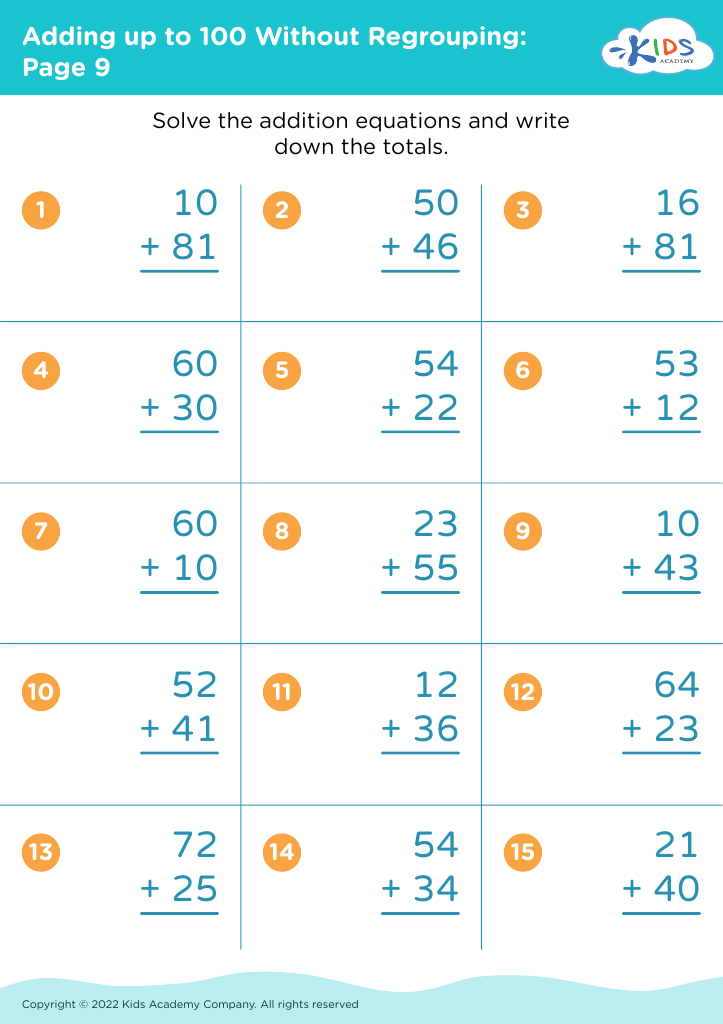
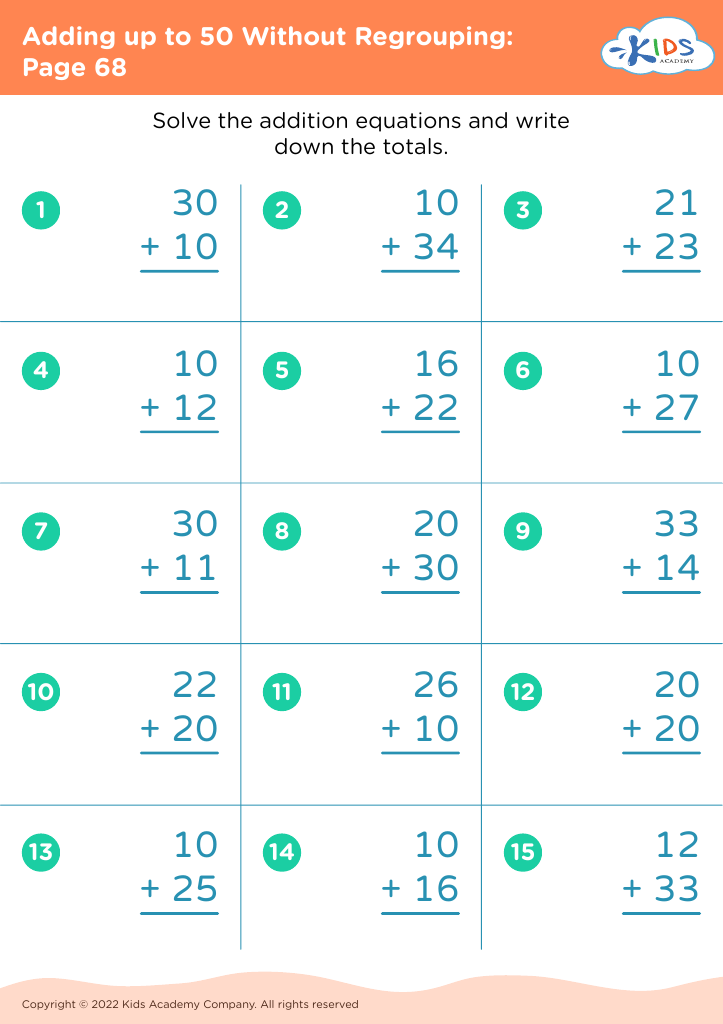
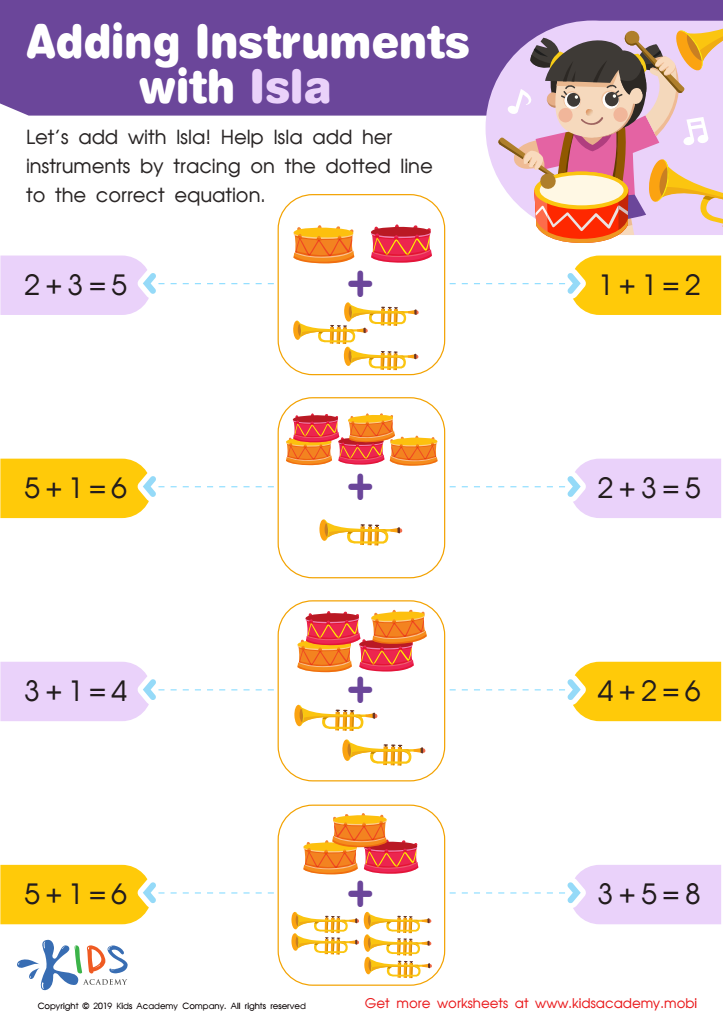
Adding Instruments with Isla Worksheet



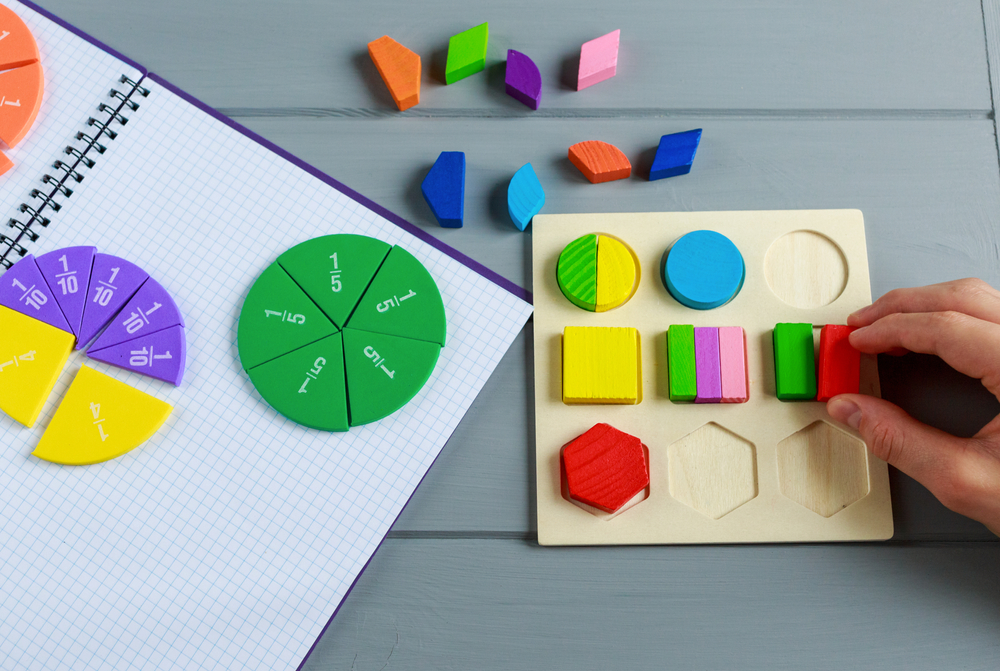


Basic addition skills are fundamental building blocks in a child's mathematical understanding and cognitive development. For children ages 7-8, mastering these skills strengthens their ability to tackle more complex mathematical concepts later on, such as subtraction, multiplication, and division. Proficiency in basic addition enhances problem-solving and critical thinking skills, essential not just in math but in everyday situations.
Parents and teachers should care about fostering these skills because they lay the groundwork for academic success. Children who struggle with basic addition can develop math anxiety, hindering their confidence and interest in the subject. Moreover, such skills are not just academic; they encourage logical reasoning that can be applied in real-life contexts—planning a budget, dividing responsibilities, or even sharing resources.
Moreover, supporting children in mastering addition skills promotes persistence and resilience. These skills can be built through engaging activities and games, turning learning into a fun experience. Partnerships between home and school in reinforcing these skills can create a supportive environment, ensuring that children are not only prepared for future math challenges but also fostering a lifelong appreciation for learning. Ultimately, focusing on basic addition skills gives children a strong foundation for success in mathematics and beyond.








