Critical thinking development Math Worksheets for Ages 7-8
4 filtered results
-
From - To
Nurture your child's analytical skills with our expertly crafted Critical Thinking Development Math Worksheets for Ages 7-8. Designed to engage young learners, these worksheets integrate fundamental math concepts with problem-solving challenges to stimulate cognitive growth. Each activity encourages logical reasoning, pattern recognition, and strategic thinking, laying a solid foundation for future academic success. Ideal for both classroom and home use, our printable materials make learning math enjoyable and effective. Help your child develop critical thinking skills while mastering key math principles. Explore our comprehensive collection today and watch your child’s confidence in math flourish!
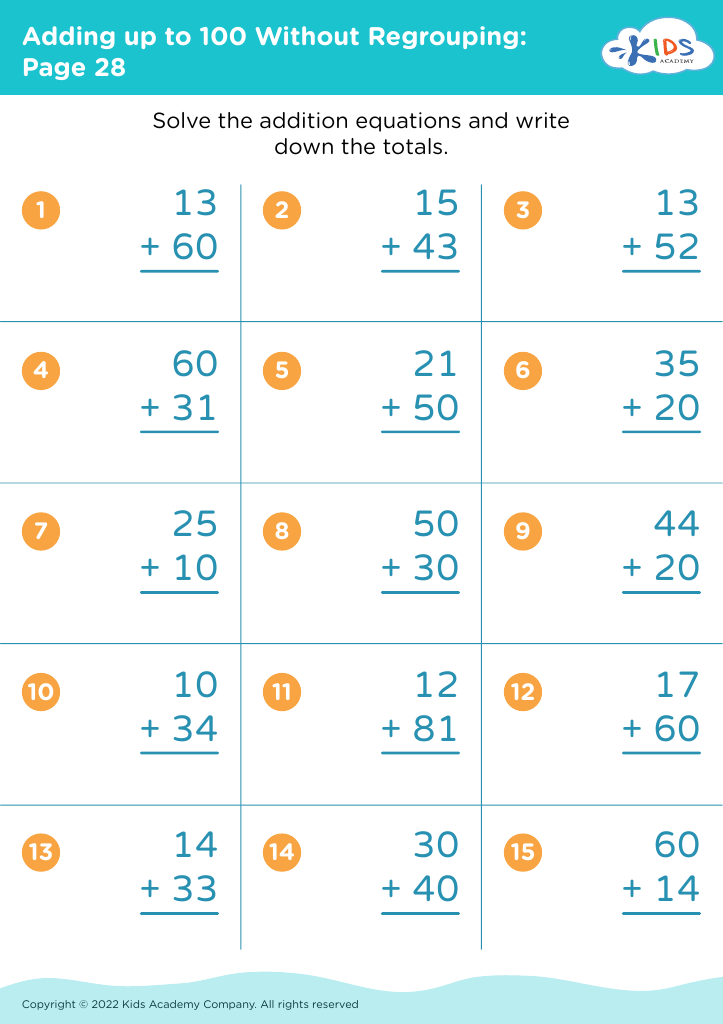
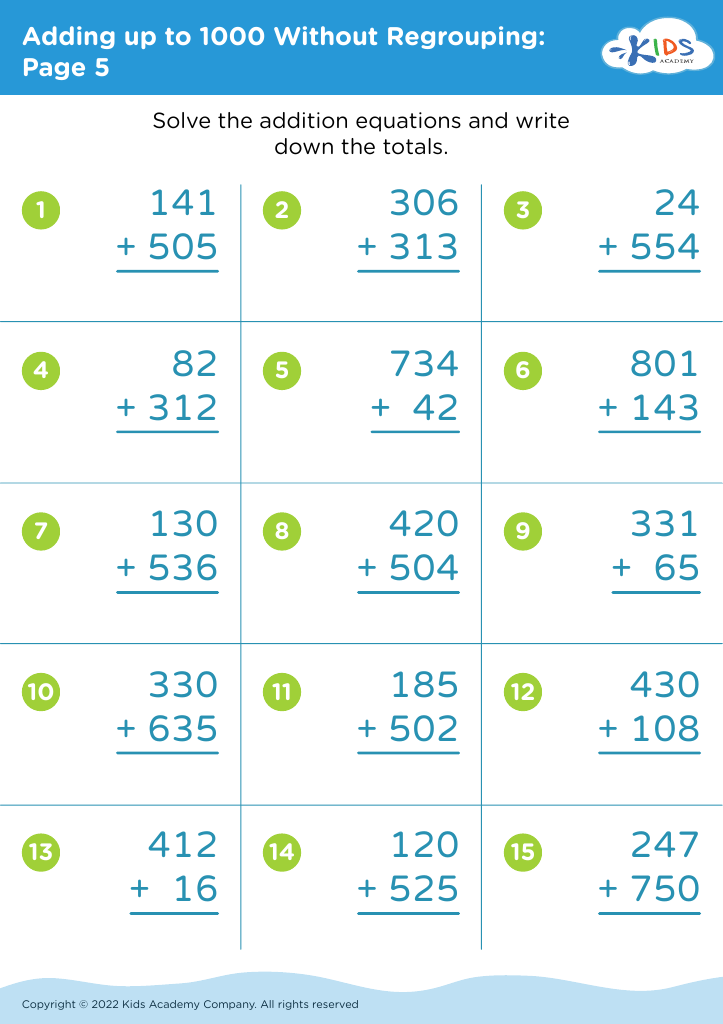
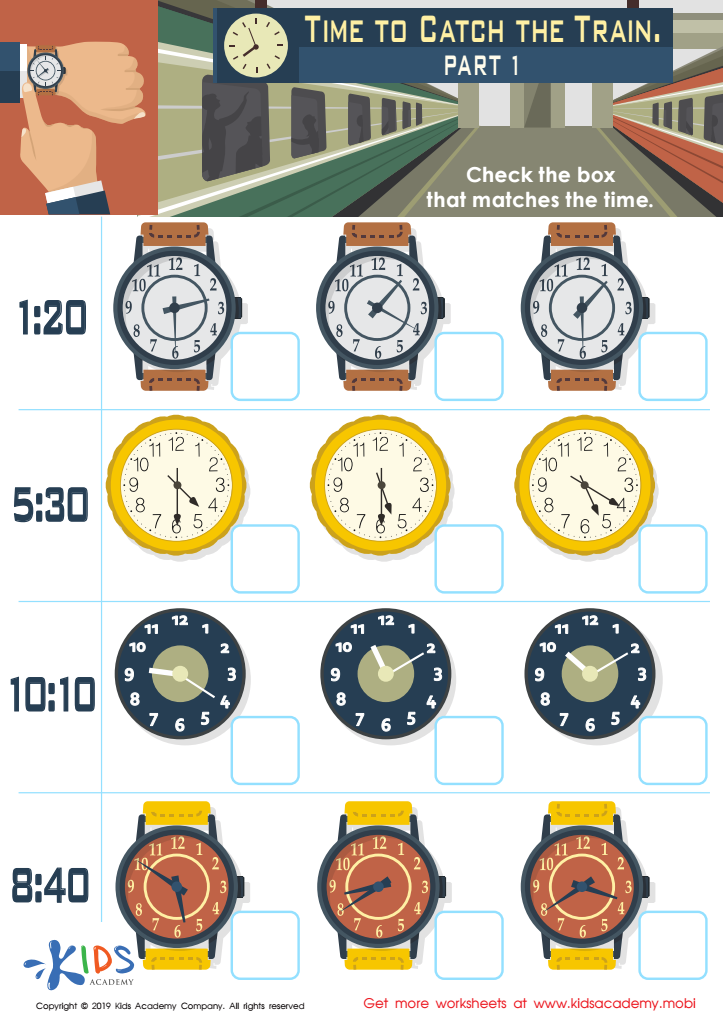
Time to Catch the Train Part 1 Worksheet
 Assign to My Students
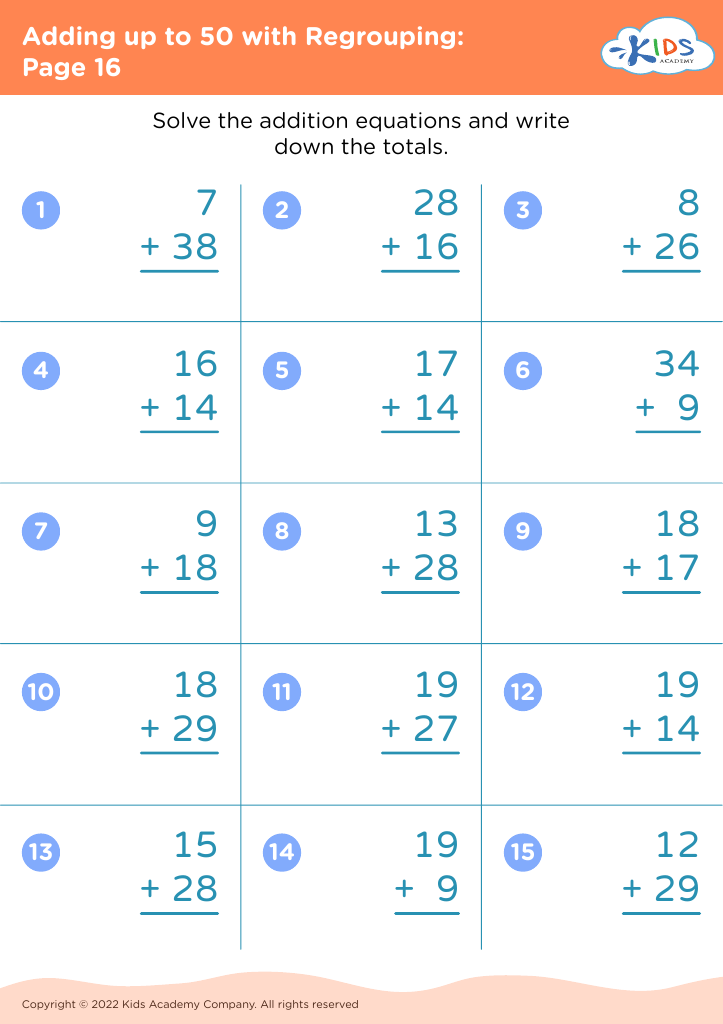







Critical thinking development in math for ages 7-8 is essential for a child's overall cognitive and problem-solving abilities. During these formative years, children begin to build the foundational skills that will influence their future learning and daily decision-making. Fostering critical thinking in math helps students approach problems systematically, evaluating different approaches and solutions. It goes beyond mere arithmetic; it teaches children to question, explore, and reason, skills that are transferable to other subjects and real-life situations.
At this age, kids are naturally curious, and critical thinking exercises in math stimulate their curiosity while promoting persistence and resilience in the face of challenges. Instead of memorizing formulas or procedures, students learn to understand the 'why' and 'how' of problems, making math more engaging and meaningful. This understanding fosters a growth mindset, enabling children to view challenges as opportunities to grow rather than obstacles.
Parents and teachers play a crucial role in nurturing these skills by providing opportunities for students to explore mathematical concepts deeply. They can incorporate puzzles, real-world problem-solving scenarios, and open-ended questions into lessons. Encouraging a child’s ability to think critically in math lays the groundwork for future academic success and equips them with the tools needed for thoughtful and informed decision-making throughout life.








