Fraction representation Math Worksheets for Ages 7-8
4 filtered results
-
From - To
Enhance your child's understanding of fractions with our engaging Fraction Representation Math Worksheets designed specifically for ages 7-8. These worksheets provide a variety of activities that promote interactive learning, helping young learners visualize fractions through real-life scenarios and colorful graphics. Children will practice identifying, comparing, and representing fractions in a fun and accessible way, making complex concepts easy to grasp. Perfect for home or classroom use, our worksheets encourage critical thinking and problem-solving skills while building a strong foundation in mathematics. Download and explore our comprehensive collection to support your child’s educational journey and foster a lifelong love for learning!
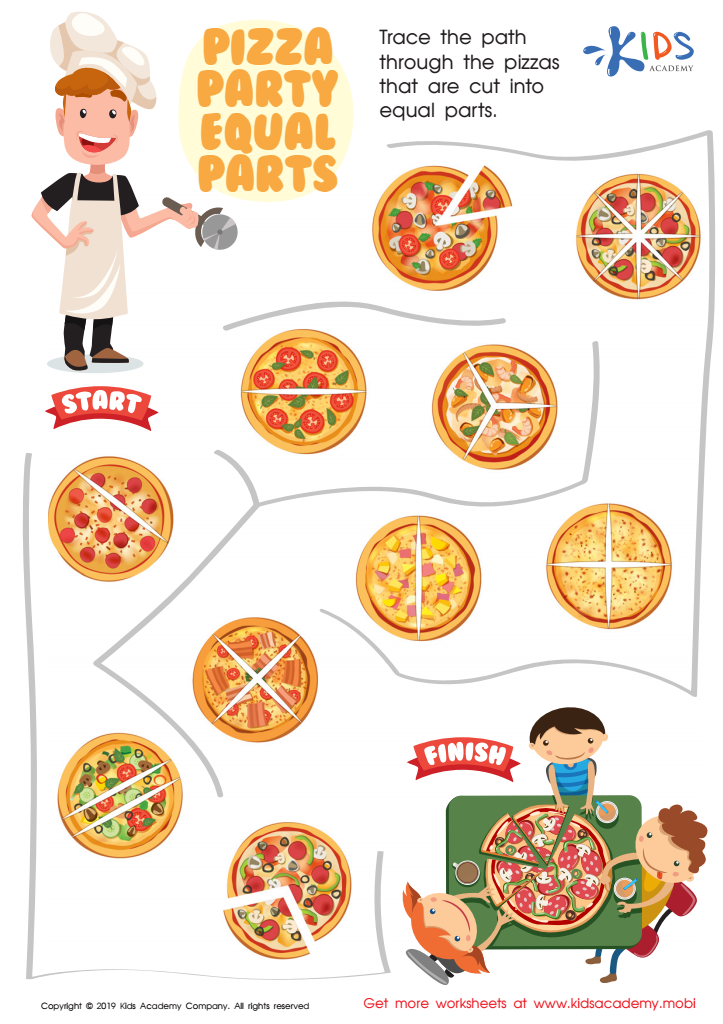
Pizza Party Equal Parts Worksheet
 Assign to My Students
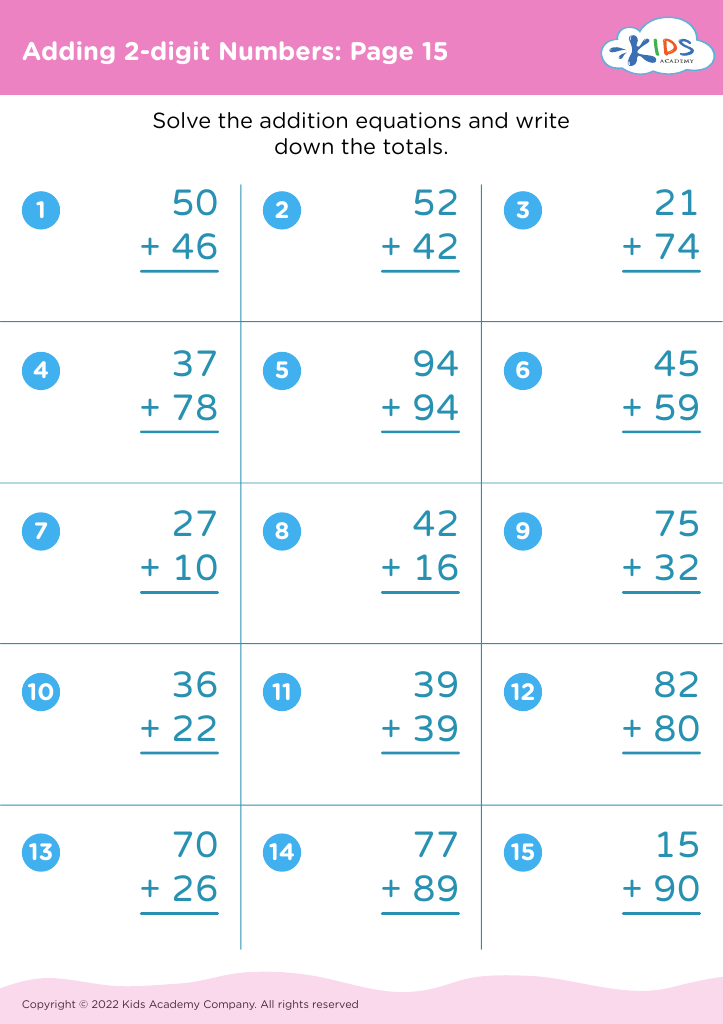
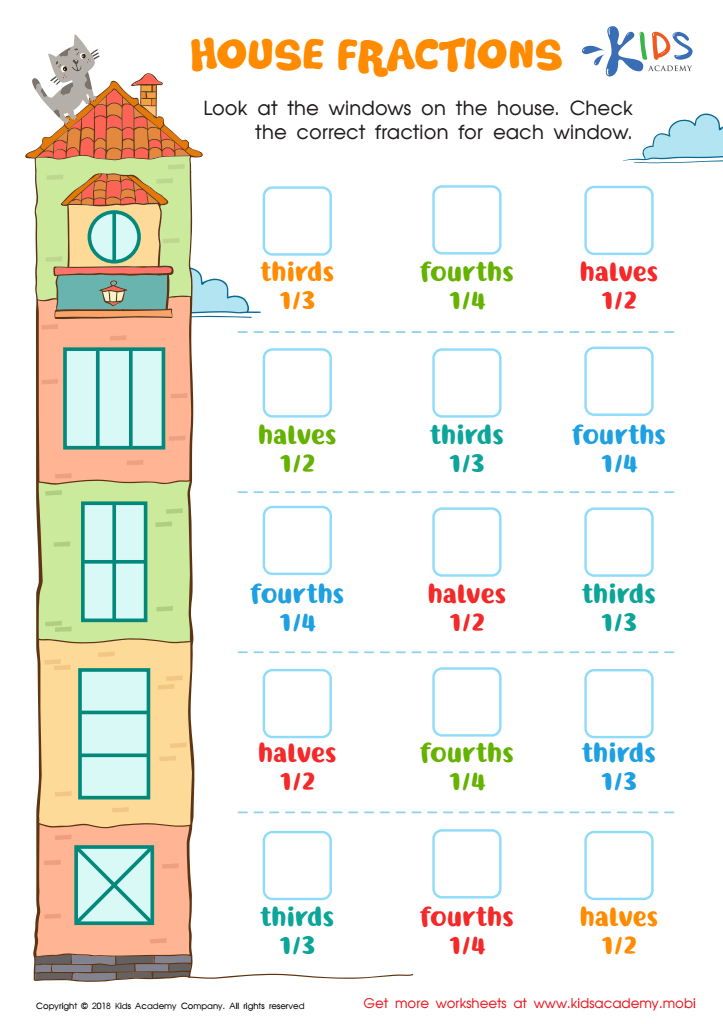
House Fractions Worksheet
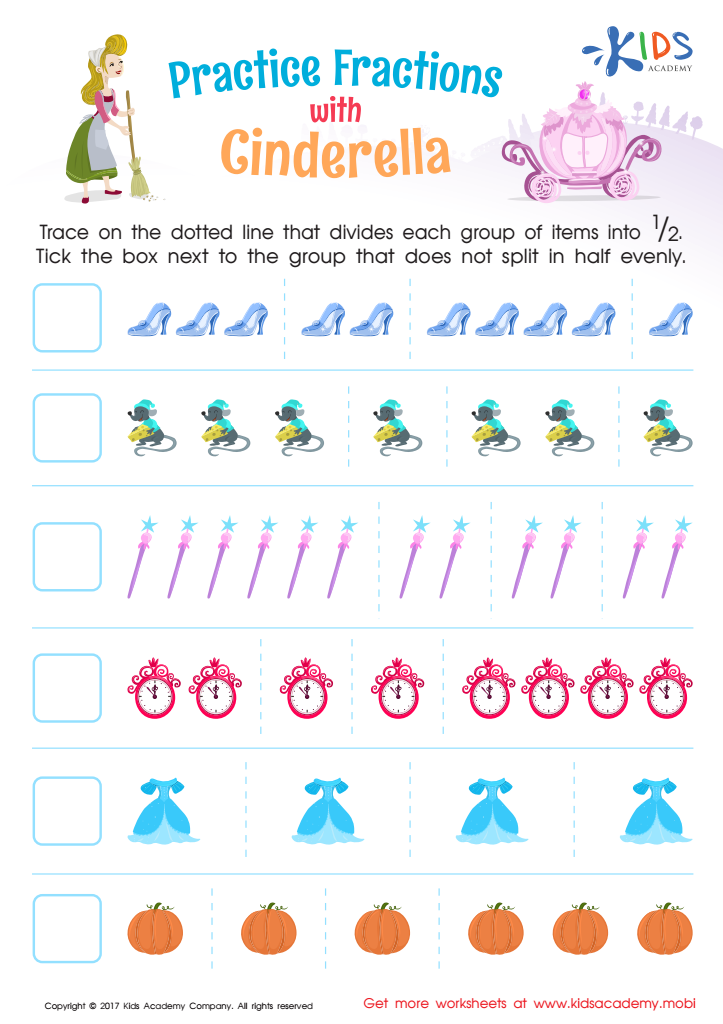
Fractions: Cinderella Printable








Understanding fraction representation is crucial for children aged 7-8, as it lays the foundation for their future mathematical skills. At this age, children begin to explore the concept of parts and wholes, and mastering fractions enables them to make sense of relationships between numbers. When parents and teachers prioritize fraction representation, they help children recognize that fractions are used in various contexts, such as cooking, sharing, and measuring, making math more relatable and engaging.
Moreover, a solid grasp of fractions is essential for handling more advanced mathematical concepts later on, such as ratios, percentages, and algebra. Engaging with different representations of fractions—like visual models, number lines, and manipulatives—promotes critical thinking and problem-solving skills. These activities also cater to diverse learning styles and allows children to express their understanding in multiple ways.
Encouraging collaborations between parents and teachers can make fraction learning more effective. When educators provide tools and activities related to fractions, parents can reinforce these lessons at home, creating a supportive learning environment. Ultimately, a strong foundation in fraction representation not only boosts confidence in math but also fosters a lifelong appreciation and competency in problem-solving, benefiting children in various aspects of their education and daily life.








