
Pattern recognition Math Worksheets for Ages 7-8
11 filtered results
Difficulty Level
Grade
Age
-
From - To
Subject
Activity
Standards
Enhance your child’s mathematical skills with our engaging Pattern Recognition Math Worksheets tailored for ages 7-8! These worksheets are designed to build critical thinking and problem-solving abilities while making math enjoyable. Featuring diverse activities that focus on identifying, extending, and creating patterns, your child will gain confidence in their math skills. Perfect for schoolwork, homework, or extra practice at home, our comprehensive resources foster a deep understanding of essential math concepts. With colorful graphics and age-appropriate exercises, learning about patterns becomes a fun adventure! Dive into our collection today and watch your child excel in math with ease!
Favorites
With answer key
Interactive
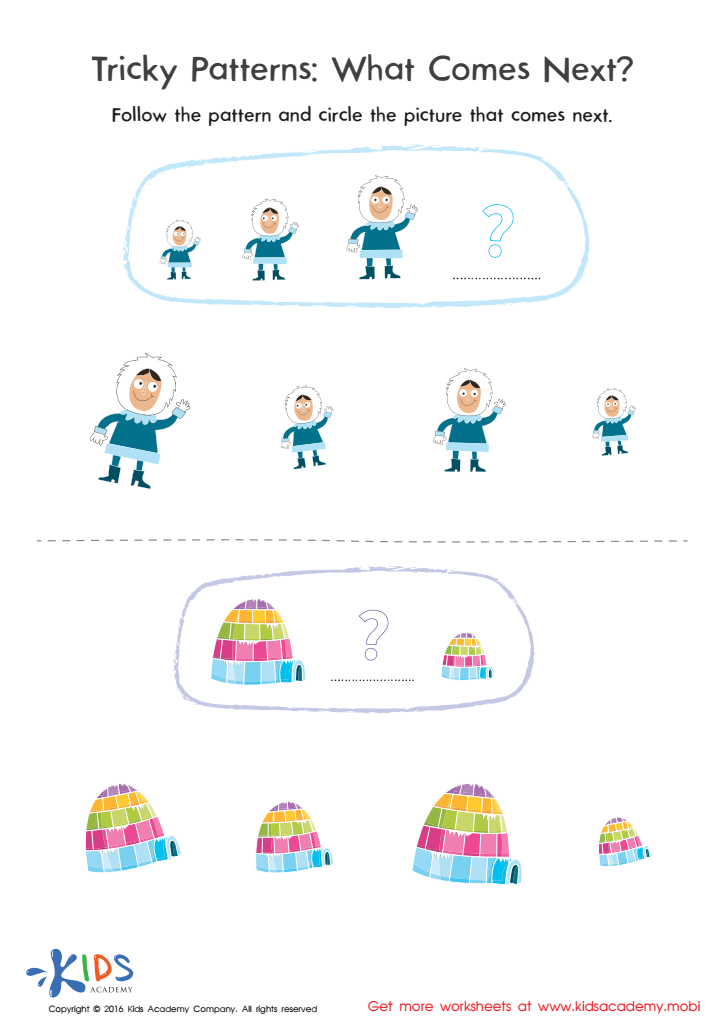
Tricky Patterns Size Worksheet
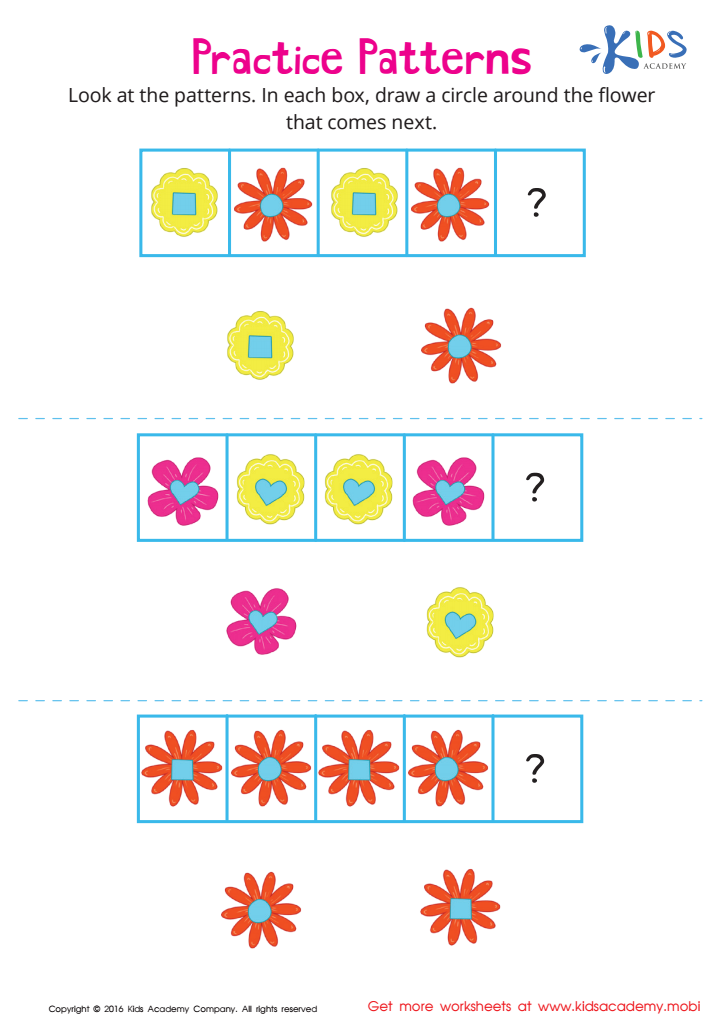
Give your child a head start on critical thinking with this picture pattern worksheet! It's an intriguingly fun way to help them master important skills like spatial reasoning, critical thinking, and logical reasoning. They'll differentiate between shapes, complete the pattern with a logical answer, and look for and understand patterns. It's the perfect foundation for future math skills, setting them up for future success!
 Assign to My Students
Tricky Patterns Size Worksheet
Worksheet
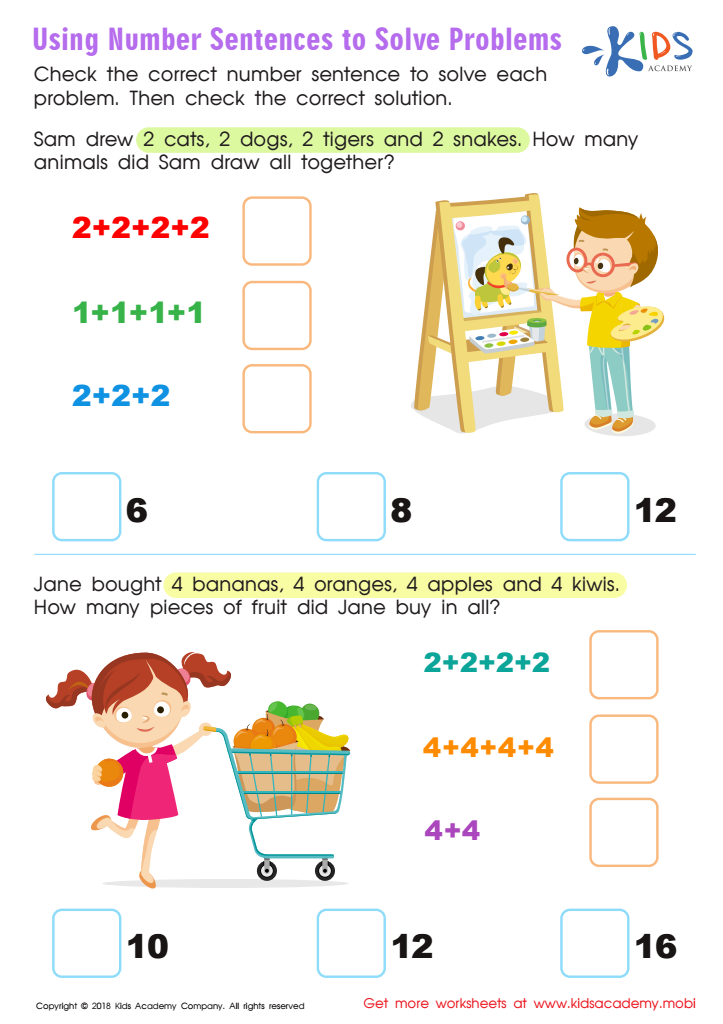
Using Number Sentences to Solve Problems Worksheet
Solving math problems requires an efficient strategy. Picture representation can help young mathematicians with basic addition problems, especially when it involves repeated addends. As they gain confidence, they'll be able to apply their number sentence solving abilities to more complex equations.
Using Number Sentences to Solve Problems Worksheet
Worksheet
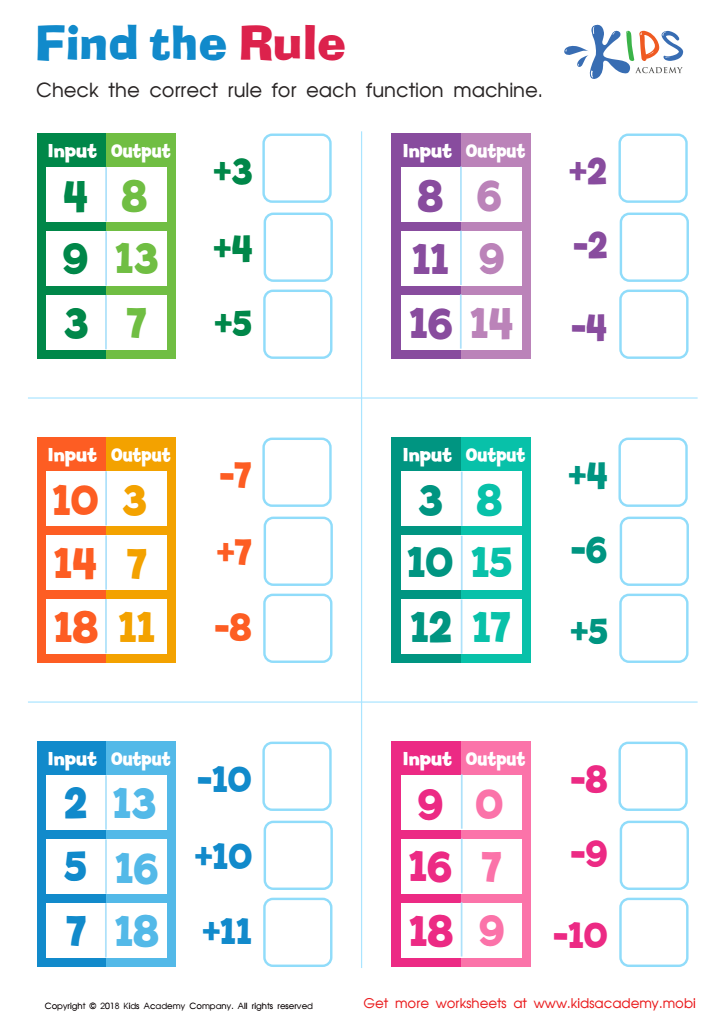
Find the Rule Worksheet
A function machine is an elementary math tool used to find an output by applying a rule, like addition or subtraction, to an input. Children use the diagram to understand the relationship between each input and output, with this worksheet helping them to analyze the machine and find the rule being used.
Find the Rule Worksheet
Worksheet
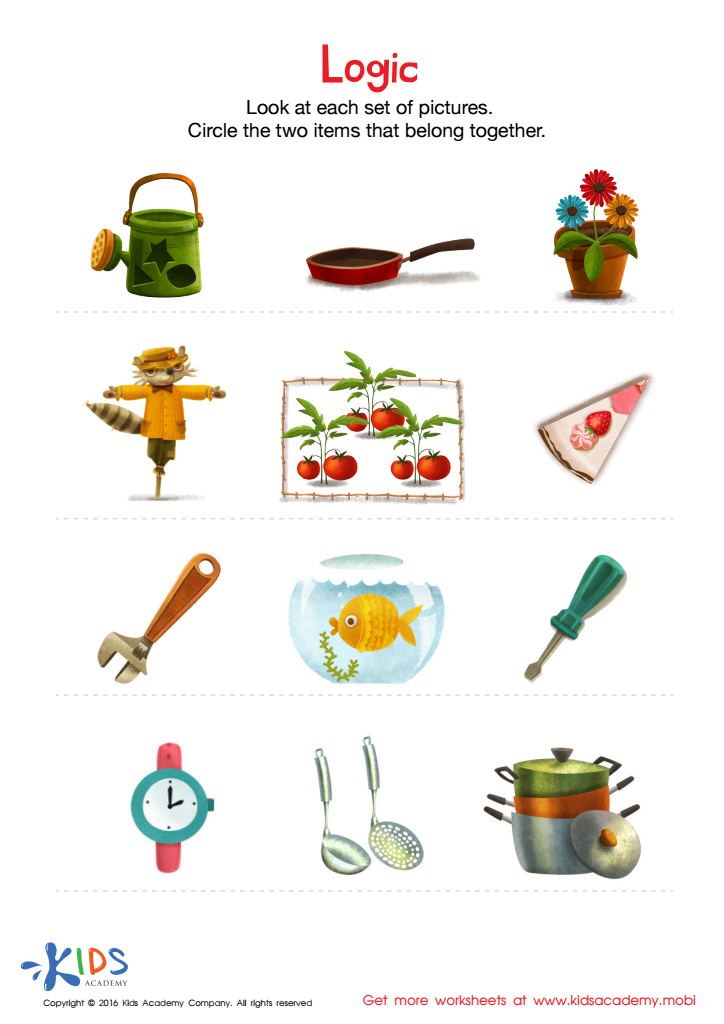
Logic Game Sorting Worksheet
Start your child's logic and reasoning development early with this fun matching worksheet! Through cute images and simple conversations, your little one can learn problem-solving, categorization, and matching skills. Plus, it's a great way for children to explore how items are used in real life. Try it and watch them boost skills with ease and fun!
Logic Game Sorting Worksheet
Worksheet
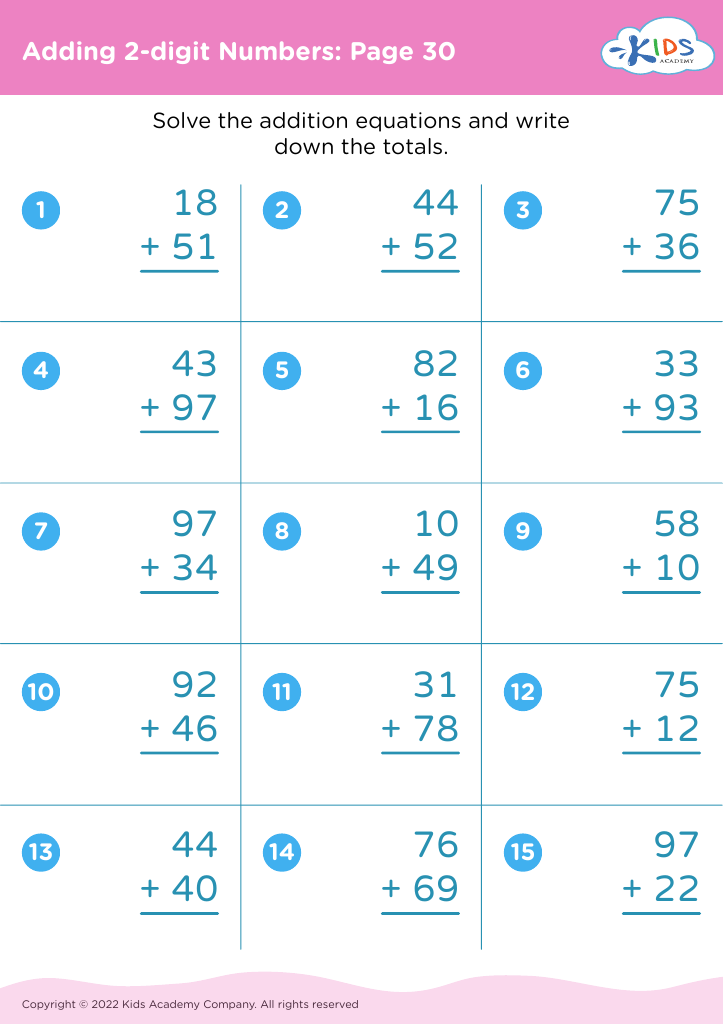
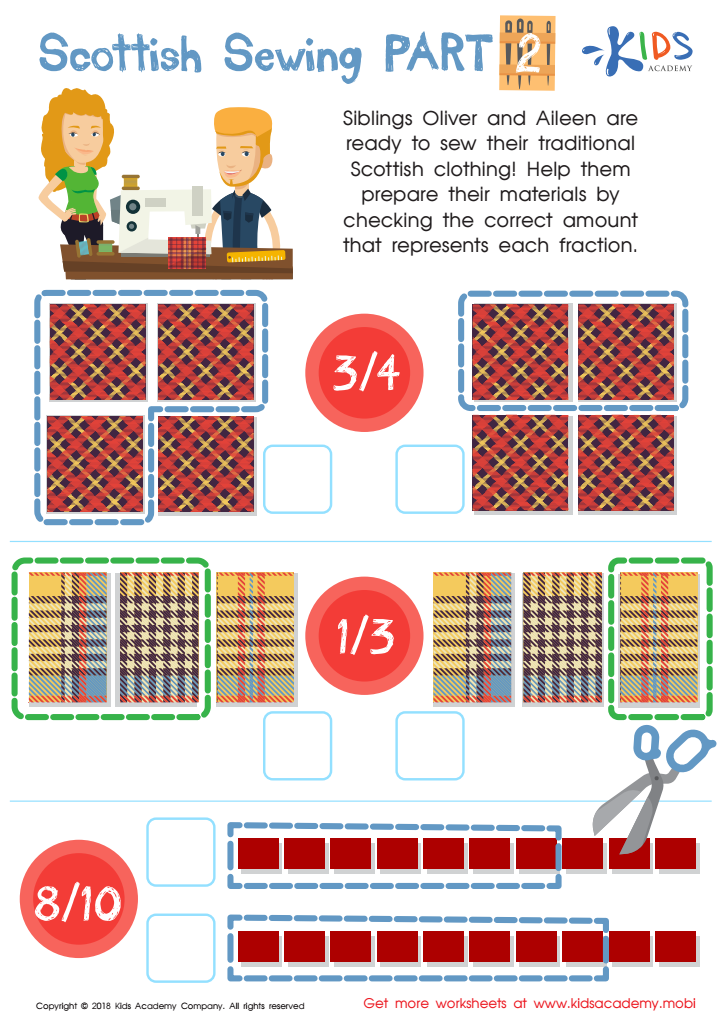
Scottish Sewing Part 2 Worksheet
Oliver and Alleen are sewing traditional Scottish attire. Help your kids count the cloth and check the correct fraction to support them. Have your kids check the correct amount that represents each fraction to help the brother-sister duo prepare their material.
Scottish Sewing Part 2 Worksheet
Worksheet
Join Kids Academy for Free
Who is primarily going to use this learning content?








Pattern recognition is a foundational skill in mathematics that significantly influences cognitive development in children ages 7-8. At this stage, kids begin to grasp more complex concepts, and recognizing patterns helps them make sense of mathematical relationships. When parents and teachers prioritize pattern recognition, they support children in developing critical thinking skills, problem-solving abilities, and a strong mathematical foundation.
Understanding patterns is essential not only in math but also in various aspects of life—such as science, art, and even language. Children who are adept at recognizing patterns can decipher trends, predict outcomes, and tackle more advanced mathematical concepts like algebra and geometry in the future. Engaging in activities that promote pattern recognition, such as number games, sequencing exercises, and hands-on projects, encourages active learning and fosters a love for mathematics.
Moreover, focusing on pattern recognition nurtures creativity and enhances analytical skills, equipping children with the tools they need for academic success. As parents and teachers take an interest in this area, they promote a growth mindset, encouraging perseverance when faced with challenging problems. Ultimately, fostering pattern recognition will empower children to see connections and relationships in the world around them, laying the groundwork for lifelong learning and success in STEM fields.








