Time-telling skills Math Worksheets for Ages 7-8
4 filtered results
-
From - To
Unlock the power of punctuality and precision with our engaging Time-telling Skills Math Worksheets designed for ages 7-8. Every activity empowers young learners to master reading analog and digital clocks, understanding hour and minute hands, and differentiating between AM and PM. With colorful illustrations and fun exercises, students will build confidence in time management while enhancing critical math skills. Our expertly crafted worksheets support school curricula and encourage practice at home, ensuring your child’s time-telling abilities are always on time. Transform learning into an exciting adventure with Kids Academy’s time-telling resources!
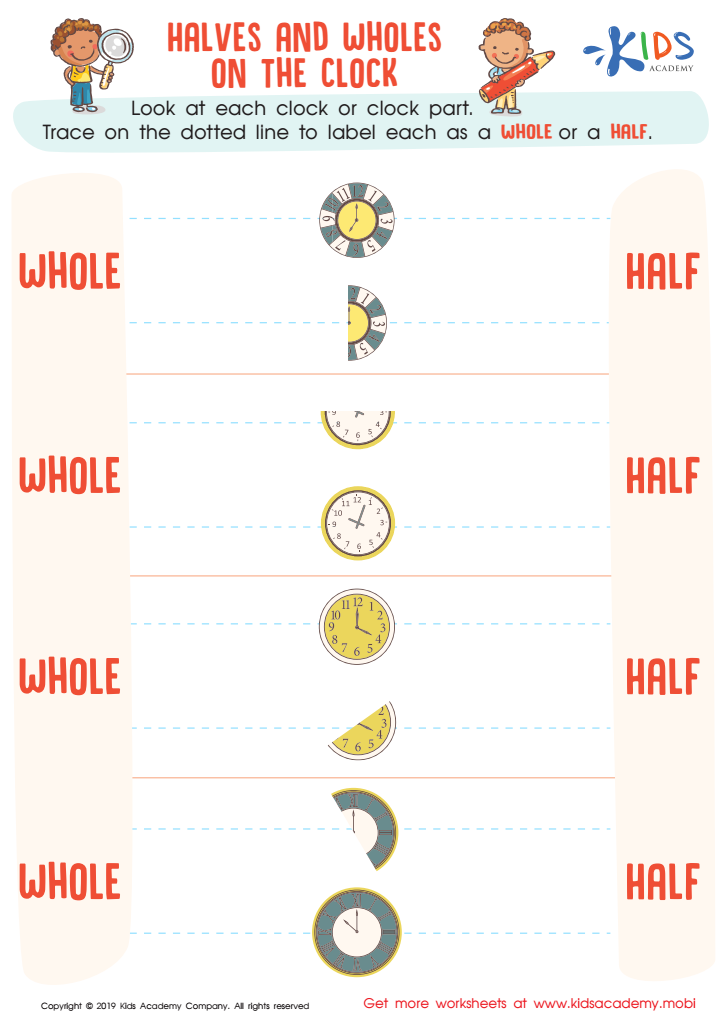
Halves and Wholes on the Clock Worksheet
 Assign to My Students
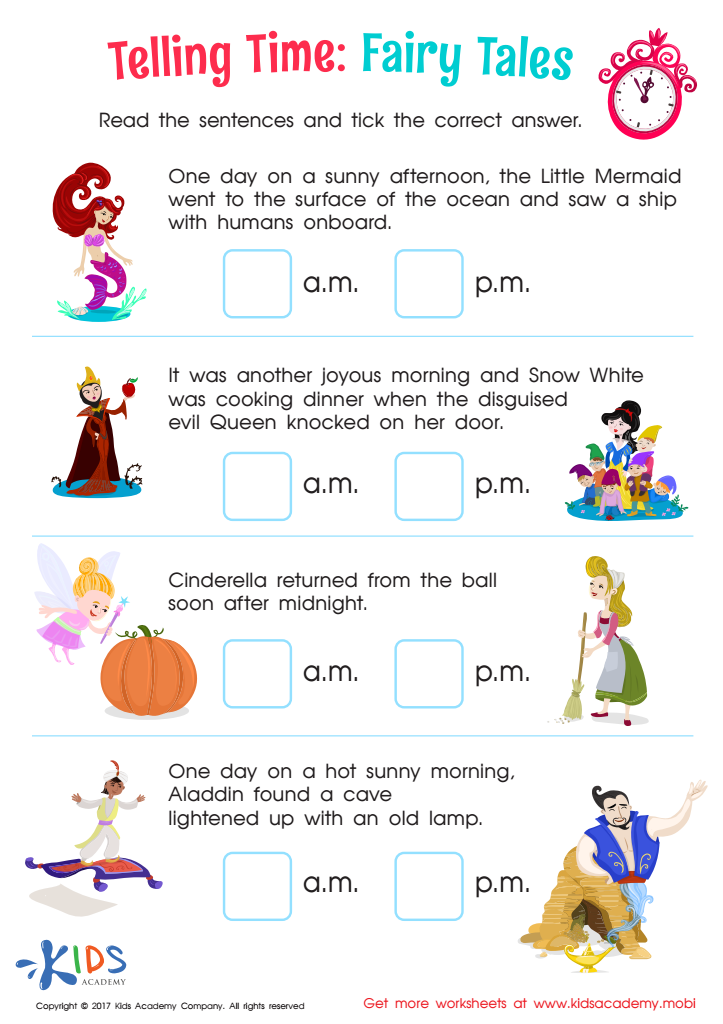
Telling Time: Fairy Tales Worksheet
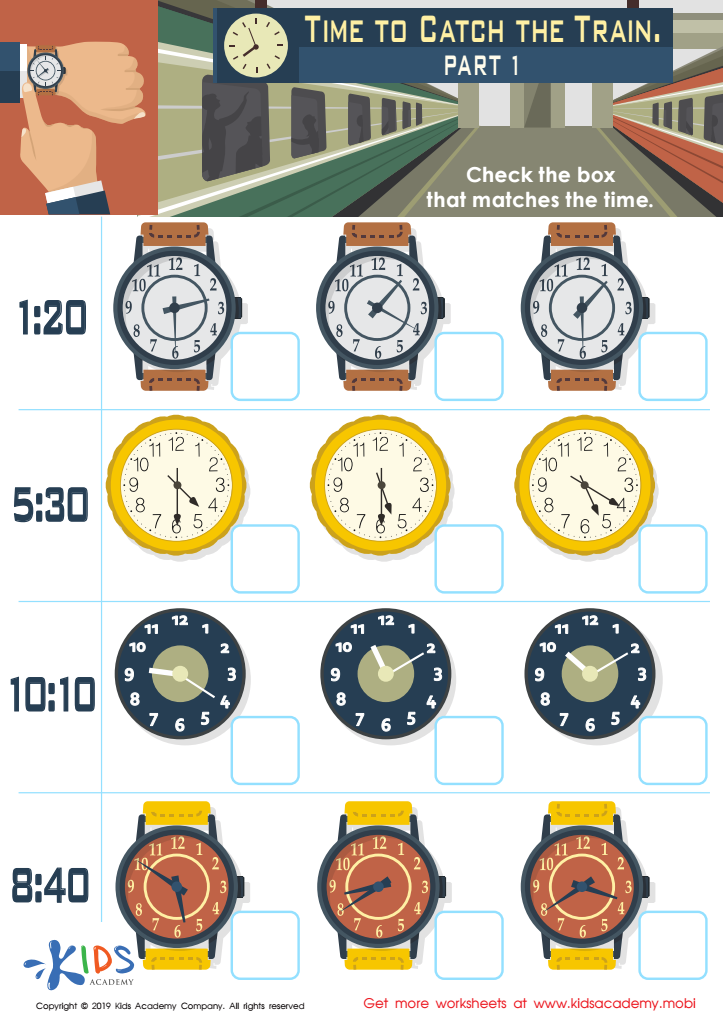
Time to Catch the Train Part 1 Worksheet








Time-telling skills are fundamental for 7 to 8-year-old children, as they serve as crucial life tools that extend far beyond simply knowing the time. For parents and teachers, instilling these skills facilitates children's ability to manage their day efficiently and fosters lifelong organizational habits. It helps children grasp the concept of routines and understand the importance of punctuality, which is essential for daily activities in school and at home, yardsticks for responsibility, and accountability. Proficiency in time-related math strengthens numerical cognition, logical reasoning, and boosts their confidence when tackling more complex math topics in future grades, like fractions and multiplication.
Moreover, accurate time-telling instills self-discipline and independence. For instance, children can manage screen time, homework periods, and play intervals. Time concepts like hours, half-hours, and quarter-hours reinforces their understanding of divisions and basic arithmetic, contributing to academic performance in broader areas. Structured learning environments enriched with time-telling duties--such as classroom schedules and timely transitions--encourage smooth functioning, mitigating chaos, reducing anxieties, and enhancing focus.
On a social level, knowing how to tell time equips children to be reliable in activities like after-school engagements, fostering friendships, and participating in extracurricular activities punctually. Therefore, both educators and parents should strategically prioritize mastering time-telling skills to ensure holistic developmental growth amongst young learners.








