Comparing sizes Measurement Worksheets for Ages 7-8
4 filtered results
-
From - To
Discover our engaging "Comparing Sizes Measurement Worksheets" designed specifically for children aged 7-8. These worksheets promote essential math skills by helping young learners explore concepts of size comparison through interactive activities. Students will enjoy visually comparing objects, practicing their measurement skills, and developing their ability to understand greater and lesser concepts. Our resources include vibrant visuals, diverse exercises, and clear instructions, making learning fun and effective. Perfect for homeschoolers, teachers, or parents looking to reinforce measurement comprehension, these worksheets offer valuable practice to support your child's educational journey. Download now to help your child boost their confidence in math!
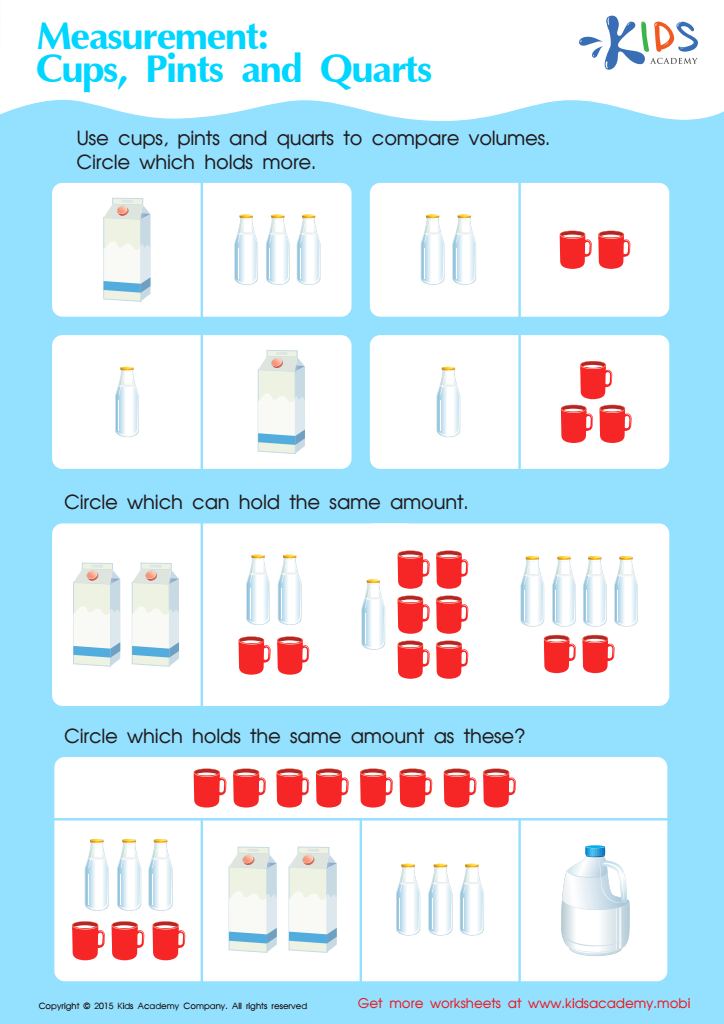
Measurement: Compare Volumes Worksheet
 Assign to My Students
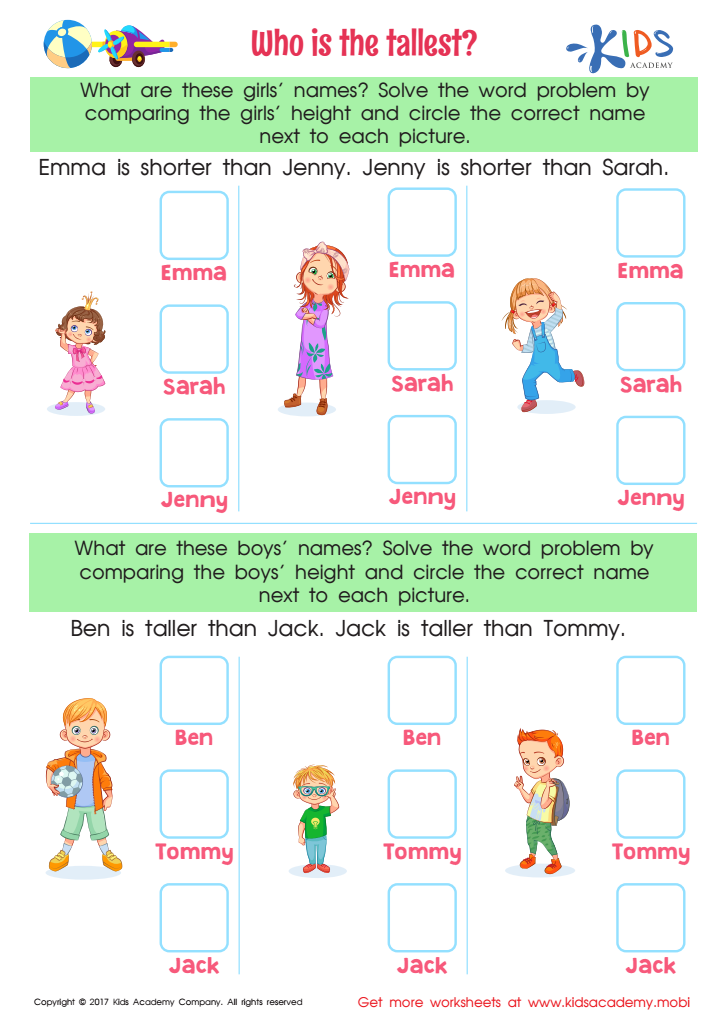
Who Tallest Printable
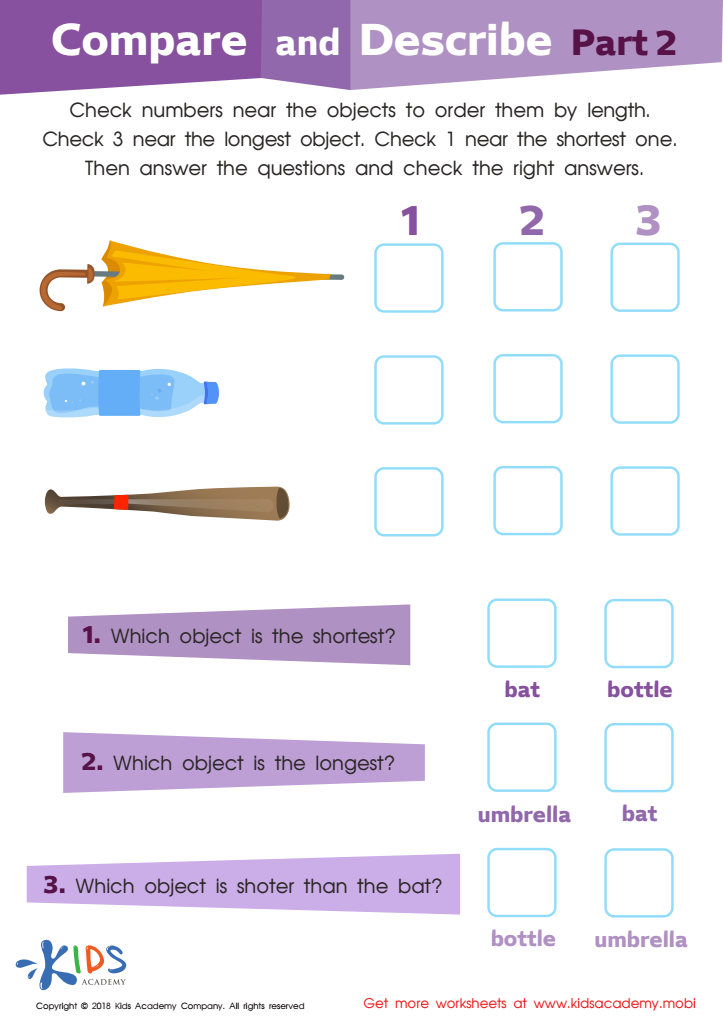
Compare and Describe: Part 2 Worksheet
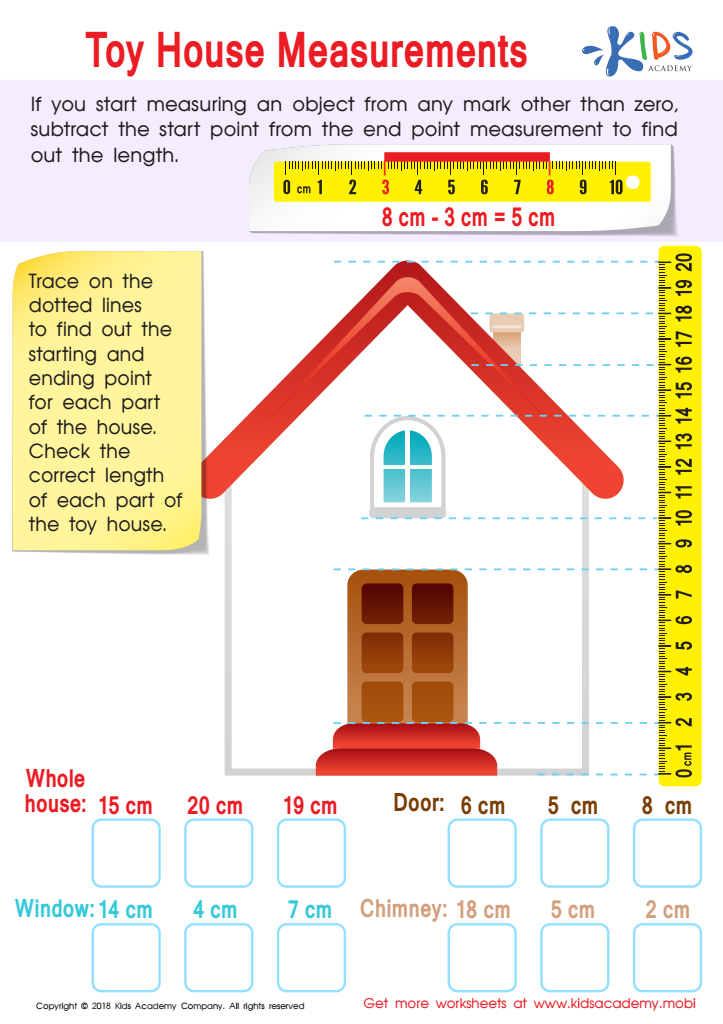
Toy House Measurements Worksheet








Comparing sizes and measurement is a vital skill for children aged 7-8, making it essential for parents and teachers to prioritize this concept. At this stage, kids are developing critical thinking and problem-solving skills, and measuring helps them engage with the world around them. Understanding measurement fosters spatial awareness, spatial reasoning, and mathematical thinking, crucial for future academic success in subjects like geometry and science.
Moreover, comparing sizes encourages hands-on learning and sensory experiences, making abstract concepts concrete. When children perceive differences in size, weight, and volume, they learn to make observations that lay a foundation for more complex ideas in mathematics and measurement. Learning to measure different objects also enhances their vocabulary, introducing terms like larger, smaller, taller, shorter, and heavier.
From a practical perspective, these skills are fundamental in everyday life, assisting children as they cook, shop, build, or create art. It also nurtures enthusiasm and curiosity about the environment. In a collaborative setting, like in the classroom or at home, measurement activities provide opportunities for social skills development, teamwork, and communication. Therefore, parents and teachers play a pivotal role in guiding children through these essential learning experiences, benefiting their overall development.








