Understanding patterns Multiplication Worksheets for Ages 7-8
11 filtered results
-
From - To
Unlock the joy of learning with our "Understanding Patterns Multiplication Worksheets" designed specifically for ages 7-8. These engaging worksheets help young learners master multiplication by recognizing and utilizing patterns, making math fun and accessible. Through a variety of captivating exercises, children will develop critical thinking skills while identifying relationships between numbers. Whether in the classroom or at home, these resources encourage a deeper understanding of multiplication, boosting confidence and creativity. With colorful visuals and step-by-step instructions, your child will grasp essential math concepts in an enjoyable way. Explore our worksheet collection today and watch your child's skills soar!
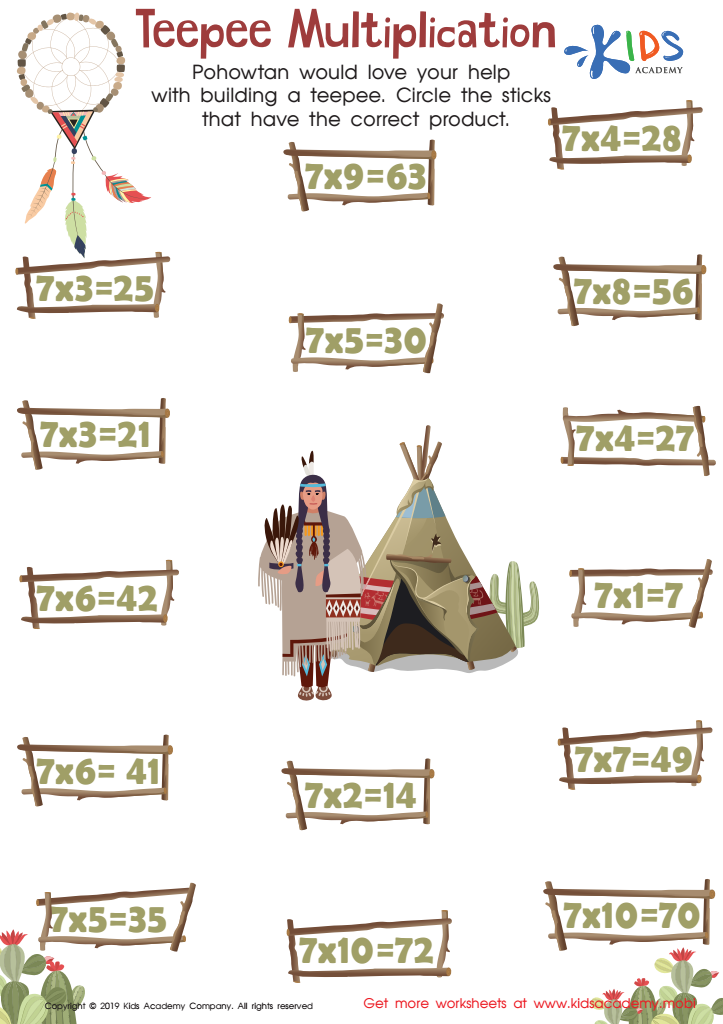
Teepee Multiplication Worksheet
 Assign to My Students
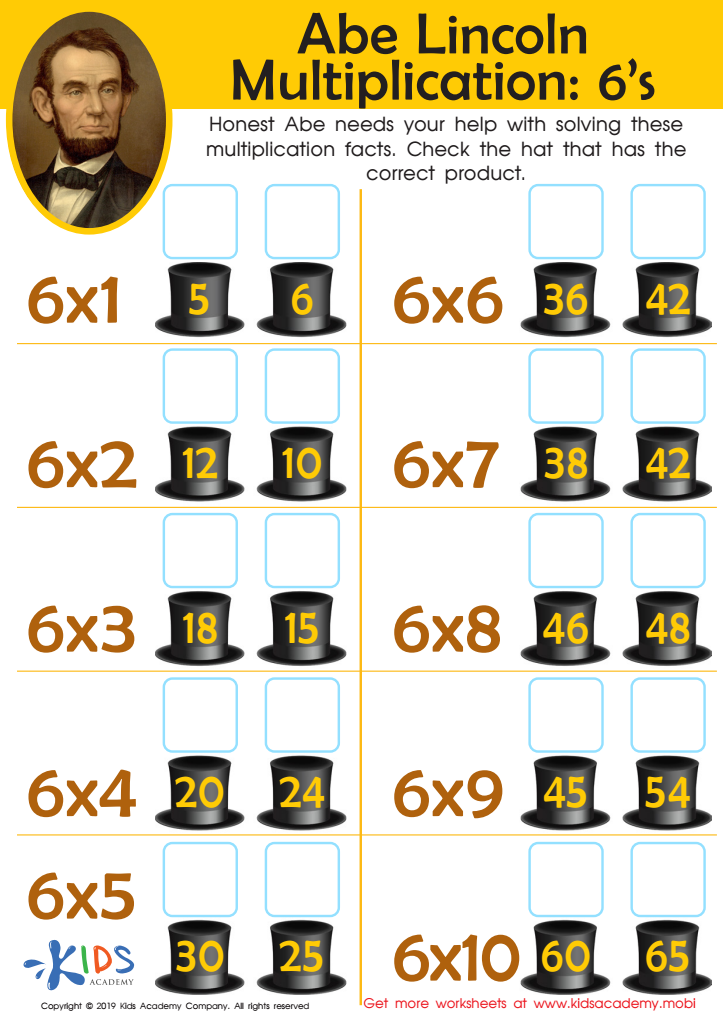
Abe Lincoln Multiplication: 6’s Worksheet
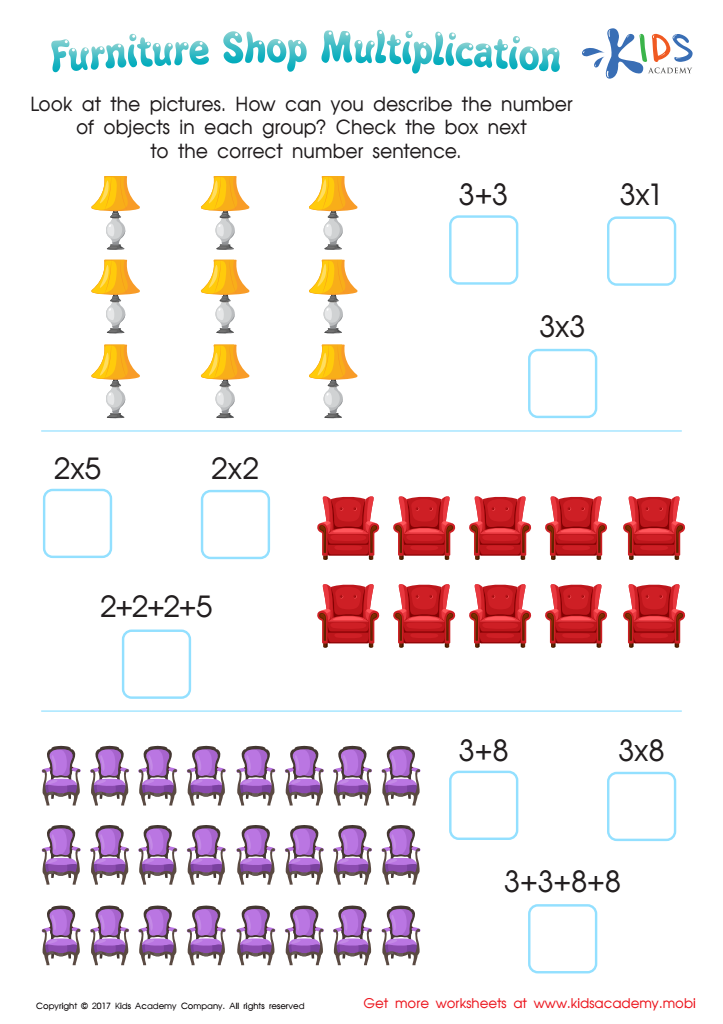
Furniture Shop Worksheet
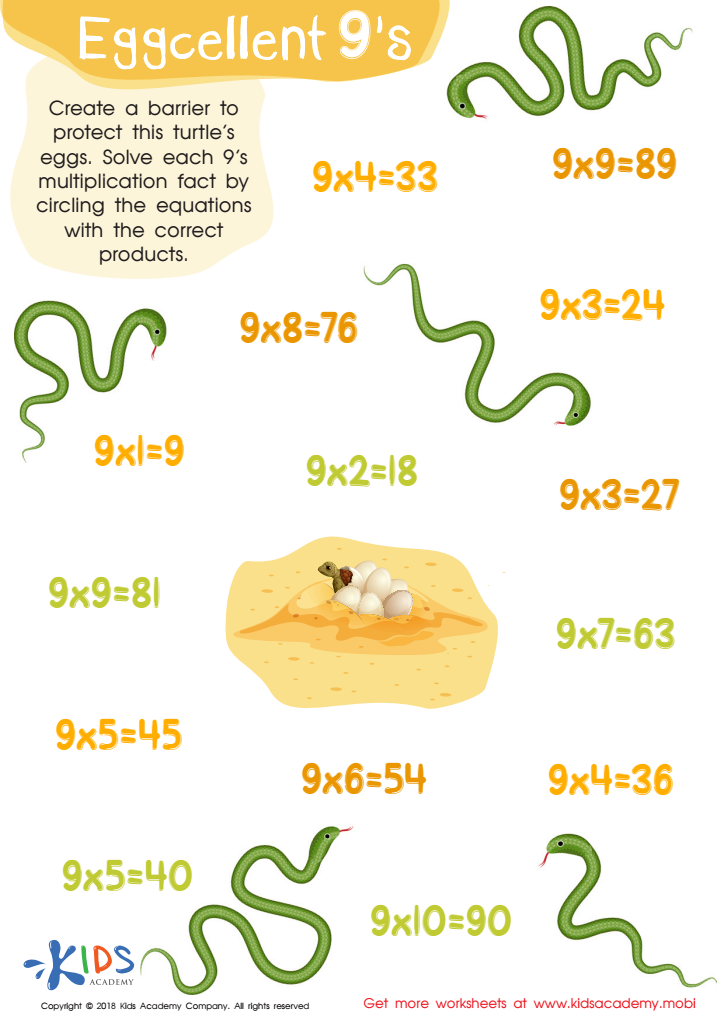
Eggcellent 9’s Worksheet
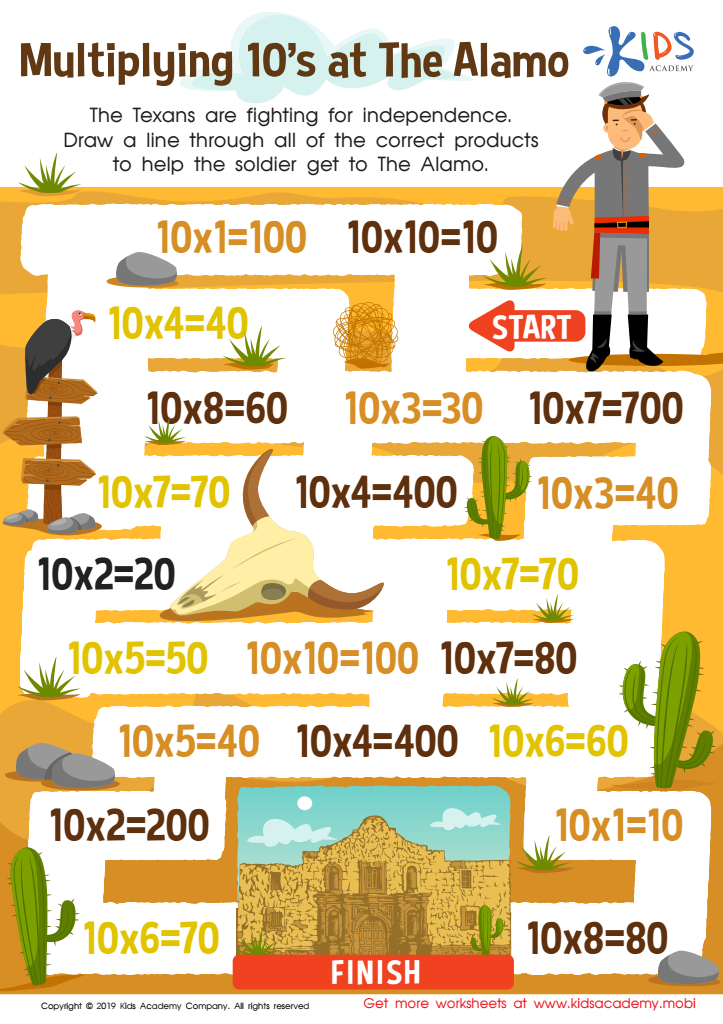
Multiplying 10’s at The Alamo Worksheet
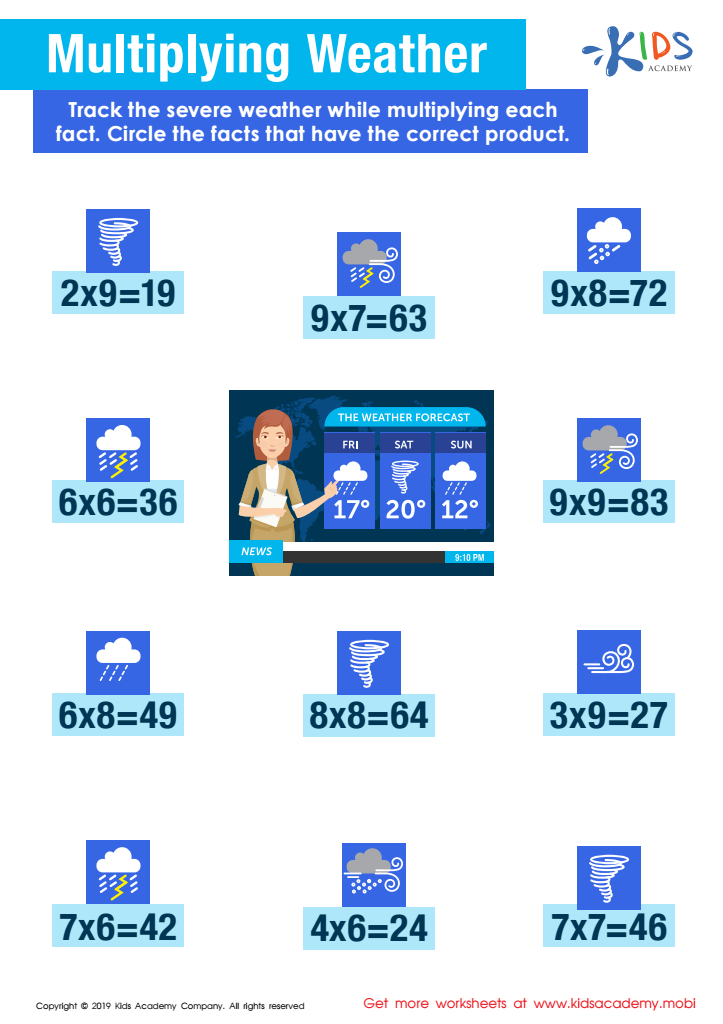
Multiplying Weather Worksheet
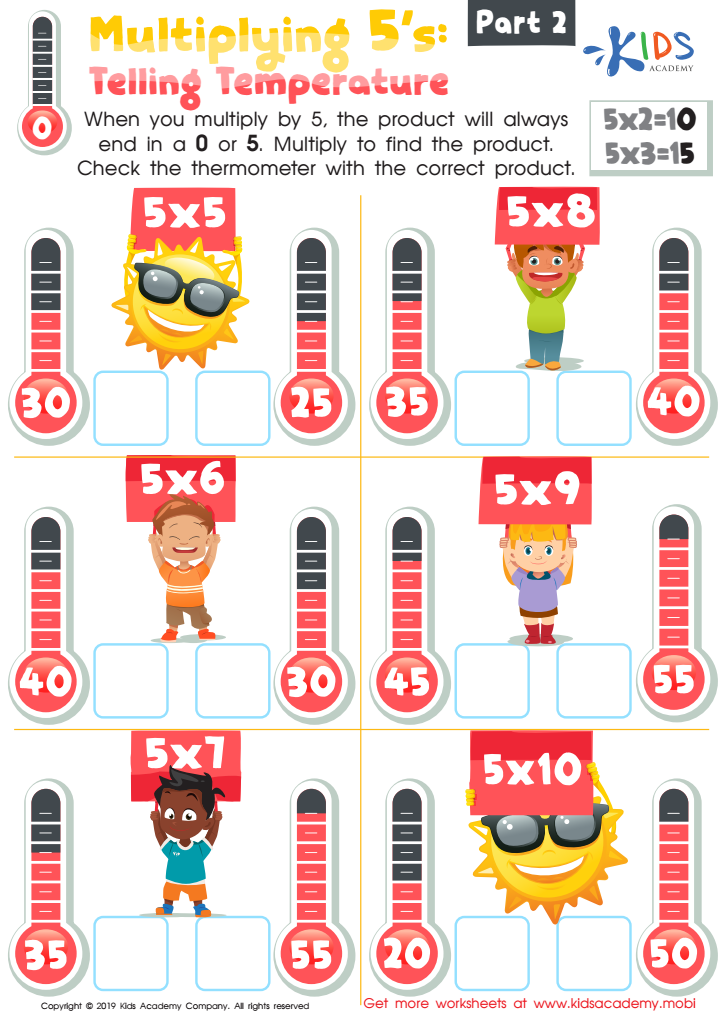
Multiplying 5’s: Telling Temperature Part 2 Worksheet
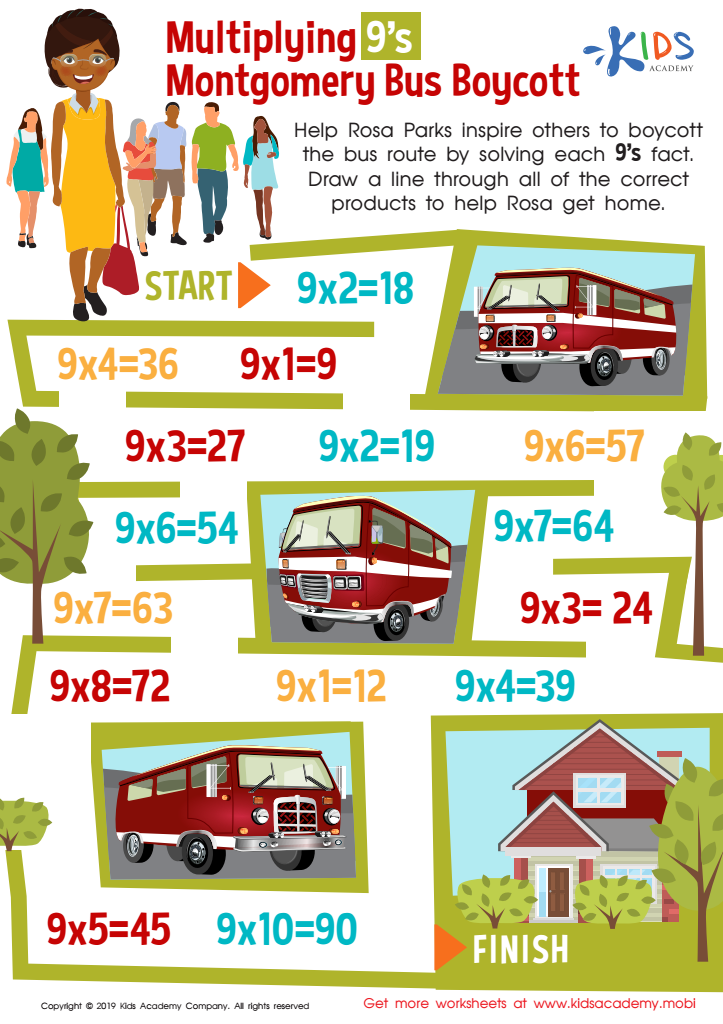
Multiplying 9’s Montgomery Bus Boycott Worksheet
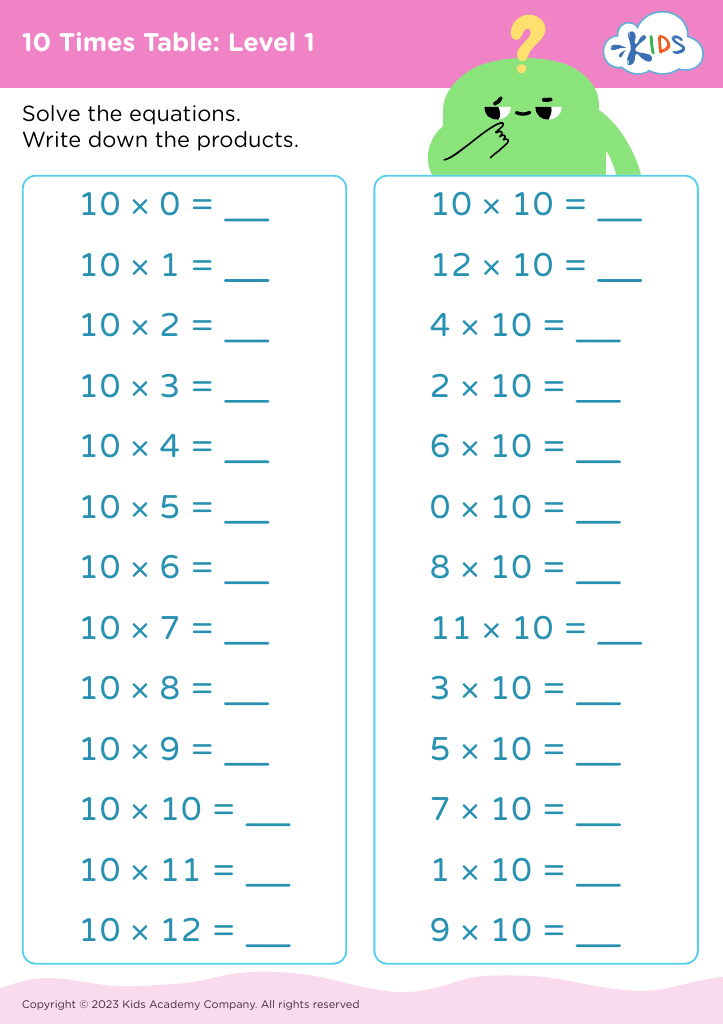
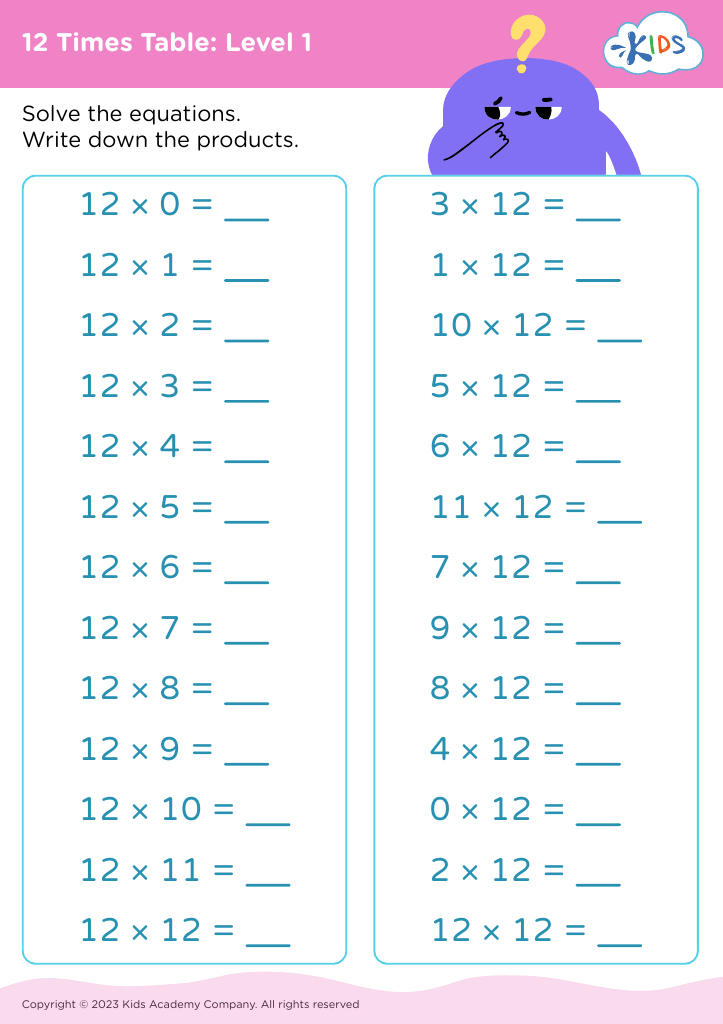
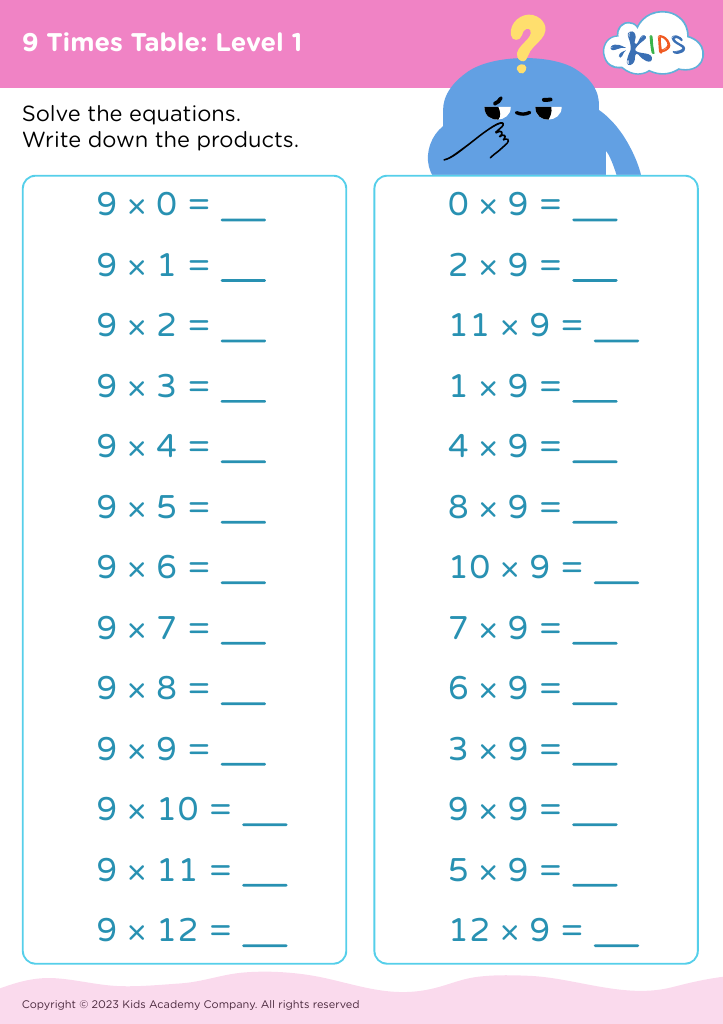







Understanding patterns in multiplication is crucial for children aged 7-8, as it serves as a foundational skill that enhances their overall mathematical proficiency. At this age, students are typically introduced to multiplication concepts and begin exploring the relationships between numbers. Recognizing patterns, such as skip counting (e.g., counting by twos, fives, and tens), helps children to grasp the idea of repeated addition, simplifying the process of learning multiplication tables.
When teachers and parents emphasize pattern recognition, they equip children with problem-solving skills that can be applied to more complex math concepts later on. For instance, noticing that (3 \times 4) is the same as doubling (3 \times 2) reinforces understanding and aids in mastering multiplication facts more readily.
Additionally, a strong grasp of multiplication patterns fosters confidence and encourages a positive attitude towards math. This understanding can lead to greater academic achievement, as children progress through school. Engaging with these patterns can also enhance cognitive development, fostering critical thinking and analytical skills that benefit children across all disciplines. Ultimately, teachers and parents should see the value in fostering pattern recognition in multiplication to build a solid mathematical foundation for lifelong learning.








