Counting skills Subtraction Worksheets for Ages 7-8
6 filtered results
-
From - To
Enhance your child's counting and subtraction skills with our comprehensive Counting Skills Subtraction Worksheets, designed specifically for ages 7-8. These worksheets provide engaging, interactive exercises that help young learners grasp the fundamentals of subtraction through counting. Each activity promotes critical thinking and improves number sense, ensuring your child builds a strong mathematical foundation. With colorful visuals and fun scenarios, your child will enjoy practicing their subtraction skills while developing confidence in their abilities. Ideal for both classroom use and home learning, our worksheets make mastering subtraction enjoyable and effective. Start your child's math journey today!
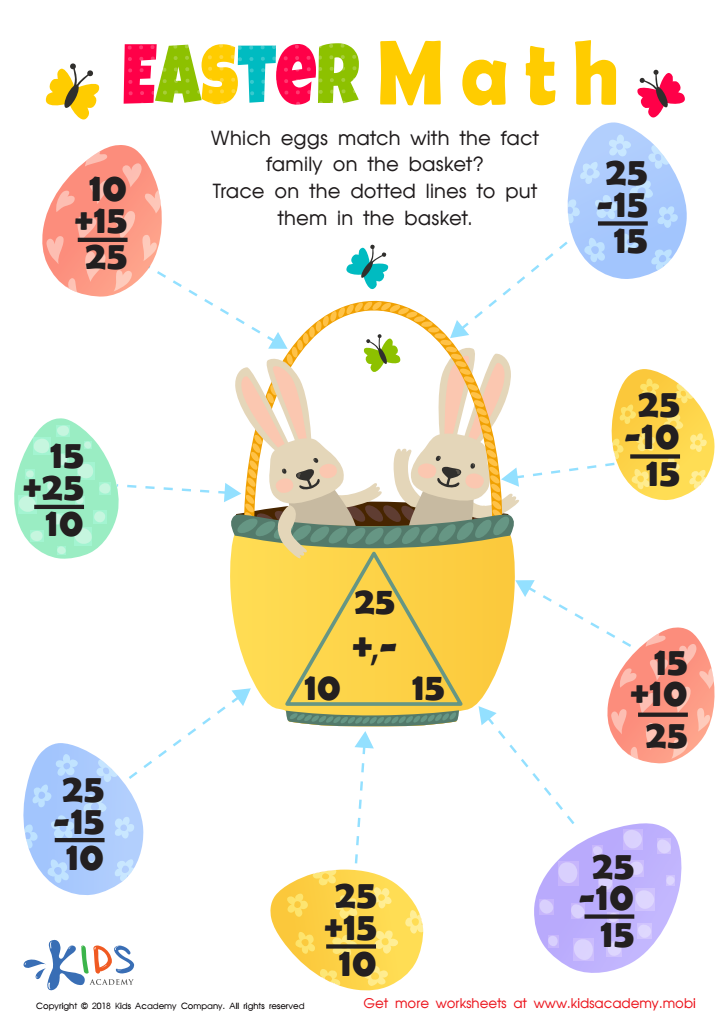
Fact Families: Easter Math Worksheet
 Assign to My Students
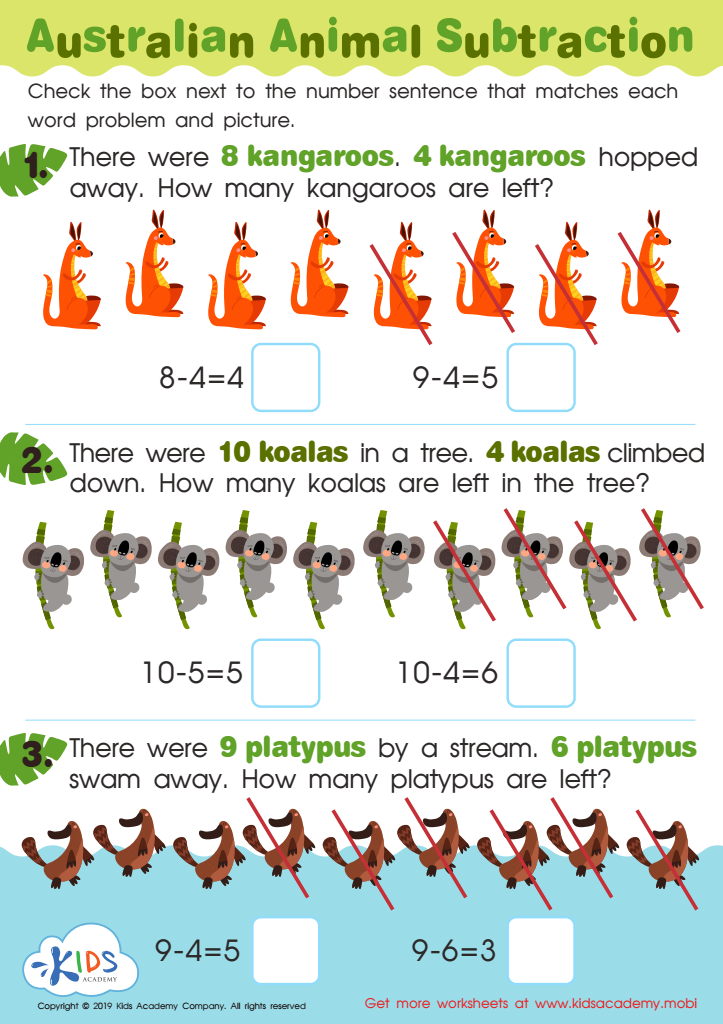
Australian Animal Subtraction Worksheet
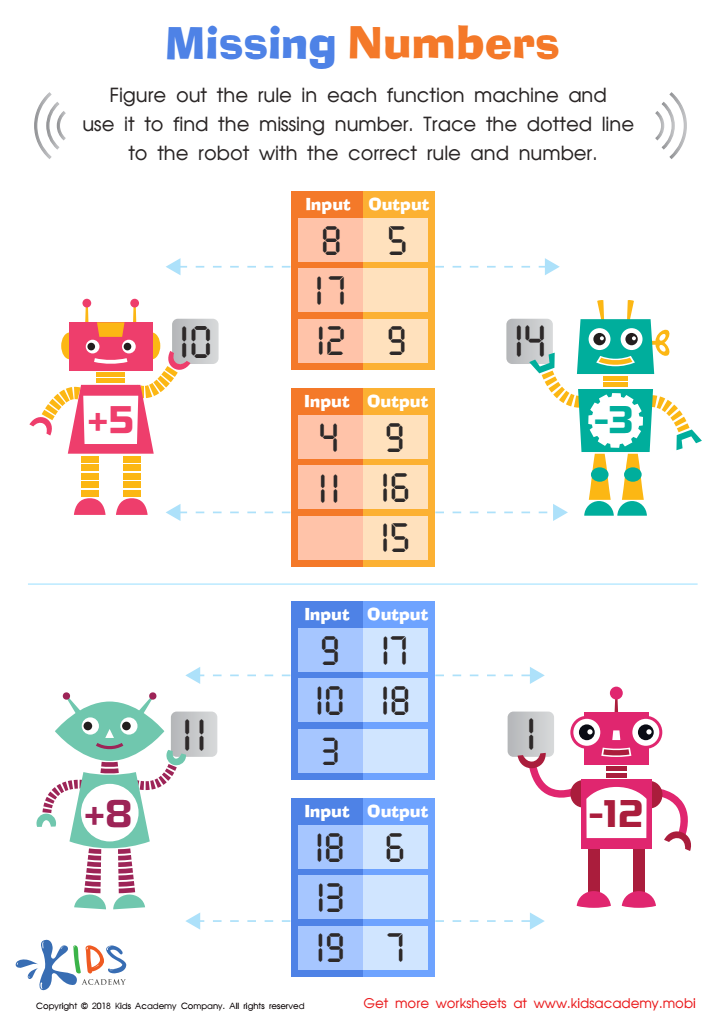
Missing Numbers Worksheet
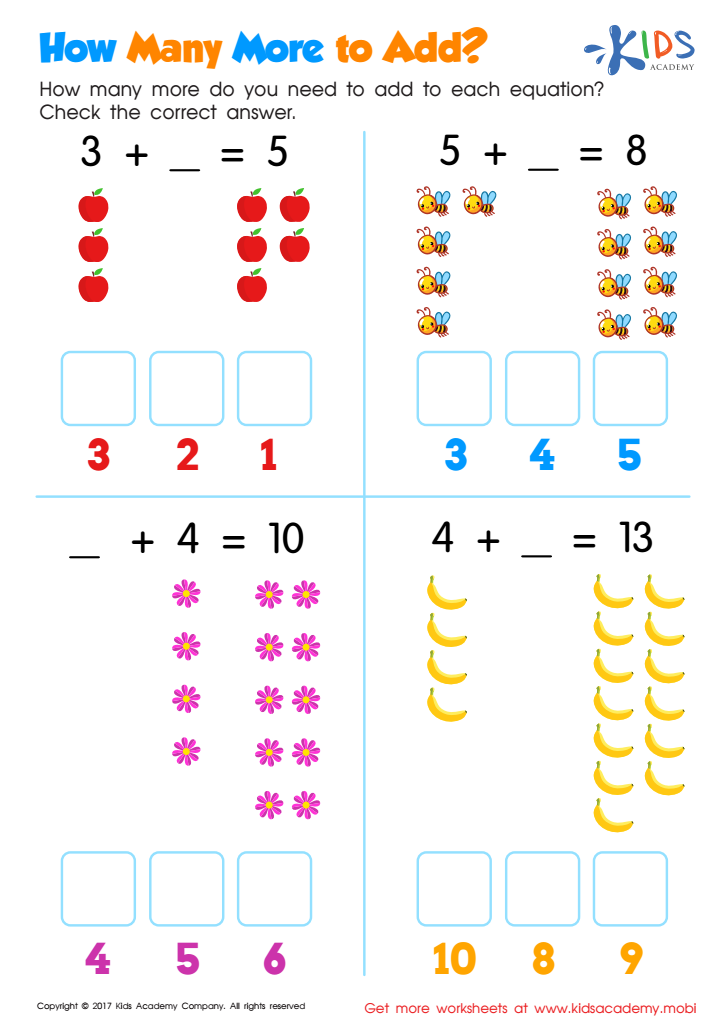
How Many More to Add Worksheet
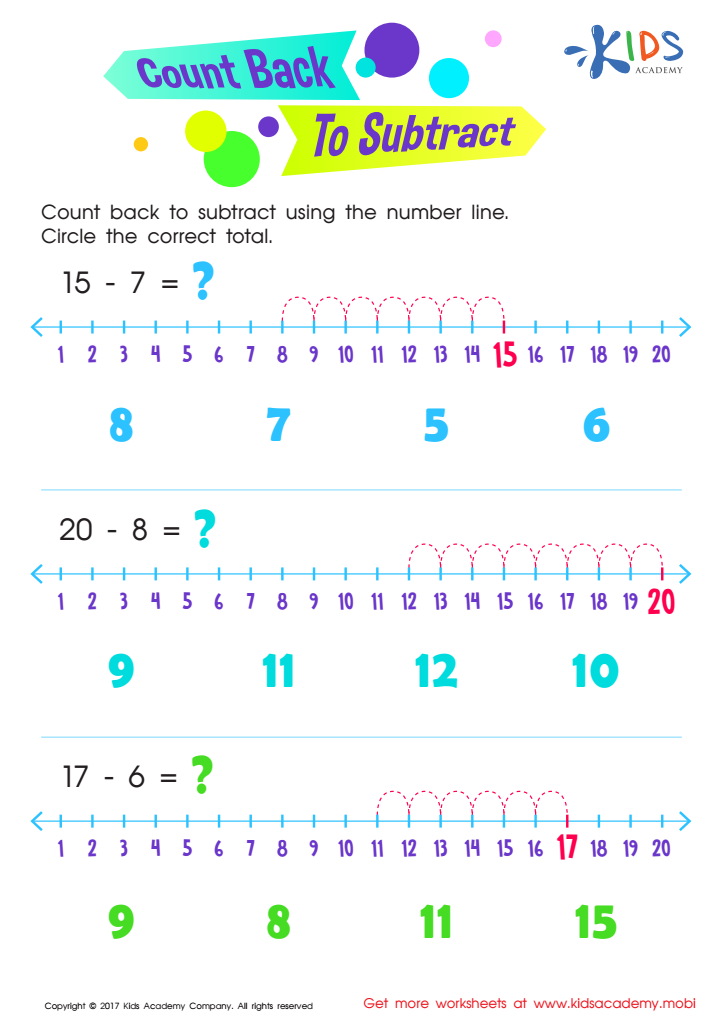
Count Back to Subtract Substraction Worksheet
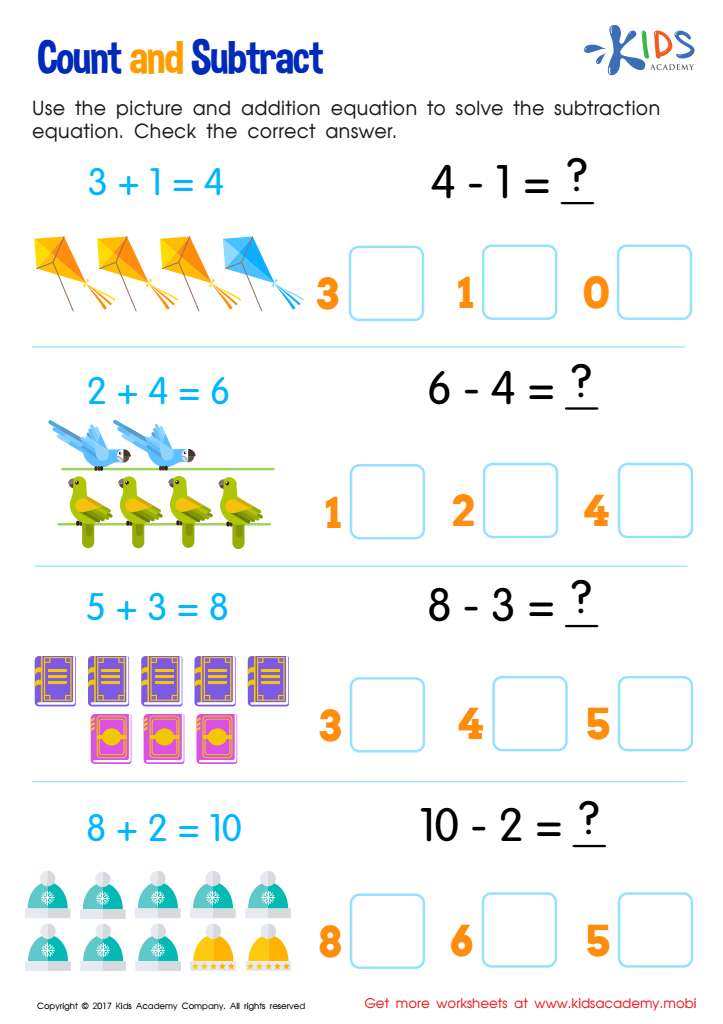
Count and Subtract Worksheet








Counting skills and subtraction are fundamental components of early mathematics education for children aged 7 to 8. At this age, students are developing their cognitive abilities, and fostering a strong foundation in these skills is crucial for their overall mathematical understanding.
Firstly, counting is essential for helping children grasp the concept of numbers and value, forming the basis of more complex operations. A solid understanding of counting aids in developing estimation and number sense, which are vital as they progress to higher-level math concepts.
Subtraction, in particular, develops logical thinking and problem-solving skills. It not only introduces the concept of taking away but also teaches children about relationships between numbers, making connections to addition, and reinforcing their understanding of the number line. These insights serve as building blocks for future mathematical concepts, including multiplication and division.
Moreover, mastering subtraction boosts children's confidence and encourages positive attitudes towards math. When parents and teachers actively engage in nurturing these skills, they provide support that can lead to academic success. Therefore, prioritizing counting and subtraction during this critical developmental phase not only enhances children's immediate learning but also prepares them for lifelong mathematical competence.








