Cognitive Development Word Problems Worksheets for Ages 7-8
4 filtered results
-
From - To
Unlock your child's cognitive potential with our engaging Cognitive Development Word Problems Worksheets designed for ages 7-8. These thoughtfully crafted resources focus on enhancing critical thinking and problem-solving skills through fun and relatable word problems. Children will explore various scenarios that challenge their understanding of math concepts while developing reasoning abilities. Our worksheets promote intellectual growth, encouraging students to analyze information and draw conclusions. Perfect for homeschooling or classroom use, these activities are a valuable addition to your educational toolkit. Foster a love for learning and build confidence in young mathematicians with our comprehensive selection of thoughtfully designed word problems today!
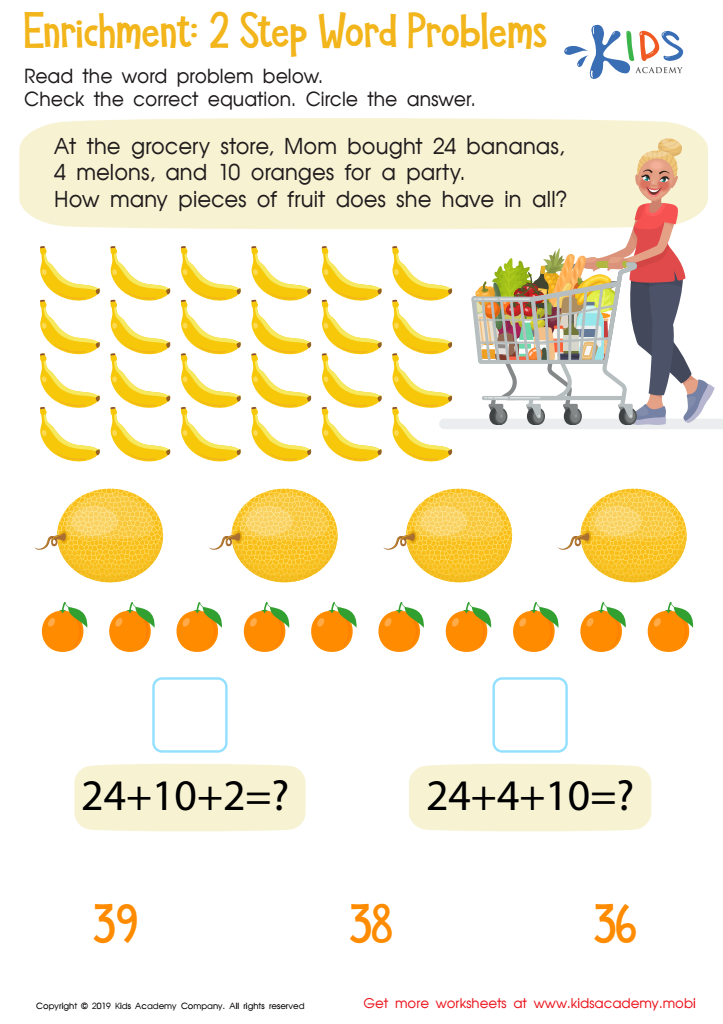
Enrichment -2 Step Word Problems Worksheet
 Assign to My Students
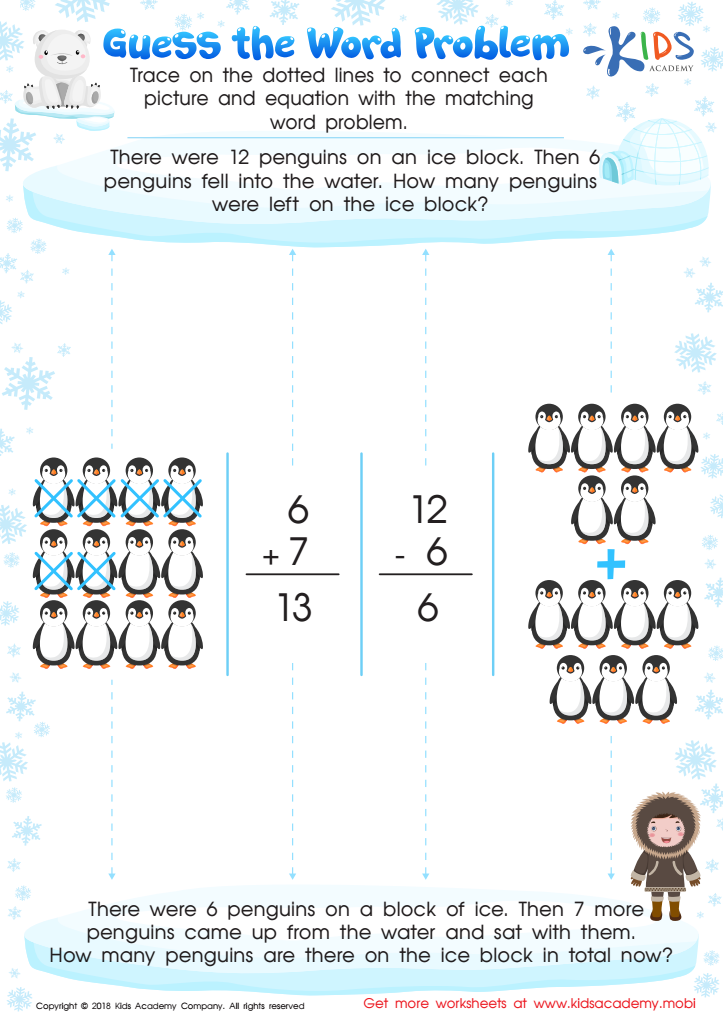
Guess the Word Problem Worksheet
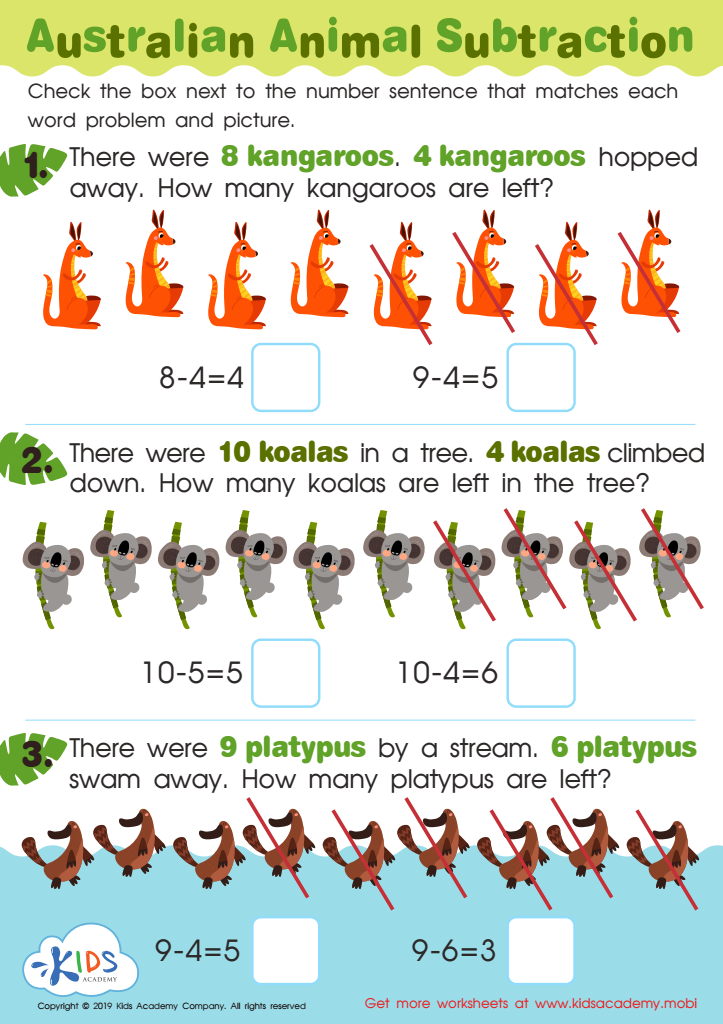
Australian Animal Subtraction Worksheet
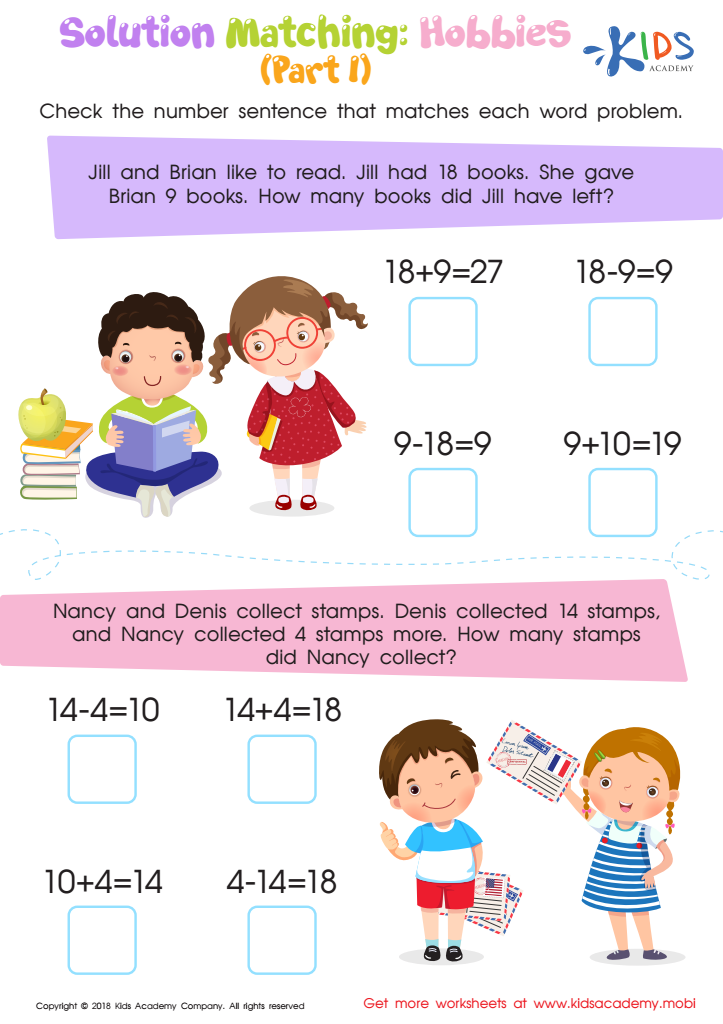
Solution Matching: Hobbies. Part 1 Worksheet








Cognitive development during ages 7-8 is crucial as children start to think logically, solve problems, and understand complex concepts. Word problems play a vital role in this developmental stage, fostering analytical thinking and comprehension skills. When children engage with word problems, they learn to interpret and break down information, a practice that builds their critical thinking abilities.
For parents and teachers, encouraging mastery of word problems helps children apply mathematical concepts in real-life scenarios, reinforcing the practicality of their education. These problems can enhance vocabulary and language skills as children learn to articulate their thought processes and explain their reasoning.
Moreover, working on word problems can improve children's confidence in their problem-solving abilities. As they experience success and learn from mistakes, they develop resilience and a growth mindset, essential traits for lifelong learning. By prioritizing cognitive development through word problems, parents and teachers can equip children with the skills necessary for academic success and essential real-world applications. Ultimately, this investment in cognitive development supports their overall growth, paving the way for more complex reasoning skills as they advance in their education.








