Vocabulary expansion Building Vocabulary Worksheets for Ages 7-8 - Page 2
46 filtered results
-
From - To
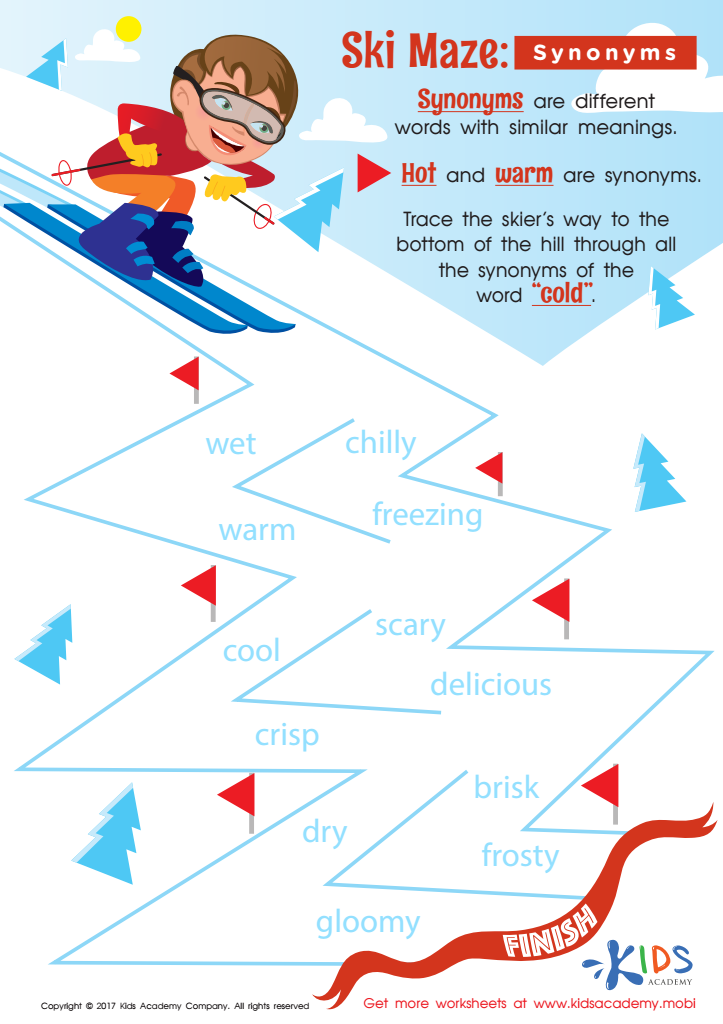
Free Printable Synonym Worksheet
 Assign to My Students











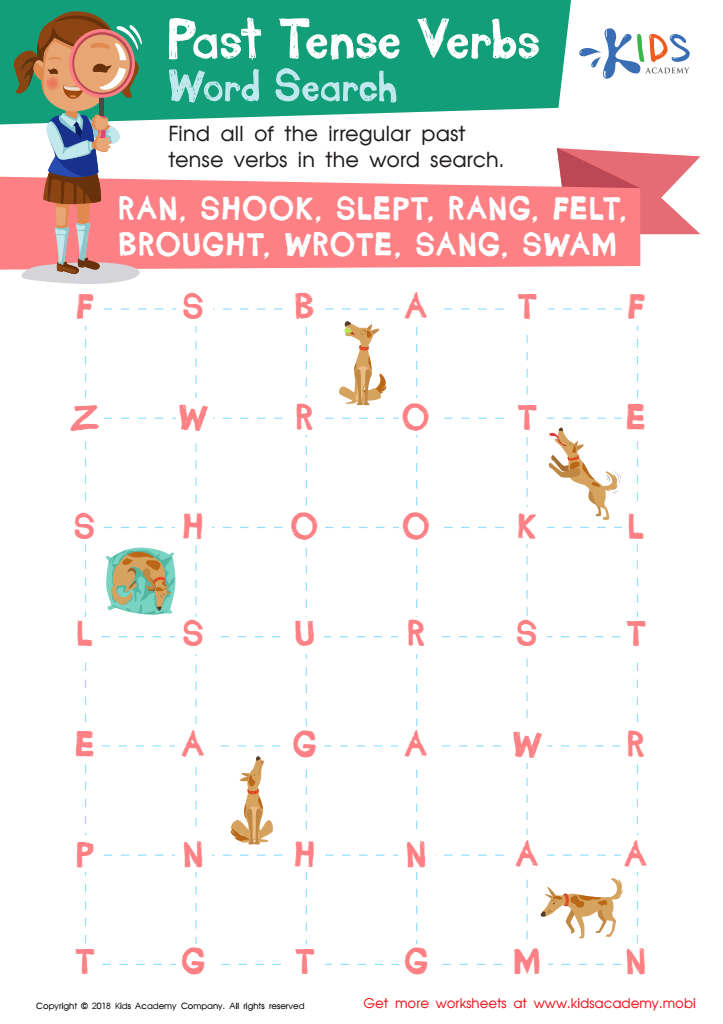
Past Tense Verbs Word Search Worksheet
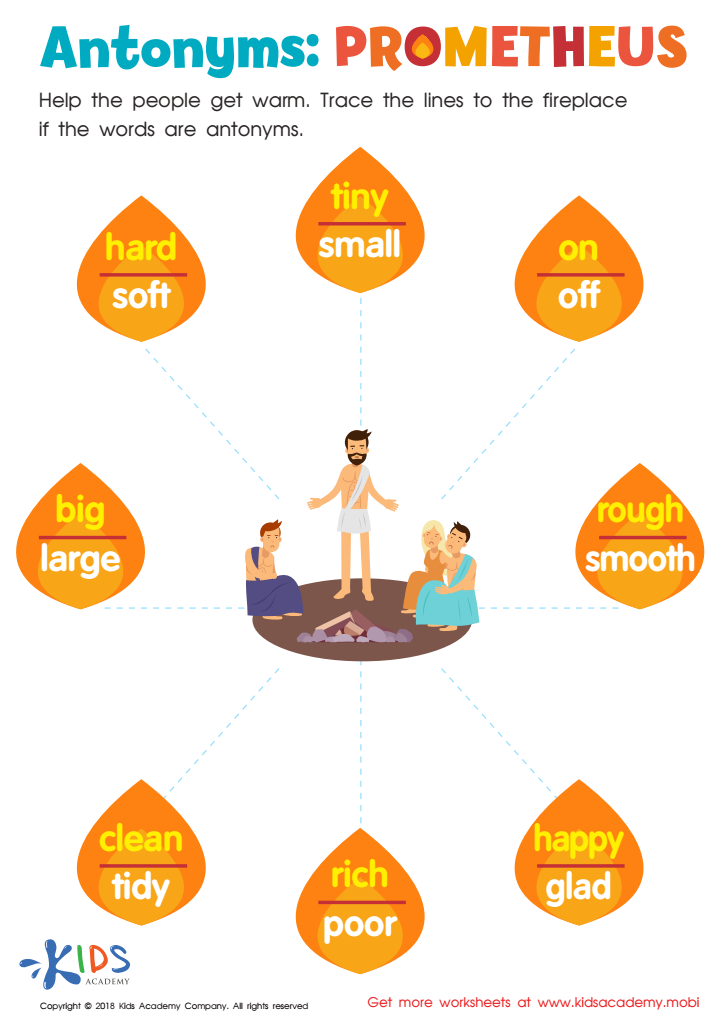
Antonyms: Prometheus Worksheet
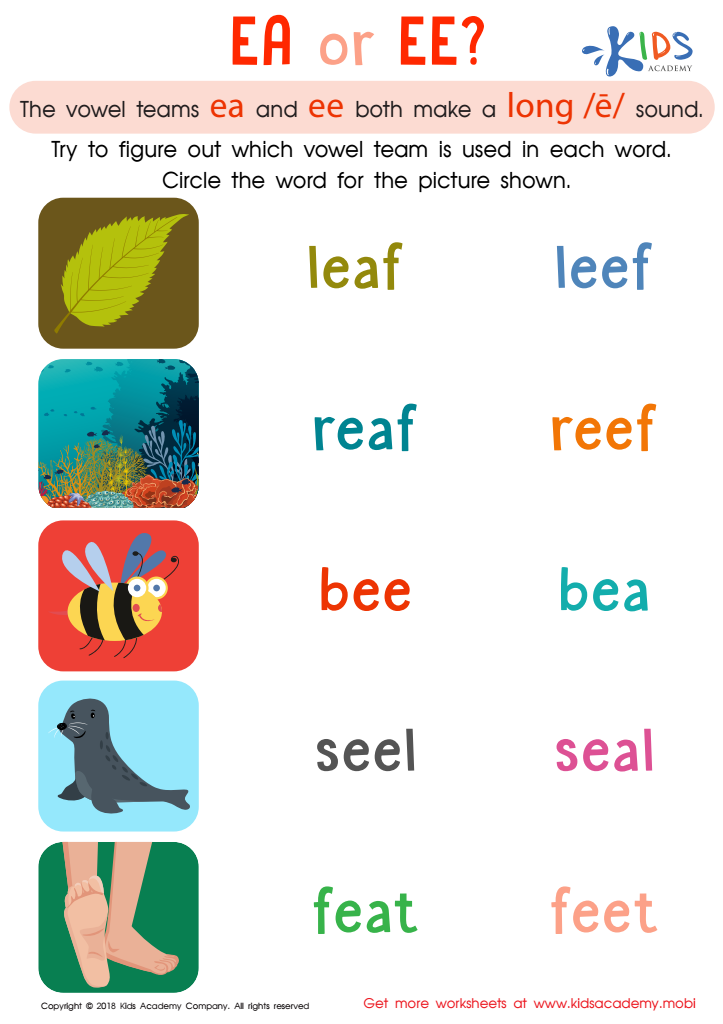
Reading: EA and EE Worksheet
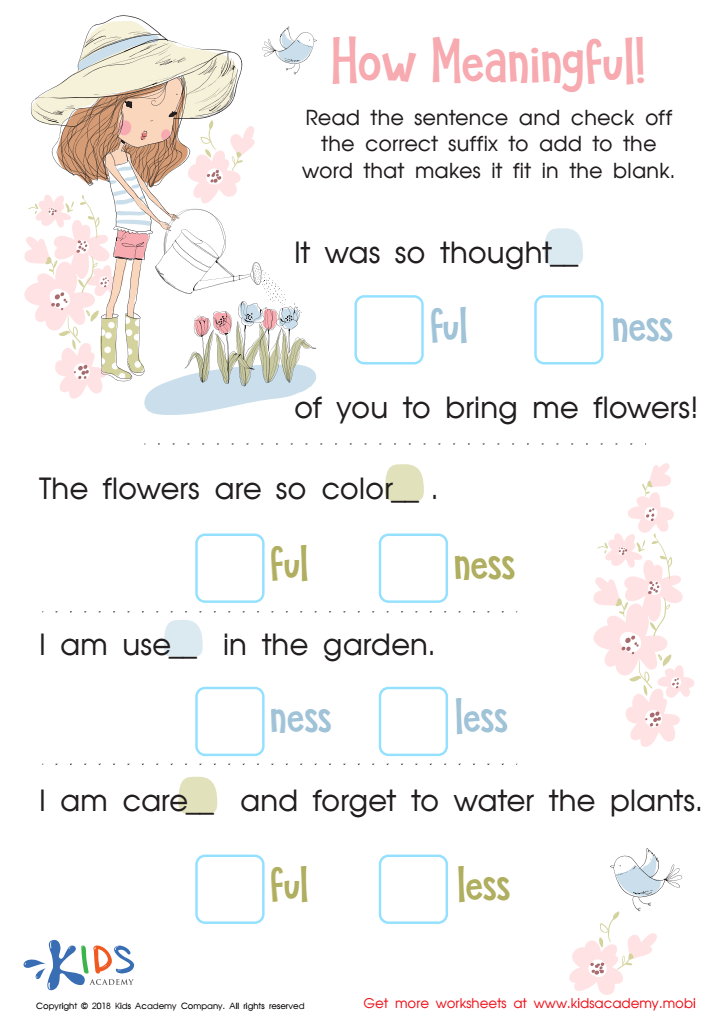
How Meaningful! Worksheet
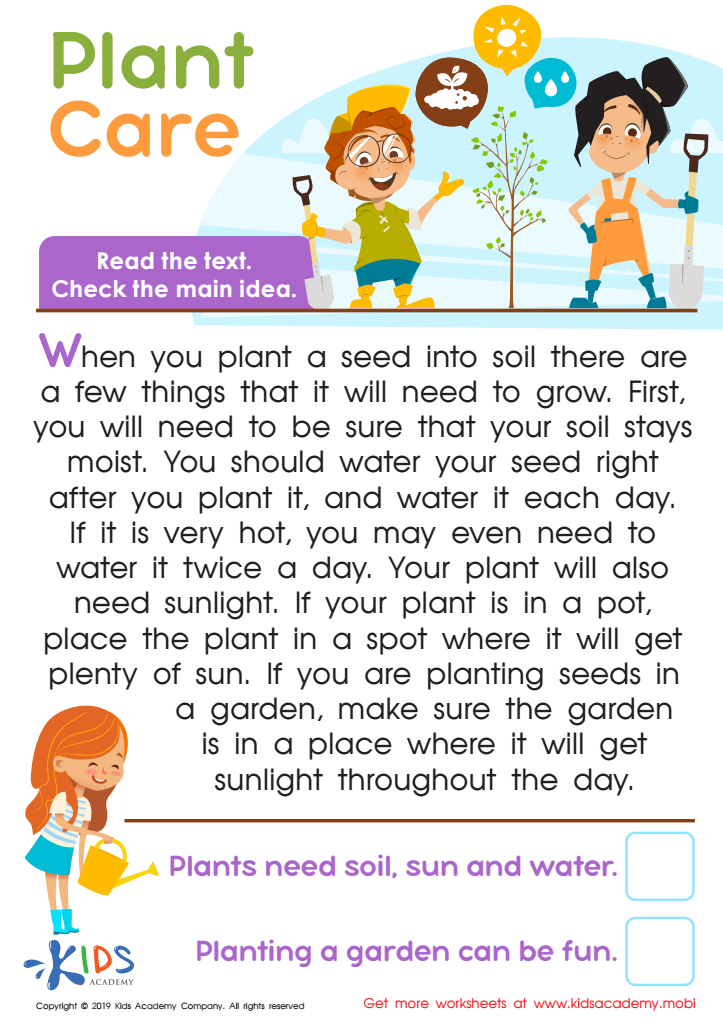
Plant Care Worksheet
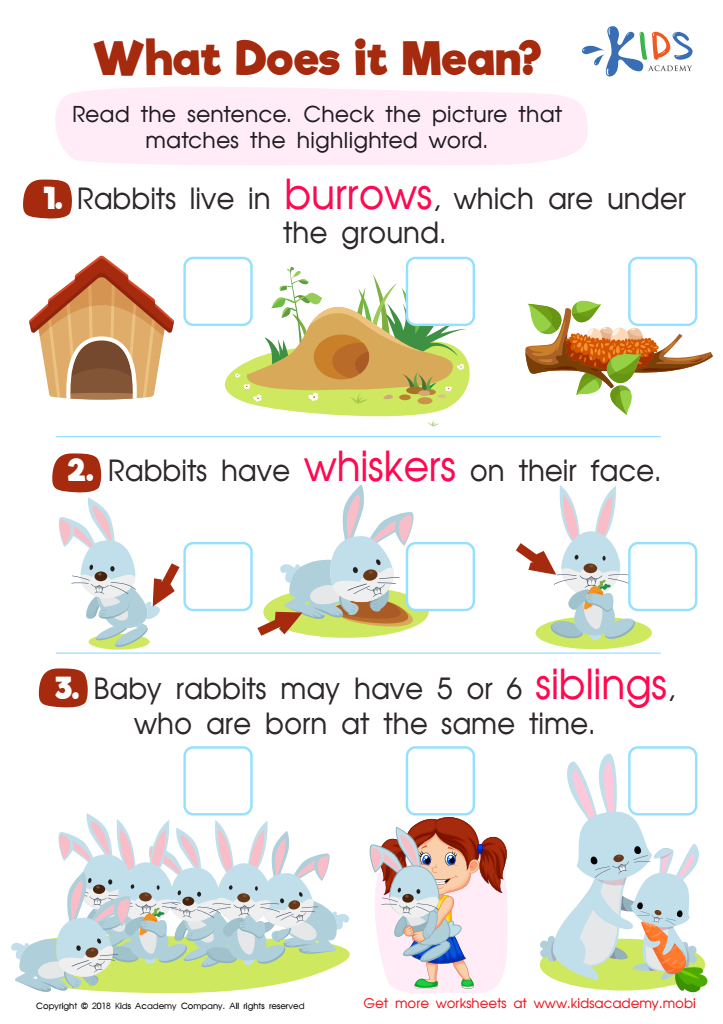
What Does It Mean? Worksheet
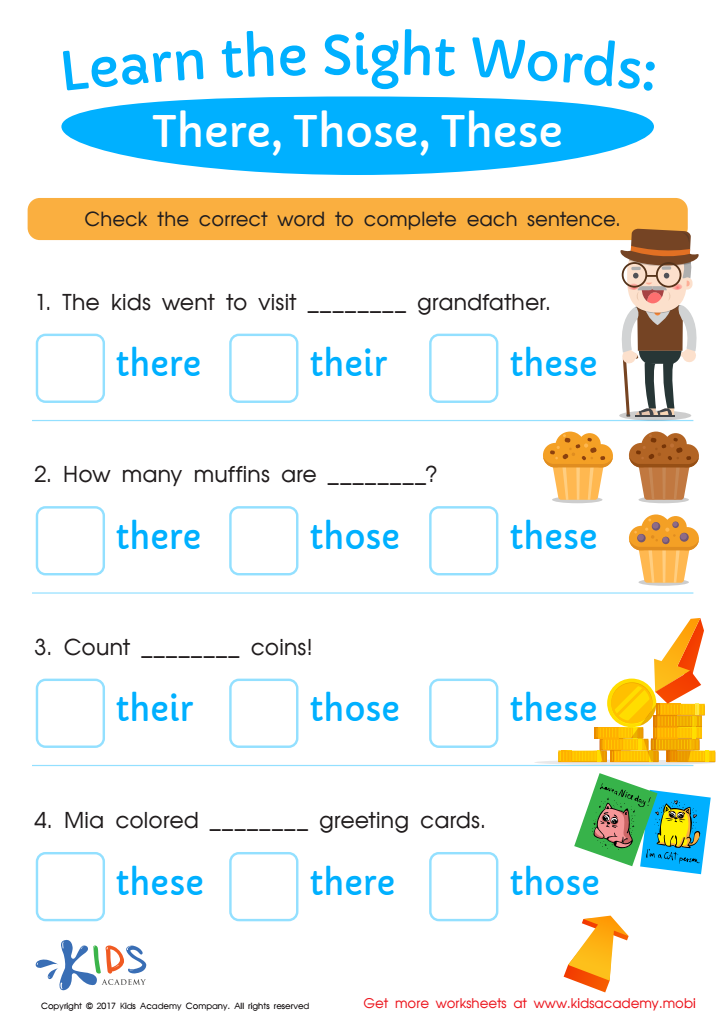
There, Those and These Sight Words Worksheet
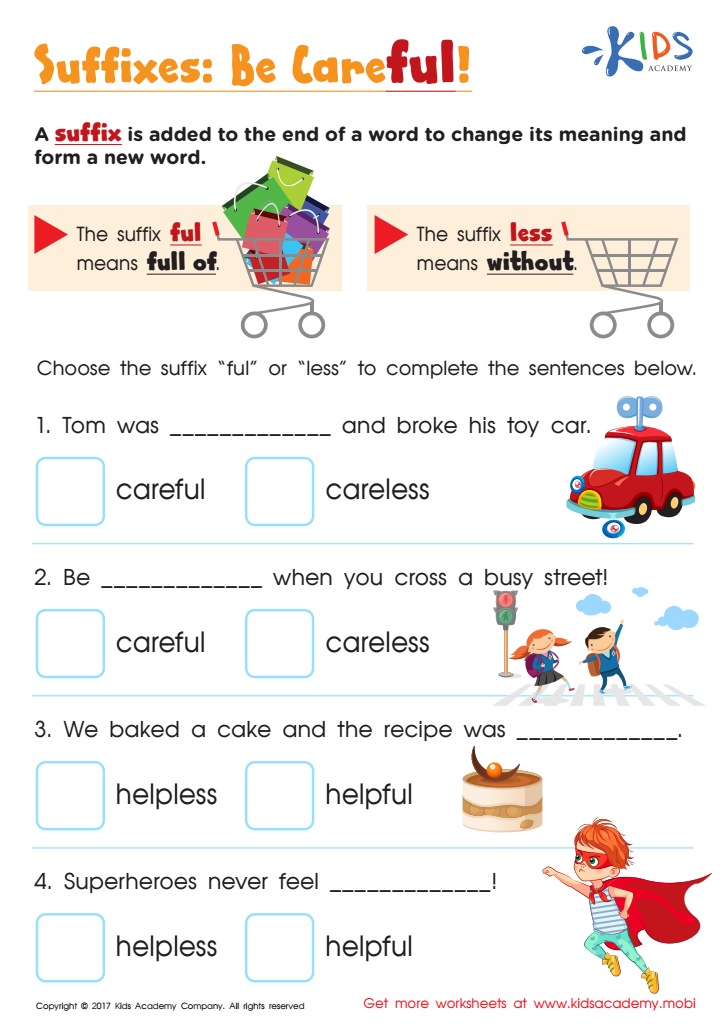
Suffixes Ful and Less Worksheet
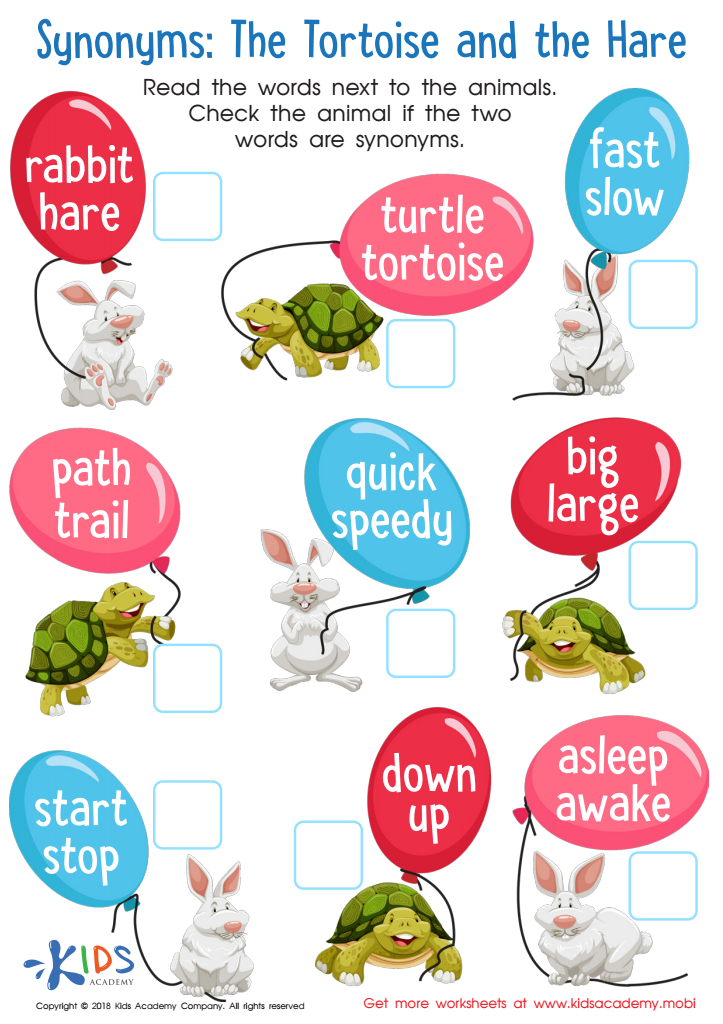
Synonyms: The Tortoise and Hare Worksheet
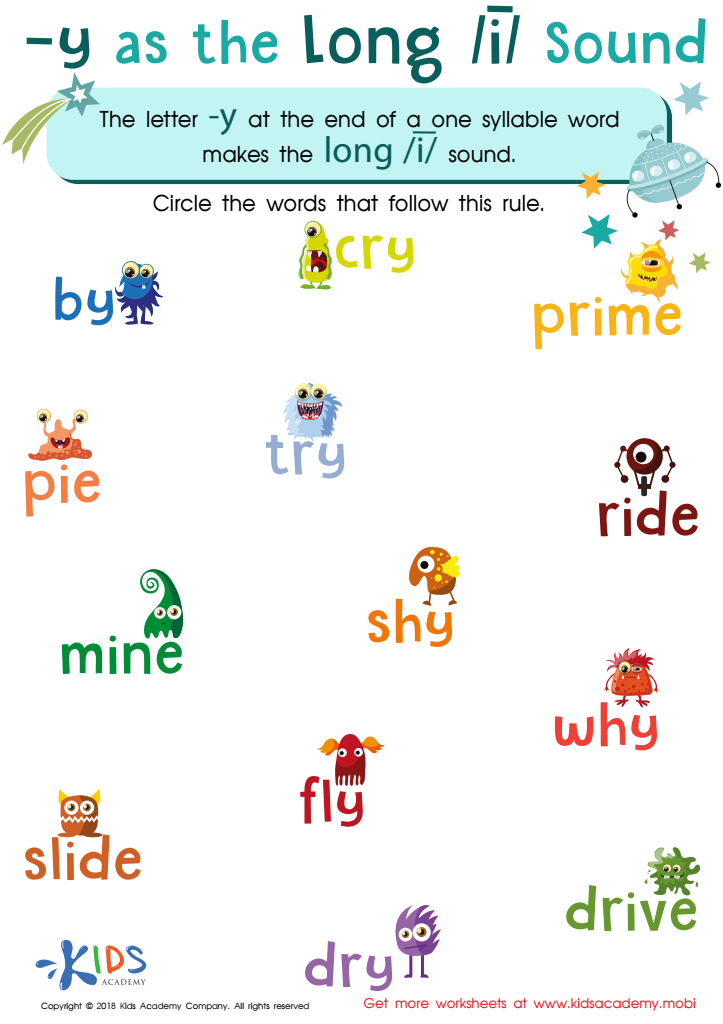
Reading: Y as Long I Worksheet
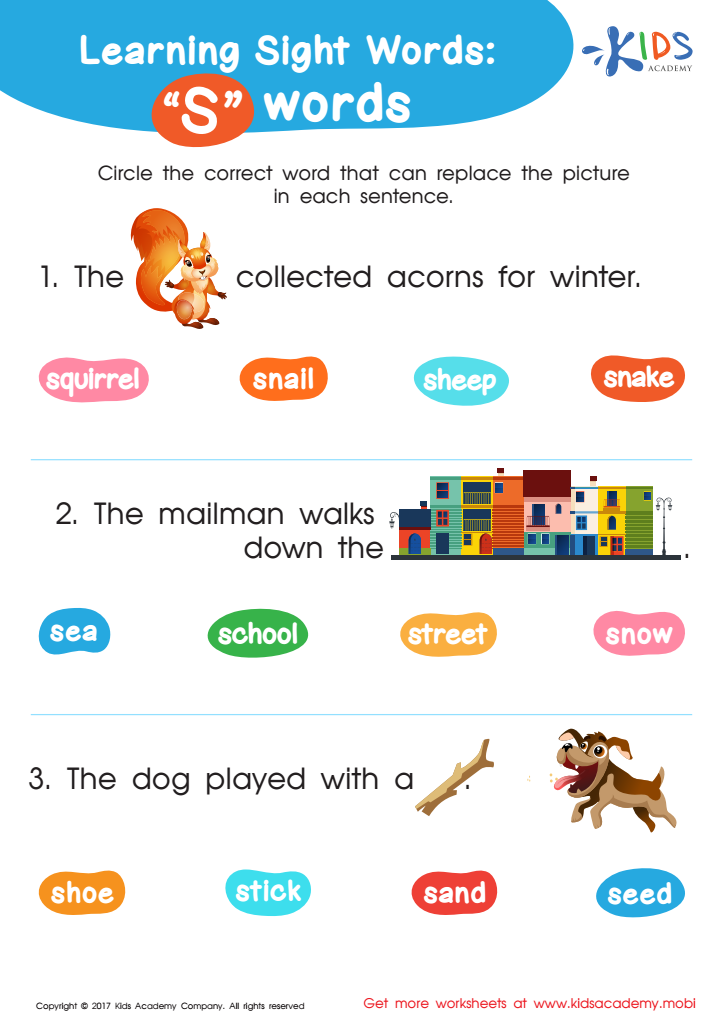
S Words Sight Words Worksheet
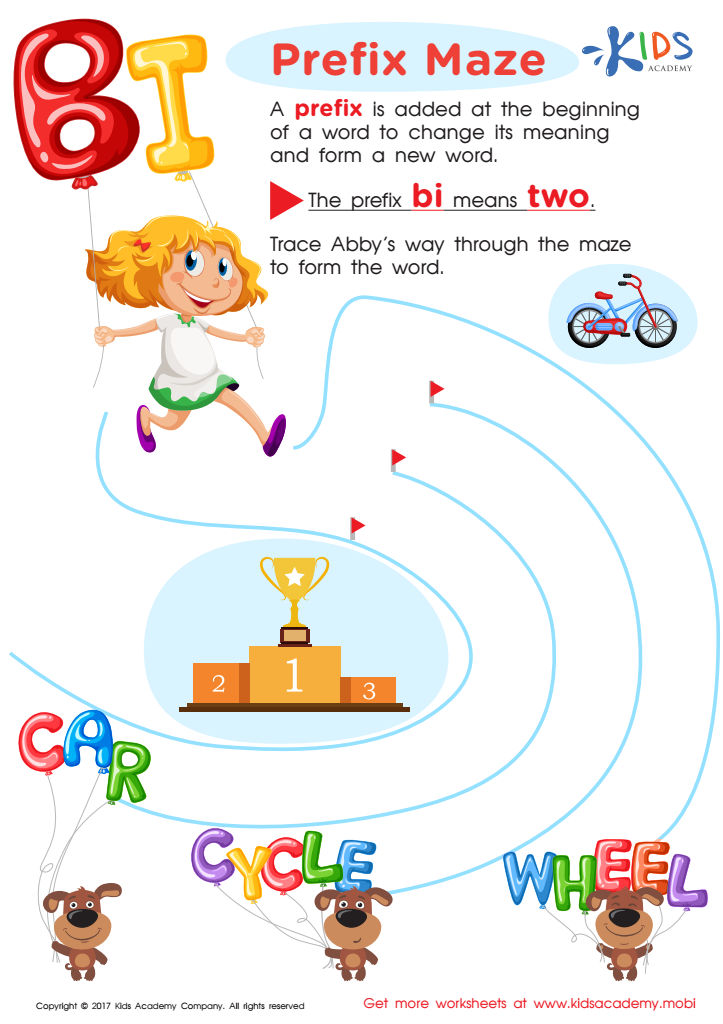
Prefix Bi Words Worksheet
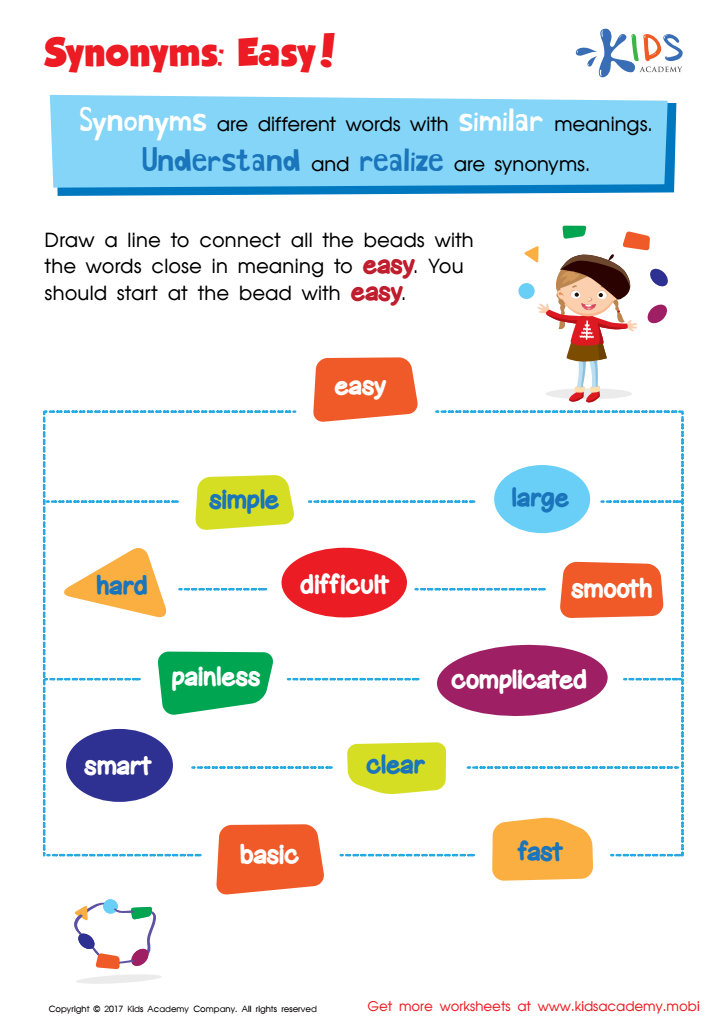
Free Synonym Worksheet
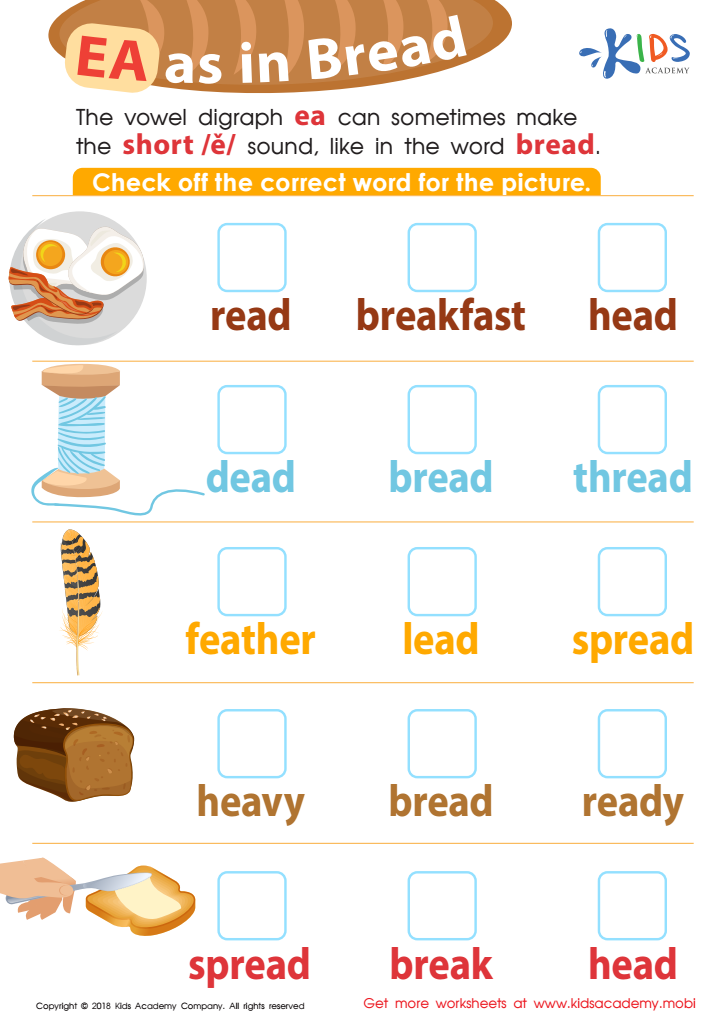
Reading: EA as in Bread Worksheet
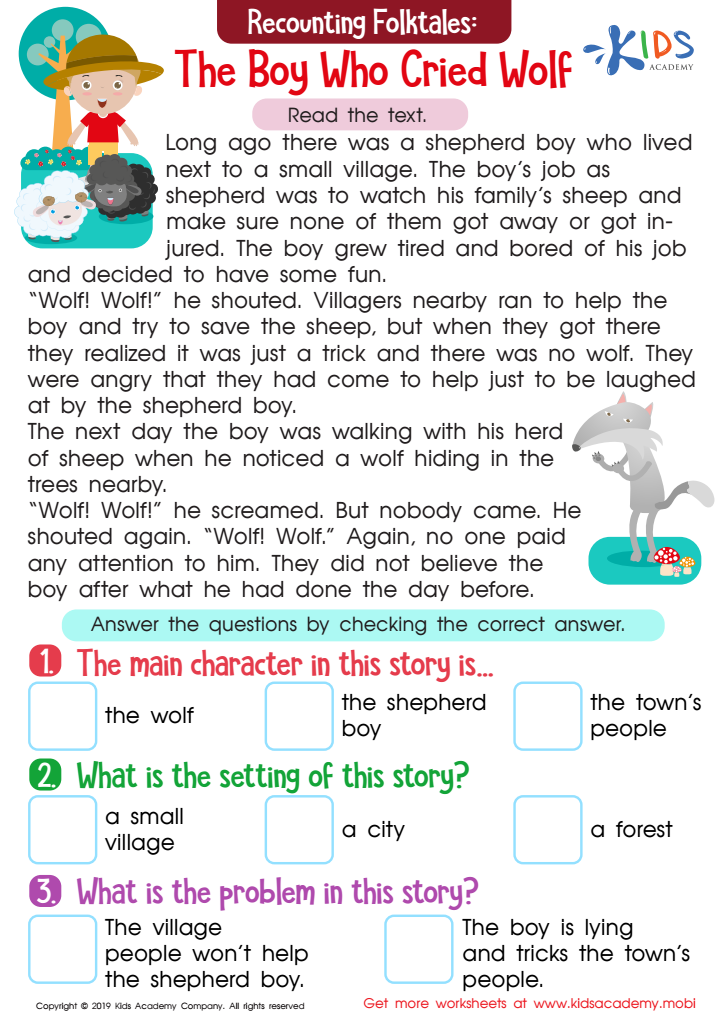
The Boy Who Cried Wolf Part 1 Worksheet
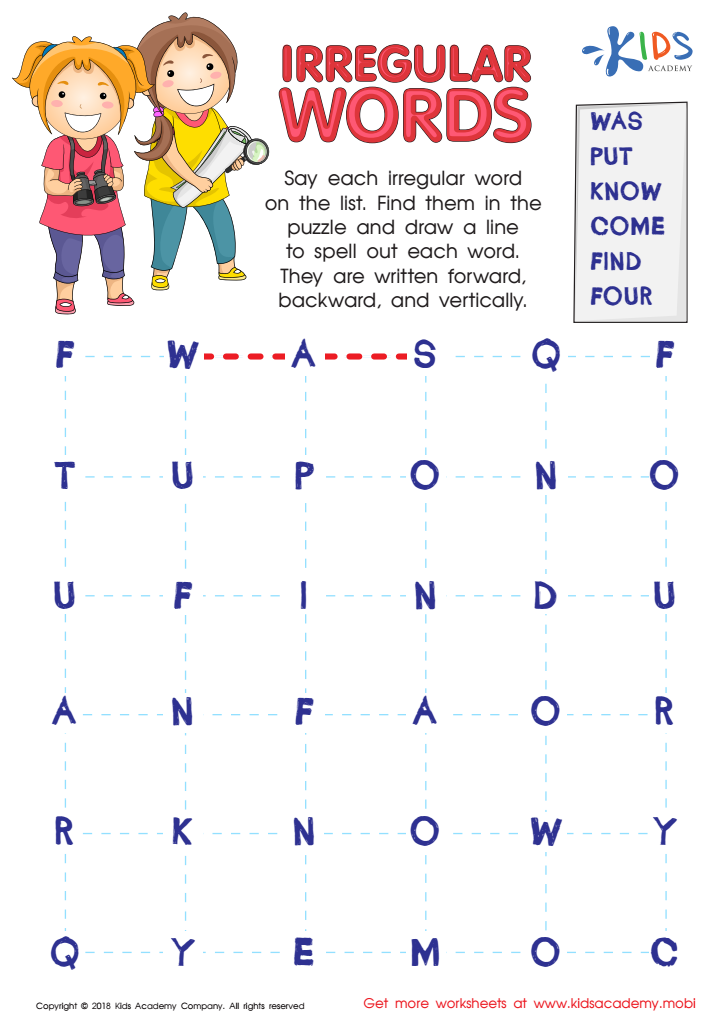
Irregular Words Worksheet
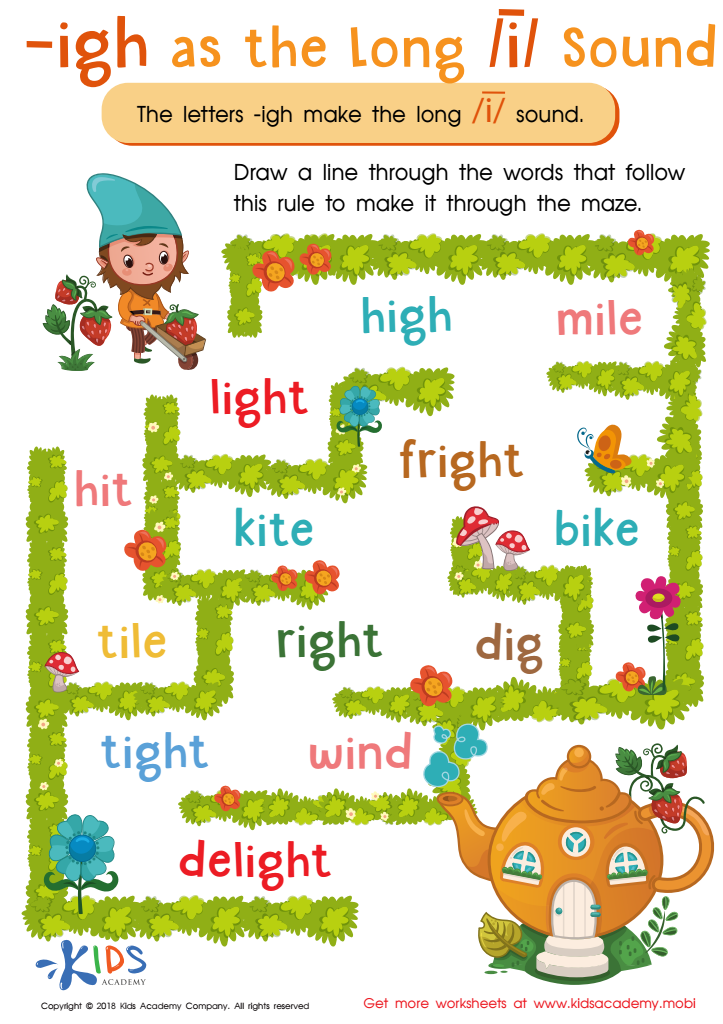
Reading: IGH as Long I Worksheet
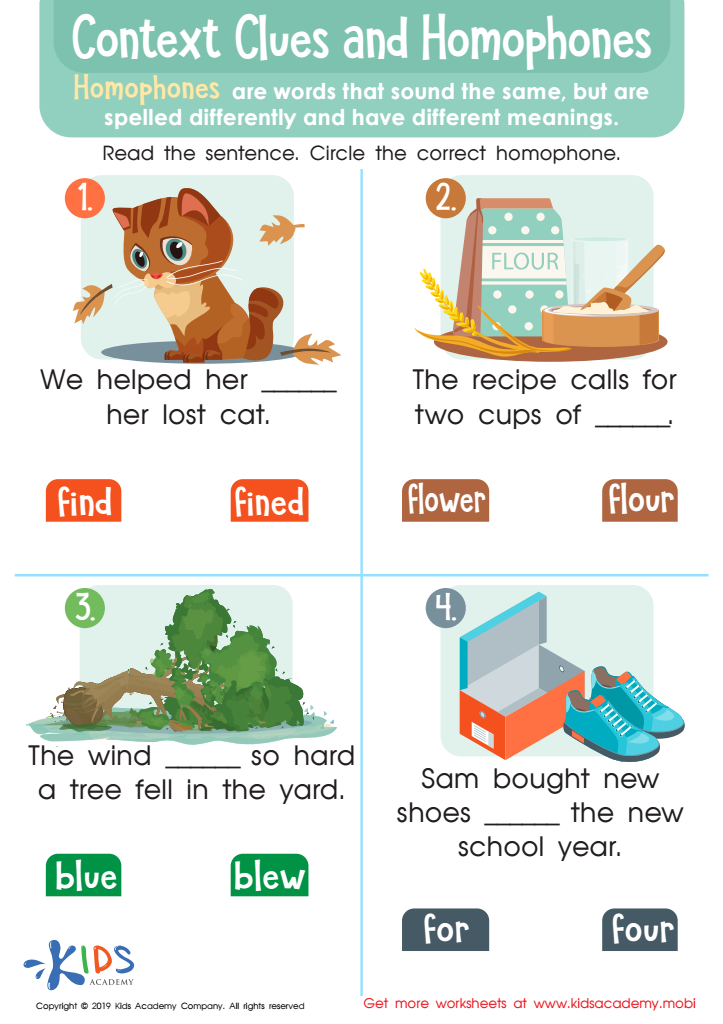
Context Clues and Homophones Worksheet
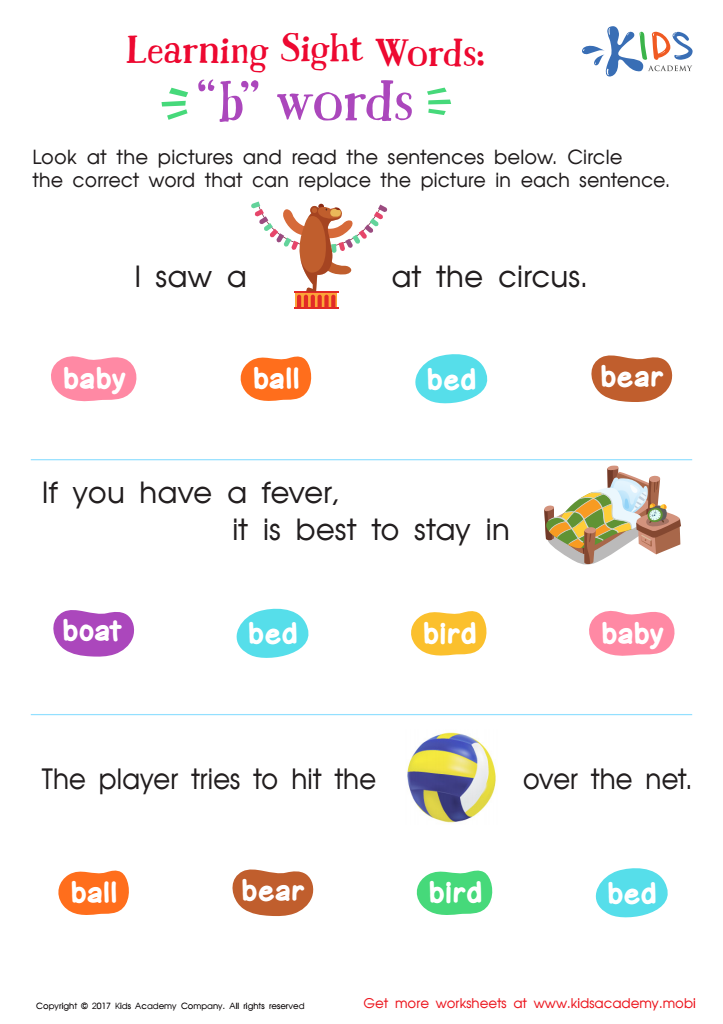
"B" Words Printable Sight Words Worksheet
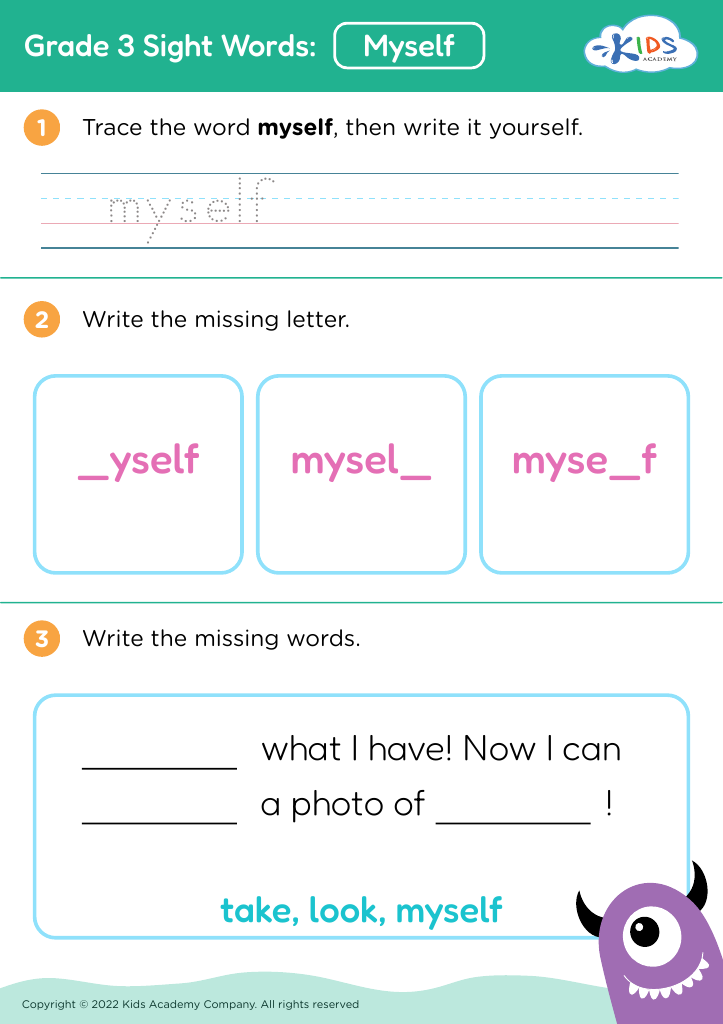
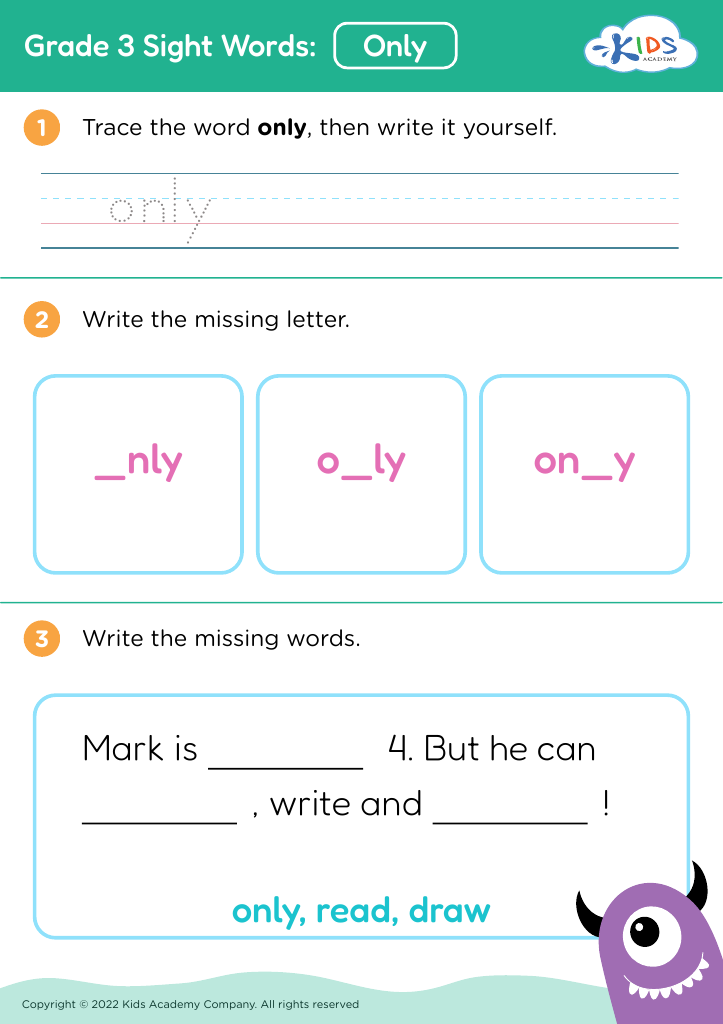








Building vocabulary for children ages 7-8 is crucial for their overall development and academic success. At this stage, children's language skills rapidly evolve, setting the foundation for more complex learning later on. A rich vocabulary enhances reading comprehension, enabling children to make connections between words, understand context, and grasp more challenging texts.
Moreover, a strong vocabulary supports effective communication. Children improve their ability to express thoughts, emotions, and ideas clearly, fostering social interactions and relationships. In a classroom setting, students with diverse vocabulary are more confident when participating in discussions, which boosts their engagement and enthusiasm for learning.
Additionally, vocabulary development influences critical thinking skills. Children learn to categorize, analyze, and integrate new information when they have a robust word bank. This cognitive engagement prepares them for problem-solving and reasoning tasks, which are critical in higher education.
For parents and teachers, prioritizing vocabulary expansion through reading, conversation, and engaging activities is essential. By nurturing language skills, we not only enhance children's academic skills but also empower them to become effective communicators and lifelong learners. Investing time and effort into vocabulary development yields long-term benefits for children's empowerment in and out of the classroom.








